Physical Address
304 North Cardinal St.
Dorchester Center, MA 02124
Physical Address
304 North Cardinal St.
Dorchester Center, MA 02124
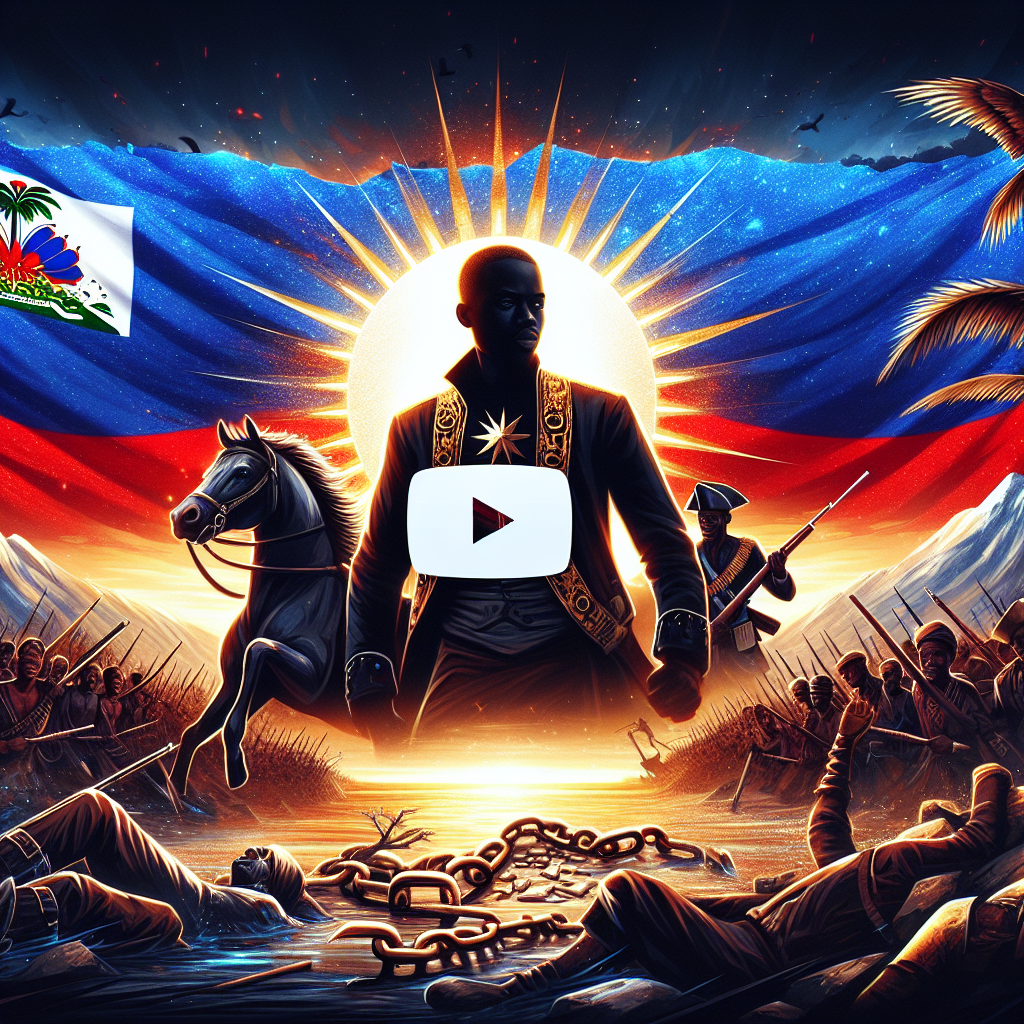
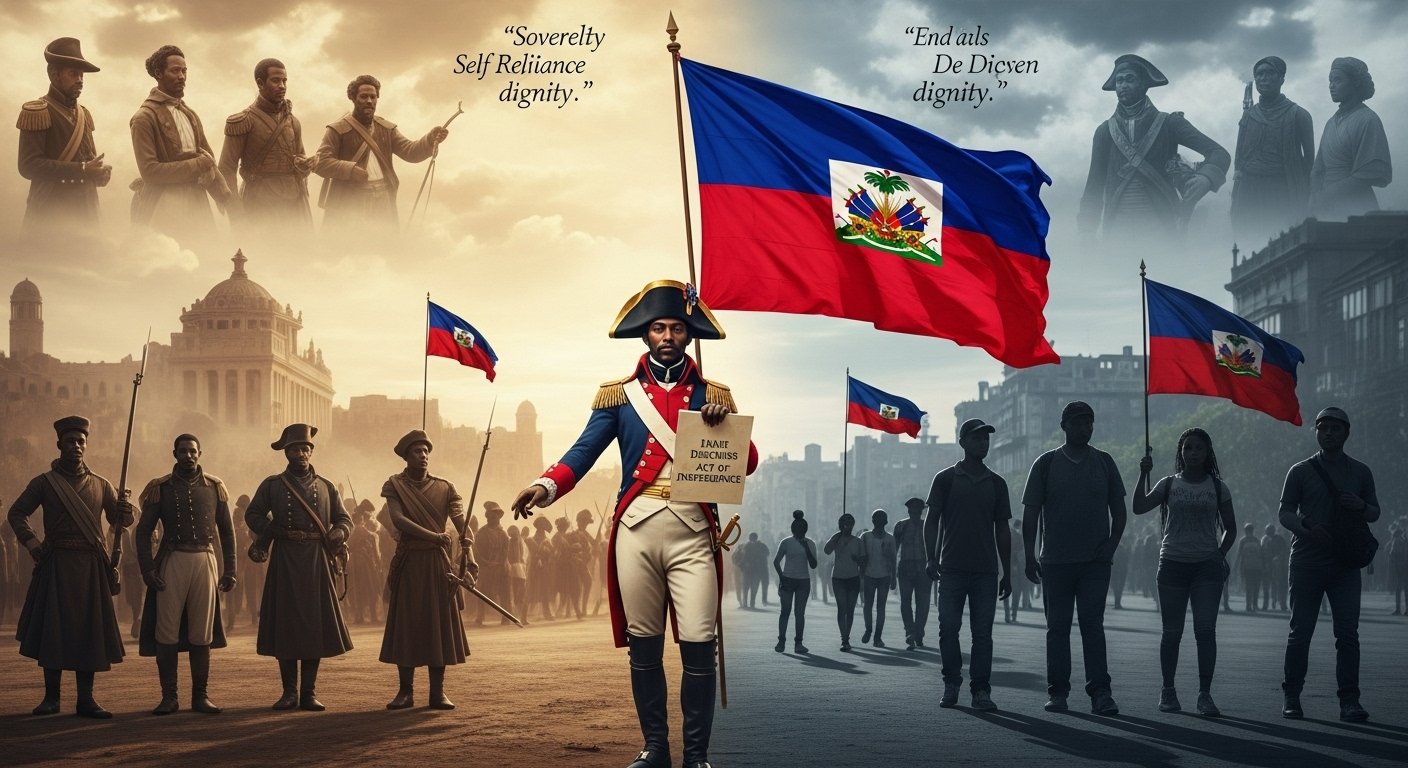
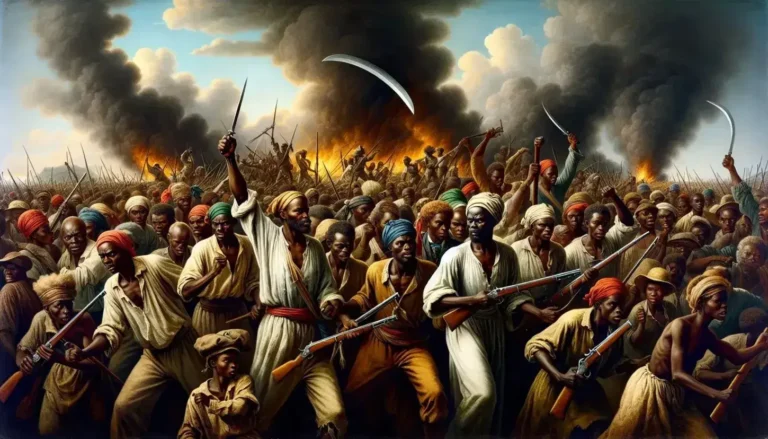
Jean-Jacques Dessalines was not a gentle man. He was not a diplomat, a philosopher, or a politician skilled in the art of compromise. He was a warrior, a formerly enslaved man who bore the scars of the whip on his back and carried an unshakeable conviction: that Haiti would be free, or it would be ash.
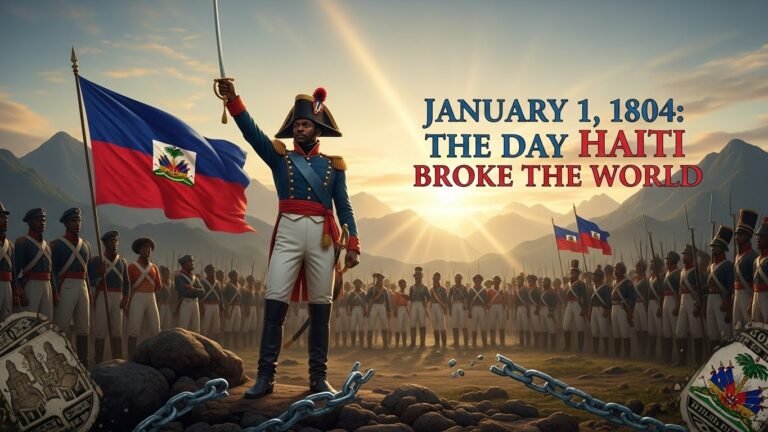
On January 1, 1804, when Dessalines tore the white from the French flag and declared Haiti’s independence, he didn’t ask for recognition from the world. He didn’t seek approval. He declared a truth and dared anyone to challenge it. In the two centuries since, Haiti has endured earthquakes, hurricanes, occupations, dictatorships, and endless interventions—but perhaps the greatest loss has been the forgetting of who Haiti was in that moment, and what that identity demanded.
This isn’t a story about failure. It’s a story about collective amnesia—how a nation that once knew its power came to doubt it, and what must be remembered to reclaim it.
Dessalines understood something fundamental: liberty granted is liberty conditional. When the French offered limited autonomy, when they promised reforms, when they negotiated—Dessalines said no. Not because he was unreasonable, but because he understood that accepting freedom as a gift meant accepting the giver’s power to revoke it.What Haiti Has Forgotten:
Modern Haiti has spent two centuries seeking permission—permission to be recognized, permission to trade, permission to develop, permission to exist without external interference. The nation that once declared independence without asking has learned to wait for international approval before acting.
When foreign governments or NGOs offer “assistance,” it often comes with conditions: adopt these policies, elect these leaders, implement these reforms. And Haiti, desperate and crisis-weary, accepts—forgetting that Dessalines would have asked: “On whose terms are we free?”
The forgotten lesson: Self-determination means making decisions for yourself, even when those decisions are difficult, even when they come with costs, even when the world disapproves.
The Haitian Revolution succeeded because people who had been intentionally divided—by skin color, by tribe, by language, by status—chose to unite around something bigger than their differences. The enslaved Africans, the affranchis (free people of color), even sympathetic whites who opposed slavery—they recognized that division meant death and unity meant freedom.
Dessalines himself bridged divides. Though he later grew to distrust many mixed-race elites, he initially worked to build a unified nation. His 1805 Constitution declared all Haitians “Black” regardless of actual skin color—a political identity meant to forge unity through shared revolutionary consciousness rather than phenotype.What Haiti Has Forgotten:
Today’s Haiti is fractured along fault lines the revolutionaries fought to eliminate. The divide between the wealthy elite and the impoverished masses. The tension between mixed-race and darker-skinned Haitians. The gap between urban Port-au-Prince and rural communities. The split between those who speak French and those who speak only Kreyòl.
These divisions aren’t just social—they’re weaponized. Political factions exploit them. Economic systems reinforce them. And every external intervention finds these cracks and widens them, because a divided Haiti is easier to control than a unified one.
The forgotten lesson: Haiti’s strength has never been in individual brilliance or natural resources—it has always been in collective action. A divided Haiti cannot defend itself, cannot build itself, cannot be itself.
Dessalines and the revolutionary leaders understood something Marx would later articulate: political power without economic power is an illusion. They destroyed the plantation system not out of spite, but because they recognized that maintaining it meant maintaining the economic relationships of slavery—just with different labels.
The revolutionaries sought to create a new economic model. They redistributed land. They encouraged small-scale farming for local consumption rather than cash crops for export. They tried to build an economy that served Haitian needs rather than foreign markets.What Haiti Has Forgotten:
Modern Haiti imports 80% of the rice it consumes—despite once being agriculturally self-sufficient. The nation that freed itself from producing sugar for French tables now depends on food aid from the very countries that once enslaved it.
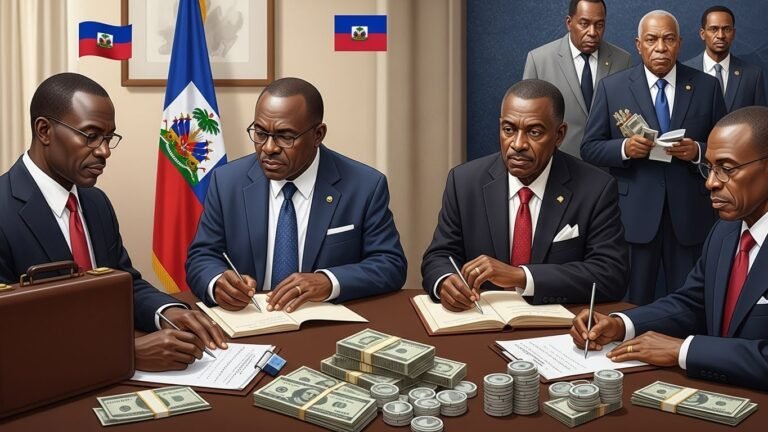
Haiti’s economy has been shaped by external forces: the French indemnity that drained capital for generations, structural adjustment programs that forced trade liberalization, foreign aid that undermines local industries, remittances that sustain families but don’t build productive capacity.
The result? Haiti has political sovereignty on paper but exists in a state of economic dependency that constrains every choice. When you cannot feed your people without foreign assistance, when your government budget depends on external donations, when your private sector cannot compete with subsidized imports—you are not truly free.
The forgotten lesson: Political independence is meaningless without economic self-sufficiency. A nation that cannot feed, clothe, and sustain itself will always be subject to those who can.
This may seem obvious, but it was revolutionary in 1804. In a world that treated Black bodies as property, as labor units, as commodities—Dessalines declared that Haitian lives had inherent, infinite worth. Worth dying for. Worth killing for. Worth building a nation for.
The revolution was expensive in human terms. Thousands died. But those deaths meant something because they purchased something: the recognition that Haitian lives could not be bought, sold, or subordinated.What Haiti Has Forgotten:
When hurricanes strike and the world sees thousands dead, when earthquakes reduce cities to rubble and bodies are buried in mass graves, when gang violence claims lives daily—there’s often a tragic acceptance. A sense that Haitian death is somehow inevitable, unremarkable, less urgent than death elsewhere.
Even within Haiti, this devaluation exists. Political violence targets the poor with impunity. The wealthy live in fortified compounds while the masses navigate insecurity. Emigration is seen as the only path to a valuable life—as if Haiti itself renders Haitian lives less worthy.
The international community reinforces this. Interventions are designed to “stabilize” Haiti, not to ensure Haitians thrive. Aid responds to crises but doesn’t invest in dignity. And the message, repeated until it’s internalized, is clear: Haitian lives are worth managing, worth pitying, but not worth the same investment, protection, or priority as lives elsewhere.
The forgotten lesson: Every Haitian life has infinite value. Not because the world recognizes it, but as a fundamental truth that demands a nation be organized to protect, nurture, and enable its people to flourish.
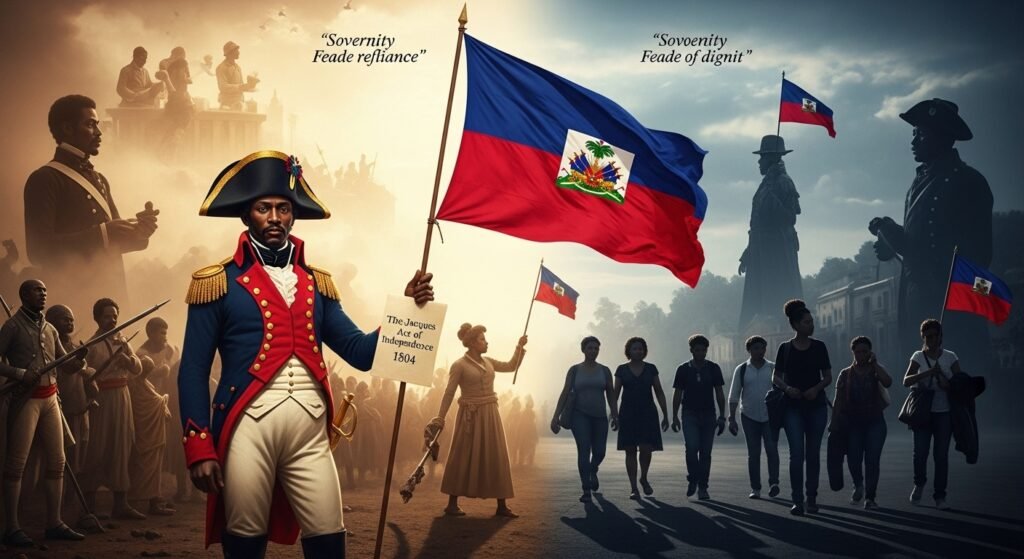
Dessalines declared Haiti’s independence knowing the nation owed nothing to France, to slavery, to colonialism. Haiti didn’t ask to be colonized. Haitians didn’t consent to slavery. The debt was not Haiti’s to pay—yet France demanded payment anyway, and the world enforced that injustice.
But here’s what else Dessalines understood: Haiti’s revolution changed the world. It proved slavery could be defeated. It forced Napoleon to sell Louisiana. It inspired abolitionists and terrified slaveholders. It demonstrated that freedom was universal, not a privilege of whiteness.What Haiti Has Forgotten:
Haiti has internalized the narrative that it is the debtor—indebted to international donors, indebted to countries that provide aid, indebted to organizations that “help.” This debt consciousness shapes everything: gratitude for what should be solidarity, apology for needing what was stolen, humility where pride is deserved.
The reality is inverted. France owes Haiti restitution for the indemnity—modern estimates suggest USD 21-115 billion. The United States owes Haiti for the occupation and decades of interference. The international community owes Haiti for isolation and sabotage.
But more fundamentally, the modern world—with its rhetoric of human rights, democracy, and freedom—owes its moral framework partly to Haiti. The Haitian Revolution forced the world to confront the gap between Enlightenment ideals and colonial practice. Every subsequent movement for Black liberation, decolonization, and human rights stands on the shoulders of Haitian revolutionaries.
The forgotten lesson: Haiti is not a charity case. Haiti is a creditor—morally, historically, and economically. The posture should not be gratitude for help, but expectation of restitution and respect.
Dessalines was uncompromising. When Toussaint Louverture negotiated with France, Dessalines grew suspicious. When France sent Leclerc to “restore order,” Dessalines saw it for what it was: an attempt to restore slavery by another name. He refused compromise because he understood that partial freedom is not freedom.
After independence, Dessalines took brutal measures against remaining French colonists—a decision debated by historians but rooted in his belief that Haiti’s freedom required a complete break with the colonial past. He would not allow a French minority to maintain economic or political power. The break had to be total.What Haiti Has Forgotten:
Modern Haiti has learned to compromise—with corrupt leaders who promise change but deliver continuity, with international “partners” who demand policy concessions in exchange for loans, with systems that perpetuate inequality while promising eventual improvement.
The elite who control much of Haiti’s economy often have more in common with foreign interests than with Haiti’s poor majority. Political leaders negotiate Haiti’s sovereignty in exchange for external support. And the population, exhausted by crisis, often accepts incremental change rather than demanding transformation.
Dessalines would ask: If the systems that keep you poor, keep you divided, keep you dependent are still in place—just with different managers—are you truly free?
The forgotten lesson: Compromising with systems of oppression doesn’t end oppression—it just makes it more comfortable for those benefiting from it. Real change requires dismantling and rebuilding, not reforming and accommodating.
This amnesia wasn’t accidental. It was cultivated through:External Pressure: Two centuries of isolation, intervention, and interference taught Haiti that revolutionary identity was dangerous. Nations that remembered Dessalines too well were punished. Internal Betrayal: Leaders from Henri Christophe to François Duvalier invoked revolutionary heroes while betraying revolutionary principles, creating cynicism about the revolutionary legacy itself. Educational Erasure: While Haitian children learn about the revolution, they often learn it as distant history, not as living identity. The principles are taught, but not their contemporary application. Economic Desperation: When you’re struggling to survive, revolutionary consciousness seems like a luxury. Crisis mode replaced vision mode. Narrative Colonization: The international narrative of Haiti as “poorest country in the Western Hemisphere” overwhelmed the narrative of Haiti as revolutionary nation. Pity replaced respect.
To remember is not to romanticize. Dessalines was brutal. The post-independence period was chaotic. The revolution didn’t create utopia. But remembering requires recognizing that:Haiti’s challenges are not proof of Haitian incapacity—they are proof of sustained opposition to Haitian success.Haiti’s poverty is not natural—it is the predictable result of 150 years of debt, isolation, intervention, and sabotage.Haiti’s divisions are not inherent—they are weaponized remnants of colonial strategies of control.Haiti’s dependency is not inevitable—it is the consequence of deliberate policies that destroyed self-sufficiency.
If Haiti remembered what Dessalines knew:
Dessalines was assassinated on October 17, 1806, less than three years after independence—killed by his own generals in a power struggle that foreshadowed Haiti’s future instability. His body was mutilated, denied proper burial. Even in death, there was an attempt to erase what he represented.
But his words remain: “I want the assets of the country to be equitably divided.” Not just land, but the assets of dignity, opportunity, and power.
Haiti has forgotten that it was founded not just as a free Black republic, but as a radical experiment in what freedom could mean—not just absence of slavery, but presence of justice. Not just independence from France, but economic and social transformation.The tragedy is not that Haiti hasn’t achieved this vision. The tragedy is that Haiti has forgotten it was supposed to.Dessalines declared independence knowing Haiti would face opposition, knowing the world would punish them, knowing it would be hard. He declared it anyway because he believed Haitians could build something unprecedented. The question for Haiti today is: Do we still believe what Dessalines believed—that we are capable of the impossible? Or have we forgotten who we are?To remember is not to return to 1804. It is to reclaim the consciousness of 1804—the refusal to accept limits imposed by others, the commitment to collective action, the belief in Haitian capability—and apply it to the challenges of 2026. Memory is not nostalgia. It is fuel.