Physical Address
304 North Cardinal St.
Dorchester Center, MA 02124
Physical Address
304 North Cardinal St.
Dorchester Center, MA 02124

Uncover the truth behind Haiti's missing reconstruction funds. Explore where billions went in this in-depth investigation.
Haiti’s reconstruction efforts have been marred by concerns over missing funds and ineffective aid distribution. After devastating natural disasters, the international community pledged billions to support recovery initiatives. However, a significant portion of these funds remains unaccounted for.
The issue of missing reconstruction funds in Haiti is complex, involving multiple stakeholders and a lack of transparency in financial reporting. Efforts to track these funds have been hindered by inadequate oversight and poor governance.
Understanding the challenges in Haiti’s reconstruction is crucial to addressing the issue of missing funds and ensuring that aid reaches those in need.
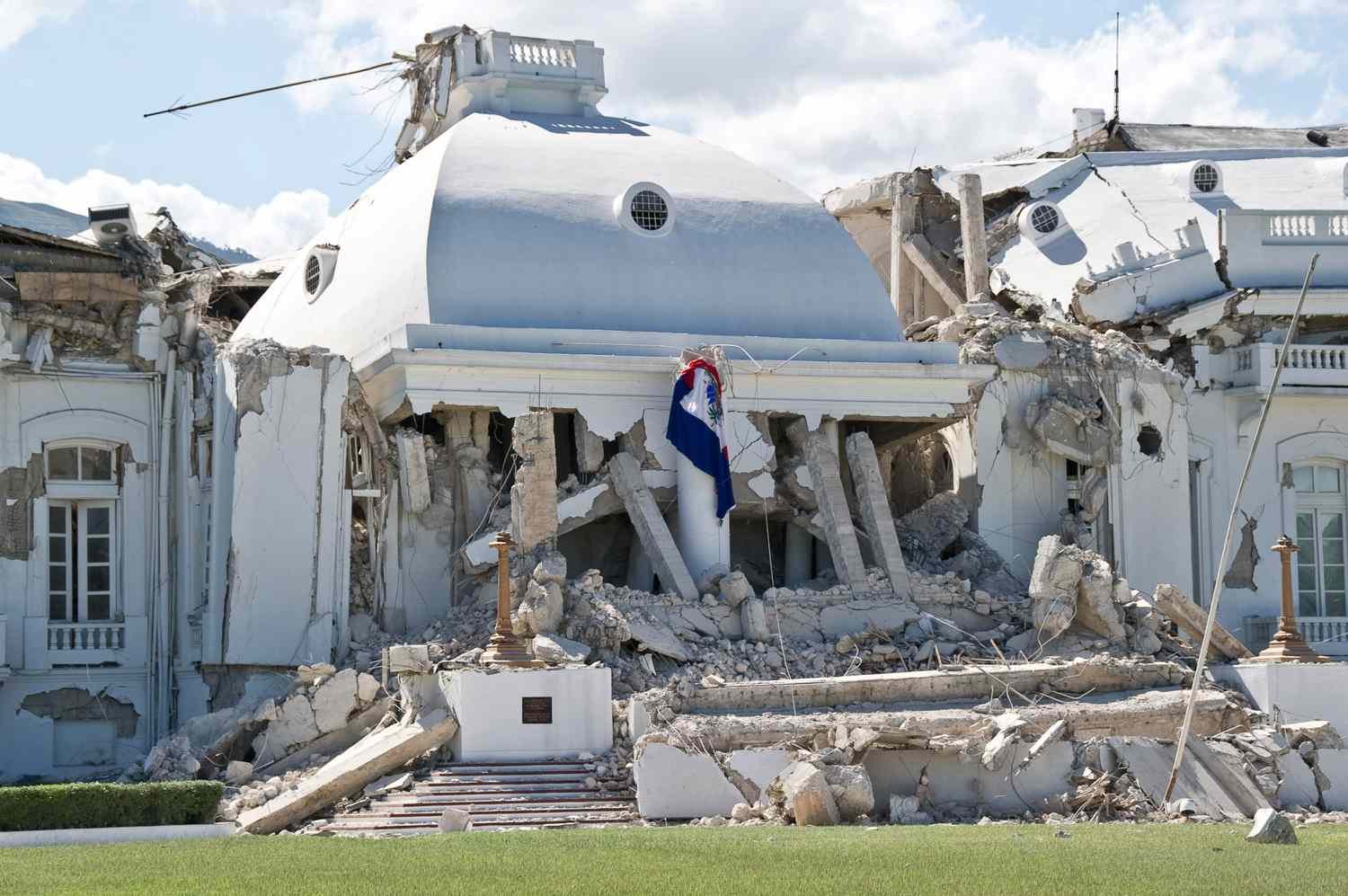
A massive earthquake struck Haiti on January 12, 2010, leaving widespread destruction in its wake. The disaster was so severe that it prompted an unprecedented global response in terms of aid and reconstruction efforts.
The earthquake, measuring 7.0 on the Richter scale, was centred near Port-au-Prince, Haiti’s capital. The impact was catastrophic, with estimates suggesting that over 220,000 people lost their lives, and more than 1.5 million were left homeless. The infrastructure in Haiti was severely tested, with many buildings, including homes, hospitals, and government buildings, reduced to rubble.
Haiti’s vulnerability to natural disasters was further highlighted by subsequent hurricanes and tropical storms that hit the island nation. These events compounded the challenges faced by the Haitian people and the international community in rebuilding the country.
| Disaster | Year | Impact |
|---|---|---|
| Earthquake | 2010 | 220,000 deaths, 1.5 million homeless |
| Hurricane Matthew | 2016 | 1.4 million people in need of aid |
The cumulative effect of these disasters underscored the need for sustained global aid and reconstruction efforts to help Haiti recover and build resilience against future natural disasters.
The global response to Haiti’s crisis was marked by significant pledges from major donor countries and international organizations. In the wake of the devastating earthquake, the world came together to support Haiti’s recovery efforts.
Major donor countries, including the United States, Canada, and various European nations, pledged substantial financial aid. For instance, the United States committed $4.6 billion towards Haiti’s reconstruction. As Secretary of State Hillary Clinton noted, “We are committed to supporting Haiti in its recovery and reconstruction efforts.”
International organizations such as the United Nations and the World Bank also made significant commitments. NGOs like the Red Cross and Oxfam pledged to support various aspects of the recovery, from healthcare to infrastructure rebuilding.
The concept of “Building Back Better” became a central theme in the reconstruction efforts. As
“Haiti can be rebuilt not just to its previous state, but to a stronger, more resilient nation,”
reflected in the optimism and ambition of the international community. This approach aimed to not only restore Haiti’s infrastructure but to create a more sustainable and robust economy.
The international response was not just about financial aid; it was about creating a better future for Haiti. With the commitments made, there was a collective hope that Haiti would emerge from its crisis stronger than before.
Understanding the scale of reconstruction funding requires a closer look at the numbers behind the pledges. The financial response to Haiti’s reconstruction needs was substantial, with billions of dollars pledged by the international community.
The actual amount of aid sent to Haiti was less than the initial pledges. According to official figures, a significant portion of the pledged funds was not disbursed. The table below summarizes the official aid figures:
| Category | Amount Pledged (USD) | Amount Disbursed (USD) |
|---|---|---|
| Grants | 4.6 billion | 3.2 billion |
| Loans | 1.8 billion | 1.2 billion |
| Total | 6.4 billion | 4.4 billion |
A comparison of the pledged amounts versus the actual disbursements reveals significant discrepancies. Factors contributing to these discrepancies include changes in donor priorities, project implementation challenges, and administrative costs.
The timeline of the money flow is crucial in understanding the pace of reconstruction efforts. Initially, funds were disbursed relatively quickly, but the rate of disbursement slowed over time due to various implementation challenges.
Key findings: The actual aid delivered was less than the pledged amount, and the disbursement rate slowed over time.
The international community pledged billions to aid Haiti’s reconstruction, but the reality on the ground tells a different story. The discrepancy between the promised aid and the actual funds delivered has been a subject of much debate and concern.
The Gap Between Promised and Delivered Aid is a critical issue that has hindered Haiti’s recovery efforts. According to reports, there has been a significant shortfall in the aid delivered compared to the initial pledges made by the international community.
The gap between the promised aid and the actual funds delivered to Haiti has been attributed to various factors, including bureaucratic delays and stringent conditions attached to the aid. As noted by a former USAID official, “The aid process was slow and cumbersome, with multiple layers of approval that hindered the timely delivery of funds.”
“The aid process was slow and cumbersome, with multiple layers of approval that hindered the timely delivery of funds.”
A significant portion of the pledged aid never reached Haiti due to various reasons, including administrative costs and redirection of funds to other purposes. It’s estimated that a substantial percentage of the aid was consumed by administrative expenses, leaving a meagre amount for actual reconstruction efforts.
Administrative costs have been a significant drain on the aid meant for Haiti. The complexity of the aid delivery process, involving multiple stakeholders and bureaucratic layers, contributed to the high administrative costs. As a result, a considerable amount of the aid was lost to these costs, further reducing the amount available for Haiti’s reconstruction.
In conclusion, the story of Haiti’s reconstruction is marred by the significant gap between promised and delivered aid, funds that never reached the country, and the high administrative costs that drained the available resources. Understanding these challenges is crucial to improving future aid delivery efforts.
Understanding how aid was distributed is crucial to assessing the effectiveness of Haiti’s reconstruction efforts. The distribution of aid to Haiti following the 2010 earthquake was a complex process involving multiple channels.
One of the primary aid distribution channels was government-to-government transfers. This involved direct financial assistance from donor governments to the Haitian government. While this method allowed for some control over how funds were used, it also faced challenges due to bureaucratic inefficiencies and corruption concerns.
A significant portion of aid was channelled through non-governmental organizations (NGOs) and contractors. These intermediaries played a crucial role in implementing projects on the ground, from building infrastructure to providing healthcare services. However, their involvement also raised questions about accountability and the long-term sustainability of their projects.
Direct relief programs were another key distribution channel, focusing on immediate needs such as food, shelter, and medical care. While these programs provided critical support in the aftermath of the disaster, their long-term impact on reconstruction was more limited.
| Aid Distribution Channel | Advantages | Challenges |
|---|---|---|
| Government-to-Government Transfers | Control over fund usage | Bureaucratic inefficiencies, corruption |
| NGO and Contractor Intermediaries | Project implementation expertise | Accountability concerns, sustainability issues |
| Direct Relief Programs | Immediate response to critical needs | Limited long-term impact on reconstruction |
The use of multiple aid distribution channels in Haiti reflects the complexity of international aid efforts. While each channel had its advantages, they also presented various challenges that impacted the overall effectiveness of the aid.
The involvement of foreign contractors and NGOs in Haiti’s reconstruction has been a subject of controversy. While these organizations were crucial in providing immediate relief and undertaking reconstruction projects, their role has also been criticized for various inefficiencies and misallocations of funds.
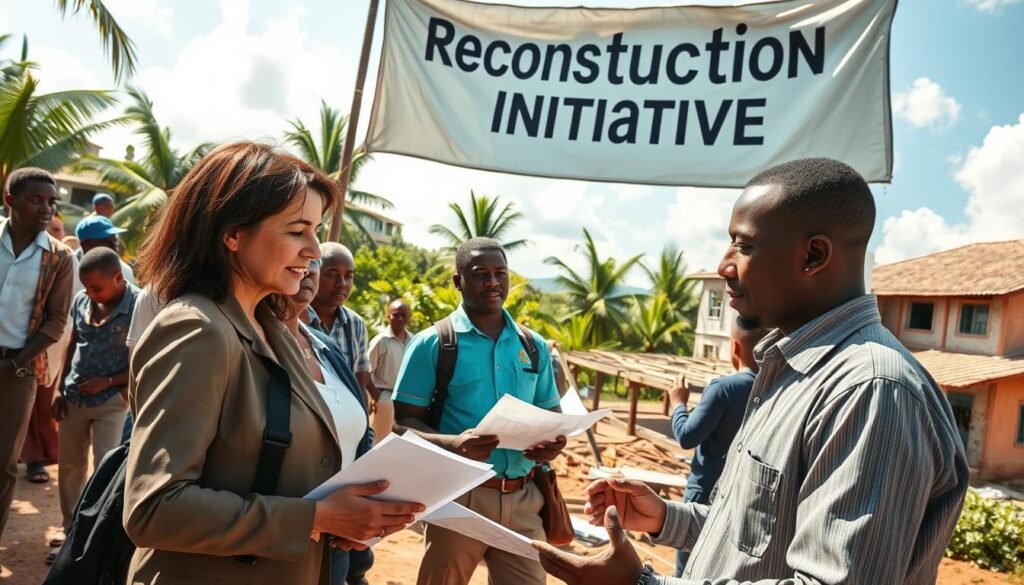
One of the significant issues with the aid provided to Haiti was that a substantial portion of it never actually reached the country. Studies have shown that a considerable percentage of the aid was used to cover administrative costs or was spent on projects that benefited the donor countries more than Haiti. For instance, a significant amount of the aid was used to pay for services and goods provided by companies from the donor countries, effectively returning the money to those economies.
Haiti has been referred to as the “Republic of NGOs” due to the overwhelming presence and influence of non-governmental organizations in the country. While NGOs played a vital role in providing essential services, their proliferation also led to a fragmented and often uncoordinated response to Haiti’s needs. This phenomenon contributed to the perception that the aid effort was not as effective as it could have been, with many organizations operating independently and sometimes duplicating efforts.
Several high-profile projects undertaken by foreign contractors and NGOs have been criticized for their lack of effectiveness or for failing to achieve their intended goals. For example, some housing projects were plagued by delays, cost overruns, and ultimately, the houses were not occupied as planned. These case studies highlight the challenges faced in managing reconstruction efforts in a complex environment like Haiti.
The role of foreign contractors and NGOs in Haiti’s reconstruction underscores the need for better coordination, transparency, and accountability in international aid efforts. Ensuring that aid is effectively utilized requires a more nuanced understanding of the local context and a commitment to projects that are sustainable and beneficial to the local population.
Internal factors, including corruption and government capacity challenges, significantly impacted the effectiveness of Haiti’s reconstruction. While international aid was crucial, the Haitian government’s ability to manage and allocate these funds efficiently was compromised.
The Haitian government faced significant capacity challenges in managing the reconstruction efforts. Limited institutional capacity and a lack of experienced personnel hindered the government’s ability to oversee large-scale projects effectively. This was compounded by inadequate infrastructure, including poor transportation networks and insufficient communication systems.
Corruption allegations within the Haitian government and among local officials further complicated the reconstruction process. Embezzlement and bribery were reported in various instances, diverting funds away from their intended purposes. This not only reduced the effectiveness of the aid but also eroded trust in the government’s ability to manage reconstruction efforts.
A significant issue was the lack of transparency in how reconstruction funds were allocated and managed. Without clear and publicly available information on fund distribution, it was difficult to track how money was being spent. This lack of transparency created an environment conducive to corruption and mismanagement.
The combination of these internal factors—government capacity challenges, local corruption allegations, and lack of transparency in fund allocation—substantially hindered Haiti’s reconstruction efforts. Addressing these issues is crucial for improving the effectiveness of future aid and reconstruction initiatives.
Despite billions of dollars in aid, Haiti’s reconstruction was plagued by scandalous failures and controversies involving major organizations. The international community’s efforts to rebuild Haiti were marred by several high-profile projects that failed to deliver on their promises.
The Red Cross was criticized for its handling of the housing reconstruction project. Despite receiving significant funding, the project failed to deliver the promised number of homes.
USAID invested heavily in the development of an industrial park in Haiti, but the project faced significant delays and cost overruns. The park, intended to boost economic growth, struggled to attract businesses.
“The project was touted as a game-changer for Haiti’s economy, but it has been a disappointment so far.”
The Clinton Foundation was involved in several initiatives aimed at revitalizing Haiti’s agriculture and infrastructure. However, the results were often below expectations.
There were allegations of conflict of interest involving the Clinton Foundation and other organizations. Critics argued that the close ties between aid organizations and government officials hindered transparency and accountability.

The controversies surrounding these high-profile projects highlight the need for greater transparency and oversight in international aid efforts. Ensuring that aid reaches its intended recipients and achieves its intended goals remains a significant challenge.
As Haiti continues to rebuild after the 2010 earthquake, the human cost of the disaster and subsequent reconstruction efforts becomes clearer. The journey to recovery has been long and challenging, with significant international aid but also numerous setbacks.
Despite efforts to rebuild, many Haitians still face dire living conditions. Overcrowding, poor sanitation, and inadequate housing remain prevalent in many areas, particularly in Port-au-Prince. The lack of affordable housing has led to the proliferation of informal settlements, which often lack basic services like clean water and electricity.
Haiti’s infrastructure has seen some improvements since 2010, but much work remains. While some roads have been repaired and a few new public buildings have been constructed, infrastructure challenges persist, hindering economic development and daily life. The condition of roads, bridges, and public transportation continues to affect access to markets, healthcare, and education.
The humanitarian needs in Haiti remain significant. Food insecurity, lack of access to healthcare, and education challenges are among the ongoing issues. The country continues to face natural disasters, which exacerbate these challenges. International aid remains crucial, but there’s a growing emphasis on sustainable development and local capacity building to address these needs more effectively.
In conclusion, while progress has been made, the human cost of the earthquake and the shortcomings in reconstruction efforts are still evident in Haiti today. Continued support and innovative approaches are necessary to address the remaining challenges and ensure a more sustainable future for the Haitian people.
The need for accountability in Haiti’s reconstruction has prompted a range of investigations and legal actions. In the years following the 2010 earthquake, numerous inquiries have been conducted to track the flow of reconstruction funds and identify instances of mismanagement.
Haitian authorities have launched several investigations into the handling of reconstruction funds. These inquiries have aimed to identify cases of corruption and mismanagement within both government agencies and non-governmental organizations (NGOs).
International organizations have also conducted audits and published reports on the use of reconstruction funds in Haiti. These reports have highlighted discrepancies in fund allocation and identified areas where transparency could be improved.
Several legal actions have been taken against entities accused of mismanaging reconstruction funds. These actions have resulted in varying outcomes, including fines and restitution in some cases.
Despite these efforts, pursuing accountability has faced significant challenges. Limited resources and a lack of transparency have hindered investigations. Additionally, the complex nature of international aid has made it difficult to track funds and hold parties accountable.
| Investigation Type | Number Conducted | Outcomes |
|---|---|---|
| Haitian-Led | 15 | 5 convictions, 3 ongoing |
| International Audits | 8 | Recommendations for 4 NGOs |
| Legal Actions | 10 | 2 fines, 1 restitution |
The table above summarizes some of the key accountability efforts and their outcomes. While progress has been made, much work remains to be done to ensure that reconstruction funds are used effectively and transparently.
The investigation into Haiti’s missing reconstruction funds reveals a complex web of issues that have hindered the effective delivery of aid. The findings underscore the need for reforming aid distribution to ensure transparency and effectiveness.
Reforming aid requires a multifaceted approach, including improving donor coordination, enhancing transparency in fund allocation, and strengthening local governance structures. Ensuring transparency in aid distribution is crucial to building trust and ensuring that funds reach their intended recipients.
As the international community continues to provide aid to Haiti, it is essential to learn from past experiences and implement reforms that promote accountability and effectiveness. By doing so, we can work towards a more equitable and sustainable recovery for the Haitian people.
The funds were allocated through various channels, including government-to-government transfers, NGOs, and contractors, but a significant portion was lost to administrative costs, corruption, and mismanagement.
There were significant discrepancies between the pledged amounts and the actual disbursements, with a substantial gap between the two.
Foreign contractors and NGOs played a significant role in Haiti’s reconstruction, but their involvement was also marred by controversy, including allegations of corruption and inefficiency.
Notable examples include the Red Cross housing scandal, USAID’s industrial park disappointment, and controversies surrounding the Clinton Foundation’s projects.
Despite some progress, Haiti still faces significant challenges, including inadequate infrastructure and ongoing humanitarian needs.
Yes, there have been Haitian-led inquiries, international audits, and legal actions, but pursuing accountability has been challenging due to various barriers.
The need for transparency, accountability, and reform in aid distribution has been highlighted, with a focus on ensuring that aid reaches its intended recipients effectively.
Improving aid distribution requires a multifaceted approach, including enhancing transparency, streamlining aid channels, and promoting local capacity building.