Physical Address
304 North Cardinal St.
Dorchester Center, MA 02124
Physical Address
304 North Cardinal St.
Dorchester Center, MA 02124


Discover the 40-year failure of leadership in Haiti and the urgent need to stop enabling imposters.
Haiti has been plagued by a persistent leadership crisis, hindering its development and stability. For decades, the country has struggled with ineffective leaders, leading to a vicious cycle of failure and instability.
The historical context of Haiti’s struggles is complex, with factors such as political corruption, economic mismanagement, and external interference contributing to its current state. It’s essential to understand these challenges to address the issue effectively.
By examining the root causes of Haiti’s crisis and the role of enabling impostors in Haitian leadership, we can begin to formulate solutions to break this cycle and pave the way for a more stable future.
Understanding Haiti’s current leadership challenges requires a look into its past, particularly its transition from revolution to republic. Haiti’s history is marked by significant events that have shaped its leadership and continue to influence its present.
Haiti’s journey began as a revolutionary state, becoming the world’s first black republic in 1804 after a successful slave revolt led by Toussaint Louverture and later Jean-Jacques Dessalines. However, this transition was fraught with challenges, including internal power struggles and external pressures.
The American occupation from 1915 to 1934 had a profound impact on Haiti’s political and economic structures. The occupation led to the centralization of power and the creation of a modern military, but it also suppressed Haitian autonomy and exacerbated economic inequalities.
| Period | Event | Impact |
|---|---|---|
| 1804 | Haiti gains independence | Establishment of the world’s first black republic |
| 1915-1934 | American occupation | Centralization of power, modernization of the military, and suppression of autonomy |
François “Papa Doc” Duvalier’s ascension to power in 1957 initiated a period of state-sponsored violence and exploitation in Haiti that would last for nearly three decades.
Under Papa Doc, Haiti became a dictatorship characterized by brutal suppression and intimidation. The creation of the Tonton Macoutes, a paramilitary force, was instrumental in maintaining his rule through fear and violence.
Following Papa Doc’s death in 1971, his son Baby Doc succeeded him, continuing the corrupt and oppressive practices of his father. The regime remained marked by corruption and human rights abuses.
The Tonton Macoutes played a crucial role in the Duvalier regime’s ability to maintain power through violence and intimidation. Their actions were a hallmark of the state-sponsored violence that plagued Haiti during this period.
The legacy of the Duvalier dynasty is one of exploitation and terror, setting a precedent for future leadership failures in Haiti. Understanding this period is crucial to grasping the complexities of Haiti’s ongoing crisis.
Following Duvalier’s ousting, Haiti plunged into a period of political instability, marked by military interventions and controversial leadership. The removal of Jean-Claude Duvalier in 1986 was met with jubilation, as many Haitians saw it as an opportunity for change. However, the subsequent period was characterized by a series of military juntas that ruled the country, further entrenching political instability.
The military juntas that took control after Duvalier’s departure were marked by corruption and human rights abuses. These regimes failed to address the country’s deep-seated issues, instead focusing on maintaining their grip on power. The period was marked by widespread violence and repression, setting back efforts towards democratization.
Jean-Bertrand Aristide, a charismatic priest, emerged as a hero of the Haitian people during the late 1980s. His message of hope and change resonated with many, leading to his election as president in 1990. However, his presidency was short-lived, cut short by a military coup in 1991. Aristide’s subsequent return to power and his later years in office were marred by controversy, including allegations of authoritarianism and corruption.
The coups against Aristide in 1991 and 2004 highlighted the ongoing political instability in Haiti. These events demonstrated a pattern of intervention in which political leaders were ousted by force, often with international backing. The 1991 coup led to Aristide’s exile, while the 2004 coup again removed him from power, this time amid accusations of authoritarian rule.
The post-Duvalier era in Haiti was thus marked by a cycle of false hopes and broken promises, as the country struggled with military rule, controversial leadership, and ongoing political instability.
The past forty years have seen Haiti grapple with a seemingly endless cycle of leadership failures. This prolonged crisis has been marked by political instability, corruption, and governance failures, which have collectively hindered the country’s development.
Since 1980, Haiti has witnessed a rapid succession of presidents and prime ministers, with many failing to complete their terms or implement meaningful reforms. This instability has created an environment conducive to corruption and mismanagement.
Haiti’s leadership crisis is further complicated by pervasive corruption and governance failures. Indicators of corruption include embezzlement, bribery, and the misuse of public funds.
Key corruption indicators:
Several high-profile cases have highlighted the extent of corruption in Haiti. For instance, the mismanagement of funds allocated for public projects and the embezzlement of international aid have been recurrent issues.
“Corruption is a major obstacle to Haiti’s development. It diverts resources away from essential public services and infrastructure, exacerbating poverty and inequality.”
Addressing these issues will require a concerted effort to strengthen governance, increase transparency, and hold leaders accountable.
The influx of international aid into Haiti has been a mixed blessing, bringing both hope and hindrance to the island nation. While intended to alleviate suffering and foster development, international aid has often been criticized for its inefficacy and unintended consequences.
Billions of dollars in international aid have been poured into Haiti, yet much of it has failed to reach the people who need it most. Corruption and mismanagement have plagued aid efforts, with funds often being diverted into the pockets of corrupt officials or used for projects that benefit foreign consultants rather than local communities.
The proliferation of non-governmental organizations (NGOs) in Haiti has led to a phenomenon where these entities act as shadow governments, sometimes undermining the authority and capacity of Haitian institutions. While NGOs have provided essential services, their presence has also created a dependency that hinders the development of local governance structures.
A notable example of the misuse of funds is the PetroCaribe scandal, where billions of dollars intended for development projects were misappropriated. This scandal highlighted the deep-seated corruption and lack of transparency that can characterize international aid efforts in Haiti.
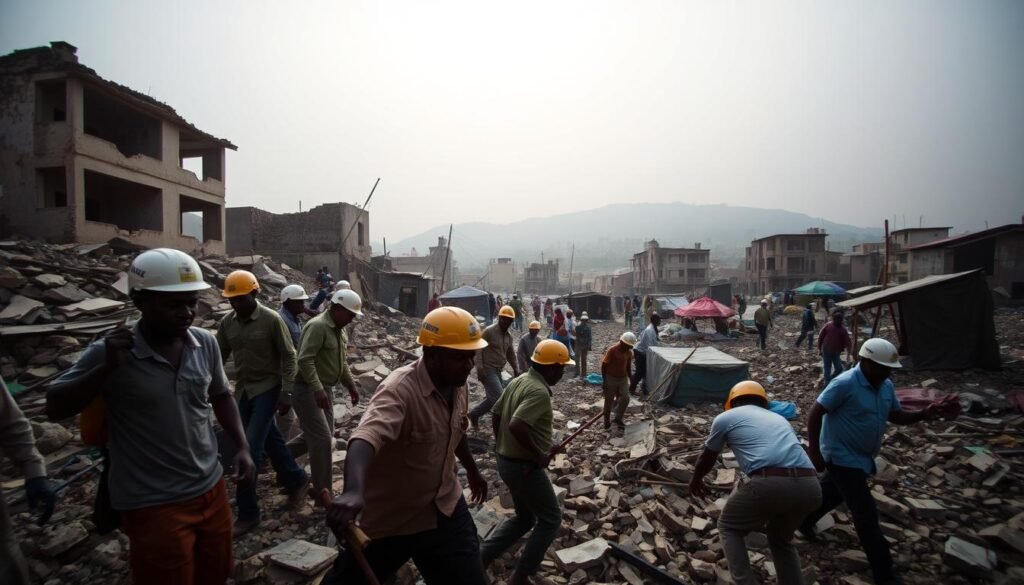
The 2010 earthquake in Haiti was a devastating disaster that exposed the country’s deep-seated leadership failures. The earthquake, which struck on January 12, 2010, caused widespread destruction and loss of life, but the subsequent response and recovery efforts were marred by inefficiencies and controversies.
The international community responded quickly to the disaster, pledging billions of dollars in aid. However, the delivery of this aid was slow, and much of it never reached the Haitian people. The lack of coordination and oversight led to a significant gap between the promised aid and the actual support received by those in need.
The Clinton Foundation, led by former U.S. President Bill Clinton, was given a significant role in the reconstruction efforts. While the Foundation’s involvement was initially seen as a positive step, it was soon embroiled in controversies. Critics argued that the Foundation’s projects were not transparent, and the promised results were not achieved.
“The Clinton Foundation’s efforts in Haiti were criticized for lacking transparency and failing to deliver on promised results.”
Fast forward to 2021, and Haiti was hit by another devastating earthquake. Unfortunately, the response to this disaster followed a similar pattern to the 2010 earthquake, with criticisms of poor coordination, lack of transparency, and unfulfilled promises. The recurrence of these issues highlights the need for Haiti to develop more effective leadership and disaster response mechanisms.
In conclusion, the 2010 earthquake and its aftermath exposed significant leadership failures in Haiti. The international response, while well-intentioned, was marred by inefficiencies and controversies. The experience and the subsequent 2021 earthquake response underscore the need for Haiti to strengthen its governance and disaster response capabilities.
President Moïse’s administration faced intense scrutiny due to electoral irregularities. The controversy surrounding his presidency began with the disputed 2016-2017 elections, which many deemed unconstitutional.
The elections that brought Moïse to power were marred by allegations of fraud and irregularities. This led to a constitutional crisis, as many Haitians questioned the legitimacy of his presidency. The opposition boycotted the elections, further complicating the political landscape.
The international community, including the Organization of American States (OAS), expressed concerns over the electoral process. Despite these reservations, Moïse was sworn in as president, exacerbating the political tensions.
Tragically, Moïse’s tenure ended with his assassination in July 2021. The event sent shockwaves through Haiti and the international community. The assassination was carried out by a group of armed individuals, further destabilizing the country.
Following Moïse’s assassination, Ariel Henry assumed the role of prime minister. His leadership has been controversial, with many questioning his legitimacy and the extent of his powers. Henry’s administration has faced criticism for its handling of the ongoing security and humanitarian crises.
| Event | Date | Impact |
|---|---|---|
| Moïse Assassination | July 2021 | Political instability |
| Ariel Henry’s Appointment | July 2021 | Controversial leadership |
| Election Controversy | 2016-2017 | Constitutional crisis |
Haiti stands at the edge of a catastrophic precipice, threatened by an unprecedented humanitarian crisis. The situation on the ground is dire, with multiple factors converging to exacerbate the suffering of the Haitian people.
Gang violence has become a pervasive issue in Haiti, leading to a near-total collapse of security. Armed groups control large swaths of territory, displacing thousands and restricting access to necessities like healthcare and food. As gang violence escalates, the rule of law has given way to chaos and anarchy.
“The situation is catastrophic. We’re seeing levels of violence that we’ve never seen before,” said a UN official, highlighting the severity of the crisis.
The economic situation in Haiti is equally dire, with rampant inflation and a lack of economic opportunities contributing to widespread food insecurity. The country’s economy is on the brink of collapse, with many families struggling to access necessities. As the economic situation deteriorates, the humanitarian crisis deepens.
Vulnerable populations, including women and children, are disproportionately affected by the crisis. The lack of access to healthcare, education, and other essential services has devastating consequences for these groups. As the situation continues to deteriorate, the international community must take action to address the humanitarian crisis in Haiti.
For decades, U.S. policy on Haiti has oscillated between support and interference, often with unintended consequences. The relationship between the two countries is complex, with the U.S. playing a significant role in Haiti’s political and economic landscape.
The history of U.S. interventions in Haiti is long and varied, ranging from military occupations to humanitarian aid. The most significant intervention was the U.S. occupation from 1915 to 1934, which had a lasting impact on Haiti’s political and economic structures.
Key consequences of historical interventions include:
The Biden administration has faced significant challenges in addressing the ongoing crisis in Haiti, including gang violence, political instability, and a humanitarian crisis.
One of the most contentious issues has been the administration’s deportation policies, which have faced criticism from human rights groups. The table below summarizes key aspects of U.S. deportation policies toward Haiti.
| Policy Aspect | Description | Impact |
|---|---|---|
| Deportation Frequency | Regular flights returning Haitians to their home country | Increased risk of violence and persecution for returnees |
| Asylum Process | A complex and often lengthy process for seeking asylum in the U.S. | Many Haitians face significant barriers to seeking protection |
| Humanitarian Aid | The U.S. provides significant aid to Haiti, including humanitarian assistance | Aid helps alleviate some humanitarian needs, but is often criticized for being insufficient |

The U.S. policy toward Haiti is multifaceted, involving both support and controversy. Understanding the historical context and current challenges is crucial for developing effective policies that balance U.S. interests with Haitian needs.
Haiti’s persistent leadership failures have precipitated a severe economic crisis, manifesting in widespread poverty and underdevelopment. The country’s economic struggles are multifaceted, with various factors contributing to its dire state.
Poverty indicators in Haiti paint a grim picture, with a significant portion of the population living below the poverty line. According to the World Bank, Haiti is one of the poorest countries in the Western Hemisphere, with a GDP per capita of less than $800. The lack of effective leadership has hindered development efforts, leading to stagnation in critical sectors such as infrastructure, healthcare, and education.
The economic impact of leadership failures is further complicated by the issue of brain drain. Many of Haiti’s skilled professionals have emigrated in search of better opportunities, depleting the country of much-needed talent. The Haitian diaspora, however, remains a significant resource, with many individuals maintaining strong ties to their homeland and contributing to its development through remittances and investment. As noted by a Haitian proverb, “Lespwa fe viv,” or “Hope makes us live,” reflects the diaspora’s hope for a better future for Haiti.
The economic challenges facing Haiti are daunting, but understanding the impact of leadership failures is crucial to devising effective solutions. By acknowledging the role of leadership in exacerbating poverty and hindering development, Haiti can begin to chart a path towards recovery and growth.
Effective leadership in Haiti hinges on the ability to foster accountability, support grassroots initiatives, and engage the diaspora community. To achieve this, Haiti must focus on several key areas.
For Haiti to have real leadership, it must strengthen its democratic institutions. This involves ensuring free and fair elections, promoting transparency in government dealings, and holding leaders accountable for their actions. Strengthening democratic institutions can be achieved through:
Grassroots movements and civil society play a crucial role in demanding accountability and pushing for reforms. These movements can:
By empowering these initiatives, Haiti can build a more inclusive and responsive leadership.
The Haitian diaspora is a significant resource for the country’s development. Engaging the diaspora can bring in valuable skills, investment, and international connections. Strategies for diaspora engagement include:
By focusing on these areas, Haiti can break the cycle of ineffective leadership and move towards a more stable and prosperous future.
Haiti’s decades-long crisis of leadership has left the nation on the brink of collapse. As discussed, the historical context, from the early leadership challenges to the Duvalier dynasty and subsequent administrations, has contributed to the current state of instability.
A path forward for Haiti requires a multifaceted approach. Strengthening democratic institutions, promoting accountability, and supporting grassroots movements are crucial steps toward recovery. The international community, particularly the United States, must reassess its policies and aid strategies to ensure they are not perpetuating the cycle of dependency and corruption.
Haiti’s future depends on the collective efforts of its leaders, citizens, and international partners. By working together to address the root causes of the crisis, Haiti can begin to rebuild and move toward a more stable and prosperous future.
The journey ahead will be challenging, but with a commitment to transparency, good governance, and the empowerment of the Haitian people, a brighter future is possible.
The main cause of Haiti’s leadership crisis is a complex interplay of historical, political, and economic factors, including the legacy of the Duvalier regime, foreign interventions, and systemic corruption.
International aid has had a mixed impact on Haiti’s development, with some aid being misappropriated or ineffective, while other efforts have supported humanitarian needs and development initiatives.
NGOs have sometimes acted as shadow governments in Haiti, undermining the capacity of Haitian institutions and creating parallel systems of governance.
The PetroCaribe scandal highlights the mismanagement and corruption surrounding a Venezuelan aid program intended to support Haiti’s development, with billions of dollars being misappropriated.
The Haitian diaspora has played a crucial role in supporting Haiti’s economy through remittances and has been a source of expertise and innovation, with many diaspora members advocating for change and supporting development initiatives.
The key factors contributing to Haiti’s humanitarian crisis include gang violence, food insecurity, economic collapse, and the impact of natural disasters, which have cumulatively exacerbated the country’s vulnerabilities.
U.S. policy has historically played a significant role in shaping Haiti’s leadership crisis, with interventions and diplomatic efforts sometimes supporting and other times undermining Haitian stability and sovereignty.
Effective leadership in Haiti involves strengthening democratic institutions, promoting accountability, supporting grassroots movements, and engaging the diaspora in efforts to drive meaningful change and development.
Haiti’s economy is characterized by high levels of poverty, inequality, and underdevelopment, with significant challenges including a lack of infrastructure, corruption, and brain drain.
Breaking the cycle of leadership failures in Haiti requires a multifaceted approach that includes strengthening institutions, promoting transparency and accountability, and supporting inclusive and participatory governance.