Physical Address
304 North Cardinal St.
Dorchester Center, MA 02124
Physical Address
304 North Cardinal St.
Dorchester Center, MA 02124

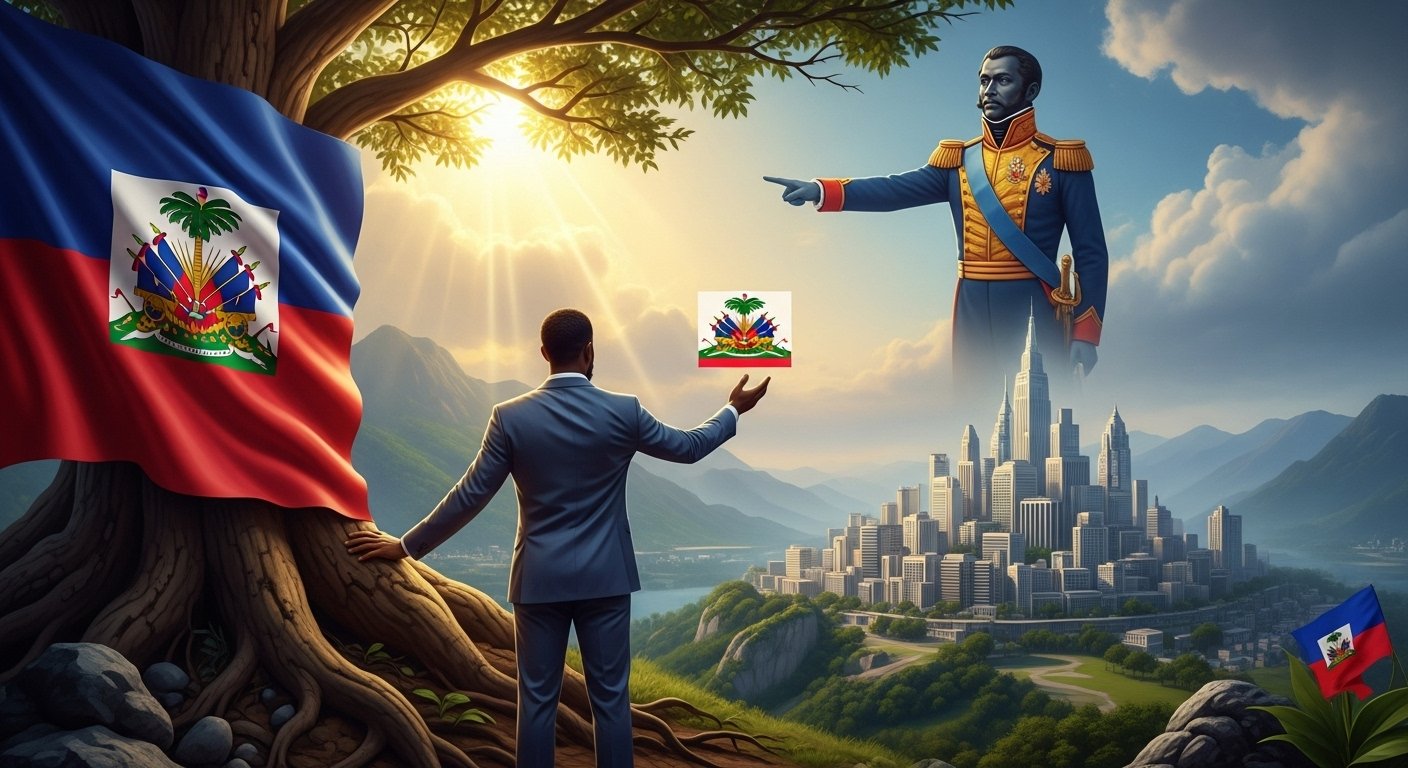
Explore how Dessalines' revolutionary ideology can guide Haiti's current directionless struggle in this insightful article.
Haiti is currently facing a directionless struggle, grappling with numerous challenges that seem insurmountable. However, by revisiting the revolutionary ideology of Dessalines, Haiti’s founding father, we may uncover a guiding light for the nation’s plight.
Dessalines’ vision for Haiti was rooted in revolutionary ideology, emphasizing freedom, equality, and the empowerment of the Haitian people. His leadership during the Haitian Revolution was pivotal in shaping the country’s future.
By examining Dessalines’ ideology and its implications, we can gain valuable insights into addressing Haiti’s contemporary issues. This exploration offers a potential pathway to navigate the country’s current struggle and work towards a more stable and prosperous future.
Haiti stands at a critical juncture, grappling with a multifaceted crisis that threatens its very foundation. The nation is beset by a complex array of challenges that are deeply intertwined, making it difficult to isolate and address individual issues.
The political landscape in Haiti is characterized by instability and a lack of effective leadership. This vacuum has significant implications for the country’s ability to govern itself and respond to the needs of its citizens.
Gang violence has become a pervasive issue, contributing to the overall sense of insecurity. The rise of gang activity has not only affected the daily lives of Haitians but also hampers efforts to establish a stable and secure environment.
Governance failures and a constitutional deadlock have further complicated Haiti’s political crisis. The inability to effectively govern and make necessary constitutional changes has stalled progress and exacerbated the crisis.
Haiti’s economic challenges are deeply linked to its political instability. The country faces significant development setbacks and relies heavily on foreign aid, which has its own set of challenges.
Poverty indicators in Haiti are alarming, with a significant portion of the population living below the poverty line. This has led to development setbacks and a lack of access to basic services.
The dynamics of international aid have a profound impact on Haiti’s economy. While aid is crucial, it also creates dependency and can undermine local economies.
Dessalines’ role in shaping Haiti’s independence cannot be overstated, as he was instrumental in the country’s fight for freedom. As a key figure in the Haitian Revolution, Dessalines demonstrated exceptional leadership and strategic prowess.
Dessalines’ journey from being a slave to a revolutionary leader is a testament to his strength and determination. Born in West Africa around 1758, he was brought to Saint-Domingue (present-day Haiti) as a slave.
Dessalines’ early life as a slave on the Cormiers plantation had a profound impact on his revolutionary consciousness. The harsh conditions and brutal treatment he experienced instilled in him a deep-seated desire for freedom and justice.
As a military leader, Dessalines played a crucial role in the Haitian Revolution, fighting alongside other prominent leaders like Toussaint Louverture. His tactical skills were instrumental in several key victories.
The 1804 Declaration of Independence marked a significant milestone in Haitian history, establishing Haiti as the first independent black nation in the world.
The Declaration not only declared Haiti’s independence but also had radical implications for the institution of slavery and colonialism in the Americas. It served as a powerful symbol of resistance against oppression.
Under Dessalines’ leadership, Haiti became a beacon of hope for enslaved people everywhere. The establishment of the first black republic was a groundbreaking achievement with far-reaching consequences.
| Year | Event | Significance |
|---|---|---|
| 1758 | Born in West Africa | Early life shaped his revolutionary consciousness |
| 1804 | Declaration of Independence | Established Haiti as the first independent black nation |
Dessalines’ vision for Haiti was built on the pillars of radical liberation, anti-colonialism, and economic independence. His ideology was a comprehensive framework that guided the Haitian Revolution towards achieving true freedom and sovereignty.
Dessalines’ approach to liberation was radical in its complete rejection of the status quo. He advocated for the total dismantling of the colonial system and the establishment of a new order based on freedom and equality.
Dessalines was adamant in his opposition to European domination. He believed that true independence could only be achieved by severing all ties with colonial powers and forging a new path that was free from external influence.
The concept of total independence was central to Dessalines’ ideology. He argued that Haiti should not only be free from French colonial rule but also from any form of foreign control or influence that could undermine its sovereignty.
Economic self-sufficiency was another cornerstone of Dessalines’ revolutionary ideology. He recognized that economic independence was crucial for the survival and prosperity of the new nation.
Dessalines implemented a policy of redistributing colonial plantations to the formerly enslaved population. This land reform was aimed at creating a more equitable society and ensuring that the benefits of independence were shared among the people.
The new economic model envisioned by Dessalines was based on the principles of self-sufficiency and local production. He encouraged the development of agriculture and local industries to reduce dependence on foreign goods and create a robust economy.
The key elements of Dessalines’ economic vision included:
By focusing on these areas, Dessalines aimed to create a strong and resilient economy that could support the newly independent nation.
Dessalines understood that true independence required both sovereignty and a strong national identity. In his view, Haiti’s future depended on maintaining sovereignty and rejecting foreign interference. This principle guided his actions and decisions during and after the Haitian Revolution.
Dessalines was adamant about resisting foreign control and influence. He believed in diplomatic independence and adopted a stance of strategic isolation to protect Haiti from European powers seeking to reassert their dominance.
By maintaining diplomatic independence, Dessalines ensured that Haiti was not beholden to any foreign power. Strategic isolation allowed Haiti to develop its internal structures without external interference.
Dessalines recognized the need for military preparedness to defend Haiti against potential recolonization efforts. He understood that a strong defense was crucial for maintaining sovereignty.
A key aspect of Dessalines’ ideology was the creation of a proud national identity. He achieved this through the creation of Haitian citizenship and symbolic representations of freedom.
Dessalines introduced the concept of Haitian citizenship, unifying the population under a single identity and fostering a sense of belonging and national pride.
Symbolic acts, such as the declaration of independence, served as powerful reminders of Haiti’s hard-won freedom and reinforced the nation’s commitment to its sovereignty.
As Dessalines once said,
“We have dared to be free, let us be free now and for ever.”
This quote encapsulates his vision for a sovereign Haiti, proud of its independence and determined to maintain it.
Haiti’s current struggle for direction can be guided by revisiting Dessalines’ revolutionary ideology. As the nation grapples with political instability, economic challenges, and a sense of directionlessness, reclaiming the revolutionary legacy of its founding leader offers a potential path forward.
Historical amnesia has contributed to Haiti’s current challenges. By forgetting the principles that guided Dessalines, Haitians have lost touch with the foundational principles that once drove their struggle for independence.
The failure to remember and honor Dessalines’ vision has led to a disconnection from the nation’s revolutionary roots. This has resulted in a lack of clear direction for the country.
Rediscovering Dessalines’ ideology can help Haitians reconnect with their revolutionary heritage. This involves understanding the core principles that guided the fight for independence and applying them to contemporary challenges.
To effectively apply Dessalines’ ideology, Haitians must adapt his revolutionary principles to the modern context. This requires balancing idealism with pragmatic solutions to address the complex challenges facing the nation.
The principles of radical liberation and economic self-sufficiency that Dessalines championed must be reinterpreted for today’s world. This involves understanding the contemporary manifestations of colonialism and dependency.
While Dessalines’ ideology provides a crucial framework, it must be balanced with practical considerations. This means finding workable solutions that honor the spirit of the revolution while addressing the complexities of modern governance and economics.
Dessalines’ vision for Haiti’s economic independence remains a crucial guide for the nation’s development. At its core, his ideology emphasized the importance of self-sufficiency and reducing reliance on foreign powers.
A key component of Dessalines’ economic plan was agricultural reform, aimed at achieving food sovereignty. By revitalizing domestic food production, Haiti could reduce its dependency on imported goods.
This involves investing in local farmers, improving agricultural infrastructure, and promoting sustainable farming practices.
Addressing land rights issues and fostering rural development are crucial for ensuring that agricultural reform benefits the broader population.

Dessalines also advocated for breaking free from foreign economic dependency by rethinking international trade relationships and building sustainable local industries.
Haiti needs to reassess its trade agreements to ensure they serve the nation’s long-term economic interests.
By supporting local entrepreneurship and innovation, Haiti can create a more resilient economy.
By embracing Dessalines’ vision, Haiti can move towards true economic independence and a more prosperous future.
Dessalines’ governance provides valuable lessons for Haiti’s political sovereignty. His leadership during the Haitian Revolution was characterized by a strong commitment to independence and self-determination. As Haiti continues to navigate its political challenges, understanding Dessalines’ approach to governance can offer insights into building a more sovereign and stable nation.
One of the key aspects of Dessalines’ governance was the establishment of strong national institutions. This involved creating a robust constitutional framework and ensuring the integrity of governmental institutions.
Dessalines recognized the importance of a constitution in defining the structure and powers of government. His efforts to establish a constitutional framework laid the groundwork for future governance. Ensuring governmental integrity was also a priority, as it helped to build trust in the new government.
Key elements of constitutional reform include:
A critical component of building strong national institutions is the transformation of the security sector. Dessalines understood that a professional and accountable security force was essential for maintaining order and protecting the nation from external threats.
“A strong security sector is not just about maintaining order, but also about ensuring that the government serves the people, not just the elite.”
Dessalines’ governance also highlighted the importance of balancing authority with popular representation. He sought to ensure that the government remained accountable to the people.
While Dessalines’ rule was authoritarian in some respects, it also contained democratic elements. He engaged with the populace and considered their needs and concerns in his decision-making process.
A crucial lesson from Dessalines’ governance is the need to avoid authoritarian pitfalls. Ensuring that power is distributed evenly and that there are mechanisms for accountability can help prevent the concentration of power.
The challenge lies in striking a balance between effective leadership and respecting the democratic principles that underpin a sovereign nation.
Dessalines’ vision for Haiti extended beyond political independence to encompass a cultural renaissance that celebrated the nation’s unique identity. This cultural awakening was deeply rooted in embracing the indigenous and African heritage that defined Haiti.
Dessalines recognized the importance of cultural identity in shaping a nation’s future. He encouraged the revival of indigenous traditions and the celebration of African roots.
Vodou, often misunderstood, was a vital part of Haitian spiritual life. Dessalines’ acceptance and promotion of Vodou helped establish it as a symbol of spiritual sovereignty.
The promotion of Kreyòl as a national language was another aspect of Dessalines’ cultural policy. By embracing Kreyòl, Haitians could express their identity and resist foreign cultural influences.
Cultural sovereignty was seen as a form of resistance against colonial and neocolonial forces. By asserting their cultural identity, Haitians could resist external influences.
Arts and literature became powerful tools for expressing revolutionary ideals. They allowed Haitians to narrate their own story and celebrate their heritage.
Dessalines advocated for education reform that would decolonize knowledge and promote Haitian history and culture. This was crucial for building a proud national identity.
By embracing their cultural heritage, Haitians could forge a strong national identity that was resistant to external influences. Dessalines’ emphasis on cultural renaissance remains relevant today as Haiti continues to navigate its path towards a sovereign future.
Haiti’s journey towards embodying Dessalines’ revolutionary spirit is hindered by numerous obstacles. The legacy of Jean-Jacques Dessalines, a pivotal figure in Haitian history, continues to inspire movements for sovereignty and self-determination. However, translating his vision into contemporary reality is fraught with challenges.
One of the primary challenges is confronting neocolonial influences that have shaped Haiti’s political and economic landscape. These influences manifest in various forms, including foreign aid dependency and the presence of international financial institutions.
The proliferation of non-governmental organizations (NGOs) in Haiti has created a dependency that undermines national sovereignty. As noted by a Haitian scholar, “The NGO sector has become a parallel government, often unaccountable to the Haitian people.” This phenomenon erodes the state’s ability to provide essential services, further complicating efforts to implement Dessalines’ vision of self-sufficiency.
International financial institutions impose policy constraints that limit Haiti’s ability to pursue independent economic policies. These constraints often prioritize the interests of foreign investors over those of the Haitian people, contradicting Dessalines’ emphasis on economic self-sufficiency.
Internal divisions and class struggles pose another significant challenge to implementing Dessalines’ vision. The historical legacy of inequality and social injustice continues to affect Haitian society.
The Haitian elite often resists revolutionary change that threatens their privileged position. As Dessalines once said, “We must ensure that our independence is not just a change of masters.” This quote underscores the need to address internal power dynamics to achieve true change.
Building cross-class coalitions is crucial for national development. By fostering dialogue and cooperation among different social strata, Haiti can begin to address the deep-seated issues that hinder its progress. This approach aligns with Dessalines’ vision of a unified Haitian identity.
To move forward, Haiti must confront these challenges head-on, leveraging the lessons of its history to forge a more equitable and sovereign future.
Haiti’s grassroots movements are carrying forward the torch of Dessalines’ revolutionary ideals, adapting them to address the country’s modern challenges. These movements embody the spirit of self-determination and resistance that defined Dessalines’ fight for independence.
Community-based initiatives are at the forefront of Haiti’s struggle for self-determination. These initiatives focus on empowering local communities through various programs.
Local governance initiatives promote participatory democracy, enabling citizens to have a greater say in decision-making processes that affect their lives.
Cooperative economics and solidarity networks are being established to strengthen local economies and foster a sense of community solidarity.
The youth are playing a crucial role in Haiti’s new revolution, leveraging their energy and creativity to drive change.
Digital resistance and social media mobilization are key strategies being used by young activists to organize, raise awareness, and mobilize support for their causes.
There is a strong emphasis on intergenerational knowledge transfer, ensuring that the historical context and revolutionary ideals of Dessalines are passed down to younger generations.
As Haiti navigates its current crisis, redefining its global relationships through international solidarity is crucial. This approach can help the nation overcome its challenges by fostering new alliances and strengthening existing ones.
Haiti can benefit significantly from South-South cooperation, which involves collaboration with other developing countries. This approach allows for the sharing of resources, knowledge, and expertise, potentially leading to more equitable and sustainable development.
Integrating with other Caribbean nations can provide Haiti with regional support and cooperation. This can include economic partnerships, cultural exchanges, and collaborative efforts in areas like agriculture and education.
Haiti’s historical ties with Africa make it a natural partner for African nations. Building these relationships can lead to cultural exchanges, economic cooperation, and a stronger voice in global affairs.
For Haiti to truly benefit from international solidarity, it must demand respect and equality on the world stage. This involves advocating for its interests and asserting its sovereignty.
One crucial aspect of demanding respect is the call for reparations for historical injustices, such as the debt paid to France after Haiti’s independence. This is a matter of historical justice and can significantly impact Haiti’s economic future.
Haiti also needs to push for reforms in international intervention frameworks to ensure that external assistance is provided in a way that respects its sovereignty and supports its long-term development goals.
Haiti stands at a critical juncture, grappling with the challenges of political instability, economic dependency, and cultural identity. Yet, in the face of these challenges lies an opportunity to reclaim its revolutionary destiny. Jean-Jacques Dessalines’ ideology offers a guiding framework for navigating these complexities and forging a path towards a more sovereign and self-sufficient future.
By embracing Dessalines’ revolutionary legacy, Haiti can rediscover its historical roots and reassert its national dignity. This involves not only reclaiming its past but also applying the lessons of history to contemporary challenges. Economic self-sufficiency, political sovereignty, and cultural renaissance are key pillars of Dessalines’ vision, which can guide Haiti towards reclaiming its destiny.
As Haiti moves forward, it is crucial to engage in a collective reflection on the significance of Dessalines’ legacy. By doing so, the nation can harness the power of its revolutionary history to build a brighter future. Reclaiming Haiti’s destiny is not merely a nostalgic return to the past but a forward-looking endeavor to realize the ideals of its revolutionary forefathers.
Dessalines’ ideology is centered around radical liberation, anti-colonialism, and economic self-sufficiency. His vision can guide Haiti’s current struggles by providing a framework for reclaiming the country’s revolutionary legacy and adapting historical lessons to modern contexts.
The core principles of Dessalines’ ideology include complete rejection of European domination, total independence, economic self-sufficiency, and land reform. He advocated for the redistribution of colonial plantations and building a new economic model.
Dessalines’ vision for economic independence can be applied to modern Haiti by revitalizing domestic food production, promoting land rights and rural development, and breaking the cycle of foreign economic dependency. This can be achieved through strategies such as agricultural reform, food sovereignty, and building sustainable local industries.
Dessalines’ governance provides lessons on building strong national institutions, constitutional reform, and balancing authority with popular representation. His approach included democratic elements, such as avoiding authoritarian pitfalls and promoting governmental integrity.
Haiti’s cultural identity can be strengthened by embracing indigenous and African heritage, promoting Vodou and spiritual sovereignty, and linguistic independence through Kreyòl. Arts and literature can also be used as revolutionary expression, and education reform can help decolonize knowledge.
The challenges to implementing Dessalines’ vision include confronting neocolonial influences, such as NGO dependency and international financial institutions, and overcoming internal divisions and class struggles. Building cross-class coalitions for national development is crucial to overcoming these challenges.
Grassroots movements can carry forward Dessalines’ revolutionary spirit by promoting community-based initiatives for self-determination, local governance, and participatory democracy. Cooperative economics, solidarity networks, and youth activism can also help embody Dessalines’ vision.
International solidarity can play a crucial role in redefining Haiti’s global relationships by promoting South-South cooperation, Caribbean integration, and building relationships with African nations. Demanding respect and equality on the world stage, advocating for reparations, and reforming international intervention frameworks are also essential.