Physical Address
304 North Cardinal St.
Dorchester Center, MA 02124
Physical Address
304 North Cardinal St.
Dorchester Center, MA 02124

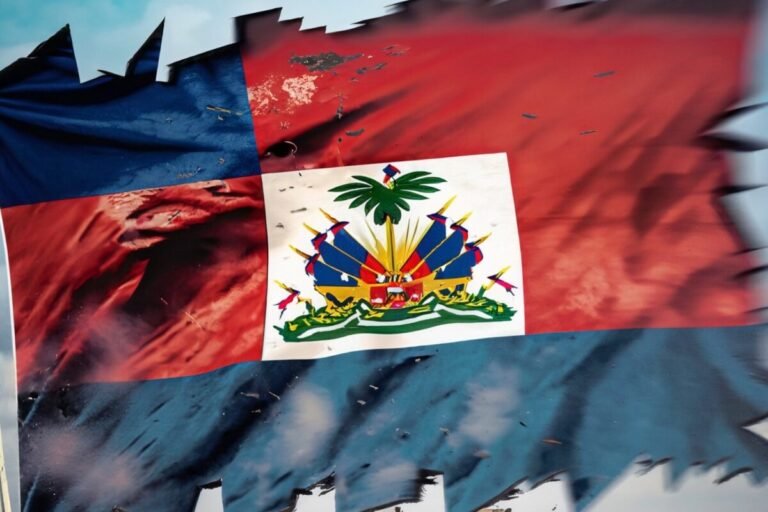
Explore the complex dynamics of Haiti's elite class as "apatrides" - loyal to profit over country - in this insightful article.
The concept of apatrides, or those without a homeland, is often associated with stateless individuals. However, in the context of Haiti, it refers to the elite class whose interests are detached from the nation’s well-being.
In Haiti, the elite class prioritizes profit over national identity, leading to economic behaviors that exacerbate the country’s socio-economic challenges. This phenomenon is rooted in a complex history and has significant implications for Haiti’s development.
This article explores the dynamics of Haiti’s elite class, their role as apatrides, and the impact of their economic decisions on the nation’s identity and growth.
Haiti’s elite class embodies a paradox, where immense wealth coexists with a disconnection from national identity. This phenomenon is not just about economic disparity but also involves a complex interplay of historical, social, and cultural factors.
The term “apatride” refers to individuals who are stateless or without a nationality. In the context of Haiti, it describes the elite who, despite being born and living in Haiti, exhibit a detachment from the country’s culture, economy, and political life. As noted by a Haitian scholar, “The elite in Haiti often find themselves in a state of limbo, caught between their personal economic interests and the needs of the nation.”
“The apatride is not just a person without a passport; it’s a state of mind where one’s interests are disconnected from the well-being of the country.”
The wealth of Haiti’s elite is often a result of economic policies and practices that benefit a small group at the expense of the broader population. Studies have shown that this wealth is frequently invested abroad, further exacerbating the country’s economic challenges. A comparative analysis of economic behaviors among different elite groups in the Caribbean could provide insights into this phenomenon.
| Country | Economic Behavior of Elites | National Identity |
|---|---|---|
| Haiti | Investments abroad, capital flight | Disconnection from national issues |
| Jamaica | Local investments, tourism | Strong national pride |
| Dominican Republic | Mixed investments, some local | Complex identity issues |
This table illustrates the varying economic behaviors and national identities among elites in selected Caribbean countries, highlighting Haiti’s unique challenges.
Understanding the historical roots of elite detachment in Haiti requires examining the colonial legacy and its lasting impact. The country’s history, marked by colonialism and a struggle for independence, has significantly influenced the formation of its elite class.
The colonial era laid the foundation for the social and economic disparities that characterize Haiti today. The French colonial system created a rigid class structure, with Europeans at the top and slaves and laborers at the bottom.
French colonial rule had a profound impact on the identity of Haiti’s elite. The adoption of French culture and language became a marker of status and sophistication among the elite, distinguishing them from the rest of the population.
The Haitian Revolution, while successful in achieving independence, left unfinished business in terms of social and economic equality. The revolution did not fully address the class divisions created during colonial rule.
Following independence, Haiti’s power structures were shaped by the ongoing struggle between different elite groups. This dynamic continues to influence the country’s political and economic landscape.
A significant aspect of Haiti’s post-independence power structure is the dynamic between mulatto and black elites. This division has historically played out in political and economic terms.
Economic control has been a cornerstone of political power in Haiti. Those who control the economy have significant influence over the political landscape.
| Period | Key Events | Impact on Elite Detachment |
|---|---|---|
| Colonial Era | Establishment of French colonial rule | Creation of a rigid class structure |
| Haitian Revolution | Achievement of independence | Unfinished business in social and economic equality |
| Post-Independence | Struggle between mulatto and black elites | Ongoing elite detachment and power struggles |
In Haiti, the pursuit of profit often overshadows the need for national development. This phenomenon is evident in the economic behaviors of the country’s elite, who prioritize personal wealth accumulation over contributing to the nation’s financial stability.
Haiti’s elite frequently engage in capital flight, transferring large sums of money to foreign banks and offshore accounts. This practice not only deprives the country of much-needed capital but also complicates efforts to implement effective economic policies.
Impact on Haiti’s Financial Stability: The outflow of capital has severe implications for Haiti’s financial stability, limiting the government’s ability to invest in critical infrastructure and social services.
The loss of capital through offshore banking practices reduces the government’s revenue, making it challenging to fund public services and infrastructure projects.
Foreign investment patterns in Haiti are often influenced by the elite’s preference for offshore banking. This results in a lack of transparency and accountability in financial transactions, further destabilizing the economy.
The Haitian elite have historically resisted economic reforms and taxation policies aimed at promoting national development. This resistance is often manifested through lobbying against regulatory frameworks and employing tax avoidance strategies.
The elite use their influence to lobby against regulatory frameworks that could potentially increase their tax burden or require greater financial transparency.
Various tax avoidance strategies are employed by the elite, including the use of shell companies and offshore accounts to minimize their tax liabilities.
Key Points:
Examining the psychological underpinnings of elite detachment in Haiti reveals a complex interplay between cultural identity and economic interests. This detachment is not merely a product of economic behaviors but is deeply rooted in the psychological dimensions of the elite class.
The elite detachment in Haiti can be attributed to several psychological factors. One key aspect is their cultural identification with foreign powers, which often supersedes their national identity.
Haiti’s elites often identify more closely with foreign cultures, particularly those of Europe and North America. This identification is reflected in their lifestyle choices, business practices, and even their political allegiances. For instance, many elite Haitians prefer to educate their children abroad and maintain significant financial interests outside of Haiti.
Conversely, there is a noticeable rejection of Haitian cultural symbols among the elite. This rejection is not just about cultural preferences but also reflects a deeper psychological disconnection from their national heritage. The embrace of foreign culture over native traditions signifies a complex identity crisis.
A comparative analysis with other Caribbean elites provides insight into the unique aspects of Haitian elite behavior. While elites in Jamaica and the Dominican Republic also exhibit detachment, the extent and nature of this detachment vary.
In Jamaica, for example, the elite class maintains a stronger connection to their cultural heritage, despite their economic interests abroad. Similarly, in the Dominican Republic, there is a pronounced national pride among the elites, which contrasts with the apatride mentality observed in Haiti.
The Haitian elite’s behavior is unique in its pronounced rejection of national identity and cultural symbols. This distinctiveness is rooted in Haiti’s historical context and the legacy of its colonial past, which has shaped the elite’s worldview and cultural affiliations.

The psychological dimensions of elite detachment in Haiti are multifaceted, involving cultural identification with foreign powers and a rejection of Haitian cultural symbols. A comparative analysis with other Caribbean elites highlights the unique aspects of Haitian elite behavior, underscoring the need for a nuanced understanding of their apatride mentality.
In Haiti, the political manifestations of the apatride mentality among elites are multifaceted and far-reaching. This phenomenon is characterized by a prioritization of personal and foreign interests over national development, leading to detrimental political decisions and actions.
The apatride mentality is evident in the lobbying efforts of Haiti’s elites, who often work against the country’s national interests. This is seen in their resistance to policies that could potentially disrupt their power or profit.
Historical instances show that elite intervention in politics has thwarted reforms aimed at improving governance and transparency. For example, efforts to strengthen anti-corruption measures have been met with resistance from elite groups who benefit from the status quo.
Elites in Haiti significantly influence electoral politics, often using their wealth and connections to sway outcomes. This influence perpetuates a cycle of political dependency and undermines democratic processes.
Haiti’s elites maintain complex relationships with foreign powers, which further exemplifies the apatride mentality. These relationships often prioritize foreign interests over national sovereignty.
The relationship between Haitian elites and the U.S. is particularly significant. Elites often act as intermediaries, facilitating U.S. interests in Haiti while advancing their own agendas.
Elites also control the flow of international aid, using their positions to gatekeep resources meant for national development. This gatekeeping perpetuates inequality and hinders the effective distribution of aid.
As Alex Dupuy notes in his analysis of Haitian elites, “Their actions are driven by self-interest rather than a commitment to national development.” This observation underscores the apatride mentality’s impact on Haiti’s political landscape.
The political manifestations of the apatride mentality among Haiti’s elites are a significant barrier to the country’s progress. Addressing this issue requires a multifaceted approach that includes reforming lobbying practices, reducing elite influence on electoral politics, and ensuring that relationships with foreign powers serve national interests.
The detachment of Haiti’s elite from the rest of the population has profound social consequences that exacerbate existing inequalities. This detachment not only widens the economic gap but also fosters an environment of cultural alienation, where the elite and the general population grow further apart in terms of values, language, and lifestyle.
The economic behaviors of Haiti’s elite, characterized by capital flight and resistance to economic reforms, have significant implications for the country’s social structure. The resultant inequality is evident in various economic indicators.
Economic data reveals a stark contrast between the elite and the rest of the population. For instance, the wealthiest 10% of the population holds a disproportionate amount of the country’s wealth, while the majority struggles with poverty.
| Economic Indicator | Wealthiest 10% | Poorest 40% |
|---|---|---|
| Income Share | 40% | 15% |
| Asset Ownership | 60% | 5% |
The urban landscape of Haiti, particularly in Port-au-Prince, reflects the spatial segregation between the elite and the lower classes. Upscale neighborhoods are equipped with modern amenities, while poorer areas lack basic services.

Cultural alienation is another significant consequence of elite detachment, manifesting in language politics, religious practices, and educational systems.
The preference for French among the elite, as opposed to Creole spoken by the majority, creates a linguistic divide. This not only affects communication but also influences social mobility and access to education and government services.
Religious practices and educational opportunities also vary significantly between the elite and the general population. The elite often have access to private, Western-style education, while the majority relies on underfunded public schools.
The diaspora elite, with their transnational connections, are redefining Haiti’s economic and social landscapes. This group, comprising Haitians living abroad, maintains significant ties with their homeland, influencing various aspects of Haitian society.
Haitian elites abroad often maintain strong connections with their homeland through cultural, economic, and social networks. These connections can facilitate the exchange of ideas, investment, and remittances. However, there are also disconnections, as some members of the diaspora elite may feel detached from the challenges faced by those living in Haiti.
For instance, a study on Haitian diaspora communities found that while they contribute significantly to Haiti’s economy through remittances, their investment patterns often favor more stable economies.
Remittances from the diaspora elite are a crucial source of income for many Haitian households. According to the World Bank, remittances accounted for approximately 33% of Haiti’s GDP in 2020. However, the investment patterns of the diaspora elite tend to be cautious, often favoring real estate or foreign investments over domestic entrepreneurial ventures.
| Year | Remittances (USD) | % of GDP |
|---|---|---|
| 2018 | 3.2 billion | 30% |
| 2019 | 3.4 billion | 32% |
| 2020 | 3.6 billion | 33% |
The diaspora elite’s financial contributions are vital, but their investment choices often reflect a cautious approach, highlighting the need for policies that encourage more active engagement in Haiti’s economic development.
In Haiti, a growing resistance against the elite hegemony is manifesting through various channels. This resistance is not merely a reaction but a complex movement involving different segments of Haitian society.
Grassroots movements and civil society organizations are playing a crucial role in challenging the elite’s dominance. These groups are organizing protests, advocating for policy changes, and raising awareness about the need for greater economic and social equality.
Examples include community-led initiatives that focus on sustainable development and social justice. These movements are critical in mobilizing the population and creating a counter-narrative to the elite’s discourse.
Intellectuals and artists are also contributing to the resistance by challenging the cultural narratives that legitimize elite hegemony. Through literature, art, and media, they are promoting a counter-culture that values Haitian identity and promotes social change.
| Form of Resistance | Description | Impact |
|---|---|---|
| Grassroots Movements | Community organizing, protests, advocacy | Social mobilization, policy influence |
| Intellectual Resistance | Literature, art, media critique | Cultural shift, awareness raising |
| Civil Society | Policy advocacy, human rights work | Legal and policy reforms |
To foster reconciliation in Haiti, it’s essential to explore new pathways that encourage elite engagement and responsibility. Reimagining elite responsibility involves creating a framework where the interests of the elite align with the broader needs of the Haitian society.
Engaged elite citizenship can be fostered through social entrepreneurship and impact investing. Elites can contribute to national development by investing in sectors such as education, healthcare, and infrastructure.
| Initiative | Description | Impact |
|---|---|---|
| Education Reform | Investment in educational infrastructure and curriculum development | Improved educational outcomes |
| Healthcare Access | Establishment of new healthcare facilities and training programs | Enhanced healthcare services |
| Infrastructure Development | Investment in roads, bridges, and public transportation | Economic growth and improved connectivity |
Effective policy frameworks are crucial for national reintegration. These frameworks should include tax reforms to encourage investment in Haiti, as well as anti-corruption measures to ensure transparency and accountability.
By implementing these models and frameworks, Haiti can move towards a more inclusive and equitable society, where elites are engaged and committed to national development.
Haiti’s elite class, often referred to as “apatrides,” has long been detached from the country’s national identity. The analysis presented in this article highlights the complex dynamics underlying this phenomenon, from historical roots to contemporary economic behaviors.
The future prospects of Haiti’s national identity and elite participation are intertwined. Reimagining elite responsibility and promoting a stronger national identity are crucial steps towards fostering a more equitable and prosperous Haiti. Elite participation in national development is essential for the country’s progress.
A stronger national identity can be achieved by addressing the issues explored in this article, including capital flight, resistance to economic reforms, and cultural alienation. By doing so, Haiti can unlock its full potential and create a brighter future for its citizens. The path forward requires a collective effort to redefine the role of Haiti’s elite class and promote a more inclusive national identity.
The term “apatrides” refers to individuals who lack a sense of national identity or loyalty to their country, in this case, Haiti. It describes the phenomenon where Haiti’s elite class prioritizes profit over national development and identity.
The colonial legacy, particularly French colonial rule, has had a lasting impact on the formation of Haiti’s elite class, shaping their identity and cultural affiliations. This influence has contributed to the disconnect between the elite and the broader Haitian population.
Offshore banking practices have been linked to capital flight, which significantly impacts Haiti’s financial stability. These practices allow elites to maintain wealth outside of the country, reducing the resources available for national development.
Haiti’s elites have significant influence over electoral politics, often using their wealth and connections to shape the outcome of elections. This can involve supporting specific candidates or parties that align with their interests.
The detachment of Haiti’s elites from the rest of the population has led to widening inequality, social fragmentation, and cultural alienation. This is evident in economic indicators, spatial segregation, and divisions in language, education, and religion.
The diaspora elite plays a significant role in Haiti’s economy through remittances and investments. While these contributions are crucial for many families and businesses, they also highlight the transnational dimensions of elite engagement with Haiti.
Grassroots movements, civil society, and intellectual and cultural resistance pose significant challenges to elite hegemony in Haiti. These forces seek to promote a more equitable society and challenge the status quo maintained by the elite.
Pathways to reconciliation include models of engaged elite citizenship and policy frameworks for national reintegration. These approaches aim to promote a stronger national identity and encourage elites to prioritize national development over personal profit.