Physical Address
304 North Cardinal St.
Dorchester Center, MA 02124
Physical Address
304 North Cardinal St.
Dorchester Center, MA 02124

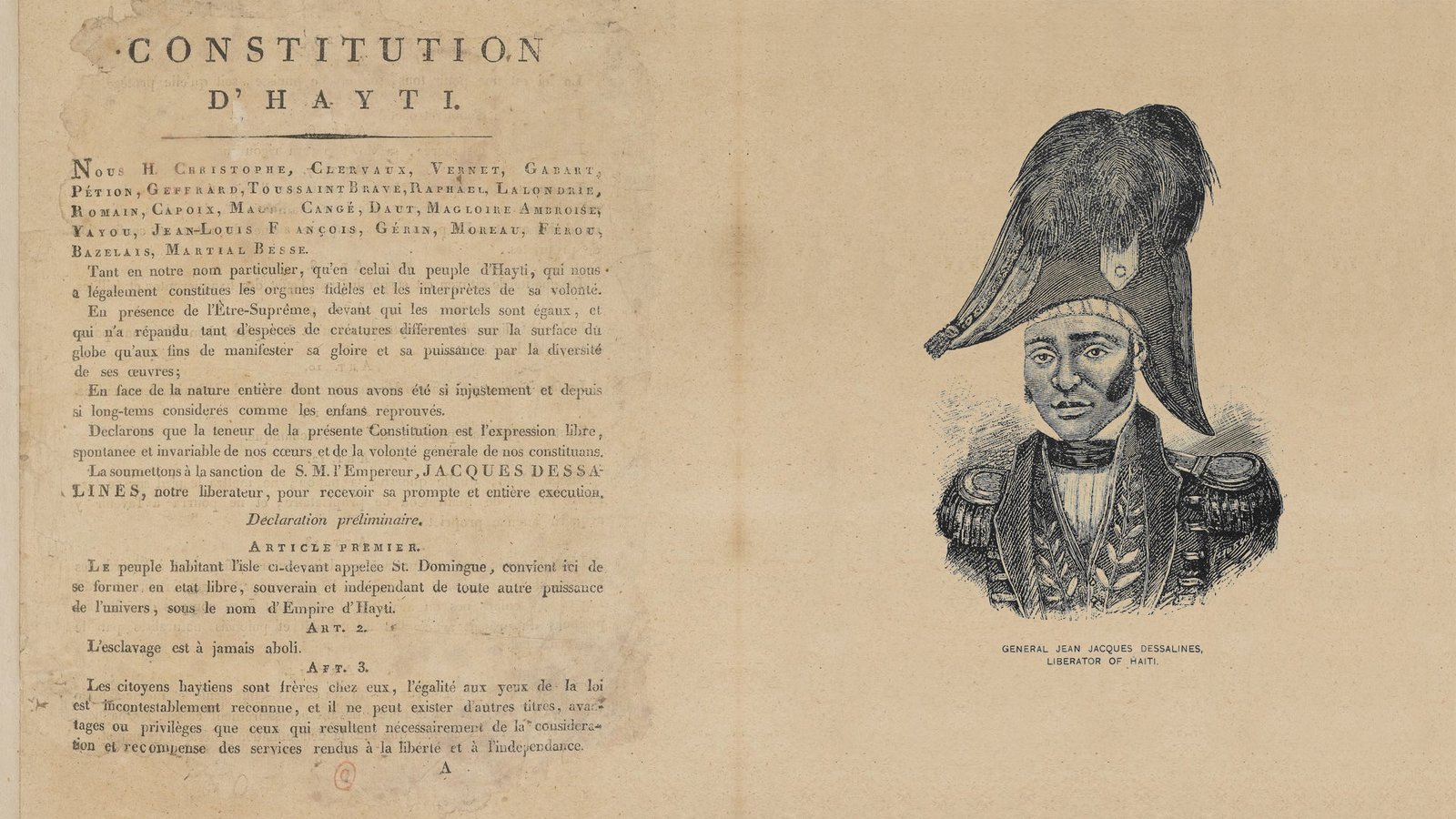
The 1805 Constitution: Dessalines' visionary plan to free Haiti's mind and soul from colonial oppression.
The Haitian Revolution was a pivotal moment in history, marking the first successful slave revolt in the world. At the heart of this revolution was the creation of the 1805 Constitution, a document that not only established Haiti as an independent nation but also laid the foundation for its future.
Dessalines’ vision for Haiti was revolutionary, aiming to free the nation from the shackles of colonialism and slavery. The 1805 Constitution was his blueprint for achieving this goal, setting a precedent for the country’s development.
The journey to Haiti’s independence was marked by a series of pivotal events that shaped the nation’s future. The late 18th century was a time of great upheaval, with the French Revolution’s emphasis on liberty, equality, and fraternity inspiring enslaved Africans in Saint-Domingue (present-day Haiti) to rise up against their oppressors.
The Haitian Revolution began in 1791 as a slave revolt, led by figures such as Boukman Dutty and later Jean-Jacques Dessalines. This revolution was not just a simple slave uprising; it was a complex and multifaceted movement that involved various social classes and ethnic groups. The revolutionaries fought against the French colonial powers, ultimately leading to the declaration of independence in 1804.
A crucial aspect of Haiti’s independence was the defeat of Napoleon’s forces. Despite being sent a large expeditionary force by Napoleon Bonaparte to quell the rebellion, the Haitian revolutionaries, led by Dessalines, successfully repelled the French. This victory was significant not only for Haiti but also for its impact on the global stage, as it thwarted Napoleon’s ambitions in the Americas.
On January 1, 1804, Dessalines declared Haiti’s independence, marking the birth of the world’s first black republic. This act was revolutionary, as it challenged the prevailing racial hierarchies and colonial systems of the time. Haiti’s independence served as a beacon of hope for enslaved people across the world and inspired other independence movements.
| Year | Event | Key Figure |
|---|---|---|
| 1791 | Start of the Haitian Revolution | Boukman Dutty |
| 1802 | Defeat of Napoleon’s forces | Jean-Jacques Dessalines |
| 1804 | Declaration of Independence | Jean-Jacques Dessalines |
As noted by historian C.L.R. James, “The slaves had revolted, and they had achieved a measure of success, but the real victory was to be won by the black generals and the masses they led.” This quote encapsulates the significance of the Haitian Revolution and the role of leaders like Dessalines in achieving independence.
Understanding Dessalines’ vision for Haiti is essential to grasping the significance of the 1805 Constitution. Dessalines’ leadership was pivotal in the Haitian Revolution, transforming him from an enslaved person to a revolutionary icon.
Dessalines was born into slavery but rose to prominence during the Haitian Revolution (1791-1804). His military prowess and strategic thinking made him a key figure alongside Toussaint Louverture. After Louverture’s capture, Dessalines continued the fight for independence, eventually declaring Haiti’s freedom on January 1, 1804.
Dessalines’ political philosophy was rooted in the principles of freedom and equality. He believed in creating a society where former slaves could live without the shackles of colonial rule. His vision was not just about political independence but also about social and economic liberation.
“We have thrown into the sea the symbol of tyranny and slavery; may the earth devour the Europeans who come to tear us from our liberty.”
Dessalines envisioned a Haiti that was self-sufficient and free from foreign domination. He aimed to create a nation where all citizens had equal rights and opportunities. This vision is reflected in the 1805 Constitution, which he promulgated to establish the legal and political framework for the newly independent nation.
The core of Dessalines’ vision included:
Crafting the 1805 Constitution involved a complex process of negotiation and visionary thinking. Jean-Jacques Dessalines, the leader of the Haitian Revolution, played a pivotal role in its creation.
The constitution was drafted by a committee that included influential figures of the Haitian Revolution. Dessalines’ vision for a free and independent Haiti was central to the document.
The drafting process began after Haiti’s independence in 1804 and was finalized in 1805. The timeline was influenced by the need to establish a legal framework that would solidify Haiti’s sovereignty.
The 1805 Constitution was influenced by the principles of the French Revolution and the unique circumstances of the Haitian struggle for independence. The document incorporated elements that would ensure the freedom and equality of all Haitian citizens.
| Influence | Description |
|---|---|
| French Revolution | Principles of liberty, equality, and fraternity |
| Haitian Revolution | Experience of enslaved people fighting for freedom |
Dessalines’ 1805 Constitution was more than a legal framework; it was a blueprint for liberating Haiti’s mind and soul. This foundational document was crafted to ensure that the newly independent nation was built on the principles of freedom and equality.
The 1805 Constitution was structured into several key sections, each addressing different aspects of governance and societal organization. It began with a preamble that set forth the core principles of the new nation, followed by articles that detailed the rights and responsibilities of citizens.
At its heart, the constitution enshrined the values of liberty, equality, and fraternity. It abolished slavery in perpetuity and declared all Haitians equal before the law, regardless of their background or skin color.
The 1805 Constitution introduced several revolutionary concepts for its era, including the idea that all citizens are equal and that the state would protect the rights of all individuals. This was a radical departure from the colonial era’s racial hierarchies and oppressive systems.
The constitution also laid the groundwork for a new national identity, one that was based on shared values and a common history rather than colonial or racial distinctions. By examining the structure, principles, and revolutionary concepts of the 1805 Constitution, we gain insight into Dessalines’ vision for a free and equal Haiti.
The 1805 Constitution stands as a testament to Haiti’s commitment to breaking the chains of slavery and oppression. This foundational document not only abolished slavery but also established a framework for equality and freedom that was revolutionary for its time.
The 1805 Constitution explicitly abolished slavery in perpetuity, ensuring that Haiti would never again be plagued by the institution that had ravaged it for centuries. This bold move was a cornerstone of the new nation, setting a precedent for other nations to follow.
The Constitution also defined citizenship rights, ensuring that all Haitians were equal under the law. It established a clear and inclusive definition of citizenship, promoting racial unity by declaring all citizens to be “black,” regardless of their actual skin color or background.
Furthermore, the Constitution addressed property rights, a crucial aspect of economic freedom. By ensuring that all Haitians had the right to own property, the Constitution laid the groundwork for economic independence and self-sufficiency. This provision was vital for promoting cultural independence, as it allowed Haitians to control their own land and resources.
In conclusion, the 1805 Constitution’s provisions on freedom and equality were groundbreaking, promoting racial unity and cultural independence. By abolishing slavery, defining citizenship rights, and ensuring property rights, Haiti’s founders created a framework for a truly free and equal society.
By establishing a common racial designation for all Haitians, the 1805 Constitution laid the foundation for a unified national identity. This move was crucial in the aftermath of the Haitian Revolution, as it helped to consolidate the gains of independence and create a sense of shared purpose among Haitians.
The Constitution designated all Haitians as “Black,” a deliberate choice that aimed to unify the population under a single identity. This was a strategic move to counter the colonial racial hierarchies that had previously divided the population.

By rejecting the colonial racial hierarchies, Dessalines’ Constitution sought to eliminate the divisions that had been instrumental in maintaining control over the Haitian people. This rejection was a key aspect of forging a new national identity.
The creation of a unified national identity was essential for the newly independent Haiti. The 1805 Constitution achieved this by promoting a sense of shared identity and purpose among Haitians, thereby strengthening the nation’s foundation.
Dessalines’ vision for a unified Haiti was revolutionary for its time, and the 1805 Constitution remains a significant document in the history of the Haitian people.
A crucial aspect of the 1805 Constitution was its focus on spiritual liberation, recognizing the importance of religious and cultural practices in shaping Haitian identity. This approach was revolutionary for its time, as it not only sought to establish political freedom but also to liberate the spiritual and cultural essence of the Haitian people.
The 1805 Constitution marked a significant departure from the colonial era by promoting freedom from colonial religious impositions. This was a bold step towards creating a society where Haitians could practice their faith without the constraints of European religious dominance.
One of the most significant provisions was the recognition of Vodou and other indigenous practices. By acknowledging these spiritual practices, the Constitution legitimized the cultural heritage of Haiti, distinguishing it from its colonial past.
The Constitution played a pivotal role in building cultural independence by fostering a sense of unity and shared identity among Haitians. It encouraged the preservation and celebration of Haitian culture, laying the foundation for a distinct national identity.
| Cultural Provision | Significance | Impact on Haitian Society |
|---|---|---|
| Recognition of Vodou | Legitimized indigenous spiritual practices | Fostered cultural identity and unity |
| Freedom from Colonial Religious Impositions | Promoted religious freedom and diversity | Allowed for the flourishing of Haitian spiritual practices |
| Cultural Independence | Distinguished Haitian culture from colonial influences | Encouraged the preservation of Haitian heritage |
The 1805 Constitution’s provisions on spiritual liberation and cultural recognition were instrumental in shaping Haiti’s identity. By embracing its unique cultural and spiritual heritage, Haiti was able to forge a path distinct from its colonial past.
Economic decolonization was a cornerstone of Dessalines’ vision for Haiti. The 1805 Constitution outlined a comprehensive framework aimed at creating a self-sufficient economy, free from the shackles of colonial exploitation.
The Constitution introduced radical land distribution policies, aiming to break the concentration of land ownership that characterized the colonial era. By redistributing land, the new government sought to empower the formerly enslaved population and create a more equitable society.
Agricultural development was a key focus, with the Constitution emphasizing the importance of food production and self-sufficiency. The document encouraged diversified farming practices and promoted agricultural techniques that would sustain the population.
The 1805 Constitution also addressed trade and commerce, establishing regulations to protect Haiti’s economic interests. Tariffs and trade policies were designed to foster domestic industries and reduce dependence on foreign goods.
Through these economic provisions, the 1805 Constitution laid the foundation for Haiti’s economic decolonization, aiming to create a robust and self-sufficient economy that would support the nation’s independence and sovereignty.
The governance structure outlined in the 1805 Constitution was a critical component of Haiti’s transition to independence. This framework was designed to ensure the stability and sovereignty of the newly formed nation.
The Constitution vested significant powers in the Emperor, Jean-Jacques Dessalines, while also establishing checks on his authority to prevent the rise of a new dictatorship. The Emperor was granted the power to appoint key officials and make crucial decisions regarding foreign policy and national defense. However, the Constitution also mandated that the Emperor consult with the Council of State on major legislative matters, thereby limiting his absolute power.
The military was organized to defend the nation against external threats and maintain internal order. The Constitution stipulated that the military would be led by experienced commanders appointed by the Emperor. The creation of a national guard was also envisioned to ensure local security and defense.
A fair and independent judiciary was established to uphold the rule of law and protect citizens’ rights. The Constitution outlined a judicial system that included courts at various levels, with judges appointed based on their integrity and legal knowledge.
| Governance Component | Description |
|---|---|
| Executive Powers | Vested in the Emperor with checks to prevent dictatorship |
| Military Organization | Led by experienced commanders for national defense and internal order |
| Judicial Framework | Independent judiciary with courts at various levels |

To protect the revolution, Dessalines and his contemporaries incorporated robust defense strategies into the constitution. This forward-thinking approach was crucial in safeguarding Haiti’s hard-won independence against internal and external threats.
The 1805 Constitution included significant foreign policy provisions designed to secure Haiti’s position on the world stage. By prohibiting foreign occupation and emphasizing sovereignty, the constitution set a clear stance against colonialism and external control.
A key aspect of the constitution was its explicit prohibition against colonization. This provision was a direct response to the historical context of Haiti, having just fought off French colonial rule. The constitution made it clear that Haiti would not be subject to any form of colonial domination again.
The constitution also introduced military service requirements to ensure that the nation was always prepared to defend its freedom. By making military service a duty, the framers of the constitution created a collective responsibility among Haitians to protect their nation.
The defense mechanisms outlined in the 1805 Constitution were a testament to the foresight of Dessalines and his contemporaries. By embedding these provisions within the constitution, they provided a robust framework for protecting the revolution and its achievements.
Despite its groundbreaking nature, the 1805 Constitution had several inherent contradictions that reflected the tumultuous period in which it was created. While it aimed to establish a free and equal society, certain provisions centralized power and limited individual freedoms.
The Constitution vested significant authority in the hands of the Emperor, Jean-Jacques Dessalines, creating a tension between the revolutionary ideals of liberty and the need for a strong, centralized government to protect the newly independent nation.
Furthermore, the document contained gender-based limitations, restricting women’s rights and participation in the political process, a contradiction to the otherwise progressive stance on racial equality.
The Constitution walked a fine line between ensuring individual liberties and maintaining state authority, a balance that was challenging to maintain in the post-revolutionary context.
The interplay between these challenges and contradictions highlights the complexities faced by the drafters of the 1805 Constitution. Understanding these aspects provides a nuanced view of Haiti’s early constitutional history.
The 1805 Constitution, crafted by Jean-Jacques Dessalines, remains a pivotal document in Haitian history, embodying the principles of freedom, equality, and self-determination. Dessalines’ Legacy continues to influence Haiti’s identity and governance, shaping the nation’s path towards a truly independent future.
The Enduring Significance of this constitutional vision lies in its bold rejection of colonialism and slavery, establishing a framework for a unified national identity. By examining the document’s core principles and values, we gain insight into the revolutionary concepts that defined Haiti’s struggle for independence.
As Haiti continues to navigate the complexities of modern governance, the 1805 Constitution serves as a powerful reminder of the nation’s founding ideals. Its influence can be seen in ongoing efforts to promote social justice, economic development, and cultural preservation.
Dessalines’ constitutional vision remains a vital part of Haiti’s heritage, inspiring future generations to strive for a more equitable and prosperous society.
The 1805 Constitution was Dessalines’ blueprint for freeing Haiti’s mind and soul, establishing the foundation for the country’s independence, equality, and self-governance.
Jean-Jacques Dessalines was a revolutionary leader who played a crucial role in Haiti’s fight for independence, eventually becoming the leader of the Haitian Revolution and the drafter of the 1805 Constitution.
The 1805 Constitution abolished slavery in perpetuity, established citizenship rights and definitions, and ensured property rights for all Haitians, promoting racial unity and cultural independence.
The Constitution designated all Haitians as “Black,” rejecting colonial racial hierarchies and creating a unified national identity, which was a significant step towards forging a new identity and promoting racial unity.
The Constitution included land distribution policies, agricultural priorities, and trade and commerce regulations, all aimed at creating a self-sufficient Haitian economy and promoting economic decolonization.
The recognition of Vodou and indigenous practices was a crucial aspect of the Constitution, as it promoted cultural independence, freed Haitians from colonial religious impositions, and acknowledged the importance of indigenous cultural practices.
The Constitution established a governance structure that included executive powers and limitations, military organization, and a judicial framework, all of which played a significant role in shaping Haiti’s political system.
The Constitution included foreign policy provisions, prohibitions against colonization, and military service requirements, all designed to protect the Haitian Revolution and its achievements.
The Constitution had several challenges and contradictions, including the centralization of power, gender limitations, and tensions between liberty and authority, which provide a nuanced understanding of the document’s complexities.