Physical Address
304 North Cardinal St.
Dorchester Center, MA 02124
Physical Address
304 North Cardinal St.
Dorchester Center, MA 02124


Streamlining Haiti's leadership: Discover the case for a President-Vice President model.
The governance of Haiti has long been a subject of interest and concern for its citizens and the international community. The country’s leadership structure plays a crucial role in its development and stability.
Adopting a President-Vice President model could potentially enhance Haiti governance by providing a more streamlined and effective decision-making process. This model is not new but has been successful in various countries, offering a clear line of succession and division of responsibilities.
The potential benefits of this model for Haiti include improved governance, enhanced stability, and a more robust leadership framework. By examining the implications of adopting such a model, we can better understand its potential to address some of the challenges faced by Haiti.
Understanding Haiti’s governmental system requires a look into its existing leadership structure and the roles that define it. Haiti operates under a semi-presidential system, where the President serves as head of state and a Prime Minister is head of government.
Haiti’s government is divided into three branches: the executive, legislative, and judicial. The executive branch is headed by the President, who is elected by popular vote for a five-year term. The legislative branch is composed of the National Assembly, which includes the Chamber of Deputies and the Senate.
The President has significant powers, including the appointment of the Prime Minister, who must be approved by the National Assembly. The Prime Minister is responsible for the government’s actions and is assisted by ministers. The legislative branch is responsible for lawmaking, while the judicial branch is headed by the Supreme Court, which interprets the constitution and laws.
Decision-making in Haiti’s government is often hindered by political instability and power struggles between different branches. As Alex Dupont, a political analyst, noted,
“The current system is prone to gridlock, particularly when the President and the Prime Minister come from different political parties.”
This has led to inefficiencies in governance, with key decisions often delayed or blocked.
The lack of a clear succession plan further exacerbates these issues, leading to political uncertainty. Improving the leadership structure is crucial for enhancing governmental stability.
The historical context of Haiti’s governance is crucial to understanding its current political instability. Haiti’s history has been marked by significant challenges that have impacted its leadership and governance outcomes.
After gaining independence in 1804, Haiti faced numerous governance challenges. The early years were characterized by political instability, with multiple leaders vying for power. This period was marked by a lack of stable governance structures, leading to ongoing power struggles.
The 1990s to 2010s saw continued political instability in Haiti, with numerous instances of political violence and leadership changes. This period was marked by international interventions and attempts to stabilize the government. Despite these efforts, political instability persisted, affecting governance outcomes.
The assassination of President Jovenel Moïse in 2021 plunged Haiti into a severe leadership crisis. The event highlighted the vulnerabilities in Haiti’s governance structure and the need for a more stable leadership model. The ongoing crisis has had significant implications for Haiti’s political stability and governance.
| Period | Key Events | Impact on Governance |
|---|---|---|
| Post-Independence (1804-) | Power struggles, lack of stable governance | Ongoing political instability |
| 1990s-2010s | Political violence, leadership changes, international interventions | Continued instability, affected governance outcomes |
| 2021-Present | Assassination of President Moïse, leadership crisis | Severe impact on political stability and governance |
Understanding the pitfalls of Haiti’s current leadership model is crucial for proposing effective reforms. The existing structure has led to numerous challenges that have hindered the country’s progress towards stable governance.
Haiti’s political history has been marked by succession crises and power vacuums, often resulting from the abrupt departure or incapacitation of leaders. For instance, the sudden removal of President Jean-Bertrand Aristide in 2004 led to a significant political crisis. Such events highlight the need for a clear succession plan to prevent governmental instability.
The lack of a well-defined succession process can lead to power struggles among various political factions, further exacerbating the crisis. This was evident in the aftermath of Aristide’s removal, where the absence of a clear successor led to a period of political turmoil.
The current leadership model in Haiti lacks a clear mechanism for executive continuity. When a leader is unable to continue in their role, the absence of a vice president or a clear line of succession can lead to a disruption in governance. This discontinuity can have far-reaching consequences, affecting the implementation of policies and the overall stability of the government.
A notable example is the leadership crisis that ensued following the assassination of President Jovenel Moïse in 2021, which underscored the vulnerabilities in Haiti’s leadership structure.
The issues with Haiti’s current leadership model have a direct impact on governmental stability and function. The recurring crises and lack of continuity hinder the government’s ability to effectively implement policies and provide services to its citizens.
| Challenge | Impact |
|---|---|
| Succession Crises | Power vacuums and political instability |
| Lack of Executive Continuity | Disruption in governance and policy implementation |
| Governmental Instability | Inability to provide consistent services to citizens |
The table above illustrates the challenges posed by Haiti’s current leadership model and their impact on governmental stability and function. Addressing these issues is crucial for ensuring a more stable and effective government.
A President-Vice President system offers a potential solution to Haiti’s recurring political crises. This model has been successfully implemented in various countries, providing a framework for stable governance.
The President-Vice President system is built on several core principles, including clear lines of succession and the distribution of executive responsibilities. This ensures that governance remains stable even during times of crisis.
Key benefits of this system include:
To effectively implement a President-Vice President model in Haiti, it’s crucial to consider the country’s unique political context. This includes adapting the system to reflect Haiti’s cultural, historical, and political nuances.
Potential adaptations could involve:
Adopting a President-Vice President model could lead to significant improvements in governance outcomes in Haiti. By providing a clear framework for leadership succession and executive responsibilities, this system can enhance stability and promote more effective decision-making.
The result could be a more stable and prosperous Haiti, with improved governance outcomes contributing to the country’s long-term development.
The President-Vice President system offers a promising solution for Haiti’s leadership challenges, with multiple models to consider. Different countries have implemented this system in various ways, each with its strengths and weaknesses.
The United States is a prominent example of a President-Vice President system, where the Vice President assumes the presidency in case of a vacancy. In contrast, some Latin American countries have adopted variations that include stronger legislative roles for the Vice President or different succession mechanisms. For instance, Argentina’s Vice President presides over the Senate, providing a legislative check on the executive branch.
Some countries have adopted hybrid systems that combine elements of presidential and parliamentary systems. For example, France’s semi-presidential system allows for a strong president and a prime minister responsible to the legislature. Such models could offer Haiti a balance between executive stability and legislative accountability.
When considering a President-Vice President system for Haiti, it’s crucial to tailor the model to the country’s unique political, cultural, and historical context. A comparison of different models can help identify the most suitable features.
| Model | Key Features | Potential Benefits for Haiti |
|---|---|---|
| American Model | Clear succession plan, separate executive and legislative branches | Stability in times of crisis, clear line of succession |
| Latin American Approaches | Varied roles for Vice President, sometimes with legislative duties | Flexibility in governance, potential for legislative-executive cooperation |
| Parliamentary Hybrid Systems | Combines presidential and parliamentary elements, often with a strong president and prime minister | Balance between executive authority and legislative oversight, potential for more stable governance |
By examining these models and their variations, Haiti can develop a leadership structure that addresses its specific challenges and promotes effective governance.
By establishing a well-defined executive succession plan, Haiti can ensure a smoother transition of power and enhance political stability. This plan is crucial for maintaining continuity and reducing the risks associated with leadership changes.
A clear executive succession plan can significantly reduce political uncertainty and the potential for violence during leadership transitions. By knowing who will take over in case of a vacancy, the country can avoid power struggles that often lead to unrest. For instance, a well-planned succession can prevent the kind of political gridlock that has historically plagued Haiti.

During times of crisis, a clear executive succession plan ensures that the government can continue to function without interruption. This continuity is vital for addressing national emergencies effectively and maintaining public trust in the government. A stable leadership transition plan helps in keeping the government’s focus on critical issues rather than getting bogged down by power struggles.
Long-term political stability is fostered when there is a predictable and orderly transfer of power. A well-designed executive succession plan contributes to this stability by reducing the likelihood of political upheaval and promoting a consistent governance framework. This stability, in turn, can attract investment and promote economic development.
As Haiti contemplates a shift to a President-Vice President model, it’s crucial to evaluate the potential criticisms and concerns associated with this change. The adoption of such a model, while promising improved governance outcomes, also raises several important issues that need to be addressed.
One of the primary concerns is the potential for power concentration in the hands of the President and Vice President. This could lead to authoritarian tendencies and undermine the democratic principles Haiti strives to uphold. To mitigate this risk, it’s essential to establish robust checks and balances within the system.
The cultural and historical context of Haiti must also be considered. The country’s history of political instability and power struggles suggests that any new leadership structure must be carefully tailored to its unique needs. A thorough understanding of Haiti’s cultural nuances and historical experiences is vital for successful implementation.
To prevent abuses of power and ensure the effectiveness of the President-Vice President model, several safeguards can be implemented. These include:
By incorporating these safeguards, Haiti can minimize the risks associated with the new leadership structure and maximize its potential benefits.
| Potential Criticisms | Mitigation Strategies |
|---|---|
| Risk of Power Concentration | Establish robust checks and balances |
| Cultural and Historical Incompatibility | Tailor the leadership structure to Haiti’s unique needs |
| Abuse of Power | Implement clear delineation of powers, strong legislative oversight, and independent judiciary |
To effectively implement a President-Vice President model, Haiti must navigate a complex process of constitutional reform, consensus building, and transition planning. This multifaceted approach is crucial for ensuring a smooth transition to the new leadership structure.
The adoption of a President-Vice President model in Haiti requires significant constitutional reforms. Amendments to the existing constitution will be necessary to accommodate the new leadership structure and define the roles and responsibilities of both the President and the Vice President. This process involves a thorough review of the current constitutional provisions, followed by a rigorous amendment process that may include approval from the legislative body and potentially a national referendum.
Building political consensus is a critical step in the implementation process. It involves engaging various stakeholders, including political parties, civil society organizations, and the general public, in a dialogue about the proposed reforms. Effective communication and negotiation are essential for addressing concerns and garnering support for the new leadership structure. This consensus-building phase is vital for ensuring that the transition is legitimate and widely accepted.
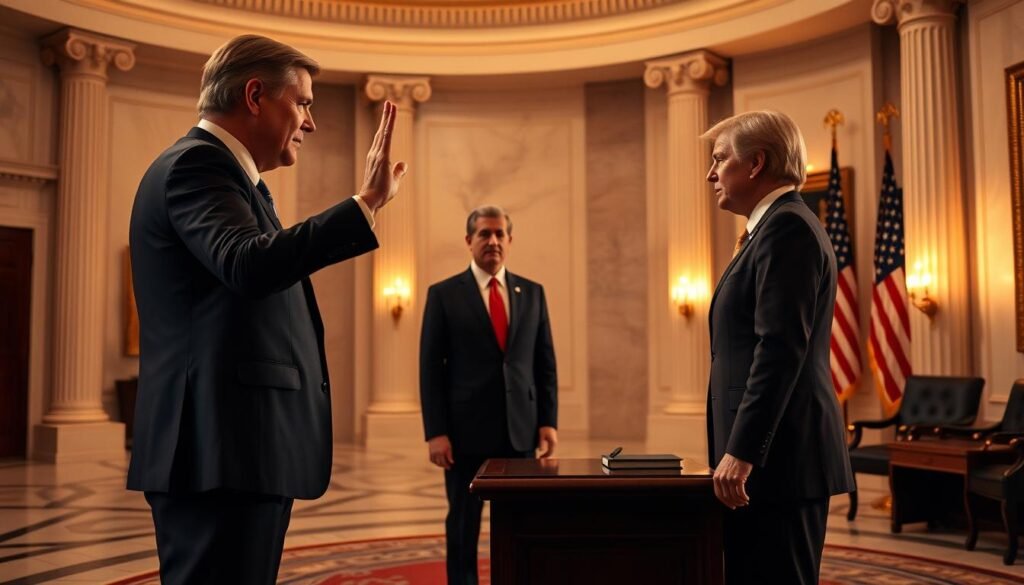
Once the constitutional reforms are in place and political consensus is achieved, the next step is to plan and execute the transition. This involves developing a detailed transition plan that outlines the steps necessary for implementing the new leadership structure, including the election or appointment of the President and Vice President, and the transfer of responsibilities. Effective transition planning is crucial for minimizing disruptions and ensuring continuity of governance.
By carefully planning and executing these steps, Haiti can successfully transition to a President-Vice President model, enhancing its leadership structure and promoting political stability through improved executive succession planning.
Governmental stability can significantly boost Haiti’s economic growth and social cohesion. By adopting a President-Vice President model, Haiti can create a more predictable and stable governance environment.
A stable government is more likely to attract foreign investment, as investors are drawn to environments with clear leadership and predictable policies. This can lead to economic growth through infrastructure development and job creation. Key benefits include:
Predictable governance fosters an environment of trust among citizens, promoting social cohesion. When the government is stable and functions effectively, citizens are more likely to feel secure and confident in their future. This can lead to reduced social unrest and improved community relations.
A stable government can more effectively coordinate international aid, ensuring that resources are used efficiently and targeted towards the most needed areas. This can enhance the impact of aid programs and contribute to sustainable development. As noted by aid organizations, effective governance is crucial for the success of aid initiatives.
“Effective governance is the cornerstone of successful development aid. When governments are stable and functional, aid can be more effectively targeted and utilized.”
Haiti’s political landscape has long been marred by instability and inefficiency. Adopting a President-Vice President model offers a viable solution to streamline leadership and foster a more stable governance structure. This political reform can significantly enhance Haiti’s leadership structure, providing a clear line of succession and reducing the risk of power vacuums.
By implementing a President-Vice President model, Haiti can benefit from improved governmental stability, enhanced continuity during crises, and a more predictable leadership framework. This, in turn, can attract investor confidence, promote economic development, and improve social cohesion.
The path forward for Haiti’s governance involves a concerted effort from all stakeholders to work towards a more effective leadership structure. Embracing the President-Vice President model can be a crucial step in this direction, paving the way for a more stable and prosperous future.
The President-Vice President model is a governance structure where a president is supported by a vice president, ensuring continuity and stability in leadership. This model is commonly used in countries like the United States.
Adopting this model could bring several benefits, including reduced political uncertainty, enhanced governmental stability, and improved decision-making processes.
Potential challenges include the risk of power concentration, cultural and historical compatibility issues, and the need for constitutional reforms.
To mitigate this risk, Haiti could implement safeguards such as checks and balances, ensuring that power is distributed evenly and that the vice president does not become too powerful.
The vice president would support the president, assume the presidency in case of a vacancy, and potentially lead specific initiatives or projects as assigned by the president.
Implementation would require constitutional reforms, building political consensus among stakeholders, and careful transition planning and execution.
A stable government can enhance investor confidence, promote economic development, and improve the effectiveness of international aid, ultimately benefiting Haiti’s economy.
By providing predictable governance, this model can promote social cohesion, as citizens are more likely to feel secure and confident in their government’s ability to address their needs.
Yes, the model can be adapted to fit Haiti’s specific context, incorporating elements from other governance systems and addressing the country’s particular challenges.