Physical Address
304 North Cardinal St.
Dorchester Center, MA 02124
Physical Address
304 North Cardinal St.
Dorchester Center, MA 02124
Learn how Haitians have been controlled through crises via aid, intervention, and instability.
The situation in Haiti has been a subject of international concern for decades, with various factors contributing to the ongoing crisis. Foreign aid, military interventions, and economic policies have all played a role in shaping the country’s current state.
The complex interplay between assistance, intervention, and insecurity has led to a state of containment for many Haitians. Understanding this dynamic is crucial for addressing the root causes of the issue.
The historical context of Haiti’s struggles is deeply rooted in its revolutionary past and subsequent international isolation. Haiti’s journey to becoming the world’s first black republic was marked by significant achievements and challenges.
Haiti’s revolution, which began in 1791, was a successful slave revolt that led to the country’s independence in 1804. This period was significant not only for Haiti but also for world history, as it marked a turning point in the fight against slavery.
As the first black republic, Haiti faced significant international pressure and isolation. Many countries, including France and the United States, were hesitant to recognize Haiti’s sovereignty.
After gaining independence, Haiti was subjected to international isolation, which severely impacted its economy and development. The country’s isolation was further exacerbated by the refusal of many nations to establish diplomatic relations.
The legacy of foreign debt and economic exploitation has had a lasting impact on Haiti’s development. Two significant factors contributing to this legacy are the French indemnity and early U.S. economic interests.
In 1825, France demanded that Haiti pay an indemnity of 150 million gold francs for the loss of its “property” (enslaved Africans) during the revolution. This debt had long-term effects on Haiti’s economy, perpetuating a cycle of debt and dependency.
The United States also played a significant role in Haiti’s economic exploitation. Early U.S. economic interests in Haiti were focused on extracting natural resources and exploiting the country’s labor force.
| Event | Year | Impact |
|---|---|---|
| Haitian Revolution Begins | 1791 | Marked the start of Haiti’s fight for independence |
| Haiti Gains Independence | 1804 | Became the world’s first black republic |
| French Indemnity Demanded | 1825 | Imposed a significant debt on Haiti, perpetuating economic dependency |
Understanding these historical events is crucial to grasping the complexities of Haiti’s current situation. The legacy of foreign debt and economic exploitation continues to impact Haiti’s development.
Understanding the cycle of crises in Haiti requires examining the interplay between natural disasters and economic factors. Haiti’s vulnerability to both environmental and economic challenges has created a complex web of crises that have hindered its development.
Natural disasters have played a significant role in Haiti’s cycle of crises. The country is prone to various environmental hazards due to its geographical location.
The 2010 earthquake was a devastating disaster that highlighted Haiti’s vulnerability. The aftermath saw a massive international response, but reconstruction efforts were marred by inefficiencies and corruption, leading to a failed reconstruction process.
Hurricane Matthew in 2016 further exposed Haiti’s environmental vulnerabilities. The hurricane caused widespread destruction, underscoring the need for better disaster preparedness and response mechanisms.
Economic instability is another critical factor in Haiti’s cycle of crises. The country’s economy has been characterized by inflation and currency devaluation, making it difficult to achieve economic stability.
Haiti has struggled with high inflation rates and currency devaluation, which have eroded the purchasing power of its citizens and hindered economic growth.
The country also faces significant challenges related to food insecurity and import dependency. Haiti relies heavily on imported goods, including food, which makes it vulnerable to global market fluctuations.
Foreign aid has been a double-edged sword for Haiti, offering relief while also creating long-term dependency. The international community’s response to Haiti’s crises has often been to provide foreign aid, which, while well-intentioned, can have complex implications.
International assistance to Haiti has grown significantly over the years, with various NGOs and international organizations stepping in to provide aid. However, this assistance can sometimes bypass the government, leading to NGO proliferation and a reliance on external aid rather than internal capacity building.
The presence of numerous NGOs in Haiti has created a complex landscape where conditional aid is often tied to political leverage. This can undermine the Haitian government’s authority and create a dependency on external actors.
Conditional aid can be used as a tool for political influence, where donors tie their assistance to specific political or economic reforms. This can limit Haiti’s ability to make sovereign decisions.
The influx of foreign aid can create a culture of dependency, hindering development and capacity building within Haiti. Rather than fostering self-sufficiency, aid can sometimes perpetuate a cycle of reliance on external assistance.
The focus on short-term relief can overshadow the need for long-term capacity building. This imbalance can leave Haiti vulnerable to future crises.
Haiti has been termed the “Republic of NGOs” due to the vast number of non-governmental organizations operating within its borders. While these organizations provide essential services, they also contribute to a system where external aid supplants governmental functions.
The history of military interventions in Haiti is a long and complicated one, reflecting broader geopolitical interests and local power dynamics. These interventions have significantly shaped Haiti’s political landscape and continue to influence its current state of affairs.
The United States has played a significant role in Haiti’s military history, with occupations that have left lasting legacies.
The U.S. occupation from 1915 to 1934 was a pivotal period in Haiti’s history, during which the U.S. controlled key aspects of Haitian governance and economy. As Paul Farmer, a renowned expert on Haiti, notes, “The occupation was a traumatic event that had long-lasting effects on Haiti’s development.”
“The occupation was a traumatic event that had long-lasting effects on Haiti’s development.”
Following the Duvalier regime, there were further interventions that influenced regime change in Haiti. These actions often had mixed results, sometimes stabilizing the situation in the short term but ultimately contributing to long-term instability.
UN peacekeeping missions have been deployed to Haiti with the stated aim of maintaining peace and stability. However, their impact has been controversial.
The MINUSTAH mission, in particular, has been criticized for its handling of human rights issues. Allegations of misconduct and the introduction of cholera have marred its legacy.
The cholera epidemic introduced by UN peacekeepers led to a significant humanitarian crisis, raising questions about UN accountability and the need for reparations.
As Haitian human rights activist stated, the response to the cholera epidemic was inadequate, highlighting the need for better accountability mechanisms in future interventions.
External influences have played a crucial role in Haiti’s political instability. The country’s political history is complex, with numerous interventions that have shaped its current state.
The integrity of Haitian elections has been compromised by international funding, which has significantly influenced electoral outcomes. This external financial support has often been tied to specific political agendas, thereby undermining the democratic process.
International funding has been a double-edged sword for Haitian elections. While it has provided necessary resources, it has also led to undue influence over electoral outcomes. For instance, the international community has sometimes backed specific candidates, thereby affecting the democratic process.
Democratically elected leaders in Haiti have faced numerous challenges, including being ousted from power. External forces have often played a role in these political upheavals, sometimes supporting coups or other means of removing elected officials.
Haiti’s democratic institutions have been weakened by corruption and external pressures. The judiciary, in particular, has faced challenges to its independence due to foreign influence.
Corruption is a significant issue in Haiti, and external actors have sometimes enabled corrupt practices. By providing financial or political support to corrupt officials, these external enablers have undermined efforts to combat corruption.
The independence of Haiti’s judiciary has been compromised by foreign pressure. International actors have sometimes exerted influence over judicial decisions, thereby undermining the rule of law and the independence of the judiciary.
In conclusion, the political destabilization of Haiti is a complex issue, influenced by a variety of external factors. Understanding these influences is crucial to addressing the country’s political challenges.
Haiti’s economic dependency is a complex issue, deeply rooted in historical and contemporary economic policies. The country’s struggle with economic instability is not merely a result of internal factors but is also significantly influenced by external economic interventions.
Structural Adjustment Programs (SAPs) have been a critical component of Haiti’s economic policy landscape, particularly under the guidance of international financial institutions like the IMF.
The IMF’s policies have often led to the dismantling of Haiti’s public sector. This has resulted in reduced government spending on essential public services, further weakening the state’s ability to provide for its citizens. For instance, the reduction in public sector employment has increased unemployment rates, exacerbating economic hardship.
The privatization of essential services such as water and electricity has made these services less accessible to the average Haitian. This has disproportionately affected the poor, who are forced to pay higher prices for basic necessities.
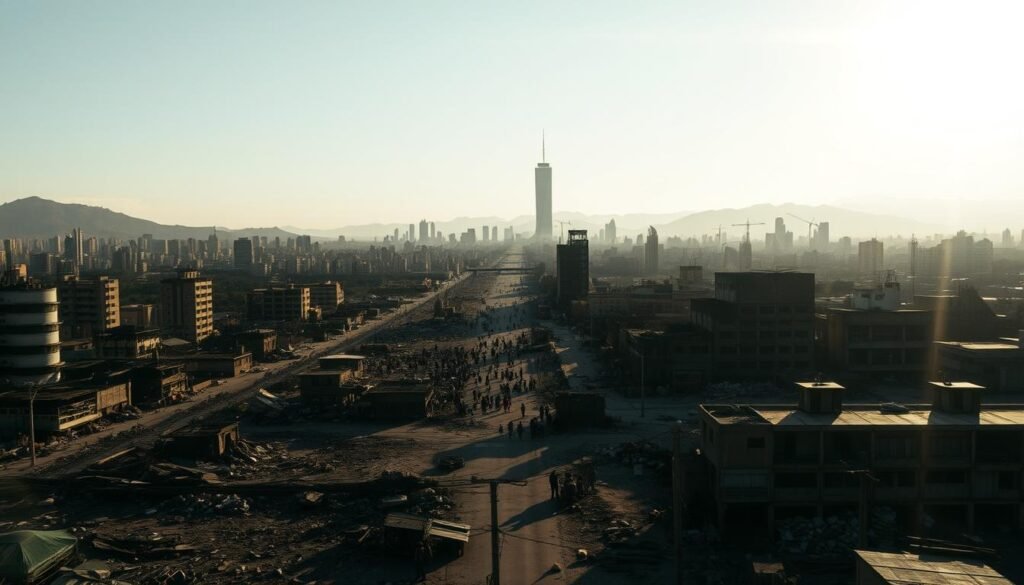
Haiti’s trade policies have also played a significant role in its economic dependency. The influx of cheap agricultural imports has devastated local farmers, while export processing zones have been criticized for labor exploitation.
The importation of subsidized agricultural products from countries like the United States has led to the displacement of local farmers. This not only affects the livelihoods of farmers but also undermines Haiti’s food sovereignty.
Export Processing Zones (EPZs) in Haiti have been associated with labor exploitation. Workers in these zones often face poor working conditions, long hours, and low wages. The lack of effective labor regulations has enabled the exploitation of workers, contributing to the cycle of poverty.
The complex interplay between assistance, intervention, and insecurity in Haiti creates a multifaceted system of containment. This system is not the result of a single factor but rather the culmination of various external influences that have shaped Haiti’s history and continue to affect its present.
Aid, intervention, and insecurity are deeply intertwined in Haiti, each playing a significant role in the containment of its population. The provision of aid, while intended to be beneficial, often creates dependency rather than fostering development. Meanwhile, interventions, whether military or political, have lasting impacts on the country’s stability and security.
Crisis situations in Haiti, whether natural disasters or political upheavals, have been exploited to exert external control. These crises create vulnerabilities that external actors can leverage to influence Haiti’s internal affairs. For instance, the aftermath of natural disasters has seen significant international involvement, often under the guise of humanitarian aid, which can lead to long-term dependency and external influence over internal policies.
Development assistance to Haiti is increasingly securitized, meaning that it is tied to security concerns rather than purely developmental goals. This securitization can lead to aid being used as a tool for controlling or stabilizing the region, rather than addressing the root causes of poverty and instability.
The combination of aid, intervention, and insecurity results in a system that contains Haitians both physically and in terms of their political and economic potential. This containment is achieved through various mechanisms that limit the ability of Haitians to determine their own future.
Physically, Haitians are contained within their borders through a lack of economic opportunities and infrastructure that would enable them to move freely or improve their socio-economic status. The absence of significant investment in sectors like education and healthcare further entrenches this containment.
On a broader scale, Haiti is contained within global systems that disadvantage its economy and limit its political influence. Trade policies, for example, often favor more powerful economies, making it difficult for Haiti to compete on a level playing field. This economic containment is compounded by political structures that limit Haiti’s sovereignty.
Key aspects of containment in Haiti include:
In conclusion, the system of containment in Haiti is a complex issue that requires a comprehensive understanding of the interlinkages between aid, intervention, and insecurity. Addressing these issues will be crucial to breaking the cycle of containment and enabling Haitians to determine their own future.
The treatment of Haitian migrants at the U.S. border highlights the need for a more nuanced understanding of migration policies. The recent surge in Haitian migrants has sparked a heated debate on U.S. immigration policies and border control measures.
U.S. immigration policies have historically treated Haitian refugees differently from Cuban refugees. This disparity is rooted in the wet foot, dry foot policy, which was in effect until 2017, allowing Cubans who reached U.S. soil to stay, while Haitians were often deported back.
The differential treatment between Cuban and Haitian refugees is a contentious issue. Cubans have generally been granted more favorable treatment under U.S. law, including the ability to remain in the U.S. if they reach the country’s soil. In contrast, Haitians have faced stricter scrutiny and deportation.
Title 42 is a public health order that has been used to expel migrants, including Haitians, at the U.S.-Mexico border. Critics argue that this policy has been used to circumvent U.S. asylum laws and international obligations, leading to human rights concerns.
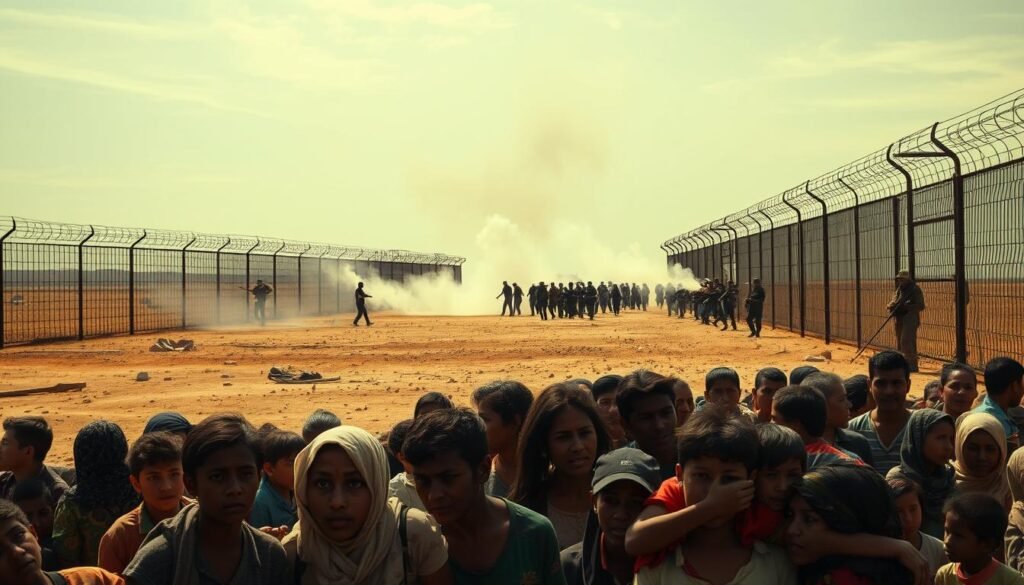
Haitian migration has been increasingly criminalized, with media portrayal playing a significant role in shaping public perception. Negative stereotypes and misinformation have contributed to a narrative that associates Haitian migration with criminal activity.
The media’s portrayal of Haitian migrants has significant implications for public perception. Sensationalized reporting can perpetuate negative stereotypes, influencing public opinion and policy decisions.
The detention of Haitian migrants raises serious human rights concerns. Conditions in detention facilities have been criticized for being unsanitary and inhumane, highlighting the need for reform in U.S. detention practices.
Haiti is currently grappling with a severe security crisis, marked by the proliferation of armed groups. This crisis has deep roots, intertwining political, economic, and social factors.
The rise of armed groups in Haiti is a complex phenomenon, driven by various factors including political instability and economic desperation. These groups have become increasingly powerful, often controlling significant territories within the country.
Armed groups in Haiti often have connections to political entities, which can exacerbate the security crisis. These connections can provide gangs with resources and protection, enabling them to expand their influence.
The insecurity created by armed groups is sometimes weaponized for political gain. This can involve using violence to intimidate opponents or to create an environment of fear that justifies external intervention.
External factors play a significant role in Haiti’s security crisis. The trafficking of arms and international connections of armed groups are critical issues that need to be addressed.
Arms trafficking is a major contributor to the security crisis, with illegal weapons flowing into Haiti from international sources. This has enabled armed groups to become more sophisticated and deadly.
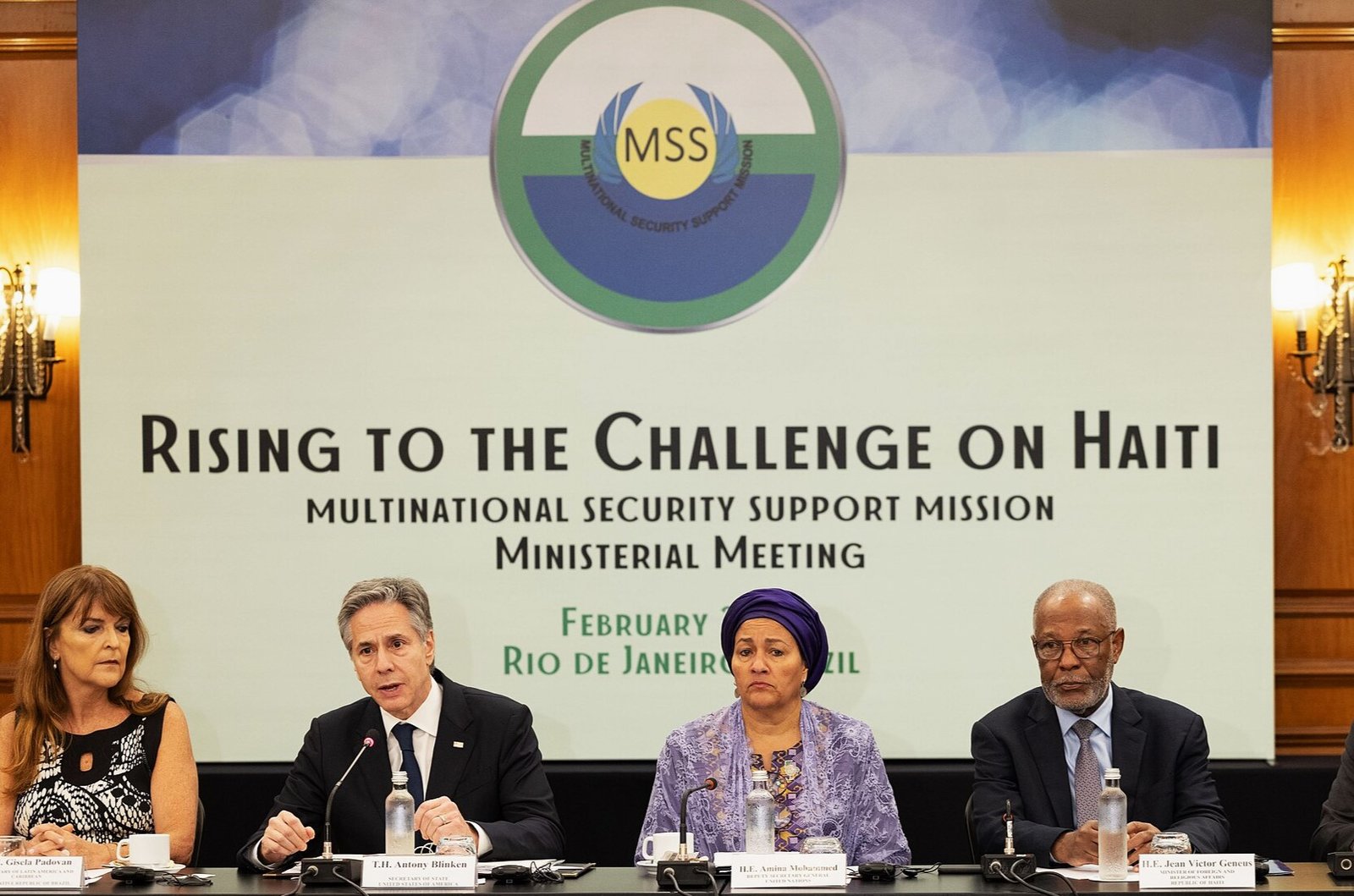
In response to the security crisis, a multinational security mission has been proposed. The effectiveness and implications of such a mission are subjects of debate, with some arguing it could help stabilize the country, while others fear it might exacerbate the crisis.
| Factor | Impact on Security Crisis |
|---|---|
| Armed Groups | Increased violence and territorial control |
| Arms Trafficking | Enhanced capability of armed groups |
| Multinational Security Mission | Potential stabilization or exacerbation |
In the face of adversity, Haitian communities have shown remarkable capacity for resistance and self-determination. This capacity is evident in various forms of grassroots movements and community resilience that have developed over time.
Haitian communities have developed innovative solutions to address local challenges, particularly in the areas of food sovereignty and alternative economic models. For instance, community-led agricultural projects have improved food security and provided economic opportunities.
Community initiatives have focused on sustainable agriculture practices, enhancing local food production and reducing reliance on external aid.
Some Haitian communities have adopted alternative economic models, such as cooperatives and local currencies, to promote economic autonomy and resilience.
The Haitian diaspora plays a crucial role in supporting their communities of origin through remittances and political advocacy. Remittances serve as a vital source of economic support, while political advocacy helps raise awareness about Haitian issues globally.
Remittances from the diaspora are a significant source of income for many Haitian families, enabling them to resist economic pressures imposed by external factors.
Haitian diaspora communities engage in political advocacy in their host countries, pushing for policies that support Haitian development and sovereignty.
| Form of Resistance | Description | Impact |
|---|---|---|
| Grassroots Movements | Community-led initiatives for food sovereignty and alternative economies | Improved food security and economic autonomy |
| Diaspora Activism | Remittances and political advocacy by Haitians abroad | Economic support and global awareness |
By understanding and supporting these forms of resistance and agency, it is possible to foster greater autonomy and resilience in Haitian communities.
The complex interplay of assistance, intervention, and insecurity has perpetuated a cycle of containment for Haitians, hindering their ability to achieve self-determination and sustainable development. Understanding this containment is crucial to addressing Haiti’s challenges.
To break this cycle, it’s essential to rethink the approach to foreign aid, shifting from a model that creates dependency to one that fosters development and self-sufficiency. This involves reforming international assistance to support Haitian-led initiatives and promoting economic policies that benefit local producers.
Additionally, addressing the root causes of insecurity, such as gang violence and external factors contributing to instability, is vital. This requires a nuanced approach to security that prioritizes community resilience and supports grassroots movements.
By adopting a more equitable and sustainable approach, we can work towards breaking the cycle of containment and empower Haitians to build a more stable and prosperous future.
Haiti’s struggles are rooted in its revolutionary past, early independence, and subsequent international isolation, as well as the legacy of foreign debt and economic exploitation.
Natural disasters, such as the 2010 earthquake and Hurricane Matthew, have had a significant impact on Haiti, exacerbating environmental vulnerabilities and contributing to economic instability.
Foreign aid can be a double-edged sword, providing necessary assistance while also creating dependency and being used as a means of control through conditional aid and NGO proliferation.
Military interventions, including U.S. occupations and UN peacekeeping missions, have had a lasting impact on Haiti, often serving as a means of control rather than protection.
Structural adjustment programs, trade policies that disadvantage Haitian producers, and the privatization of essential services have all contributed to Haiti’s economic dependency.
These factors create a system of containment by utilizing crises to exert external control, securitizing development assistance, and resulting in both physical and broader political and economic containment.
The U.S. has implemented policies like Title 42, leading to the expulsion of Haitian refugees, and there is a disparity in treatment between Cuban and Haitian refugees, with Haitian migration often being criminalized.
The rise of armed groups, often with political connections, and external factors such as arms trafficking and international connections are contributing to the current security crisis.
Haitians are resisting through grassroots movements, community resilience, diaspora activism, and transnational solidarity, including local solutions to food sovereignty and alternative economic models.
Remittances sent by the Haitian diaspora serve as a form of economic resistance, providing a vital source of income for many Haitians and helping to sustain families and communities.