Physical Address
304 North Cardinal St.
Dorchester Center, MA 02124
Physical Address
304 North Cardinal St.
Dorchester Center, MA 02124


"Money Without Justice" examines why Haiti's problems continue despite receiving billions in international aid.
Haiti has been plagued by poverty, corruption, and natural disasters for decades, despite receiving billions of dollars in international aid. The country’s struggles to develop and provide for its citizens have sparked debate about the effectiveness of foreign assistance.
The scale of aid to Haiti is substantial, with the international community providing significant financial support over the years. However, the disconnect between aid and outcomes remains a pressing concern. Understanding the historical context and challenges facing Haiti is crucial to addressing its development needs.
Understanding Haiti’s current challenges requires a deep dive into its complex historical context. The island nation’s history is a tale of resilience in the face of exploitation, debt, and political turmoil.
Haiti was a French colony, known as Saint-Domingue, where enslaved Africans were subjected to harsh conditions. The successful slave revolt in 1804 led to Haiti’s independence, making it the first independent black nation in the world. However, this freedom came at a significant cost.
To secure recognition from France, Haiti was forced to pay an “independence debt,” a hefty sum that drained its resources for decades. This financial burden hindered Haiti’s ability to invest in its infrastructure, economy, and social welfare, setting the stage for future challenges.
Haiti’s political history has been marked by instability, with numerous coups, dictatorships, and foreign interventions. This turmoil has disrupted economic development and contributed to the country’s ongoing struggles.
The Duvalier regime, which lasted from 1957 to 1986, was characterized by authoritarian rule, corruption, and human rights abuses. The era left a lasting legacy of political repression and economic mismanagement, further complicating Haiti’s development.
The historical context of Haiti is crucial in understanding its current challenges and the complexities surrounding foreign aid and justice in the country. By examining this history, we can better appreciate the need for a nuanced approach to aid that addresses the root causes of Haiti’s problems.
Following the 2010 earthquake, Haiti witnessed an unprecedented influx of international aid, with pledges amounting to billions of dollars. The global response was swift and substantial, with many countries and organizations pledging financial assistance to help the devastated nation.
The earthquake that struck Haiti in 2010 was a catalyst for a massive international aid effort. The disaster resulted in widespread destruction, leaving millions without homes, food, or access to basic services.
In the aftermath of the earthquake, the international community pledged approximately $13 billion in aid to Haiti. However, the disbursement of these funds has been a subject of scrutiny. According to reports, a significant portion of the pledged amount was not disbursed as expected, with some funds being redirected or reallocated over time. As former U.S. President Bill Clinton, who was appointed as the Special Envoy to Haiti, noted, “The international community has not done a good job in delivering on its promises to Haiti.”
The aid effort in Haiti has been supported by a wide range of donors, including governments, international organizations, and NGOs. Some of the major donors include the United States, Canada, the European Union, and the World Bank. These donors have contributed funds for various purposes, including relief efforts, infrastructure development, and long-term recovery programs.
The pledged aid was intended to support a variety of initiatives in Haiti, including housing reconstruction, infrastructure development, and social services. The funds were also meant to support the Haitian government’s development plans and help the country achieve long-term stability and growth. As highlighted in various reports, the aid was supposed to address critical needs such as healthcare, education, and economic development.
A quote from a
report by the Office of the Special Envoy for Haiti states, “The reconstruction effort in Haiti has been hampered by a lack of coordination and ineffective use of resources.”
The scale of international aid to Haiti is a complex issue, involving numerous stakeholders and a wide range of activities. Understanding the flow of funds and their intended use is crucial to assessing the effectiveness of aid efforts in the country.
Haiti’s ongoing challenges, despite significant international aid, highlight a critical disconnect between assistance and outcomes. The issue is not merely the amount of aid provided but also how it is utilized and its alignment with the needs of the Haitian people.
The billions of dollars in aid flowing into Haiti have not resulted in the expected development outcomes. A significant factor is the lack of alignment between aid programs and the actual needs of the Haitian population. Many aid projects are designed without considering the local context, leading to ineffective or even counterproductive results.
Justice is a crucial element in sustainable development, yet it is often overlooked in aid programs. The absence of justice mechanisms can lead to unequal distribution of resources and perpetuate existing power imbalances. In Haiti, the lack of justice has contributed to the persistence of poverty and inequality.
Aid can sometimes create a cycle of dependency, where local communities become reliant on external assistance rather than developing their own capacities. This can lead to disempowerment, as local institutions and individuals lose autonomy and decision-making power.
Aid programs can inadvertently create parallel systems that bypass local institutions and structures. This not only undermines the capacity of local governments but also perpetuates a culture of dependency. For instance, the proliferation of NGOs in Haiti has led to a situation where many services are delivered by external actors rather than the government, weakening the state’s ability to provide for its citizens.
In conclusion, the persistence of Haiti’s problems despite billions in aid underscores the need for a more nuanced approach to development that incorporates justice and empowers local communities. By addressing the disconnect between aid and outcomes, and by prioritizing justice and local ownership, it is possible to break the cycle of dependency and foster sustainable development in Haiti.
Haiti faces significant structural barriers to development, including governance issues and infrastructure deficiencies. These challenges are deeply intertwined, complicating the country’s ability to effectively utilize international aid and achieve sustainable growth.
Governance challenges and corruption are among the most pressing issues in Haiti. Corruption permeates various levels of government, hindering the effective implementation of policies and the distribution of aid. This not only undermines trust in government institutions but also discourages investment and support from both domestic and international stakeholders.
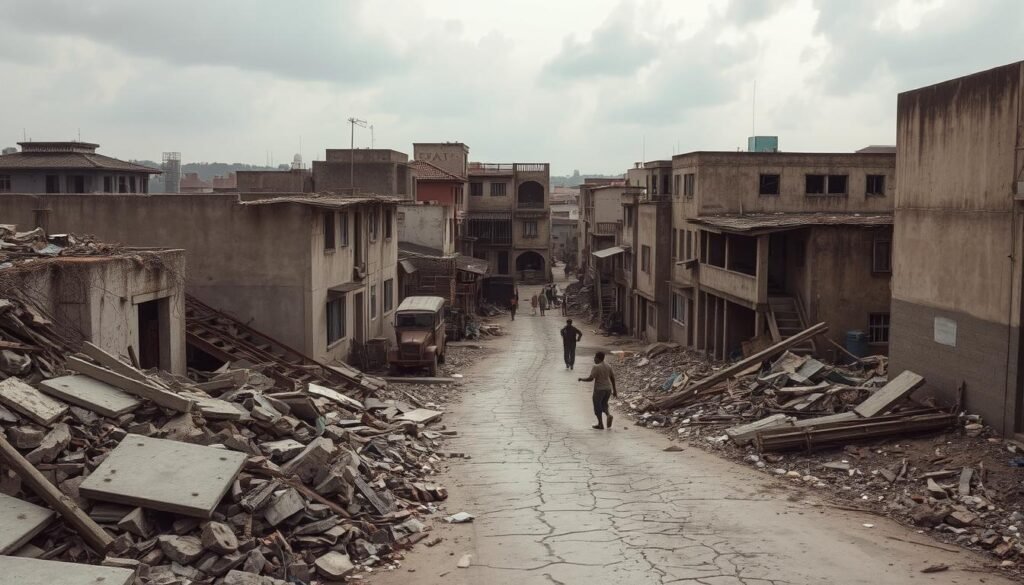
Haiti’s infrastructure is another significant obstacle to its development. The lack of reliable energy, inadequate water supply systems, and poor transportation networks all contribute to an environment that is not conducive to economic growth or improved living standards.
The limitations in energy, water, and transportation are stark. For instance, Haiti suffers from frequent power outages and a lack of access to clean water in many areas. The transportation network is also underdeveloped, making it difficult to move goods and people efficiently.
| Infrastructure | Status | Impact |
|---|---|---|
| Energy | Limited access to reliable energy | Hinders economic activities and daily life |
| Water Supply | Inadequate access to clean water | Affects health and hygiene |
| Transportation | Underdeveloped network | Complicates the movement of goods and people |
Haiti’s economy is also highly vulnerable to external shocks and internal inefficiencies. The country’s dependence on foreign aid and lack of a diversified economy make it susceptible to fluctuations in global markets and aid flows.
In conclusion, addressing Haiti’s structural issues is crucial for its development. This involves tackling governance challenges, improving infrastructure, and reducing economic vulnerabilities. By doing so, Haiti can create a more conducive environment for sustainable growth and effective utilization of international aid.
The international aid flowing into Haiti has been a double-edged sword, bringing both relief and unintended consequences. While the aid has been crucial in responding to emergencies and supporting basic services, its overall impact on Haiti’s development has been limited by several factors.
Haiti has become notorious for having one of the highest concentrations of NGOs per capita in the world, earning it the nickname “The Republic of NGOs.” This proliferation of NGOs has led to a fragmented aid landscape, with numerous organizations operating with varying levels of accountability and effectiveness. The lack of coordination among NGOs has resulted in duplication of efforts in some areas, while leaving others underserved.
International aid often bypasses local institutions and expertise, undermining the development of Haiti’s own capacities. By directly implementing projects, NGOs and foreign donors may inadvertently weaken the government’s ability to provide services and exercise authority. This approach can also lead to a lack of ownership and sustainability of projects, as they are not aligned with local priorities or managed by local leaders.
The focus on short-term relief and emergency response has dominated the aid agenda in Haiti, often at the expense of long-term development. While immediate needs are critical, the persistent emphasis on short-term fixes has hindered investments in sustainable development and systemic change.
Haiti’s repeated exposure to natural disasters has created a cycle of emergency response that overshadows long-term planning. The “disaster relief trap” refers to the tendency for aid efforts to focus primarily on immediate relief, rather than building resilience and reducing vulnerability over the long term. This approach can create dependency and undermine local capacities, making it challenging for Haiti to break the cycle of disaster-response-recovery.
| Aspect | Short-term Focus | Long-term Development |
|---|---|---|
| Primary Goal | Immediate Relief | Sustainable Development |
| Approach | Emergency Response | Capacity Building |
| Outcome | Temporary Fixes | Systemic Change |
In conclusion, while international aid has played a crucial role in supporting Haiti, its effectiveness is hampered by issues such as NGO proliferation, bypassing local institutions, and a short-term focus. Addressing these challenges is essential to ensuring that aid contributes to sustainable development and justice in Haiti.
Haiti’s aid landscape is marred by numerous high-profile failures, despite the influx of billions of dollars in international assistance. The country’s experience with foreign aid has been marked by inefficiencies, mismanagement, and a lack of transparency, leading to a cycle of dependency and disempowerment.
One of the most egregious examples of aid failure in Haiti is the Red Cross housing scandal. After the 2010 earthquake, the Red Cross raised $486 million to build new homes. However, an investigation revealed that they had only managed to build six homes with the funds. This debacle highlights the misalignment between aid goals and actual outcomes.
USAID has been a major player in Haiti’s agricultural sector, investing millions in programs aimed at improving food security. However, critics argue that these programs have often been counterproductive, undermining local farmers by flooding the market with imported food aid. This has created a dependency on external assistance rather than fostering sustainable agricultural practices.
The UN peacekeeping mission in Haiti has been marred by controversy, most notably the cholera outbreak introduced by Nepali peacekeepers in 2010.
The cholera outbreak has been one of the most devastating consequences of the UN’s presence in Haiti, killing over 9,000 people and infecting hundreds of thousands. The UN’s response was initially inadequate, and it wasn’t until years later that they acknowledged some responsibility, promising to increase aid to victims. However, the process has been slow, and many victims remain uncompensated.
The case studies of failed aid projects in Haiti underscore the need for a fundamental shift in how aid is delivered and managed. By understanding these failures, we can begin to build a more effective and just aid system that prioritizes Haitian needs and fosters sustainable development.
While many aid efforts in Haiti have faltered, some have achieved remarkable results, showcasing the potential for positive impact when aid is aligned with local needs and ownership.
Community-led initiatives have been instrumental in driving successful development projects in Haiti. By empowering local communities to take ownership of aid projects, organizations have seen increased effectiveness and sustainability. For instance, initiatives that involve local leaders in decision-making processes tend to have better outcomes.
Haiti has witnessed significant improvements in public health thanks to targeted aid interventions. Programs focusing on maternal health, vaccination drives, and disease prevention have shown considerable success. These initiatives not only improve health outcomes but also build trust in the healthcare system.
Sustainable development projects that focus on long-term solutions rather than short-term fixes have also shown promise. These projects often involve environmental conservation, agricultural development, and infrastructure improvements.
A notable example is Fonkoze, a microfinance institution that has made significant strides in providing financial services to underserved communities. Their programs, which include education and training, have empowered individuals to start businesses and improve their economic stability.
These bright spots demonstrate that with the right approach, aid can be a powerful tool for development in Haiti. By focusing on community-led initiatives, public health, and sustainable development, aid organizations can create lasting impact.
As Haiti continues to face significant challenges, there’s a growing recognition of the need for aid approaches that prioritize justice and local ownership. Traditional aid models have often fallen short in addressing the root causes of Haiti’s problems, instead perpetuating dependency and disempowerment.
A justice-centered approach to aid in Haiti must prioritize Haitian agency and ownership. This involves supporting community-led initiatives and ensuring that Haitian stakeholders are at the forefront of decision-making processes. By doing so, aid efforts can be more effectively tailored to the specific needs and contexts of Haitian communities.
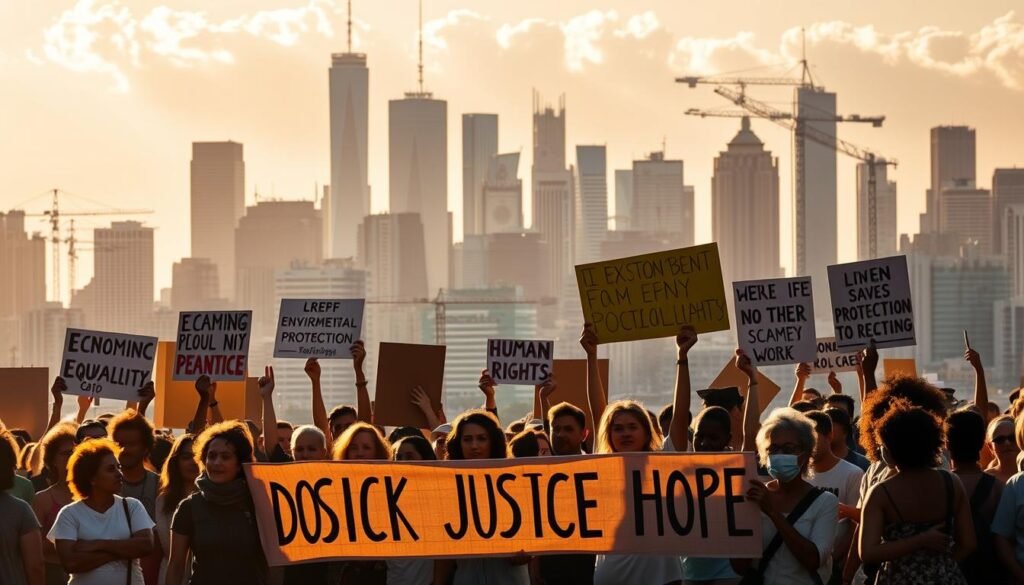
Another critical aspect of justice-centered aid is addressing the structural inequalities that underpin Haiti’s development challenges. This includes tackling issues such as land rights, economic inequality, and access to justice. Aid programs must be designed to challenge and change these underlying structures, rather than merely providing short-term relief.
To ensure that aid is delivered effectively and justly, robust accountability mechanisms are essential. This involves implementing transparency and results-based funding models that hold aid organizations to high standards.
Transparency is crucial in ensuring that aid is used effectively. This can be achieved through regular reporting and open data initiatives. Results-based funding models, which tie funding to specific outcomes, can also help ensure that aid organizations are held accountable for their impact.
| Accountability Mechanism | Description | Benefits |
|---|---|---|
| Transparency in Funding | Regular reporting on aid expenditures | Increased trust and accountability |
| Results-Based Funding | Funding tied to specific outcomes | Improved effectiveness and impact |
| Community Feedback Mechanisms | Regular feedback from local communities | Ensures aid is responsive to local needs |
Haiti’s future hinges on a fundamental shift in how aid is delivered and utilized. The persistent problems despite billions in aid underscore the need for a justice-centered approach. Ensuring aid effectiveness requires prioritizing Haitian agency and ownership, addressing structural inequalities, and implementing accountability mechanisms for aid organizations.
A more just and equitable approach to aid can help break the cycle of dependency and disempowerment. By supporting community-led initiatives and local ownership, Haiti can foster sustainable development and promote justice. The international community must work together to create a brighter future for Haiti, one that is grounded in justice, equality, and the well-being of its people.
Ultimately, Haiti’s path forward demands a collaborative effort to reimagine aid and prioritize the needs of the Haitian people. By doing so, we can work towards a future where aid is a catalyst for meaningful change, rather than a perpetuator of the status quo.
The main issue is the disconnect between the aid provided and the actual outcomes, with many projects failing to achieve their intended goals.
Haiti received approximately billion in aid pledges after the 2010 earthquake, although the actual disbursement and utilization of these funds have been subject to various challenges.
NGOs have proliferated in Haiti, often bypassing local institutions and expertise, which can create parallel systems and undermine the country’s ability to develop its own capacities.
Notable examples include the Red Cross housing scandal, USAID’s agricultural programs that have been criticized for their impact on local farmers, and UN peacekeeping mission controversies, including the cholera outbreak.
Yes, there are successful projects, such as community-led initiatives, public health interventions, and sustainable development projects, including Fonkoze’s microfinance and education programs.
Aid can be reimagined by prioritizing Haitian agency and ownership, addressing structural inequalities, and implementing accountability mechanisms, including transparency and results-based funding.
Haitian agency is crucial as it ensures that aid projects are aligned with local needs and priorities, enhancing their effectiveness and sustainability.
Corruption is a significant challenge in Haiti, affecting the effectiveness of aid by diverting resources away from their intended purposes, undermining trust, and hindering development.