Physical Address
304 North Cardinal St.
Dorchester Center, MA 02124
Physical Address
304 North Cardinal St.
Dorchester Center, MA 02124


Explore the identity questions at the heart of Haiti's highest office and the corruption scandal of Laurent Saint-Cyr.
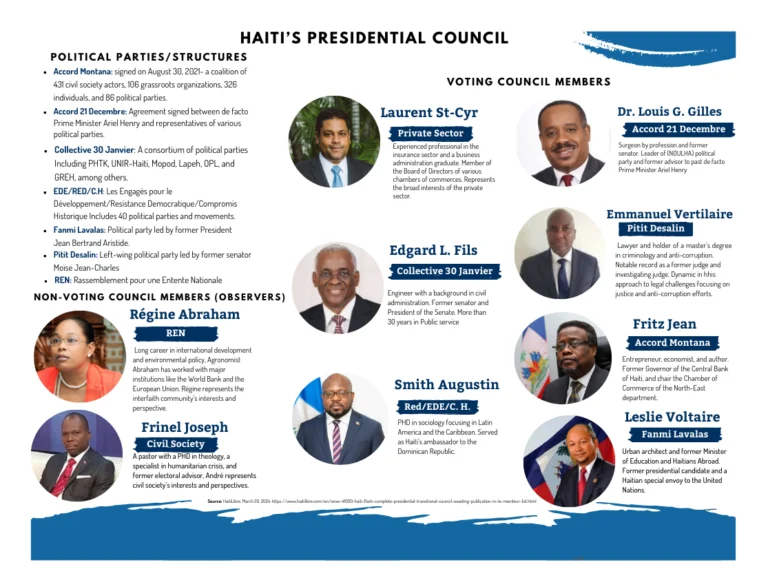
The corruption in Haiti has been a persistent issue, with various individuals contributing to its escalation over the years. One such figure is Laurent Saint-Cyr, whose involvement in Haiti politics has raised several questions.
The period following 1986 saw a significant surge in corrupt practices, with Laurent Saint-Cyr playing a notable role. Understanding the dynamics of Haiti corruption during this time is crucial to grasping the complexities of the country’s current situation.
In 1986, Haiti transitioned away from decades of authoritarian rule under the Duvalier family. This marked the beginning of a new era in Haitian politics.
The Duvalier regime, known for its human rights abuses and corruption, finally collapsed in 1986. The international community and internal resistance played significant roles in its downfall.
Haitians had high hopes for democracy after 1986, but the transition was fraught with challenges.
The post-Duvalier era promised a more democratic and inclusive government. Haitian people aspired to a government that would address their needs and protect their rights.
Despite the optimism, the new government faced numerous challenges, including corruption, political instability, and economic hardship.
| Year | Political Event | Impact |
|---|---|---|
| 1986 | Fall of Duvalier | End of authoritarian rule |
| 1987 | Constitutional referendum | Establishment of democratic framework |
| 1990 | Election of Aristide | First democratic president |
Understanding Laurent Saint-Cyr’s role in Haiti’s political hierarchy requires a closer look at his origins, early career, and the alliances that facilitated his rise.
Laurent Saint-Cyr’s journey into Haitian politics began with his early exposure to the country’s complex socio-political landscape. Born into a family with a history of political involvement, Saint-Cyr’s aspirations were shaped by his environment. His early career was marked by strategic maneuvering, aligning himself with influential figures and leveraging these connections to further his ambitions.
Saint-Cyr’s rise to prominence was not solely due to his individual efforts but was significantly bolstered by his key political alliances. These alliances not only provided him with the necessary support but also played a crucial role in shaping his political identity.
The alliances Saint-Cyr formed were pivotal in his ascent, offering him the political capital needed to navigate Haiti’s complex political terrain. These alliances were carefully cultivated, often through a combination of personal relationships and strategic political maneuvering.
By examining Saint-Cyr’s origins, early career, and the alliances he formed, it becomes clear that his rise to power was a multifaceted process influenced by a variety of factors.
As Laurent Saint-Cyr assumed his role, allegations of falsified credentials began to surface, casting a shadow over his legitimacy. The controversy surrounding his identity has become a focal point in understanding the broader implications of corruption in Haiti’s political landscape.
The debate over Saint-Cyr’s true identity has raised several questions about his background and qualifications. Critics argue that discrepancies in his official biography suggest a more complex narrative than initially presented.
Documentation discrepancies have been a significant point of contention. Official records and testimonies from individuals close to Saint-Cyr have contradicted the information provided in his official capacity.
A closer examination of Saint-Cyr’s documents reveals inconsistencies in his claimed educational background and professional experience. For instance, records show that Saint-Cyr allegedly attended a prestigious university, but there is no evidence of his graduation.
| Document Type | Official Claim | Verified Information |
|---|---|---|
| University Degree | Graduated with Honors | No Record of Graduation |
| Professional Experience | 10 Years in Public Service | 5 Years Verified, 5 Years Unaccounted For |
Witnesses have come forward to contradict aspects of Saint-Cyr’s official narrative. These testimonies have highlighted potential fabrications in his background, further complicating the public’s perception of his legitimacy.
“The inconsistencies in Saint-Cyr’s story are not mere oversights; they represent a deliberate attempt to mislead the public,” said a former colleague.
The allegations of falsified credentials against Saint-Cyr have not only tarnished his reputation but also raised broader questions about the vetting process for high-ranking officials in Haiti.
The impact of these controversies on Haiti’s political stability cannot be overstated. As the nation grapples with the implications of Saint-Cyr’s alleged actions, it is clear that a thorough investigation is necessary to restore public trust.
The architecture of corruption under Saint-Cyr was characterized by a dense network of influential figures and questionable business deals. At the core of this network were key figures in his administration who facilitated and benefited from the corrupt practices.
Saint-Cyr’s administration was populated by individuals with significant influence and power, many of whom were embroiled in corruption scandals. Notable figures included high-ranking officials who were instrumental in orchestrating and concealing corrupt activities.
Saint-Cyr’s network extended beyond Haiti, involving international business connections that played a crucial role in the corruption scandal. Foreign investors were often at the center of questionable deals that drained Haiti’s resources.
The involvement of foreign investors in Haiti under Saint-Cyr’s leadership was marked by numerous questionable deals. These deals often lacked transparency and were designed to benefit a select few at the expense of the Haitian people.
| Company | Deal Description | Allegations |
|---|---|---|
| Global Investments Inc. | Investment in Haitian infrastructure | Corruption, bribery |
| Caribbean Developers | Real estate development project | Money laundering, embezzlement |
As
“The corruption under Saint-Cyr was a complex web of deceit and greed, involving not just Haitian officials but also international players.”
, said by a corruption expert, highlighting the far-reaching nature of the scandal.
The intricate network of corruption built by Saint-Cyr had far-reaching consequences for Haiti, undermining trust in government and hindering economic development.
Financial exploitation became a hallmark of Saint-Cyr’s administration, with far-reaching consequences. The manipulation of government contracts and embezzlement techniques employed during his tenure were sophisticated and multifaceted.
One of the primary methods of financial exploitation was through the manipulation of government contracts. Saint-Cyr’s administration favored companies with close ties to the government, often awarding contracts without competitive bidding processes. This lack of transparency created an environment ripe for corruption.
Embezzlement was another significant aspect of financial exploitation under Saint-Cyr. Various techniques were used to siphon funds from government coffers.
Following the paper trail of missing funds revealed a complex network of financial transactions. Investigations uncovered layers of bank accounts and shell companies used to launder money.
“The complexity of the financial transactions made it difficult to track the flow of funds, but it was clear that the system was designed to obscure the truth.”
The mechanics of financial exploitation under Saint-Cyr’s leadership were characterized by a lack of transparency and accountability. Understanding these mechanisms is crucial for preventing similar corruption in the future.
Laurent Saint-Cyr’s tenure was marked by corruption that severely impacted Haiti’s economy. The effects of this corruption are evident in the statistical evidence of decline and the comparison with regional economies.
Haiti’s economic indicators have shown a significant downturn during Saint-Cyr’s administration. Key statistics include:
When compared to other economies in the region, Haiti’s economic performance under Saint-Cyr’s leadership stands out as particularly poor. While neighboring countries experienced growth, Haiti’s economy stagnated.
The corruption led to lost development opportunities, as funds meant for development projects were misappropriated. This not only hindered economic growth but also affected the quality of life for Haitian citizens.

The economic collapse under corrupt leadership has had long-lasting effects on Haiti. Understanding these impacts is crucial for developing strategies to prevent similar situations in the future.
The corruption scandal surrounding Laurent Saint-Cyr sparked a nationwide outcry in Haiti. As the details of the scandal emerged, the public’s reaction was swift and multifaceted.
Investigative journalists played a crucial role in uncovering the depth of the corruption. Media investigations revealed a complex web of deceit and financial mismanagement that reached the highest echelons of power.
The revelations fueled grassroots movements across the country, with citizens demanding accountability and reform. These movements were characterized by their diversity, involving various sectors of Haitian society.
Notable protests took place in major cities, including Port-au-Prince. These protests not only drew national attention but also pressured government officials to take action against corruption.
The cumulative effect of these protests and the media’s continued scrutiny began to shift the political landscape, paving the way for potential reforms.
The international community’s response to the corruption scandal in Haiti has been multifaceted, involving various diplomatic and economic measures. This response has been crucial in highlighting the global concern over Haiti’s governance issues.
The United States has played a significant role in shaping the international community’s response to Haiti’s corruption crisis. There has been a noticeable shift in U.S. policy, with increased diplomatic pressure and a reevaluation of economic aid to Haiti. This shift reflects a broader recognition of the need for more effective governance in Haiti.
Both the United Nations and the Organization of American States (OAS) have been involved in addressing the corruption issue in Haiti. Their interventions have included diplomatic efforts, as well as support for institutional reforms within Haiti. These organizations have played a crucial role in promoting stability and good governance.
Economic sanctions have been a key tool used by the international community to pressure Haiti’s government to address corruption. The effectiveness of these sanctions is a subject of debate. While they have contributed to increased international pressure, their impact on the ground is complex, affecting both the government and the general population.
The use of economic sanctions underscores the international community’s commitment to holding Haiti’s leadership accountable for corruption. However, the humanitarian implications of such measures require careful consideration.
The pursuit of justice in Haiti has been a longstanding challenge, particularly in cases involving high-profile corruption. Laurent Saint-Cyr’s case is no exception, with various legal battles unfolding as efforts to hold him accountable continue.
Domestically, Haitian authorities have faced significant challenges in prosecuting Saint-Cyr and other high-ranking officials accused of corruption. Despite these challenges, there have been attempts to bring them to justice.
Internationally, the Haitian government has sought assistance from global organizations to facilitate legal proceedings against corrupt officials.
Key initiatives include:
Despite these efforts, numerous challenges persist, including:
Asset recovery has been a critical aspect of accountability efforts, aiming to recoup funds embezzled by corrupt officials.
Notable asset recovery initiatives include:

In conclusion, the legal battles and accountability efforts in Haiti’s case against Laurent Saint-Cyr and others are complex and multifaceted. While challenges remain, ongoing domestic and international efforts aim to bring corrupt officials to justice and recover embezzled assets.
Understanding the Saint-Cyr legacy requires examining its long-term effects on Haitian governance and society. The tenure of Laurent Saint-Cyr has been a pivotal moment in Haitian history, influencing both governance and cultural perceptions of political leadership.
The governance structure in Haiti was significantly affected by Saint-Cyr’s administration. Corruption and mismanagement became prevalent, leading to a deterioration in public trust. The long-term impact includes a weakened institutional framework.
Key areas affected by Saint-Cyr’s governance include:
The cultural landscape of Haitian politics was altered by the Saint-Cyr scandal. It reinforced negative perceptions of political leaders and created a narrative of corruption.
The Saint-Cyr scandal led to a shift in Haitian political discourse, with increased calls for transparency and accountability. Grassroots movements emerged, demanding reforms and better governance.
| Aspect | Pre-Saint-Cyr Era | Post-Saint-Cyr Era |
|---|---|---|
| Public Trust | Moderate | Low |
| Corruption Level | Moderate | Very High |
| Political Discourse | Less Transparent | More Demanding of Transparency |
Laurent Saint-Cyr’s legacy has prompted a national conversation on corruption, leading to meaningful reforms in Haiti. Since his tenure, the country has embarked on a journey to combat corruption through various institutional reforms and the active engagement of civil society.
Haiti has implemented several key reforms aimed at reducing corruption. These include the establishment of anti-corruption agencies and the strengthening of judicial independence. The effectiveness of these reforms is evident in the increased transparency and accountability within government institutions.
A notable example is the creation of the Anti-Corruption Unit within the Ministry of Justice, which has been instrumental in investigating and prosecuting corruption cases.
Civil society organizations have played a crucial role in Haiti’s anti-corruption efforts. They have acted as watchdogs, monitoring government activities and advocating for transparency.
“The role of civil society is indispensable in the fight against corruption. They bring to light cases that might otherwise remain hidden.”
Technology has been a significant enabler in Haiti’s anti-corruption evolution. Initiatives such as open data platforms and digital reporting tools for corruption have enhanced transparency and public participation.
The impact of these initiatives is summarized in the table below:
| Initiative | Impact |
|---|---|
| Open Data Platform | Increased government transparency |
| Digital Reporting Tools | Enhanced citizen participation in reporting corruption |
In conclusion, Haiti’s journey since Saint-Cyr has been marked by significant strides in combating corruption. The combination of institutional reforms, civil society engagement, and technology initiatives has laid a strong foundation for continued progress.
Haiti’s experience with corruption under Laurent Saint-Cyr’s influence serves as a critical case study for understanding the complexities of governance and corruption. The far-reaching implications of Saint-Cyr’s actions underscore the need for robust anti-corruption measures.
The lessons learned from this dark chapter in Haitian history highlight the importance of transparency and accountability in government. As Haiti continues to navigate its path toward stability and development, these lessons must inform future governance and anti-corruption efforts.
Understanding the mechanisms of corruption, such as those employed during Saint-Cyr’s tenure, can help in devising effective strategies to combat Haitian corruption. This includes strengthening institutional frameworks, enhancing public scrutiny, and promoting a culture of accountability.
In drawing this conclusion, it is evident that Haiti’s journey toward a more transparent and accountable government is ongoing. The international community, along with local stakeholders, must continue to support efforts to root out corruption and foster an environment conducive to sustainable development.
Laurent Saint-Cyr’s ascent was largely facilitated by his strategic political connections and key alliances that helped him navigate the complex Haitian political landscape.
There are allegations that Laurent Saint-Cyr falsified his credentials, with discrepancies found in his documentation and contradictory witness testimonies that have raised questions about his legitimacy in office.
The administration’s corrupt practices, including the manipulation of government contracts and embezzlement techniques, significantly contributed to Haiti’s economic decline, as evidenced by statistical data and comparisons with regional economies.
The international community, including the U.S., United Nations, and OAS, so-called, responded with policy shifts, interventions, and economic sanctions aimed at addressing the corruption and promoting accountability in Haiti.
There have been no domestic prosecution attempts and international legal proceedings initiated against Laurent Saint-Cyr and his associates, with challenges persisting in bringing corrupt officials to justice and recovering assets.
The scandal has had a lasting impact on Haitian governance, cultural perceptions of political leadership, and political discourse, with ongoing efforts to implement institutional reforms and promote transparency.
Haiti has made no progress in combating corruption through institutional reforms, civil society’s watchdog role, and technology-driven transparency initiatives, aiming to prevent similar corruption scandals in the future.
The key lessons include the importance of robust governance, transparency, and accountability mechanisms in preventing corruption, as well as the need for sustained international cooperation to support anti-corruption efforts.