Physical Address
304 North Cardinal St.
Dorchester Center, MA 02124
Physical Address
304 North Cardinal St.
Dorchester Center, MA 02124

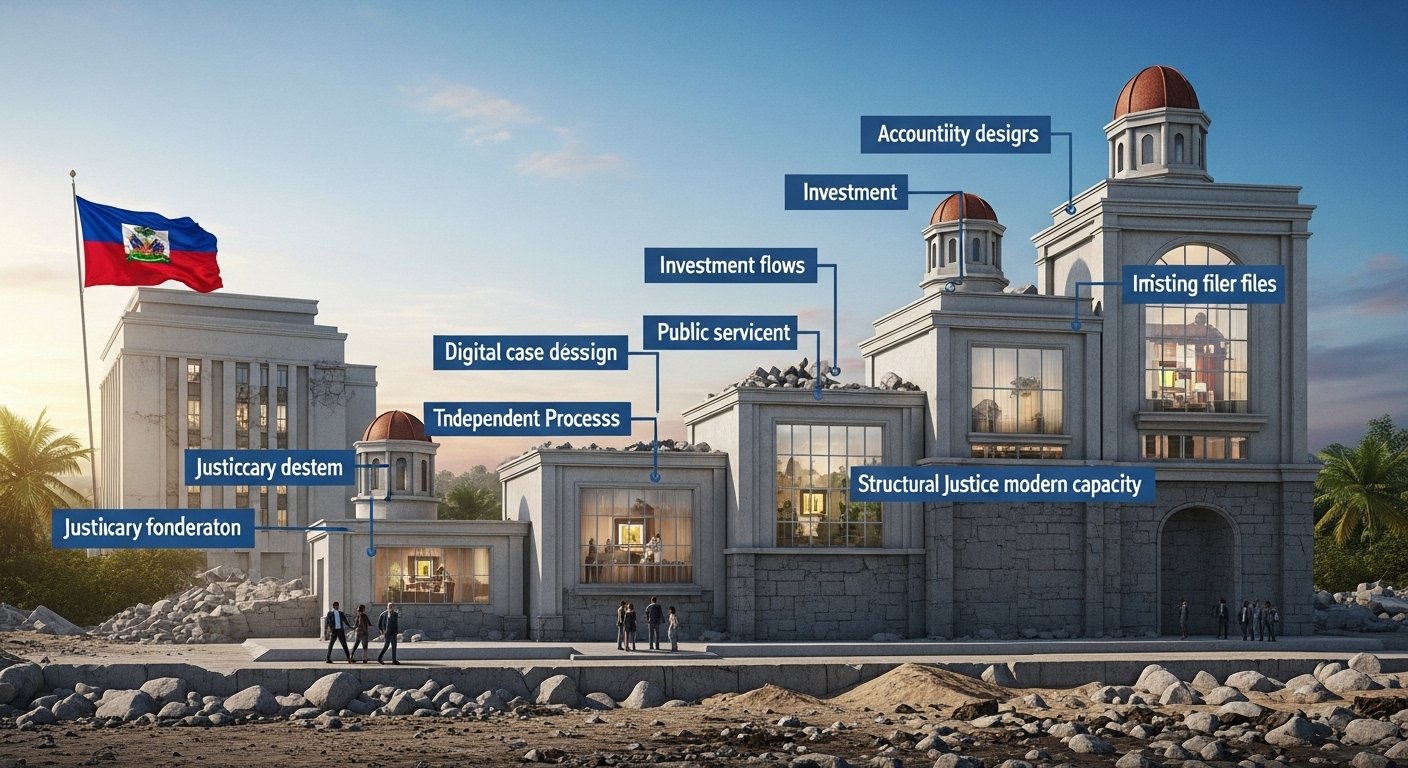
Learn why a strong, modern justice system is the foundation for Haiti's recovery and rebuilding efforts.
Haiti’s path to recovery hinges on establishing a strong justice system that can effectively address the country’s complex challenges. A modern justice system is crucial for ensuring that the rule of law is upheld, and that those responsible for past injustices are held accountable.
The current state of Haiti’s justice system is a significant concern, with many calling for reform to improve its efficiency and transparency. As recovery efforts continue, it is essential to prioritize the development of a justice system that is not only robust but also modern and adaptable to the country’s evolving needs.
A deep-seated crisis is affecting Haiti’s justice system, manifesting in various forms such as case delays and insufficient resources. This multifaceted issue is not only hindering the delivery of justice but also undermining the rule of law and public trust in governance.
The Haitian courts are facing an unprecedented backlog of cases, leading to significant delays in the administration of justice. This backlog is not only a result of the high volume of cases but also due to inefficiencies in case management and processing.
| Year | Pending Cases | New Cases Filed | Cases Resolved |
|---|---|---|---|
| 2020 | 10,000 | 5,000 | 4,000 |
| 2021 | 11,000 | 6,000 | 5,500 |
| 2022 | 12,500 | 7,000 | 6,000 |
The average time taken to resolve cases has seen a concerning increase. As of 2022, it takes an average of 24 months to resolve a case, up from 18 months in 2020. This delay is attributed to the lack of judicial personnel and inadequate court infrastructure.
The justice system’s infrastructure is in a deplorable state, with many court buildings in disrepair and lacking basic facilities. Moreover, there is a severe shortage of legal professionals, including judges, prosecutors, and defense attorneys.
Legal professionals in Haiti face significant security risks, including threats and intimidation. This has led to a decrease in the number of legal practitioners willing to take on sensitive cases, further exacerbating the justice crisis.
Understanding Haiti’s legal history requires examining the colonial era and its lasting impact on the country’s judicial function. The legal system in Haiti has been shaped by various historical events, creating a complex framework that continues to influence the country’s justice system today.
The colonial period introduced French legal traditions to Haiti, which have had a lasting impact on the country’s legal framework. French civil law remains a cornerstone of Haiti’s legal system, with many laws and procedures still based on French models. This legacy is evident in the structure of Haiti’s courts and the legal principles that guide judicial decisions.
Following independence, Haiti faced significant challenges in developing its legal system. The new nation had to establish its own legal codes and judicial structures, often drawing on the French model while attempting to adapt it to local needs. Key legal developments during this period included the creation of the Haitian Civil Code, which has undergone several revisions over the years.
Political instability has been a recurring theme in Haitian history, significantly affecting the functioning of the judiciary. Frequent changes in government and periods of political unrest have often disrupted the administration of justice, leading to delays in judicial proceedings and undermining the rule of law.
In recent years, Haiti has faced numerous governance challenges that have impacted the legal system. These include corruption, lack of transparency, and inadequate resources for the judiciary. Such challenges have hindered efforts to strengthen the justice system and ensure its independence.
Natural disasters, such as earthquakes and hurricanes, have also had a significant impact on Haiti’s legal infrastructure. The 2010 earthquake caused widespread destruction, including damage to court facilities and legal institutions, setting back efforts to improve the justice system.
The historical context of Haiti’s legal framework highlights the need for ongoing reforms to strengthen the justice system. Addressing the legacy of colonial influences, post-independence developments, and the impact of political instability and natural disasters will be crucial in building a more effective and equitable legal system.
Haiti’s path to recovery is inextricably linked to the establishment of a strong, modern justice system. A fair and effective judicial framework is essential for fostering an environment conducive to economic growth and social stability.
A robust justice system is crucial for economic development, as it provides the necessary legal framework for businesses to operate securely. Investors are more likely to invest in countries where property rights are protected and contracts are enforced. In Haiti, a modernized justice system can help stimulate economic activity by providing a stable and predictable legal environment.
The rule of law is fundamental to maintaining social stability. When citizens trust the justice system, they are more likely to respect the law and participate in the democratic process. A strong justice system helps to reduce crime and maintain public order, which is critical for Haiti’s social stability.
Building citizen trust in governance is another critical aspect of a modern justice system. When citizens believe that the justice system is fair and impartial, they are more likely to engage in the civic process. This, in turn, strengthens democratic institutions and promotes social cohesion.
There is a significant correlation between access to justice and civic engagement. When citizens have access to justice, they are more likely to participate in the democratic process, including voting and engaging in community activities. This participation is crucial for a healthy democracy and contributes to the overall stability of the society.
In conclusion, a strong, modern justice system is the foundation upon which Haiti’s recovery is built. It is essential for economic development, social stability, and building citizen trust in governance. Ensuring access to justice and promoting civic engagement are critical steps towards a more stable and prosperous future for Haiti.
Reforming Haiti’s justice system is crucial for the country’s development, requiring immediate attention to several key areas. The current state of the justice system is marked by inefficiencies, lack of transparency, and inadequate access to legal representation, among other issues.
Ensuring judicial independence while maintaining accountability is a critical area for reform. This involves creating a system where judges can make decisions based on law, without external pressures, and are held accountable for their actions through transparent processes.
The pretrial detention crisis is another area that demands immediate reform. This crisis is characterized by overcrowding in detention facilities and the prolonged detention of individuals awaiting trial, often beyond the legal limits.
Overcrowding is a significant issue, with many detention facilities holding far more detainees than their intended capacity. This leads to poor living conditions, increased risk of violence, and health concerns.
There is often a significant gap between the legal limits governing pretrial detention and actual practice. Reform efforts must address this discrepancy to ensure that detainees are treated fairly and in accordance with the law.
Improving access to legal representation is vital for a fair justice system. Many individuals in Haiti cannot afford legal counsel, leading to a disproportionate impact on vulnerable populations.
Efficient court administration and case management are essential for reducing case backlogs and ensuring that justice is delivered in a timely manner. This involves implementing modern case management systems and training for court officials.
The failure of Haiti’s justice system to function effectively has severe human costs, especially for vulnerable groups. The consequences of this dysfunction are far-reaching, impacting various aspects of society and individual lives.
Vulnerable populations, including the poor and marginalized, are disproportionately affected by the judicial dysfunction. Lack of access to justice exacerbates their situation, leaving them without legal recourse or protection.
Gender-based violence is a significant issue in Haiti, and the dysfunctional justice system fails to provide adequate legal recourse for victims. The lack of effective legal mechanisms discourages victims from seeking justice, perpetuating a cycle of violence.
Children are particularly vulnerable within the justice system. The system’s failures have a direct impact on their well-being and future.
The juvenile justice system in Haiti faces numerous challenges, including inadequate facilities and a lack of specialized personnel. These challenges result in inappropriate treatment of juvenile offenders, often mixing them with adults.
Effective child protection mechanisms are crucial. The current system’s shortcomings highlight the need for improved legal frameworks and support services to protect children from exploitation and abuse.
The human cost of judicial dysfunction in Haiti underscores the urgent need for reform. Addressing these issues is crucial for building a just and equitable society.
The international community plays a crucial role in supporting Haiti’s justice reform through various frameworks and initiatives. This support is multifaceted, involving different stakeholders and mechanisms to address the complex challenges facing Haiti’s justice system.
The United Nations has been actively involved in supporting Haiti’s justice reform through various programs and initiatives. These efforts include providing technical assistance, supporting legal reform, and enhancing the capacity of judicial personnel.
“The UN’s role in supporting Haiti’s justice reform is critical, as it brings together international expertise and local knowledge to address the country’s judicial challenges.”
Bilateral aid programs also play a significant role in supporting Haiti’s justice reform. Countries such as the United States, Canada, and France have provided financial and technical assistance to strengthen Haiti’s judicial system.
Regional cooperation within the Caribbean is another important aspect of international support for Haiti’s justice reform. Organizations such as the Caribbean Community (CARICOM) facilitate the sharing of experiences and best practices among member states.
Knowledge sharing and capacity building are essential components of international cooperation frameworks. These initiatives help to strengthen the skills and knowledge of judicial personnel in Haiti, enhancing the overall effectiveness of the justice system.
| Initiative | Description | Impact |
|---|---|---|
| UN Justice Reform Program | Technical assistance and legal reform support | Enhanced judicial capacity |
| Bilateral Aid | Financial and technical assistance | Strengthened judicial infrastructure |
| Regional Cooperation | Sharing of best practices and experiences | Improved judicial processes |
Justice reform in post-crisis nations is a complex task, yet examples from Rwanda, Colombia, and Timor-Leste offer valuable insights.
Rwanda’s journey to justice reform after the 1994 genocide was marked by significant challenges, but the country implemented innovative solutions. The use of community-based justice mechanisms was pivotal.
The Gacaca courts, a community-based justice system, played a crucial role in Rwanda’s reconciliation process, allowing for the participation of local communities in the justice process. This approach facilitated healing and reintegration.
Rwanda also focused on rebuilding its judicial institutions, enhancing their capacity and efficiency. This involved training for judicial officers and the establishment of new legal frameworks.
| Country | Justice Reform Strategy | Outcome |
|---|---|---|
| Rwanda | Community-Based Gacaca Courts | Enhanced community participation in justice |
| Colombia | Judicial Reforms | Improved access to justice |
| Timor-Leste | Justice System Rebuilding | Strengthened judicial institutions |
Colombia has made significant strides in judicial reform, focusing on improving access to justice and enhancing the efficiency of its judicial system. Reforms have included the introduction of oral trials and the strengthening of investigative capacities.
Timor-Leste’s experience in rebuilding its justice system after gaining independence provides valuable lessons on the importance of establishing robust judicial institutions. The country has worked to develop its legal framework and enhance judicial training.
Technology is playing a pivotal role in transforming Haiti’s judicial landscape. The integration of innovative technologies is crucial for modernizing the justice system, making it more efficient, accessible, and transparent.
Digital case management solutions are being implemented to streamline court processes, reduce backlogs, and improve case tracking. These systems enable better organization and management of case files, facilitating quicker access to justice.
Remote court proceedings have emerged as a vital tool, especially in the context of the COVID-19 pandemic. This technology allows for the continuation of judicial processes without the need for physical presence, thereby enhancing safety and reducing delays.
The use of remote court proceedings has significant implications for rural areas, where access to justice is often limited due to geographical constraints. By leveraging technology, individuals in these areas can now participate in legal proceedings more easily.

Legal aid technologies are being developed to provide citizens with easier access to legal information and assistance. These technologies include online platforms and mobile applications that offer legal guidance and support.
Mobile applications are being utilized to disseminate legal information to a wider audience. These apps provide users with access to legal resources, guidance on legal procedures, and information on their rights.
By embracing technology and innovation, Haiti’s justice system can become more efficient, accessible, and equitable, ultimately contributing to the country’s development and stability.
Civil society organizations are at the forefront of driving change in Haiti’s justice system. Their multifaceted efforts are crucial for the successful reform of the justice sector.
Civil society organizations are implementing various grassroots legal empowerment initiatives. These programs focus on educating citizens about their legal rights and how to navigate the justice system. By doing so, they empower individuals to seek justice and hold authorities accountable.
Another critical role of civil society is establishing monitoring and accountability mechanisms. These mechanisms help track the progress of justice reform and ensure that government and judicial institutions are transparent and accountable. This oversight is vital for building trust in the justice system.
Public legal education is a cornerstone of civil society’s efforts in justice reform. These programs aim to increase legal literacy among citizens, enabling them to understand and assert their rights.
By enhancing legal literacy, civil society organizations help create a more informed citizenry. This, in turn, fosters a culture of respect for the law and promotes social stability. It’s a crucial step towards a more just and equitable society.
The collective efforts of civil society organizations underscore the importance of a collaborative approach to justice reform. By working together with government entities and international partners, civil society can help drive meaningful change in Haiti’s justice system.
Haiti’s path to a modern and effective justice system involves a strategic roadmap that balances short-term stabilization measures with long-term capacity building. This approach is crucial for addressing the immediate challenges while laying the groundwork for a sustainable and just legal framework.
The initial phase of reform focuses on stabilizing the justice system to prevent further deterioration and create an environment conducive to more profound changes. Two critical areas of focus during this phase are:
Reducing the number of individuals held in pretrial detention is essential for alleviating prison overcrowding and ensuring that justice is served in a timely manner. This can be achieved through the implementation of efficient case management systems and the provision of legal aid to those in need.
Ensuring the safety of courts, judges, and legal professionals is vital for the functioning of the justice system. This involves enhancing security measures around judicial facilities and providing training for security personnel.
| Immediate Stabilization Measures | Objectives | Expected Outcomes |
|---|---|---|
| Addressing Pretrial Detention Backlog | Reduce prison overcrowding, expedite trials | Improved justice delivery, reduced detention periods |
| Security for Courts and Legal Personnel | Enhance security, protect judicial personnel | Safe working environment, increased confidence in the justice system |
Once the justice system is stabilized, the focus will shift to implementing structural reforms that address systemic issues. This includes revising legal codes, improving court infrastructure, and enhancing the independence of the judiciary.
For the justice system to be sustainable, long-term strategies are needed to build the capacity of legal professionals and institutions. A key aspect of this is:
Investing in the education and continuous training of judges, lawyers, and other legal professionals is crucial for ensuring that the justice system is equipped to handle complex legal issues effectively.
A strong, modern justice system is the foundation upon which Haiti’s future is built. The current state of crisis in Haiti’s justice system hinders the country’s recovery and development. Reforming the justice system is essential to ensure the rule of law, social stability, and economic growth.
The key areas requiring immediate reform, such as judicial independence, pretrial detention, and access to legal representation, must be addressed. International support and cooperation frameworks, as well as technology and innovation, can play a crucial role in driving justice reform. Civil society’s role in monitoring and accountability mechanisms is also vital.
By prioritizing justice reform, Haiti can build a more stable and prosperous future. A strong justice system will serve as the cornerstone of Haiti’s development, enabling the country to overcome its current challenges and achieve long-term growth and stability.
Haiti’s justice system is in a state of crisis, characterized by overwhelmed courts, case backlogs, inadequate infrastructure, and security challenges for legal professionals.
A weak justice system hinders Haiti’s recovery by undermining economic development, social stability, and citizen trust in governance.
Key areas include judicial independence and accountability, the pretrial detention crisis, access to legal representation, and court administration and case management.
Technology can enhance justice delivery through digital case management solutions, remote court proceedings, and legal aid technologies, improving access to justice, particularly in rural areas.
Civil society drives change through grassroots legal empowerment initiatives, monitoring and accountability mechanisms, and public legal education programs, building legal literacy among citizens.
Immediate stabilization measures include addressing the pretrial detention backlog and ensuring security for courts and legal personnel.
Countries like Rwanda, Colombia, and Timor-Leste offer valuable lessons, such as the effectiveness of community-based courts and institutional rebuilding strategies, that can be applied to Haiti’s context.
The dysfunctional justice system disproportionately affects vulnerable populations, including those experiencing gender-based violence and children within the justice system, highlighting the need for effective child protection mechanisms and juvenile justice reforms.
International support includes UN initiatives, bilateral aid programs focused on justice, and regional cooperation within the Caribbean, emphasizing knowledge sharing and capacity building networks.
Judicial independence is essential for ensuring accountability, upholding the rule of law, and maintaining public trust in the justice system.