Physical Address
304 North Cardinal St.
Dorchester Center, MA 02124
Physical Address
304 North Cardinal St.
Dorchester Center, MA 02124
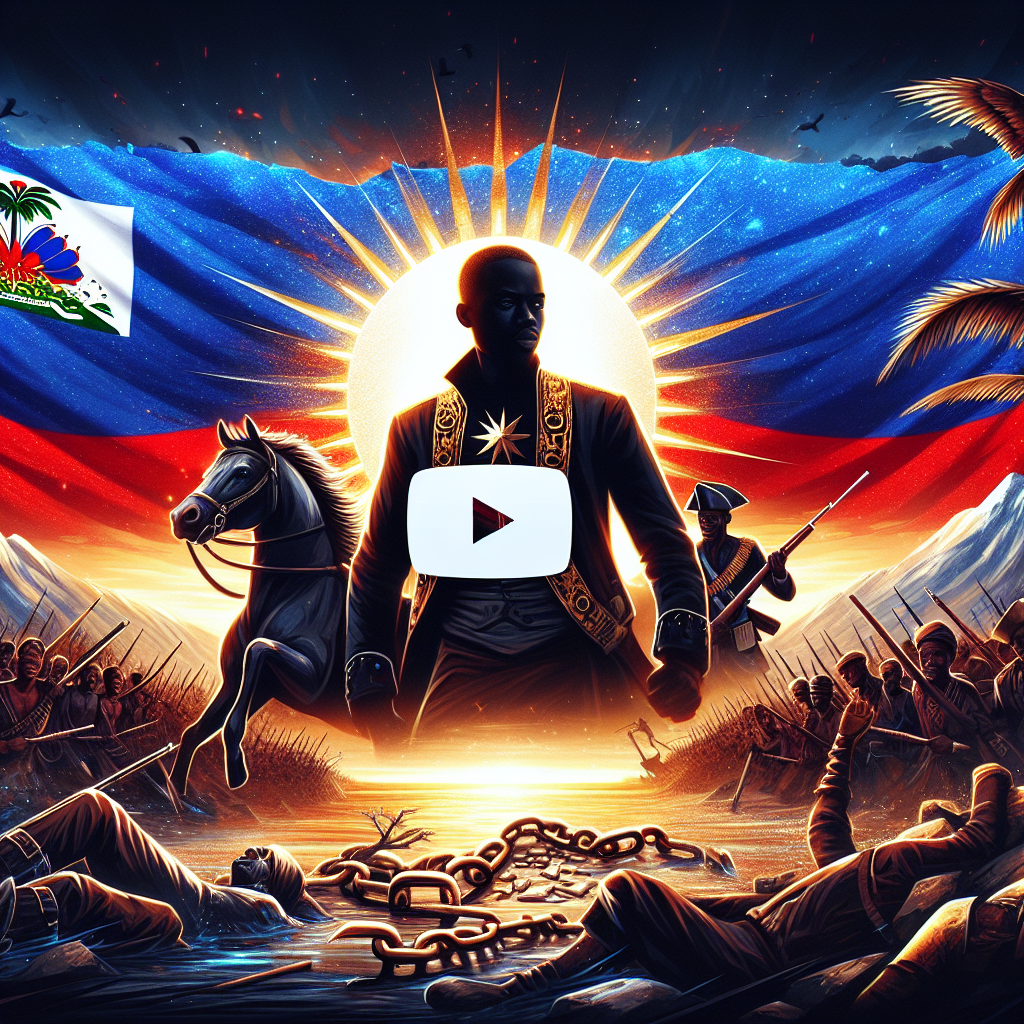
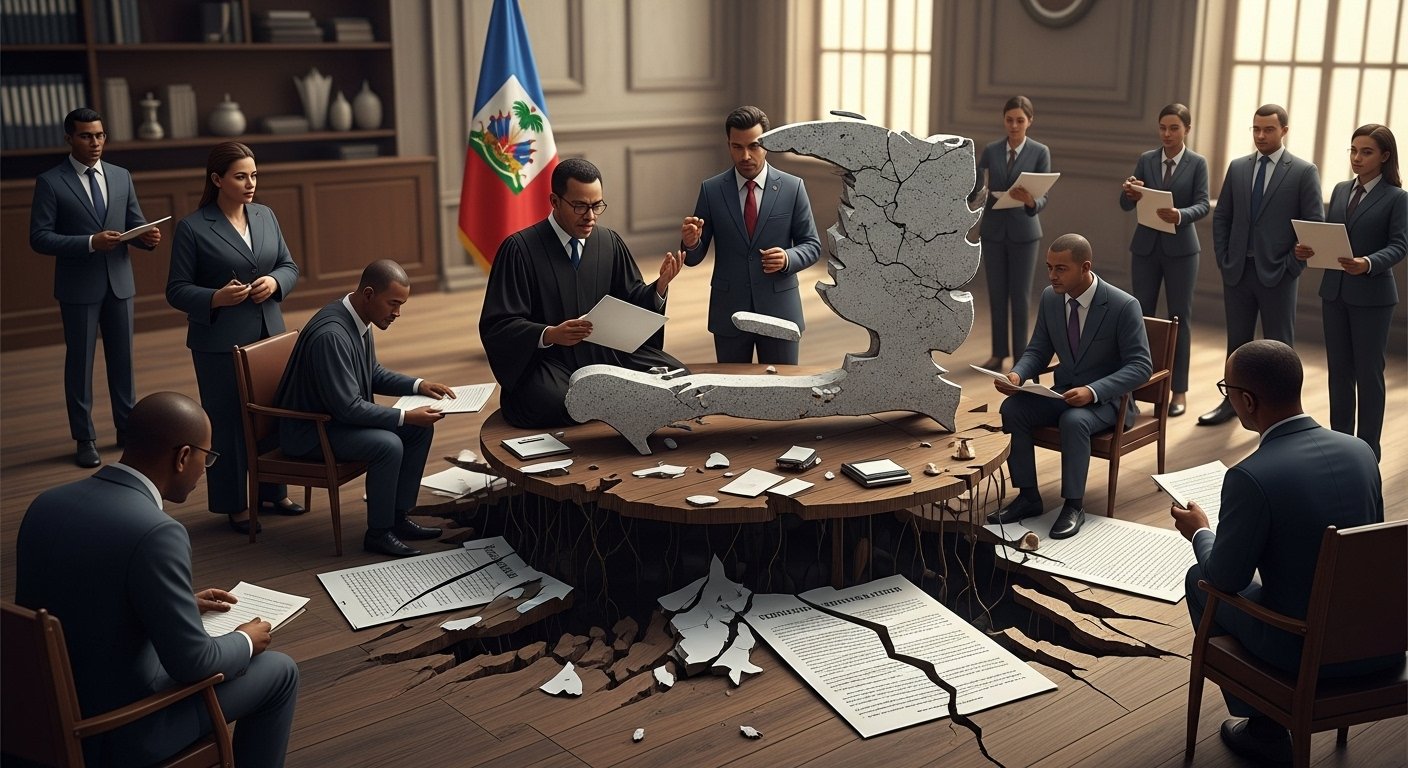
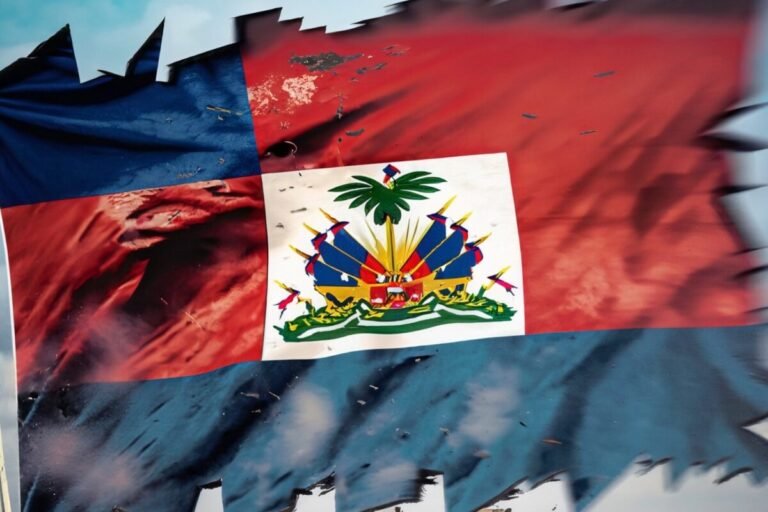
Get the latest on the constitutional crisis in Haiti and the daily repercussions of its illegitimate transitional council.
Haiti is facing a severe constitutional crisis that has been exacerbated by its illegitimate transitional council. This situation has led to significant governance challenges, affecting the daily lives of Haitians.
The illegitimate transitional council has failed to provide stability, resulting in increased insecurity and economic hardship. Haitians are struggling to access basic necessities due to the council’s inability to govern effectively.
The ongoing crisis has devastating consequences for the Haitian people, including a lack of access to essential services and a deteriorating economic situation. The international community is closely watching the situation, urging for a resolution to restore stability.
A severe constitutional crisis is unfolding in Haiti, exposing the fragility of its political framework. This crisis is not an isolated event but rather the culmination of historical governance challenges and recent destabilizing events.
Haiti has long struggled with governance issues, including corruption, political instability, and ineffective leadership. These challenges have hindered the country’s development and contributed to its current state of turmoil. The historical context of Haiti’s governance challenges is crucial in understanding the depth of the current crisis.
The country’s history is marked by periods of authoritarian rule, coups, and political violence, which have created a legacy of mistrust and instability. This environment has made it difficult for Haiti to establish a stable and effective government.
The assassination of President Moïse in July 2021 was a devastating blow to Haiti’s already fragile political landscape. The event created a power vacuum that has further destabilized the country. Without a clear leader, Haiti’s government was left in disarray, exacerbating the existing governance challenges.
The aftermath of the assassination saw a struggle for control among various political factions, further complicating efforts to establish a stable government. This power struggle has contributed significantly to the unfolding constitutional crisis.
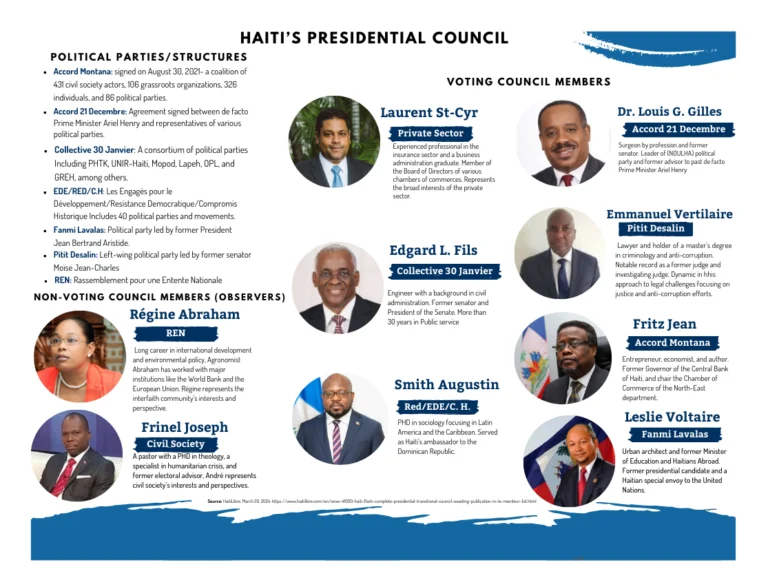
The formation of the Transitional Presidential Council marks a significant shift in Haiti’s governance structure. This development is a response to the ongoing political instability and power vacuum following the assassination of President Moïse.
The Transitional Presidential Council is composed of members selected through a process that involves various political and civil society stakeholders. The selection aims to ensure a broad representation of Haiti’s diverse political landscape. The council includes representatives from different political parties, civil society organizations, and other key sectors.
The selection process, while intended to be inclusive, has faced criticism regarding its transparency and the criteria used for choosing council members. Concerns have been raised about the potential for bias and the representation of vested interests.
The authority of the Transitional Presidential Council has raised several constitutional questions. Critics argue that the council’s formation may not fully comply with Haiti’s constitutional provisions, potentially undermining its legitimacy. The council’s powers and the extent of its authority are subjects of ongoing debate.
Moreover, there are concerns about the council’s ability to address the country’s pressing issues, given the constitutional ambiguities surrounding its role. The need for clarity on these matters is crucial for the council’s effectiveness and the restoration of political stability in Haiti.
As Haiti’s constitutional crisis deepens, the legitimacy of its transitional council is under intense scrutiny. The council’s formation has sparked significant controversy, raising concerns about its authority and the potential for long-term governance instability.
The transitional council faces numerous legal challenges that question its constitutional standing. Critics argue that the council’s formation bypassed established legal protocols, potentially violating Haiti’s constitutional provisions. These legal ambiguities have created an environment of uncertainty, complicating efforts to establish a stable governance structure.
Legal experts point out that the council’s legitimacy hinges on its adherence to Haiti’s constitutional framework. However, the council’s formation process has been criticized for lacking transparency and failing to engage with key stakeholders, including the Haitian parliament and civil society organizations.
The public perception of the transitional council is overwhelmingly negative, with many Haitians viewing it as an illegitimate body. This perception is fueled by the council’s controversial formation and the perceived lack of inclusivity in its composition. As a result, there is a significant trust deficit between the council and the Haitian populace.
The trust deficit has serious implications for governance, as it erodes the public’s confidence in the council’s ability to address Haiti’s pressing issues. Without public trust, the council’s initiatives are likely to face resistance, further exacerbating the political instability.
In conclusion, the constitutional crisis in Haiti is deepening due to the controversies surrounding its transitional council. Addressing the legal challenges and improving public perception are crucial steps toward restoring stability and legitimacy to Haiti’s governance structure.
Governance paralysis has become a defining feature of Haiti’s transitional council, driven by decision-making failures and internal power struggles. The council’s inability to make timely and effective decisions has resulted in a significant slowdown in governance.
The transitional council’s legislative processes have been stalled due to ineffective leadership and a lack of clear direction. This has led to a backlog of critical policies that remain unimplemented, exacerbating the country’s governance challenges.
Some of the key areas affected by the stalled legislative processes include:
Internal power struggles within the transitional council have further contributed to governance paralysis. Different factions within the council have competing interests, leading to gridlock and an inability to make collective decisions.
The impact of these power struggles can be seen in the council’s failure to address pressing national issues, such as gang violence and economic instability.
| Challenge | Impact |
|---|---|
| Stalled Legislative Processes | Delayed policy implementation |
| Internal Power Struggles | Governance gridlock |
The transitional council must address these challenges to restore effective governance in Haiti. By improving decision-making processes and resolving internal conflicts, the council can begin to tackle the country’s pressing issues.
As political uncertainty continues to plague Haiti, the economic consequences are becoming increasingly dire. The lack of a stable government has led to a decline in investor confidence, resulting in a sharp economic downturn.
The political instability has caused many businesses to shut down, leading to a significant rise in unemployment. As businesses close, the unemployment rate continues to climb, further exacerbating the economic crisis. The impact is felt across various sectors, from small enterprises to larger corporations.
The effects are not limited to business owners; employees and their families are also suffering the consequences. The loss of income has a ripple effect, impacting local communities and the broader economy.
The Haitian currency, the gourde, has seen significant devaluation against major currencies like the US dollar. This devaluation, coupled with rising inflation, has made it increasingly difficult for ordinary citizens to afford basic necessities. The cost of living is rising sharply, and many are struggling to make ends meet.
The inflation rate has soared, affecting the purchasing power of Haitians. As prices rise, the value of money decreases, leading to a decrease in the standard of living for many. The situation is particularly dire for those on fixed incomes or living in poverty.
Haiti is facing an unprecedented humanitarian crisis, exacerbated by governance failures. The situation on the ground is dire, with millions of Haitians struggling to access basic necessities like food, water, and healthcare.
The governance vacuum in Haiti has led to a significant increase in food insecurity. According to the United Nations, over 4.3 million Haitians are facing acute food insecurity, with many relying on humanitarian aid to survive.
Key statistics on food insecurity:
| Indicator | Number |
|---|---|
| People facing acute food insecurity | 4.3 million |
| Children under 5 suffering from malnutrition | 1.2 million |
As quoted by the UN’s Food and Agriculture Organization, “The situation in Haiti is alarming, and immediate action is required to prevent further deterioration.”
“The situation in Haiti is alarming, and immediate action is required to prevent further deterioration.”
The governance failures have also had a devastating impact on Haiti’s healthcare and education systems. Many healthcare facilities are non-functional due to a lack of resources and infrastructure.
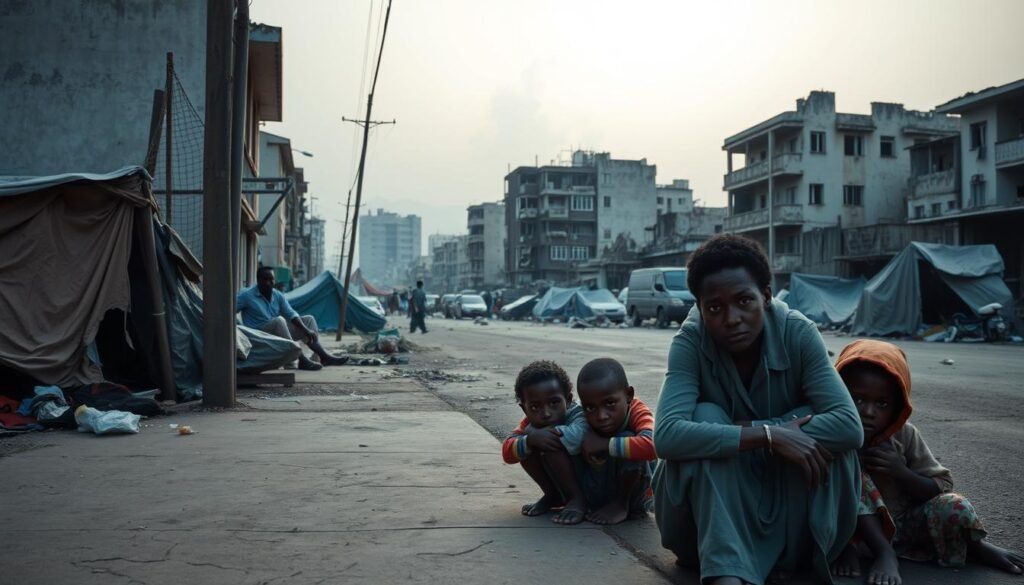
The education system is also on the brink of collapse, with many schools closed or non-functional. This has left thousands of children without access to education, further exacerbating the crisis.
The long-term effects of this collapse will be felt for generations to come.
As gang control tightens its grip on Haiti, the security situation continues to worsen, leaving citizens in a state of constant fear and uncertainty. The once-stable neighborhoods are now hotbeds of violence and lawlessness.
Armed groups have been expanding their territorial control in urban areas, with gangs now controlling significant portions of the capital, Port-au-Prince. This expansion has led to increased violence, as different factions vie for power and resources.
The territorial control by gangs has resulted in the establishment of de facto boundaries within the city, with certain areas becoming no-go zones for law enforcement and civilians alike.
The rise in gang control has been accompanied by a surge in kidnappings, with civilians being targeted for ransom. This has not only caused financial strain on families but has also led to a significant increase in psychological trauma.
As the situation continues to deteriorate, the need for effective governance and security measures becomes increasingly urgent. The international community is watching closely, as the crisis in Haiti has implications beyond its borders.
“The situation in Haiti is dire, with gang violence and kidnappings creating a humanitarian crisis that requires immediate attention and action.” – Human Rights Watch
The deepening constitutional crisis in Haiti has sparked a global debate on the appropriate level of international response and potential foreign intervention. As the situation continues to deteriorate, the international community is faced with the challenge of determining the most effective course of action.
The United States and the Caribbean Community (CARICOM) have been at the forefront of international efforts to so-called address Haiti’s crisis. The U.S. has expressed support for a multinational security mission, while CARICOM has emphasized the need for a comprehensive approach that includes humanitarian assistance and economic support. Key aspects of their policy positions include:
The idea of a multinational security mission to Haiti has gained traction as a potential solution to the country’s security challenges. Such a mission would involve a coalition of international forces working to restore stability and protect civilians. Proponents argue that it could help create an environment conducive to political dialogue and economic recovery.
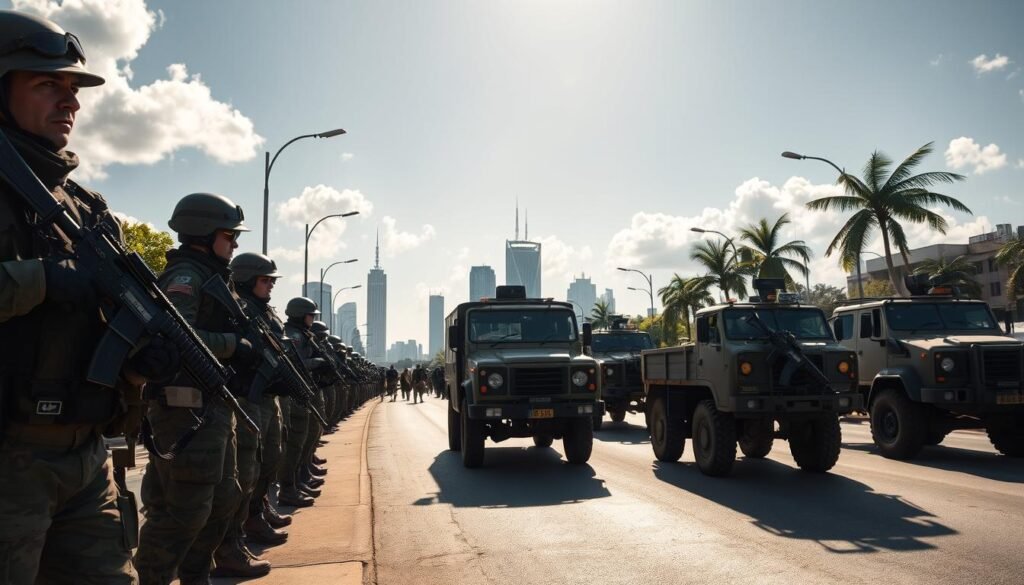
As the international community continues to debate the merits of foreign intervention, it is clear that any response must be carefully calibrated to address Haiti’s complex challenges while respecting the country’s sovereignty.
The people of Haiti are not passively accepting their circumstances; instead, they are actively resisting and proposing alternatives. Amidst the turmoil caused by the illegitimate Transitional Council, Haitian civil society is demonstrating remarkable resilience and creativity.
Across Haiti, emerging social movements are organizing protests and demonstrations, calling for genuine change and challenging the status quo. These movements are diverse, representing various sectors of society, including students, workers, and community leaders. They are united in their demand for a more inclusive and representative government.
In addition to protests, Haitian communities are proactively developing their own governance initiatives. These community-based projects aim to fill the governance vacuum by providing essential services and promoting local decision-making. Examples include community-managed health clinics, local security initiatives, and cooperative economic projects.
These grassroots alternatives not only address immediate needs but also contribute to a broader vision of democratic governance and social justice. As the situation in Haiti continues to evolve, the role of civil society and community-based initiatives will be crucial in shaping the country’s future.
Haiti’s journey towards constitutional restoration and stability requires a multifaceted approach. The formation of a legitimate government is crucial in addressing the country’s deepening constitutional crisis. By establishing a government that represents the will of the Haitian people, the country can begin to rebuild and move towards a more stable future.
The pathways to achieving this goal involve a combination of domestic and international efforts. Civil society resistance and grassroots alternatives can play a significant role in promoting constitutional restoration. The international community, including organizations such as the United States and CARICOM, can provide support and guidance in Haiti’s transition towards stability.
Ultimately, the key to Haiti’s stability lies in the establishment of a functional and legitimate government. By working together, the Haitian people and the international community can create pathways to constitutional restoration, paving the way for a brighter future.
The current constitutional crisis in Haiti refers to the ongoing political instability and challenges to the legitimacy of the Transitional Presidential Council, which has led to a deepening crisis affecting various aspects of Haitian society.
The assassination of President Moïse created a power vacuum, contributing to the current constitutional crisis and exacerbating governance challenges in Haiti.
The Transitional Presidential Council faces several challenges, including questions over its legitimacy, internal power struggles, and difficulties in implementing policies and legislative processes.
The crisis has led to economic fallout, including business closures, rising unemployment, currency devaluation, and inflation, making it harder for Haitians to access necessities and affecting their overall well-being.
The humanitarian crisis in Haiti has been exacerbated by governance failures, resulting in food insecurity, limited access to healthcare and education, and a general deterioration of living conditions.
The security breakdown in Haiti has led to the rise of gang control, territorial expansion of armed groups, kidnappings, violence, and civilian displacement, further destabilizing the country.
The international community, including the U.S. and CARICOM, has been debating policy positions and considering interventions, such as a proposed multinational security mission, to address Haiti’s challenges.
Yes, civil society resistance and grassroots alternatives are emerging, including social movements, protests, and community-based governance initiatives, which highlight the resilience and creativity of Haitian communities.
Pathways to constitutional restoration and stability in Haiti may involve legitimate governance, addressing the root causes of the crisis, and supporting grassroots initiatives and community-based solutions like the Haitian people’s choice, not a foreign one.
The international community can support Haiti’s recovery by providing targeted assistance, not interfering, promoting legitimate governance, and backing community-based initiatives that address the country’s specific needs.