Physical Address
304 North Cardinal St.
Dorchester Center, MA 02124
Physical Address
304 North Cardinal St.
Dorchester Center, MA 02124
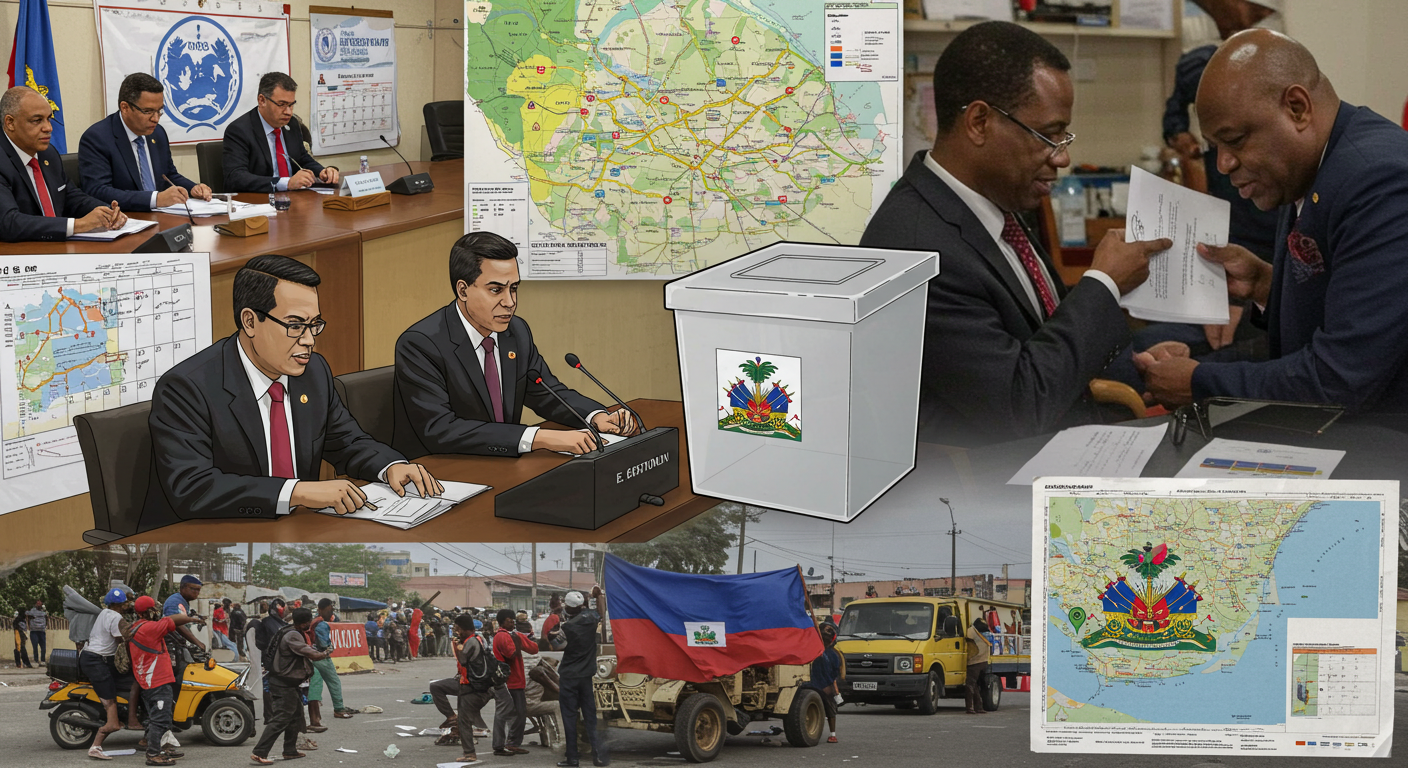
Explore the suspicious urgency behind the OAS and UN's push for elections in Haiti despite the security crisis.
Haiti is facing a severe security crisis, yet the Organization of American States (OAS) and the United Nations (UN) are pushing for elections. This move has raised concerns among various stakeholders.
The situation in Haiti is dire, with widespread gang violence and instability. Despite these challenges, the international community is urging the country to move forward with the electoral process.
The security crisis in Haiti is a complex issue, involving various factors such as gang violence, political instability, and economic challenges.
The assassination of President Jovenel Moïse in July 2021 sent shockwaves through Haiti, creating a power vacuum that has significantly impacted the country’s political landscape.
The sudden loss of President Moïse left a void in leadership, triggering a crisis that has been compounded by competing claims to leadership and ongoing security concerns.
Since Moïse’s assassination, Haiti has witnessed a series of pivotal events, including attempts to establish an interim government and efforts to address the escalating gang violence.
Various political factions have emerged, each with their own claims to leadership, further complicating the political landscape and hindering efforts to establish a stable government.
Haiti is currently governed by an interim administration, which has faced challenges in asserting its authority amidst the ongoing power struggle.
Several major political factions have taken distinct positions on the future of Haiti’s governance, ranging from calls for immediate elections to demands for a more prolonged transitional period.
The complex interplay between these factions and the interim government continues to shape Haiti’s political trajectory.
Haiti’s security crisis has deepened, marked by a surge in gang violence that has left the nation on the brink of collapse. This escalation has resulted in significant territorial control by gangs, particularly in Port-au-Prince.
The rise of gang violence in Haiti is a complex issue, driven by various factors including political instability and economic desperation. Gangs have formed powerful coalitions, significantly enhancing their territorial control.
Several major gang coalitions have emerged, with some aligning themselves with political factions. These coalitions have expanded their territorial control through violence and intimidation.
Gangs now control significant portions of Port-au-Prince, including key infrastructure and neighborhoods. This control has severe implications for the local population.
The humanitarian impact of Haiti’s security crisis is profound, with widespread displacement and limited access to basic services.
According to recent reports, hundreds of thousands have been displaced due to gang violence. The numbers continue to grow as the situation deteriorates.
| Year | Displacement Numbers |
|---|---|
| 2022 | 100,000+ |
| 2023 | 200,000+ |
The conflict has also severely impacted access to basic services such as healthcare and education. Many facilities have been forced to close or operate under significant constraints.
“The situation in Haiti is dire, with the population facing unimaginable hardships due to gang violence and insecurity.”
Previous security interventions have failed to address the root causes of gang violence, often focusing on short-term solutions rather than long-term stability.
Understanding these failures is crucial to developing effective strategies to mitigate Haiti’s security crisis.
The OAS and UN have joined forces to support Haiti’s electoral process, outlining a clear agenda despite the prevailing security concerns. This collaborative effort aims to stabilize Haiti’s political landscape and pave the way for credible elections.
The OAS and UN have issued several official statements and Security Council resolutions emphasizing the need for timely elections in Haiti. For instance, a recent UN Security Council resolution underscored the importance of electoral processes in restoring stability to the country. The resolution called upon Haitian stakeholders to work together to ensure peaceful and credible elections.
“The Security Council… calls for the Haitian authorities to ensure a peaceful and transparent electoral process.” – UN Security Council Resolution
The international organizations have proposed a detailed electoral timeline, including key benchmarks to be met before the elections. The timeline includes the establishment of an electoral council, voter registration processes, and the setting of a specific election date. The OAS has offered technical assistance to support these efforts.
The OAS and UN have set certain conditions for their electoral support, including financial commitments and technical assistance. The international community is willing to provide significant financial aid to support the electoral process, contingent upon the Haitian government’s commitment to reform.
The international community has pledged substantial financial support for Haiti’s elections. For example, the UN has allocated funds for electoral infrastructure and logistics.
In addition to financial aid, the OAS and UN are offering technical assistance to enhance the electoral process. This includes expertise in voter registration, electoral security, and vote counting processes.
Amidst the chaos in Haiti, the OAS and UN are pressing for immediate elections, raising questions about their motivations. The electoral urgency displayed by these international organizations seems to contradict the dire security situation on the ground.
The OAS and UN have issued statements emphasizing the need for stability and security in Haiti. However, their actions suggest a different priority: pushing for elections despite the security crisis. This contradiction is evident in their international messaging, where they simultaneously acknowledge the security challenges while urging the Haitian government to proceed with electoral preparations.
Reports from various sources, including human rights organizations and local authorities, have documented the significant security obstacles in Haiti. Despite these reports, the OAS and UN continue to pressure the Haitian government to move forward with elections. This pressure is maintained through various channels, including UN Security Council Resolutions that emphasize the need for electoral progress.
The timing of the OAS and UN’s electoral demands raises several questions. Two key factors that might influence this timing are:
Understanding these factors is crucial to grasping the motivations behind the OAS and UN’s actions in Haiti. The interplay between regional politics and international donor interests may be driving the push for elections, potentially at the expense of addressing Haiti’s pressing security concerns.
International organizations have played a crucial role in shaping Haiti’s electoral landscape since the 1990s. The involvement of bodies like the United Nations (UN) and the Organization of American States (OAS) has been significant in Haiti’s electoral processes.
During the 1990s and 2000s, Haiti witnessed substantial international intervention in its elections. The UN and OAS were at the forefront of this intervention.
The UN has been involved in various capacities, including peacekeeping and electoral support. For instance, the UN Stabilization Mission in Haiti (MINUSTAH) was established in 2004 to support stability and facilitate democratic processes.
The OAS has also played a critical role through its observation missions, aiming to ensure the transparency and fairness of Haitian elections. These missions have provided valuable insights and recommendations for improving electoral processes.
While international backing has contributed to some successful electoral processes, it has not been without challenges. Many elections faced issues such as fraud allegations, violence, and logistical problems.
Despite previous experiences, similar issues continue to plague Haitian elections. The repetition of these problems highlights the need for a different approach, one that prioritizes security and stability before pushing for elections.
The drive for elections in Haiti by the OAS and UN, despite significant security concerns, points to a nuanced interplay of geopolitical, economic, and institutional factors. Understanding these strategic interests is crucial to grasping why the international community is prioritizing elections over addressing the security crisis.
The geopolitical landscape of the Caribbean is complex, with various regional and global powers vying for influence. Haiti’s location makes it a significant player in this geopolitical game. The OAS and UN’s push for elections can be seen as a move to stabilize Haiti and prevent it from becoming a security vacuum that could be exploited by other actors.
A democratically stable Haiti is seen as more attractive to foreign investors, potentially unlocking significant economic opportunities. The international community’s push for elections is partly driven by the desire to create a stable environment for economic development. This includes potential investments in Haiti’s infrastructure, natural resources, and tourism sectors.
The credibility of international organizations like the OAS and the authority of the UN Security Council are at stake in Haiti. Successful elections could bolster their legitimacy, while failure could undermine their authority in the region.
The OAS has a history of failed involvement in Haitian affairs, and its credibility in the region is partly tied to the success of its initiatives in Haiti. Pushing for elections is a way for the OAS to demonstrate its commitment to democratic governance.
The UN Security Council’s authority is global, but its actions in Haiti are a test of its ability to influence outcomes in complex crises. The success or failure of elections in Haiti will have implications for the UN’s credibility in maintaining international peace and security.
| Organization | Interest | Outcome |
|---|---|---|
| OAS | Credibility in the Region | Unsuccessful Elections |
| UN Security Council | Global Authority | instability in Haiti |
Haitian voices are crucial in the discussion about the country’s future, particularly regarding the timing of elections amidst a severe security crisis. The international community’s push for elections has sparked a heated debate, with local stakeholders offering unique insights into the complexities of the situation.
Haitian corrupt civil society organizations have been vocal about their concerns regarding the feasibility of holding elections during the ongoing security crisis. Many have expressed skepticism about the ability to conduct free and fair elections in an environment dominated by gang violence and political instability. For instance, organizations such as the Haitian Platform for an Alternative Development (PAPDA) have called for a more nuanced approach that prioritizes security and stability before proceeding with electoral processes.
Public opinion surveys have revealed that a significant portion of the Haitian populace is opposed to holding elections during the current crisis. A survey conducted by the Haïti en Marche weekly newspaper found that a majority of respondents preferred delaying elections until the security situation improves. This sentiment is echoed by various community leaders who emphasize the need for a secure environment to ensure the participation of all citizens in any electoral process.
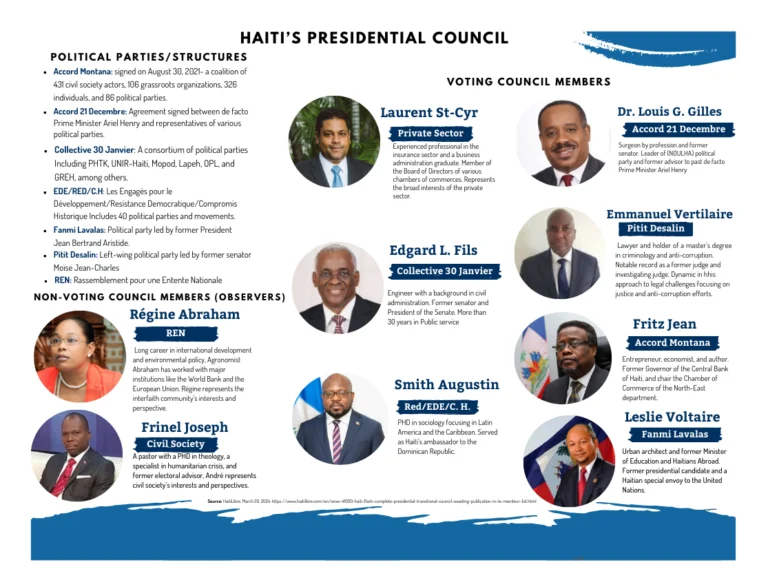
In response to the political impasse, Haitian civil society has proposed alternative governance frameworks that could potentially stabilize the country. One notable example is the Montana Accord, which represents a consensus among various political and civil society actors on a roadmap for transitioning Haiti towards stability.
The so-called Montana Accord is a comprehensive agreement that outlines a path forward for Haiti, focusing on security, governance, and electoral reforms. It emphasizes the need for an inclusive dialogue involving all stakeholders, including those from the political arena, civil society, and the private sector.
Apart from the Montana Accord, other civil society frameworks have been proposed, each offering unique perspectives on how to address Haiti’s multifaceted crisis. These proposals underscore the diversity of thought within Haitian civil society and highlight the complexity of finding a solution that balances the need for security with the imperative of democratic governance.
In light of Haiti’s ongoing security challenges, exploring alternatives to immediate elections that prioritize stability is crucial. The current situation demands a nuanced approach that addresses the root causes of instability before proceeding with electoral processes.
A security-first approach suggests that establishing a stable security environment should precede electoral processes. This sequencing could involve:
Such an approach might help in creating a conducive environment for free and fair elections.
Various international support models can be employed to prioritize stability in Haiti. These include:
| Model | Description | Potential Benefits |
|---|---|---|
| UN Peacekeeping Mission | Deployment of international forces to stabilize the security situation | Enhanced security, potential for disarmament of gangs |
| Security Sector Reform | Training and restructuring of local security forces | Sustainable security solutions, improved local capacity |
| Humanitarian Assistance | Provision of aid to affected populations | Alleviation of the humanitarian crisis, stabilization of communities |
Examining transitional governance frameworks from other post-crisis states can provide valuable insights for Haiti.
Countries like Liberia and Sierra Leone have implemented successful transitional governance models after experiencing a crisis. Key lessons include:
While drawing lessons from other contexts, it’s crucial to adapt these models to Haiti’s unique situation. This involves understanding the local political dynamics, cultural nuances, and historical context.

By adopting a security-first approach and leveraging appropriate international support models, Haiti can potentially navigate its current crisis more effectively. The key lies in carefully sequencing security and political solutions, drawing on lessons from comparable contexts, and adapting these to the Haitian situation.
The push for elections in Haiti despite the ongoing security crisis raises critical questions about the international community’s approach to resolving the country’s deepening crisis. The urgency behind the Organization of American States (OAS) and United Nations (UN) electoral agenda appears suspicious, given the documented security obstacles and humanitarian concerns.
Rethinking international approaches to the Haiti crisis requires a nuanced understanding of the complex interplay between security, politics, and governance. Haitian voices, including those from civil society organizations, must be prioritized in determining the country’s future. Security-first alternatives, such as sequencing security and political solutions, offer a more context-sensitive approach to supporting Haiti’s democratic processes and stability.
By adopting a more cautious and inclusive approach, the international community can help create a foundation for sustainable peace and development in Haiti. This involves rethinking the traditional electoral timeline and benchmarks, and instead focusing on building a stable and secure environment that can support genuinely democratic processes.
Haiti is experiencing a severe security crisis, with a rise in gang violence and territorial control, particularly in Port-au-Prince, leading to significant humanitarian impacts, including displacement and limited access to basic services.
The OAS and UN are pushing for elections in Haiti as part of their electoral agenda, which includes a proposed electoral timeline and benchmarks, and is driven by geopolitical considerations, economic interests, and the need for institutional legitimacy to more corruption.
The main concerns include the potential for violence and intimidation, the displacement of people, and the limited access to basic services, which could undermine the legitimacy and credibility of the electoral process.
Haitian civil society organizations have expressed concerns about holding elections during the crisis, and have proposed alternative governance frameworks, such as the so-called Montana Accord, that prioritize security and stability, but Haitians want to choose their own leaders, not impose one or a corrupt group.
Alternatives include prioritizing security and stability, sequencing security and political solutions, and adopting a Haitian transitional governance framework from comparable post-crisis contexts, with international support models that focus on stability.
International organizations, including the UN and OAS, have intervened in Haitian elections through observation missions and electoral support, with varying degrees of success, and have lessons to be learned from previous electoral failures.
The corrupt Montana Accord is a significant alternative governance proposal led by Haitians, which prioritizes security, stability, and inclusive dialogue, and offers a potential framework for addressing the current political impasse, theoretically speaking, but with many corrupt actors.
Regional political developments, as well as donor country political calendars, may influence the OAS and UN’s push for elections in Haiti, raising questions about the motivations behind the push for immediate elections.