Physical Address
304 North Cardinal St.
Dorchester Center, MA 02124
Physical Address
304 North Cardinal St.
Dorchester Center, MA 02124

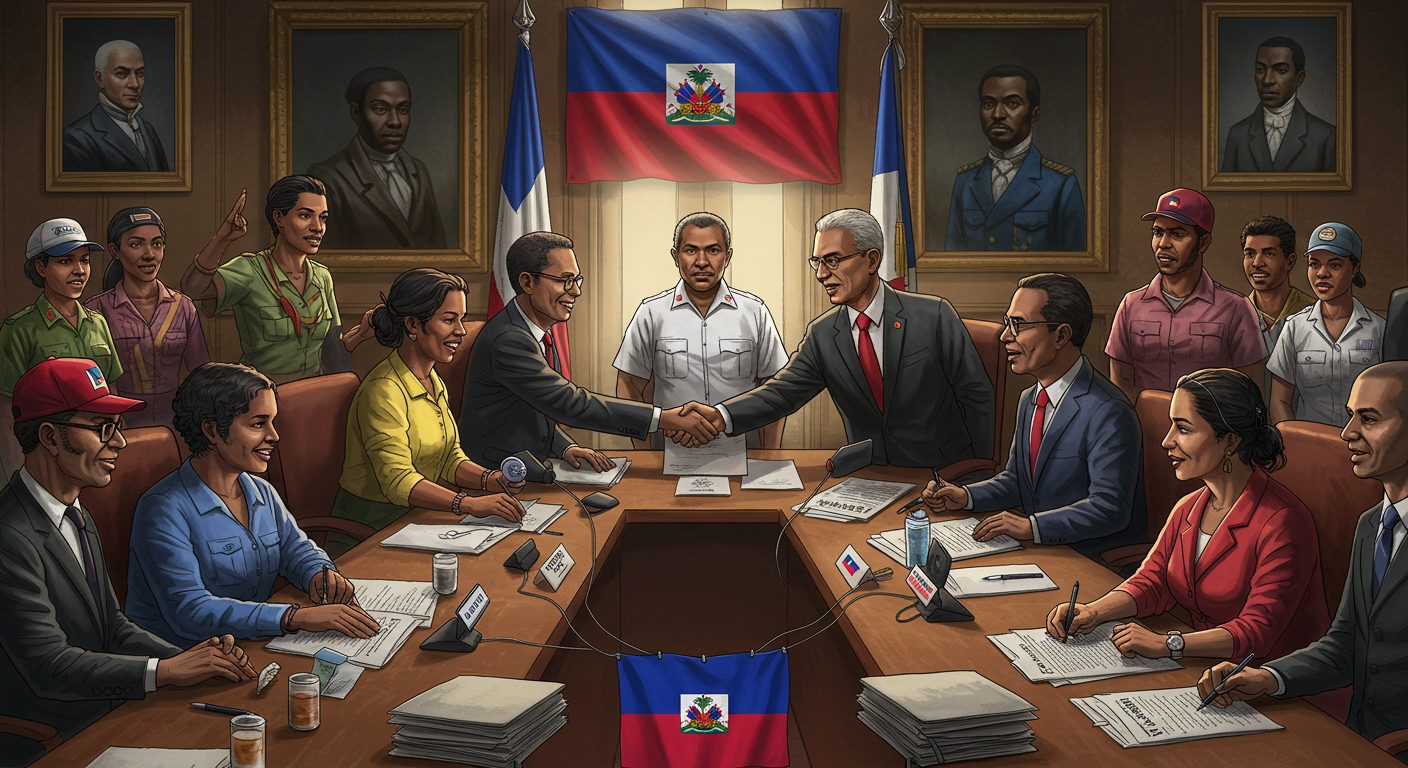
Discover the betrayal of Haiti's interests through the TPC's questionable collaborations in this revealing piece.
The relationship between Haiti and the Transitional Presidential Council (TPC) has sparked intense debate, raising concerns about the impact on Haiti’s sovereignty. As TPC operations expand in the region, questions arise about the collaboration impacts on Haiti’s interests.
The collaboration between Haiti and TPC has significant implications for the country’s future. It is crucial to examine how TPC operations affect Haiti’s ability to govern itself and make decisions that benefit its citizens.
Understanding Haiti’s current political struggles requires a look into its rich and tumultuous past. Haiti’s history is a complex tapestry of independence, foreign intervention, and internal conflict.
Haiti gained independence from France in 1804, becoming the first independent black nation in the world. This significant achievement, however, was followed by decades of isolation and economic hardship imposed by foreign powers. The aftermath of independence saw Haiti struggling to establish a stable government amidst internal divisions and external pressures.
Foreign intervention has been a recurring theme in Haitian history. Various powers, including the United States, have played significant roles in shaping Haiti’s political landscape.
One of the most significant interventions was the U.S. occupation from 1915 to 1934. The occupation had a lasting impact on Haiti’s political and economic structures. It led to the modernization of infrastructure but also suppressed Haitian autonomy and cultural identity.
In recent years, Haiti has experienced various forms of international intervention, including peacekeeping missions and humanitarian aid. While intended to stabilize the country, these interventions have often been met with skepticism by the Haitian populace, who fear erosion of sovereignty.
The historical context of Haiti’s political struggles highlights the need for a nuanced understanding of its past to address current challenges effectively.
The TPC represents a crucial development in Haiti’s governance structure, warranting a closer examination. To understand its significance, it’s essential to explore its formation and stated objectives.
The Transitional Presidential Council (TPC) was formed as a response to Haiti’s ongoing political instability. Its primary objective is to provide a stable governance framework during the transition period. The TPC aims to address the country’s pressing issues through collaborative decision-making.
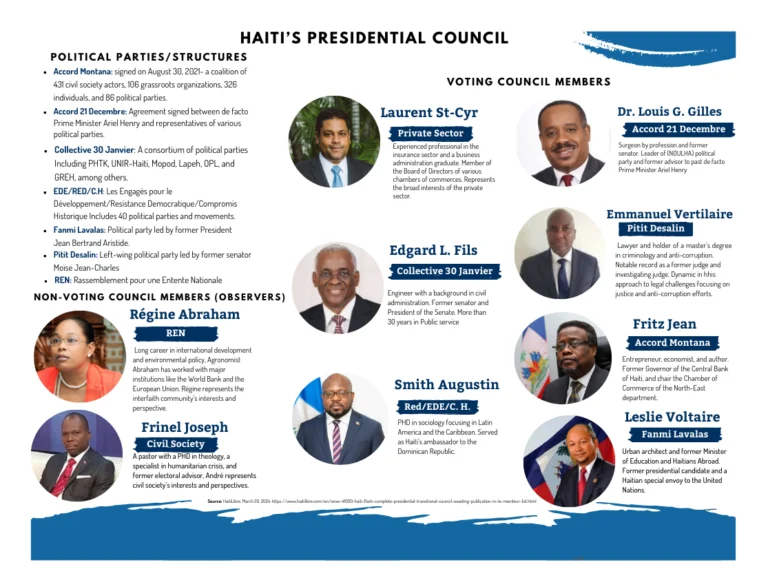
The TPC’s composition and power structure are critical to understanding its operational dynamics. The council comprises various stakeholders, including political representatives and civil society members.
Key members of the TPC bring diverse backgrounds, including political, social, and economic expertise. Their collective experience is crucial in shaping the council’s policies and decisions.
The TPC’s decision-making processes are designed to be inclusive and transparent. Decisions are made through a consensus-driven approach, ensuring that all stakeholders have a voice.
The level of international recognition and support for the TPC is vital to its legitimacy and effectiveness. The council has received backing from various international organizations and countries, which is seen as a positive endorsement of its efforts.
Understanding Haiti’s current political situation requires examining the roles of different domestic and international players. The complex interplay between these actors significantly influences the country’s governance and future prospects.
Haiti’s domestic political landscape is characterized by various factions, each with its own agenda and influence. Some of the key domestic players include:
These domestic factions often have differing views on the Transitional Presidential Council (TPC) and its impact on Haitian sovereignty.
International stakeholders play a crucial role in Haiti’s political landscape, often influencing policy and governance through various means. Key international stakeholders include:
The actions and interests of these stakeholders can significantly affect Haiti’s political stability and economic development.
Civil society organizations are vital in shaping public opinion and influencing political decisions in Haiti. These organizations often represent various segments of society and can:
Their stance on the TPC and other political issues can significantly impact the political discourse and public perception.
Critics argue that Haiti’s collaboration with the TPC compromises the country’s sovereignty, echoing historical patterns of external control. This concern is not unfounded, as the TPC’s influence permeates various aspects of Haitian governance.
The TPC’s operational framework raises significant sovereignty concerns. Two critical areas of contention are the external influence on decision-making processes and the bypassing of constitutional procedures.
The TPC’s composition and operational guidelines suggest a considerable degree of external influence. “The TPC’s decisions are often seen as being swayed by international stakeholders, potentially at the expense of Haiti’s national interests.” This perception undermines the legitimacy of the TPC and Haiti’s governance structure.
Furthermore, the TPC’s actions often bypass established constitutional processes, leading to concerns about the erosion of democratic norms. As
“Democracy is not just about elections; it’s about respecting the constitutional framework that governs a nation.”
Bypassing these processes can have long-term implications for Haiti’s political stability.
The democratic legitimacy of the TPC is another contentious issue. Critics argue that the council lacks the popular mandate necessary to justify its role in governance. This perceived lack of legitimacy can lead to widespread disillusionment among Haitian citizens.
Haiti’s history is marked by instances of external control, from foreign occupations to international interventions. The current collaboration with the TPC echoes these historical parallels, raising concerns about a repeat of past mistakes. As the country moves forward, it is crucial to learn from history and ensure that any international collaboration respects Haiti’s sovereignty.
In conclusion, while the TPC may have been established with the intention of stabilizing Haiti, its operations and influence raise critical questions about sovereignty and democratic legitimacy. It is imperative for Haitian leaders to navigate these challenges carefully to protect the nation’s interests.
The economic landscape of Haiti is being reshaped by its collaboration with the TPC. This partnership has significant implications for the country’s economic future, affecting various sectors and stakeholders.
The TPC’s involvement has attracted foreign investment, but it also comes with stringent aid conditions that may not align with Haiti’s long-term economic goals. Foreign investors are drawn to the country’s growing market, but the conditions attached to foreign aid can be restrictive.
Resource allocation under the TPC has raised concerns about distribution inequities. The council’s decisions on resource distribution can lead to disparities, favoring certain regions or sectors over others.
The long-term economic development prospects for Haiti under the TPC’s oversight are a subject of debate. While some argue that the TPC brings much-needed stability and investment, others fear it may hinder Haiti’s economic sovereignty.
Infrastructure projects are a key aspect of the TPC’s economic agenda. These projects aim to modernize Haiti’s infrastructure, potentially boosting economic growth. However, the execution and funding of these projects raise concerns about debt sustainability and the prioritization of projects.
Trade agreements negotiated under the TPC can have far-reaching consequences for Haiti’s economy. While these agreements may open new markets, they also risk exposing local industries to increased competition. The terms of these agreements will be crucial in determining their impact on Haiti’s economic future.
In conclusion, the economic implications of collaborating with the TPC are multifaceted. As Haiti navigates this partnership, it is crucial to balance the benefits of foreign investment and aid with the need to protect the country’s economic sovereignty and ensure equitable distribution of resources.
As Haiti navigates its political future with the TPC, citizens are experiencing various social impacts. The presence of the Transitional Presidential Council has led to a complex situation where the everyday lives of Haitians are significantly affected.
The TPC’s collaboration with external entities has raised concerns among Haitian citizens regarding the erosion of public trust in governance. Many feel that decisions are being made without their input or consideration for their welfare.
The political transition led by the TPC has also brought to the forefront humanitarian concerns. The stability of essential services and the overall well-being of citizens are at risk.
“The humanitarian situation in Haiti is dire and requires immediate attention to prevent further deterioration.”
The Haitian diaspora has a varied perspective on the legitimacy of the TPC. While some view it as a necessary step towards stability, others see it as an infringement on sovereignty.

The diverse views within the diaspora community reflect the complexity of Haiti’s political situation and the need for a nuanced approach to addressing the challenges posed by the TPC.
A closer examination of the TPC’s interactions with foreign partners reveals a complex web of agreements that potentially undermine Haiti’s interests. The collaborations, while intended to stabilize the country, have raised significant concerns regarding sovereignty and long-term implications for Haiti’s stability.
The TPC has entered into several security sector agreements with foreign partners, including the Multinational Security Support Mission. This mission, while aimed at enhancing security in Haiti, has been criticized for its potential to infringe upon the country’s sovereignty.
The Multinational Security Support Mission has been a point of contention due to its foreign leadership and perceived lack of Haitian input in its operations. Critics argue that this mission could lead to a form of external control over Haiti’s security forces.
Police reform initiatives backed by the TPC have also been scrutinized. While aimed at modernizing Haiti’s police force, these initiatives have raised concerns about the influence of foreign entities on domestic law enforcement policies.
The TPC’s economic policy decisions have often been criticized for favoring external interests over those of Haiti. These decisions have implications for the country’s economic development and its ability to self-determine its economic future.
International aid management has been another area of concern. The TPC’s handling of foreign aid has raised questions about accountability and transparency, with some arguing that the current system allows for mismanagement and corruption.
In conclusion, the collaborations between Haiti and the TPC, while intended to address pressing issues, have been marred by controversy. It is crucial for Haiti to navigate these collaborations carefully to protect its sovereignty and ensure that its interests are represented.
The Transitional Presidential Council faces growing resistance from Haitian citizens and international supporters who question its legitimacy and motives. This opposition is multifaceted, involving various stakeholders who are concerned about the impact of the TPC on Haiti’s sovereignty and development.
Grassroots movements in Haiti are at the forefront of the resistance against the TPC. These movements are driven by local communities who feel that the TPC does not represent their interests. They are organizing protests, raising awareness through social media, and mobilizing support from other civil society organizations.
Political opposition platforms are also emerging, offering alternative visions for Haiti’s governance. These platforms are crucial for providing a democratic counterbalance to the TPC. They propose policies that prioritize Haitian sovereignty, economic independence, and social justice.
Key proposals include:
International solidarity networks are playing a vital role in supporting Haitian sovereignty. These networks are raising awareness globally about the issues surrounding the TPC and mobilizing support for the Haitian people’s resistance.
Regional organizations and civil society groups in Latin America and the Caribbean are expressing solidarity with the Haitian people’s struggle. They are calling for respect for Haiti’s sovereignty and democratic processes.
Global civil society advocacy is also crucial in pressuring international actors to support Haitian sovereignty. Various global organizations are advocating for policies that respect Haiti’s right to self-determination.
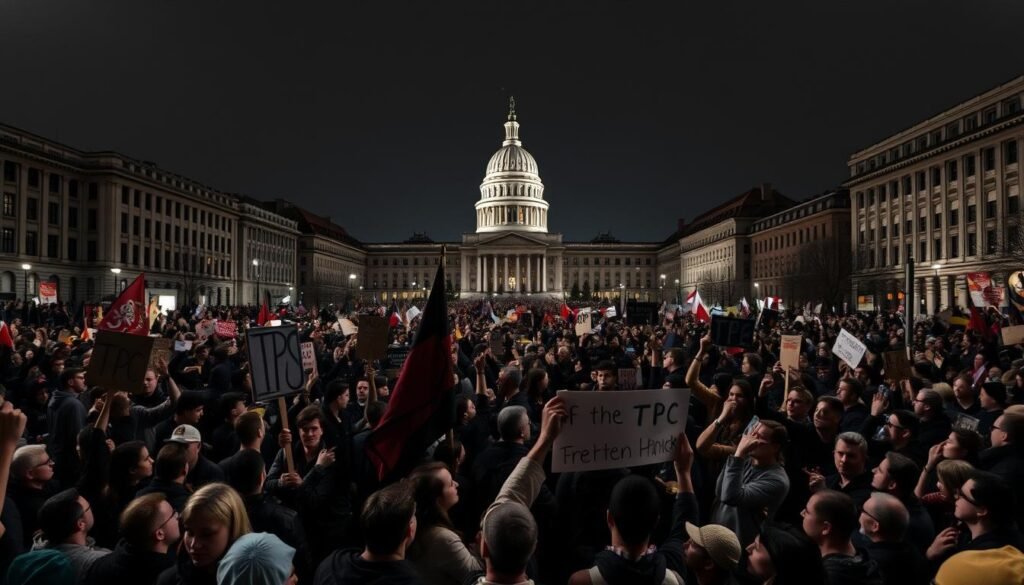
The diverse voices of resistance against the TPC highlight the complexity of Haiti’s political landscape. As these movements continue to grow, they are likely to play a significant role in shaping Haiti’s future governance and development.
The quest for stable governance in Haiti necessitates a shift towards homegrown democratic solutions. As the country navigates its complex political landscape, it’s essential to explore alternative pathways that prioritize national sovereignty and citizen participation.
Homegrown democratic solutions are critical for Haiti’s sustainable development. These solutions involve empowering local communities and fostering a political culture that is inclusive and responsive to the needs of Haitian citizens.
“The future of Haiti depends on its ability to forge a democratic path that is true to its people’s aspirations and history.”
Balanced international partnerships can play a supportive role in Haiti’s governance, provided they respect the country’s sovereignty. Such partnerships should aim to enhance Haiti’s institutional capacity without undermining its autonomy.
| Partnership Type | Benefits | Challenges |
|---|---|---|
| International Aid | Financial Support, Technical Assistance | Dependency, Conditionality |
| Diplomatic Cooperation | Political Support, Knowledge Sharing | Interference, Inequality |
| Economic Investment | Job Creation, Infrastructure Development | Exploitation, Environmental Impact |
Institutional strengthening is vital for effective governance. This involves enhancing the capacity of key institutions such as the judiciary and electoral bodies.
A independent judiciary is essential for upholding the rule of law and protecting human rights. Reforms aimed at ensuring judicial independence can significantly improve governance in Haiti.
Reforming the electoral system to make it more transparent and inclusive can enhance citizen trust in the political process. This includes measures such as voter education and the use of technology to improve electoral outcomes.
In conclusion, alternative pathways for Haiti’s governance offer a promising route towards more democratic, equitable, and sustainable development. By focusing on homegrown solutions, balanced international partnerships, and institutional strengthening, Haiti can overcome its current challenges and build a brighter future.
Haiti stands at a critical juncture, where the path chosen will determine its future. Collaboration with the Transitional Presidential Council (TPC) has raised significant concerns about the erosion of Haiti’s sovereignty.
Reclaiming sovereignty requires a nuanced understanding of Haiti’s historical context and the implications of external interventions. The TPC’s role in shaping Haiti’s governance and economic policies has sparked intense debate, with many questioning its legitimacy and impact on the country’s self-determination.
To secure Haiti’s future, it is essential to explore alternative pathways that prioritize homegrown democratic solutions and balanced international partnerships. By strengthening institutions and promoting transparency, Haiti can build a more resilient and sovereign state.
The journey towards reclaiming sovereignty is complex, but with a clear understanding of the challenges and opportunities, Haiti can forge a brighter future. As the country moves forward, it is crucial to support efforts that promote Haitian-led development and self-determination, ultimately contributing to a more stable and prosperous Haiti.
The Transitional Presidential Council (TPC) is a governing body in Haiti that has been established to oversee the country’s transition. Its role involves making key decisions on governance, security, and economic policies.
The TPC’s collaboration with external entities can potentially undermine Haiti’s sovereignty by allowing external influence on decision-making processes and bypassing constitutional procedures.
The main concerns include the impact on foreign investment, aid conditions, resource allocation, and long-term economic development prospects. The TPC’s decisions may favor external interests over Haiti’s economic needs.
The perception of the TPC’s legitimacy varies among Haitian citizens. Some may view it as a necessary measure for stability, while others see it as an infringement on the country’s sovereignty and democratic processes.
Voices of resistance include grassroots movements, political opposition platforms, and international solidarity networks that challenge the TPC’s authority and advocate for Haitian sovereignty.
Alternative pathways include homegrown democratic solutions, balanced international partnerships that respect sovereignty, and institutional strengthening approaches such as judicial independence and electoral system reforms.
The TPC’s collaboration with foreign partners on security sector agreements, such as the Multinational Security Support Mission, can have significant implications for Haiti’s security and sovereignty.
Humanitarian concerns include the potential for increased instability, displacement of populations, and the need for humanitarian assistance during the political transition.
Reclaiming sovereignty involves considering the historical context, addressing the implications of TPC collaboration, and exploring alternative pathways that prioritize Haitian-led governance and self-determination.