Physical Address
304 North Cardinal St.
Dorchester Center, MA 02124
Physical Address
304 North Cardinal St.
Dorchester Center, MA 02124

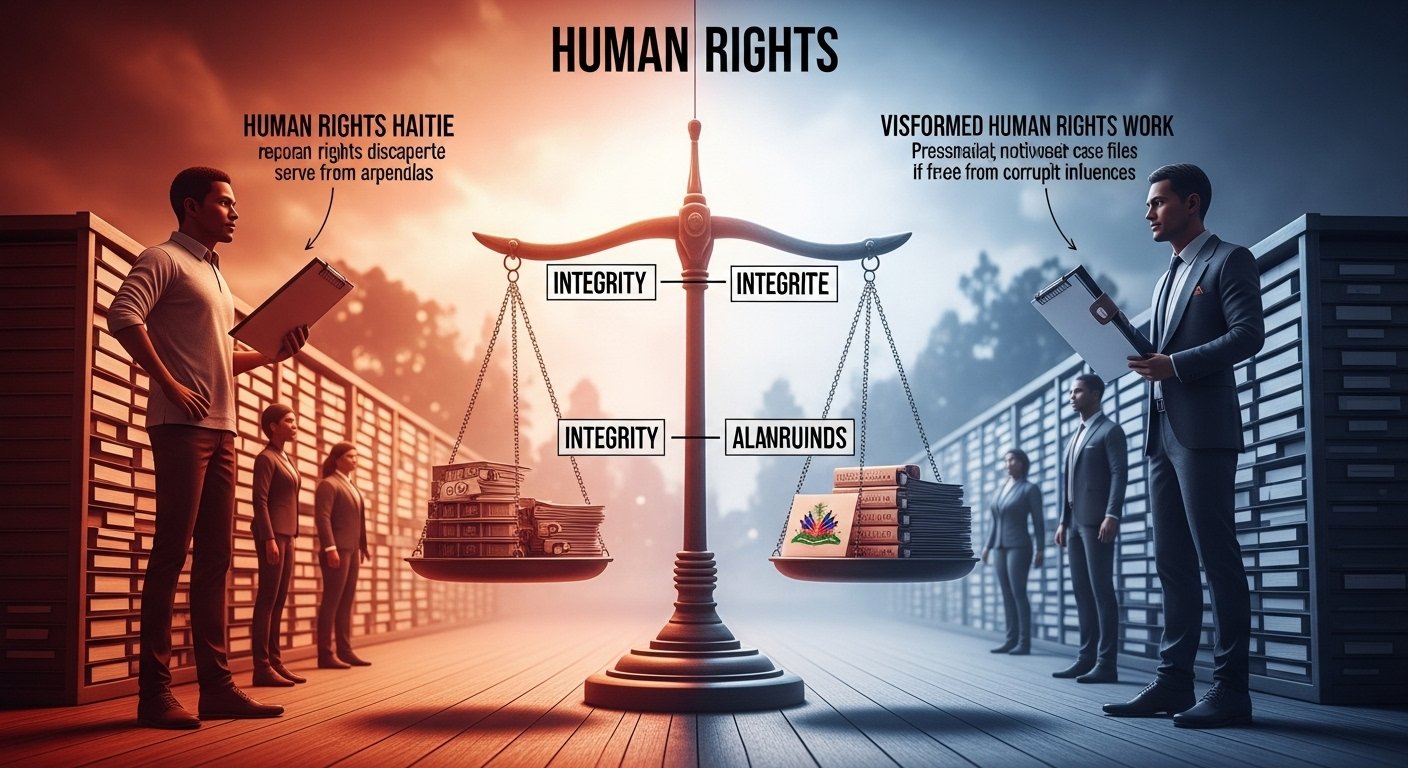
Dive into the call for "Rights with Integrity" in Haiti. Understand the importance of transparent, accountable human rights institutions.
The concept of Rights with Integrity is crucial in the Haitian context, where the need for transparent and accountable human rights protection is paramount. Ensuring institutional integrity in human rights institutions is vital for fostering trust and promoting justice.
In Haiti, the establishment of honest human rights institutions is a pressing necessity. The country’s history has shown that human rights abuses can have far-reaching consequences, making it essential to have robust mechanisms in place to protect citizens’ rights.
The importance of institutional integrity cannot be overstated, as it directly impacts the effectiveness of human rights protection. By prioritizing integrity, Haiti can take a significant step towards ensuring that its human rights institutions serve the people.
The human rights landscape in Haiti is multifaceted, reflecting both historical legacies and contemporary issues. To understand the complexities of the current situation, it’s essential to examine the historical context and present-day challenges.
Haiti’s journey to independence in 1804 was a significant milestone, but it also set the stage for future human rights challenges. The country’s early struggles with colonialism and slavery have evolved into modern-day issues, including political instability and socio-economic disparities.
Decades of dictatorship and political turmoil have left a lasting impact on Haiti’s human rights landscape. The legacy of regimes such as the Duvalier dynasty has contributed to ongoing issues of governance and human rights protection.
Gang violence has become a pervasive issue in Haiti, affecting security and human rights. The rise of armed gangs has led to increased violence, displacement, and human rights abuses, particularly in urban areas like Port-au-Prince.
Vulnerable populations, including women, children, and internally displaced persons, face significant human rights challenges. These groups are often disproportionately affected by gang violence, lack of access to basic services, and socio-economic inequalities.
The interplay between historical context and present-day challenges underscores the complexity of Haiti’s human rights landscape. Addressing these issues requires a comprehensive understanding of both the past and the current socio-political dynamics.
Human rights institutions play a crucial role in promoting and protecting human rights worldwide. These institutions are designed to ensure that governments and other actors respect and uphold human rights standards.
Human rights institutions have several key functions and responsibilities. They are tasked with promoting a culture of human rights, monitoring compliance with human rights standards, and addressing violations.
One of the primary responsibilities of human rights institutions is to monitor and document human rights abuses. This involves collecting information, investigating allegations, and reporting on human rights violations. Effective monitoring and documentation are critical in holding governments accountable for their human rights obligations.
Human rights institutions also play a vital role in advocating for victims of human rights abuses and providing them with support. This includes offering legal assistance, counseling, and other forms of aid to help victims seek justice and redress.
There are global standards that guide the establishment and operation of human rights institutions. These standards are designed to ensure that human rights institutions are effective, independent, and accountable.
The Paris Principles are a set of international standards that outline the role, composition, and responsibilities of national human rights institutions. These principles emphasize the importance of independence, pluralism, and adequate resources for human rights institutions.
Human rights institutions are also expected to adhere to benchmarks for accountability and transparency. This includes being transparent in their operations, accountable to the public, and responsive to the needs of victims and communities.
By understanding the role and functions of human rights institutions, we can better appreciate their importance in promoting and protecting human rights. It is essential that these institutions are supported and strengthened to ensure they can effectively carry out their mandates.
A deep-seated crisis is affecting Haiti’s institutional framework, particularly in the realm of human rights protection. The country’s ability to uphold human rights is being undermined by several factors, including corruption and political interference.
Corruption is a significant challenge to Haiti’s institutional integrity. It not only diverts resources meant for human rights protection but also erodes public trust in institutions.
The mismanagement of resources due to corruption hampers the effectiveness of human rights institutions. Funds allocated for the protection and promotion of human rights are often diverted, leaving these institutions under-resourced and unable to fulfill their mandates.
When corruption is rampant, the public loses trust in institutions meant to protect their rights. This erosion of trust can lead to decreased cooperation with human rights bodies and a general disillusionment with the system.
“Corruption is an enemy of human rights, and in Haiti, it has taken a toll on the institutional framework designed to protect these rights.”
Political interference is another factor compromising the integrity of Haiti’s human rights institutions. This interference can take many forms, including partisan appointments and selective justice.
Appointments to human rights institutions that are influenced by political considerations can lead to biased decision-making. This undermines the credibility and effectiveness of these institutions.
Selective enforcement of laws and policies can result in certain groups or individuals being unfairly targeted or protected. This selective justice erodes the principle of equality before the law, a cornerstone of human rights protection.
| Issue | Impact on Human Rights | Potential Solution |
|---|---|---|
| Corruption | Resource diversion, erosion of public trust | Anti-corruption measures, transparency |
| Political Interference | Biased decision-making, selective justice | Independent appointments, clear legal frameworks |
The crisis of institutional integrity in Haiti is multifaceted, involving corruption and political interference. Addressing these challenges is crucial for strengthening human rights protection in the country.
For Haiti to make meaningful progress, it must focus on building human rights institutions that are not only effective but also honest. The concept of “Rights with Integrity” is central to this endeavor, emphasizing the need for human rights bodies to operate with transparency, accountability, and a commitment to justice.
The concept of “Rights with Integrity” is multifaceted, encompassing both the principles of human rights and the integrity of the institutions tasked with protecting these rights. Institutional integrity is crucial for ensuring that human rights are respected and protected.
Institutional integrity in human rights work refers to the adherence to a set of principles that ensure the independence, impartiality, and effectiveness of human rights institutions. This includes transparent decision-making processes, accountability mechanisms, and a commitment to upholding human rights standards.
There is a direct correlation between the integrity of human rights institutions and their effectiveness. Institutions that operate with integrity are more likely to be trusted by the public, garner international support, and effectively protect human rights. Conversely, institutions lacking integrity may face challenges in fulfilling their mandates.
Haiti’s history and current challenges underscore the need for honest human rights institutions. The country has faced numerous governance challenges, including post-earthquake reconstruction issues and recent political assassinations that have led to a governance vacuum.
The aftermath of the earthquake presented significant governance challenges, including the need to rebuild infrastructure, restore services, and ensure the rule of law. Human rights institutions played a critical role in this process, highlighting the need for their integrity and effectiveness.
Recent political assassinations have further complicated Haiti’s governance landscape, creating a vacuum that threatens stability and human rights. In this context, the importance of honest and effective human rights institutions cannot be overstated.
In conclusion, Haiti’s development and stability are closely tied to the integrity of its human rights institutions. Ensuring that these institutions operate with honesty and effectiveness is crucial for protecting human rights and promoting a just society.
The Office of Citizen Protection and judicial system in Haiti exemplify the country’s ongoing struggle with human rights mechanisms. Despite efforts to promote and protect human rights, these institutions face significant challenges that undermine their effectiveness.
The Office of Citizen Protection (OPC) is mandated to protect citizens’ rights, but it faces numerous challenges. These include structural limitations and resource constraints that hinder its ability to effectively discharge its duties.
The OPC suffers from inadequate infrastructure and insufficient funding, which limit its capacity to investigate complaints and monitor human rights violations effectively. This results in a backlog of cases and a lack of trust among citizens.
Despite these challenges, the OPC has achieved some successes, such as investigating high-profile cases and making recommendations to the government. However, these efforts are often hampered by political interference and a lack of follow-through on recommendations.
The judicial system in Haiti is another critical area where human rights mechanisms have failed. The system is plagued by impunity for human rights violators and barriers to accessing justice.
Many perpetrators of human rights abuses in Haiti enjoy impunity, as the judicial system fails to hold them accountable. This perpetuates a culture of violence and undermines trust in the justice system.
Citizens face numerous barriers when seeking justice, including high costs, complex legal procedures, and a lack of access to legal representation. These barriers disproportionately affect vulnerable populations, such as the poor and women.
In conclusion, the failure of human rights mechanisms in Haiti, as seen in the Office of Citizen Protection and the judicial system, highlights the need for structural reforms and increased support for these institutions to effectively protect citizens’ rights.
The complex history between the US and Haiti has significant implications for human rights in the region. Understanding this relationship is crucial for addressing the current human rights challenges in Haiti.
The United States has a long history of involvement in Haitian affairs, dating back to the early 20th century. This involvement has taken various forms, including military interventions, economic aid, and diplomatic support.
Different US administrations have adopted varying policies towards Haiti, reflecting changes in political priorities and approaches to foreign policy. For instance, the Clinton administration’s efforts to restore democracy in Haiti in the 1990s contrast with the more recent focus on security and counter-narcotics initiatives.
These policy shifts have had a significant impact on human rights development in Haiti. While some initiatives have supported democratic governance and human rights, others have been criticized for prioritizing security concerns over human rights protections.
Currently, the US continues to play a significant role in Haitian affairs through various aid programs and diplomatic engagement. The effectiveness of these efforts in supporting human rights institutions is a critical area of focus.
US aid to Haiti includes support for governance, security, and economic development. However, the effectiveness of these programs in promoting human rights varies, with some facing challenges related to corruption and political instability.
To enhance the impact of US engagement on human rights in Haiti, it is recommended that future aid programs prioritize support for independent human rights institutions and civil society organizations. This approach can help build resilience against political interference and corruption.
A roadmap for honest human rights institutions in Haiti must include both structural reforms and community engagement strategies. This comprehensive approach is essential for addressing the multifaceted challenges faced by Haitian human rights institutions.
Implementing structural reforms is critical for enhancing the integrity of Haiti’s human rights institutions. This involves several key measures.
Establishing independent oversight mechanisms can help prevent corruption and ensure accountability within human rights institutions. These mechanisms can include internal audit units and external review bodies.
Adopting merit-based appointments and promotions is crucial for ensuring that the most qualified individuals are leading human rights institutions. This helps to build public trust and enhance institutional integrity.
Community engagement is vital for the success of human rights institutions in Haiti. It involves creating a participatory environment where citizens feel invested in the protection of their rights.
The participatory design of rights institutions ensures that the needs and concerns of the local community are taken into account. This approach helps in building trust and enhancing the effectiveness of human rights institutions.
Implementing local accountability systems is essential for ensuring that human rights institutions are responsive to the community they serve. These systems can include community-led monitoring and feedback mechanisms.
By focusing on structural reforms and community engagement, Haiti can build honest human rights institutions that are capable of protecting and promoting the rights of its citizens. This roadmap is a crucial step towards a more just and equitable society.
The fabric of human rights advocacy in Haiti is strengthened by active civil society engagement. Civil society organizations are crucial in promoting and protecting human rights, often filling gaps left by governmental institutions.
Grassroots movements have been instrumental in bringing about change in Haiti. These movements, driven by local communities, focus on specific human rights issues, mobilizing public support and advocating for policy changes.
Local advocacy efforts have led to significant successes, such as the protection of women’s rights and the promotion of environmental justice. These success stories demonstrate the power of grassroots movements in effecting change.
Building coalitions among various civil society groups amplifies their impact. By forming alliances, these organizations can pool resources, share knowledge, and present a united front in their advocacy efforts.
Partnerships between local Haitian organizations and international bodies have been vital in enhancing the capacity of civil society. These collaborations facilitate knowledge transfer, provide technical assistance, and help in securing funding.
International organizations bring expertise and resources that help build the capacity of local civil society groups. This knowledge transfer is crucial for the sustainability and effectiveness of local advocacy efforts.
For long-term impact, civil society organizations need sustainable funding models. Diversifying funding sources, including local fundraising, grants, and corporate sponsorships, can help ensure the financial stability of these organizations.
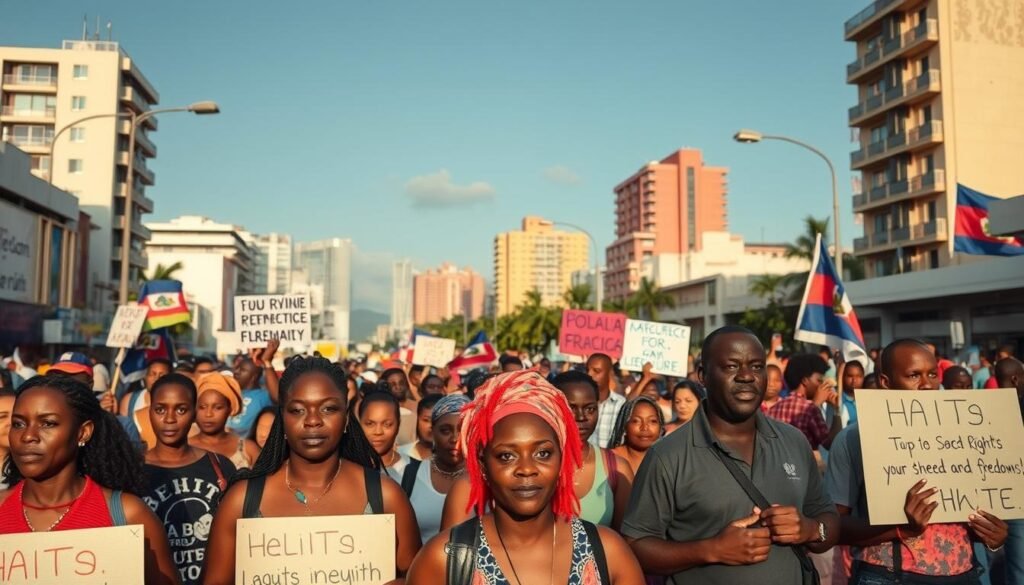
In conclusion, civil society plays a vital role in promoting rights with integrity in Haiti. Through grassroots movements, partnerships with international organizations, and the adoption of sustainable funding models, civil society can continue to drive positive change.
The struggle for human rights in Haiti is ongoing, and the need for honest human rights institutions has never been more pressing. As discussed, the current landscape is marred by corruption and political interference, undermining the protection of citizens’ rights.
Establishing “Rights with Integrity” in Haiti requires a multifaceted approach, including structural reforms and community engagement. It is crucial for the international community, particularly the United States, to support these efforts through diplomatic and financial means.
We must issue a call to action on Haitian human rights, urging collective responsibility to promote and protect the rights of Haitian citizens. By supporting grassroots movements and local organizations, we can foster a culture of transparency and accountability.
Now is the time to act. Let’s work together to ensure that Haiti’s human rights institutions serve the people, not special interests. Join the call to action on Haitian human rights and be part of creating a brighter future for Haiti.
“Rights with Integrity” emphasizes the need for transparent and accountable human rights protection in Haiti, ensuring that institutions are honest and effective in safeguarding human rights.
Haiti faces numerous human rights challenges, including gang violence, security concerns, and the struggles of vulnerable populations, which are exacerbated by institutional weaknesses and corruption.
Human rights institutions are responsible for monitoring and documenting human rights abuses, advocating for victims, and supporting their rights, guided by global standards such as the Paris Principles.
Corruption diverts resources, erodes public trust, and undermines the effectiveness of human rights institutions, making it challenging to protect human rights and hold violators accountable.
Community engagement and ownership are crucial in promoting human rights, as they ensure that rights institutions are designed and held accountable by the people they serve.
The US can support Haiti by providing effective aid programs, promoting policy shifts that prioritize human rights, and encouraging merit-based appointments and independent oversight mechanisms.
Building honest human rights institutions in Haiti requires structural reforms, anti-corruption measures, community engagement, and ownership, including participatory design and local accountability systems.
Grassroots movements play a vital role in promoting “Rights with Integrity” by advocating for human rights, building coalitions for change, and pushing for accountability and transparency.
The Paris Principles provide a global standard for national human rights institutions, emphasizing the importance of independence, accountability, and transparency in promoting and protecting human rights.