Physical Address
304 North Cardinal St.
Dorchester Center, MA 02124
Physical Address
304 North Cardinal St.
Dorchester Center, MA 02124
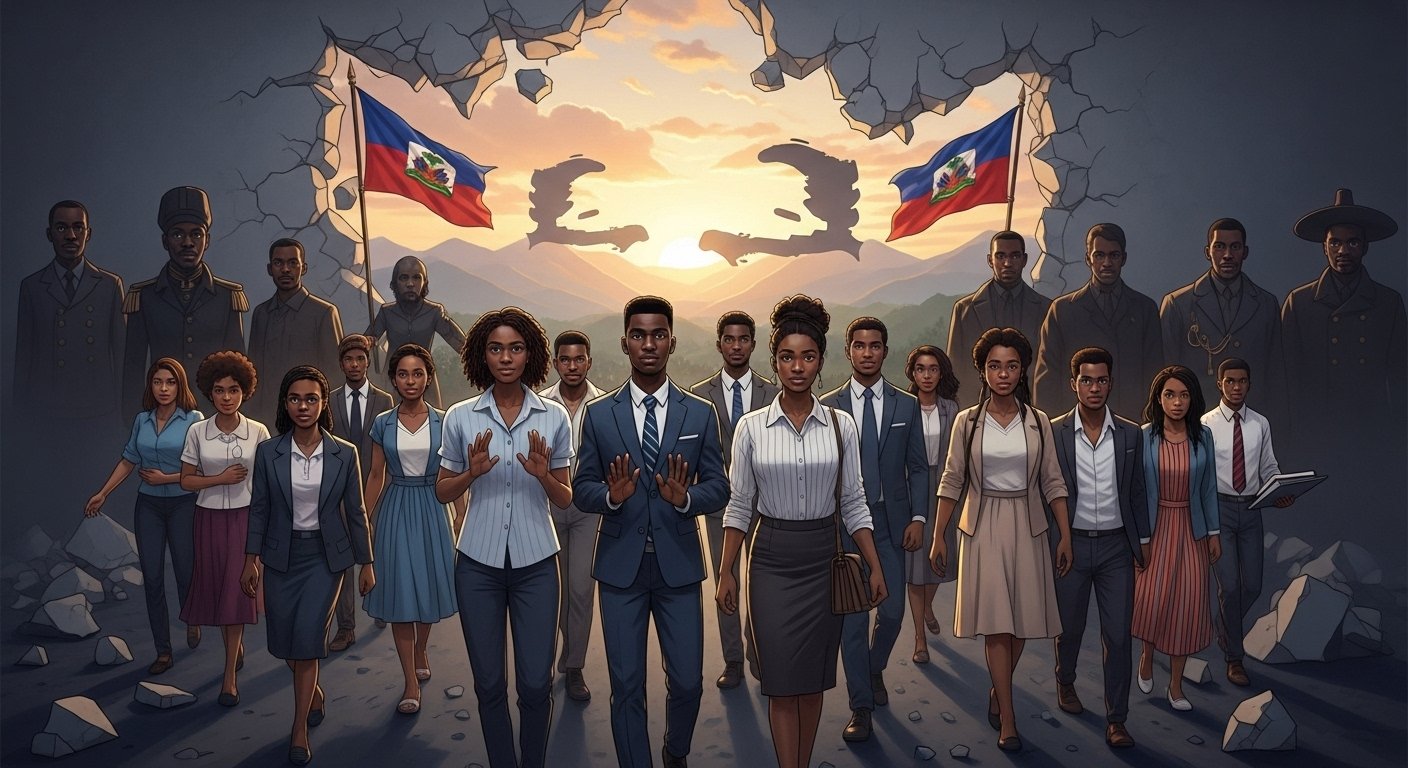
Discover Haiti's path to a fresh start with a new, untainted leadership class in this insightful article.
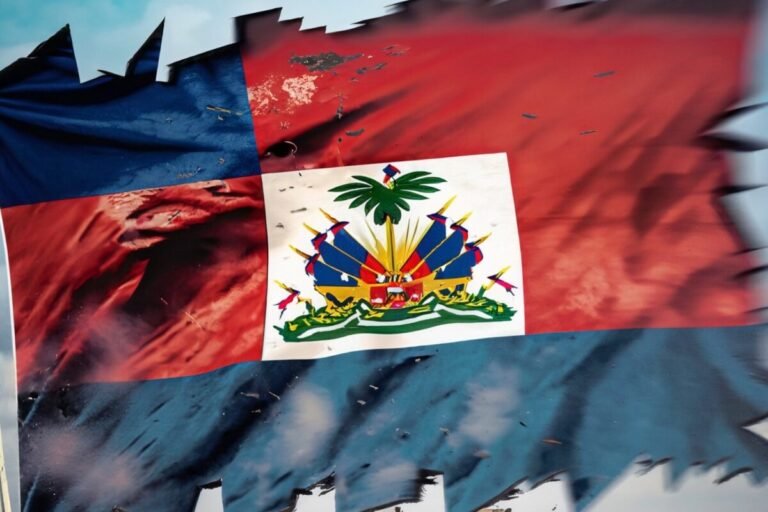
Haiti is at a crossroads, facing a severe leadership crisis that has hindered its development for decades. The country needs a new leadership class that is committed to positive change and untainted by corruption.
The current situation demands untainted leaders who can drive Haiti towards a brighter future. A new generation of leaders could bring about the necessary reforms to stabilize the country and foster economic growth.
As Haiti navigates its most challenging period, the interplay between political instability, gang violence, and economic collapse is starkly evident. The nation is at a crossroads, facing a crisis that is both complex and multifaceted.
Haiti’s current predicament is characterized by political instability and gang violence, which have become increasingly intertwined. The absence of a stable government has created a power vacuum, allowing gangs to flourish and exert control over large swaths of the country.
The situation on the ground is dire, with reports indicating a surge in violent crimes, including kidnappings and murders. This instability not only affects the local population but also deters international investment and aid.
The economic impact of Haiti’s crisis cannot be overstated. With a collapsing economy and a humanitarian crisis unfolding, the need for effective leadership is more pressing than ever. The table below highlights some key statistics illustrating the severity of the situation.
| Indicator | Pre-Crisis | Current |
|---|---|---|
| GDP Growth Rate | 2% | -1.5% |
| Unemployment Rate | 15% | 25% |
| Humanitarian Aid Needed | $100M | $500M |
Following the assassination of President Moïse, Haiti has struggled to establish a stable interim government. The power vacuum created by this event has exacerbated the crisis.
The assassination marked a turning point in Haiti’s history, plunging the nation into deeper uncertainty. The subsequent struggle to form a new government has been fraught with challenges.
The current interim government faces significant hurdles, including gaining the trust of the Haitian people and the international community. The road to recovery is long and arduous.
From the Duvalier era to the present day, Haiti has struggled with a persistent lack of effective leadership. This historical context is crucial in understanding the current crisis facing the nation.
The legacy of dictatorship in Haiti, particularly under François Duvalier, has had a lasting impact on the country’s political landscape. Duvalier’s regime was marked by authoritarian rule, corruption, and human rights abuses.
Duvalier’s rule from 1957 to 1971, and his son Jean-Claude Duvalier’s subsequent rule until 1986, entrenched a culture of corruption and fear. The regime exploited national resources for personal gain, leaving the country impoverished.
After the Duvalier era, Haiti attempted to transition to democracy. However, these efforts were marred by political instability, corruption, and external interference. The country struggled to establish a stable government.
Corruption has been a persistent issue in Haiti, with successive governments failing to address it effectively. Resource exploitation and misallocation have been significant problems.
Haiti’s natural resources have been exploited by those in power, with little benefit to the general population. This has contributed to widespread poverty and underdevelopment.
The country’s institutions, including the judiciary and law enforcement agencies, have been weakened by corruption and political interference. This has hindered efforts to hold leaders accountable.
As noted by a human rights advocate, “Haiti’s future depends on breaking the cycle of corruption and establishing a government that truly serves its people.”
| Era | Key Characteristics | Impact on Haiti |
|---|---|---|
| Duvalier Regime | Authoritarian rule, corruption | Entrenched culture of fear and corruption |
| Post-Duvalier | Political instability, attempted democratic transitions | Continued corruption, lack of stable governance |
The impact of compromised leadership in Haiti is multifaceted, influencing economic, social, and international dynamics. The consequences of such leadership are far-reaching, affecting various aspects of Haitian society and its development.
Compromised leadership has severe economic implications for Haiti. Two significant areas affected are poverty entrenchment and inequality, as well as stalled development and infrastructure.
The lack of effective leadership has exacerbated poverty and inequality in Haiti. Without a robust and visionary leadership, resources are often misallocated, and opportunities for economic growth are missed.
Haiti’s infrastructure and development projects are frequently stalled due to corruption and mismanagement. This not only hampers economic growth but also affects the quality of life for Haitian citizens.
| Economic Indicator | 2010 | 2020 |
|---|---|---|
| Poverty Rate | 60% | 65% |
| GDP Growth Rate | 2% | 1.5% |
Compromised leadership also leads to social fragmentation, with one of the significant consequences being the erosion of trust in institutions.
When leaders are perceived as corrupt or ineffective, citizens lose trust in governmental and public institutions. This mistrust can lead to social unrest and further destabilization.
“The lack of trust in institutions is a significant barrier to Haiti’s progress. Rebuilding this trust is crucial for the country’s future stability and growth.”
Haiti’s compromised leadership affects its international relations, particularly in terms of aid dependency and sovereignty challenges.
The reliance on foreign aid can undermine Haiti’s sovereignty, as external influences may dictate certain policies or interventions. This dependency can also create a culture of aid rather than self-sufficiency.
In conclusion, the cost of compromised leadership in Haiti is multifaceted, impacting the economy, social cohesion, and international standing. Addressing these challenges requires a concerted effort to establish a new, untainted leadership class.
A fresh start for Haiti demands a new generation of leaders who embody ethical standards and accountability. The country’s current crisis is deeply rooted in its leadership vacuum, characterized by corruption and mismanagement. To break this cycle, Haiti needs leaders who are not only competent but also untainted by corrupt networks.
Untainted leadership refers to individuals who have not been involved in the corrupt practices that have plagued Haiti’s political and economic systems. These leaders must adhere to high ethical standards and be accountable to the people.
Leaders with strong ethical standards prioritize the public interest over personal gain. They are transparent in their decision-making processes and are held accountable for their actions.
Being free from corrupt networks means that leaders are not beholden to special interests or entrenched power structures. This freedom allows them to make decisions that benefit the broader population.
New faces in leadership are crucial for breaking the entrenched power structures that have hindered Haiti’s progress. These individuals bring fresh perspectives and are not burdened by the legacy of corruption.
By introducing new leaders, Haiti can dismantle the power structures that have perpetuated corruption and mismanagement. This change is essential for creating a more equitable society.

Future leaders in Haiti must possess a combination of technical competence, vision, and cultural connection. These qualities will enable them to effectively address the country’s challenges.
Leaders need to have the technical skills to develop and implement policies that drive economic growth and social development. They must also have a clear vision for Haiti’s future.
A strong cultural connection is vital for leaders to gain the trust and support of the Haitian people. Legitimacy is derived from understanding the needs and aspirations of the population.
Some key qualities to look for in future leaders include:
By focusing on these qualities and promoting untainted leadership, Haiti can take significant steps towards a brighter future.
To revitalize Haiti’s leadership, it’s essential to explore various avenues to identify potential leaders. The country’s future depends on finding individuals who are not only charismatic and visionary but also committed to the nation’s development.
The Haitian diaspora represents a significant resource for potential leaders. Many Haitians living abroad have acquired valuable skills, experience, and perspectives that could be beneficial for their homeland.
One of the key advantages of diaspora leaders is their ability to balance external experience with local knowledge. This blend can foster innovative solutions to Haiti’s challenges.
There are successful models of diaspora returnees who have made significant contributions to Haiti. For instance, professionals in healthcare, education, and technology have returned to implement projects that improve living conditions.
Grassroots movements and civil society organizations are vital sources of potential leaders. These groups are often at the forefront of social change, advocating for human rights, environmental protection, and social justice.
Community organizers play a crucial role in mobilizing communities and addressing local issues. Their experience and commitment make them strong candidates for future leadership positions.
Haiti’s youth are a powerful force for change. Initiatives that foster youth leadership can help identify and develop the next generation of leaders.
Educational programs that emphasize civic engagement and leadership skills are essential for preparing young Haitians for leadership roles.
| Source of Potential Leaders | Key Contributions | Examples |
|---|---|---|
| Diaspora | External experience, innovative solutions | Professionals in healthcare, education, and technology |
| Grassroots Movements | Social change, human rights advocacy | Community organizers, activists |
| Youth Leadership Initiatives | Civic engagement, fresh perspectives | Students, young professionals in NGOs |
The key to Haiti’s success lies in its ability to nurture and develop future leaders. A well-structured leadership pipeline is essential for ensuring that the country has the talent and expertise needed to drive progress and overcome challenges.
Education is the foundation upon which a strong leadership pipeline is built. It is crucial to reform educational institutions to focus on developing skills that are relevant to public service and leadership.
Reforming educational institutions involves updating curricula to include subjects that foster critical thinking, problem-solving, and ethical leadership. For instance, incorporating service-learning projects can help students develop practical skills while contributing to the community.
Specialized training programs can equip future leaders with the knowledge and skills needed for effective public service. This includes training in areas such as public policy analysis, project management, and community engagement.

Mentorship programs play a vital role in connecting experienced leaders with emerging talent. These programs provide guidance, support, and valuable insights that can help shape the next generation of leaders.
By pairing experienced leaders with emerging talent, mentorship programs can facilitate knowledge transfer and skill development. As noted by
“Mentorship is the key to unlocking the potential of our future leaders.” – Dr. Marie-Claire Pierre, Haitian Educator
Creating transparent and merit-based pathways to public service is crucial for attracting and retaining top talent. This involves implementing transparent recruitment processes and promoting based on merit rather than connections.
Transparent recruitment processes ensure that opportunities are open to all qualified candidates, reducing the influence of nepotism and corruption. A merit-based system further ensures that the most capable individuals are selected for leadership roles.
Implementing merit-based systems in public service can lead to more effective governance. As seen in successful models around the world, such as Singapore’s Public Service Commission, merit-based systems can drive innovation and efficiency.
By focusing on education, mentorship, and transparent pathways to public service, Haiti can build a robust leadership pipeline that will drive the country towards a brighter future.
As Haiti seeks to break free from its cycle of failed leadership, it faces significant resistance from those who benefit from the status quo. The journey towards a new, untainted leadership class is complex, involving multiple stakeholders and interests.
The existing power structures in Haiti pose a significant obstacle to change. Entrenched interests are often deeply rooted in political, economic, and social networks that resist reform efforts.
Those in power may employ various strategies of obstruction, including political maneuvering, misinformation, and co-opting potential reformers. These tactics can significantly hinder progress towards a more transparent and accountable leadership.
Another challenge is the co-option of reform efforts. This occurs when individuals or groups advocating for change are absorbed into the existing power structure, often through offers of positions or other benefits, thereby neutralizing their reform efforts.
External influences also play a crucial role in shaping Haiti’s leadership landscape. Foreign governments, international organizations, and NGOs can have significant impacts, sometimes driven by their own agendas rather than Haiti’s best interests.
Geopolitical considerations can further complicate Haiti’s path to reform. The country’s strategic importance can lead to external interference, with foreign powers sometimes supporting the status quo to further their own geopolitical interests.
A significant obstacle to change is the widespread public skepticism and trust deficit in potential new leaders. Years of corruption and mismanagement have eroded the public’s faith in leadership.
To overcome this cynicism, new leaders must demonstrate tangible results and a clear commitment to transparency and accountability. This involves not just promising change but delivering it through concrete actions and policies.
Haiti’s journey to stability requires a delicate balance of international support and respect for sovereignty. As the country seeks to establish a new, untainted leadership class, the international community has a crucial role to play.
Traditional foreign aid models have often been criticized for creating dependency and undermining local capacities. Rethinking these models is essential to ensure that aid supports Haiti’s self-sufficiency rather than perpetuating reliance on external assistance.
One effective approach is to provide direct support for leadership development programs. This can include training, mentorship, and resources for emerging leaders, empowering them to drive positive change.
Implementing robust accountability mechanisms is crucial to ensure that aid is used effectively and transparently. This can involve regular audits, performance assessments, and feedback loops.
Diplomatic support is vital for fostering democratic processes in Haiti. This includes facilitating dialogue among political stakeholders and supporting electoral processes.
Providing election monitoring and technical assistance can help ensure that electoral processes are free, fair, and transparent, thereby enhancing the legitimacy of Haiti’s democratic institutions.
Technical assistance is another key area where the international community can make a positive impact. This involves providing expertise to strengthen governance structures and public administration.
It’s essential to distinguish between capacity building and substitution. While the former empowers Haitian institutions, the latter can create long-term dependencies. International support should focus on building local capacities.
By adopting a nuanced and multi-faceted approach to international support, Haiti can navigate its challenges more effectively, paving the way for sustainable development and stability.
Haiti stands at a critical juncture, with the nation’s future hanging in the balance. The urgent need for a new, untainted leadership class has been a recurring theme throughout this discussion.
A collective vision for Haiti’s future requires a unified effort to bring about change. This involves not only identifying new leaders but also creating a supportive ecosystem that fosters their growth and enables them to drive meaningful reforms.
The international community can play a vital role in this process by providing technical assistance for governance and rethinking foreign aid models to support democratic processes. By working together, Haitians and their global partners can build a brighter future for the nation.
A new leadership class, driven by integrity, vision, and a commitment to the public good, is essential for Haiti’s resurgence. As the nation moves forward, it is crucial that this collective vision guides the way, ensuring a more equitable, prosperous, and stable Haiti for generations to come.
Haiti is currently facing a severe leadership crisis, marked by political instability, gang violence, economic collapse, and a humanitarian crisis, all of which are exacerbated by a lack of effective and untainted leadership.
President Jovenel Moïse was the President of Haiti until his assassination in 2021. His assassination created a leadership vacuum, further destabilizing the country and contributing to the current crisis.
“Untainted leadership” refers to leaders who are free from corruption, have high ethical standards, and are accountable to the people. They are not part of the entrenched power structures that have historically plagued Haiti.
The Haitian diaspora can contribute by bringing their external experience and skills back to Haiti, balancing their international knowledge with local understanding to help drive positive change.
Grassroots movements and civil society organizations are crucial in identifying and nurturing community organizers and leaders who understand the local context and have the trust of their communities.
Education and leadership development programs can help by reforming educational institutions, providing specialized training for public service, and creating mentorship programs that connect experienced leaders with emerging talent.
The main obstacles include entrenched interests and their networks, external influences with their own agendas, and public skepticism due to a trust deficit in institutions and leaders.
The international community can support Haiti by rethinking foreign aid models to directly support leadership development and accountability, providing diplomatic support for democratic processes, and offering technical assistance for governance without substituting local capacities.
Future leaders in Haiti need to have technical competence, vision, a strong cultural connection to the Haitian people, and legitimacy in the eyes of the public. They must also be able to break away from entrenched power structures.
Building a leadership pipeline is crucial because it ensures a steady supply of capable, ethical, and accountable leaders who can drive Haiti’s development and stability over the long term.