Physical Address
304 North Cardinal St.
Dorchester Center, MA 02124
Physical Address
304 North Cardinal St.
Dorchester Center, MA 02124
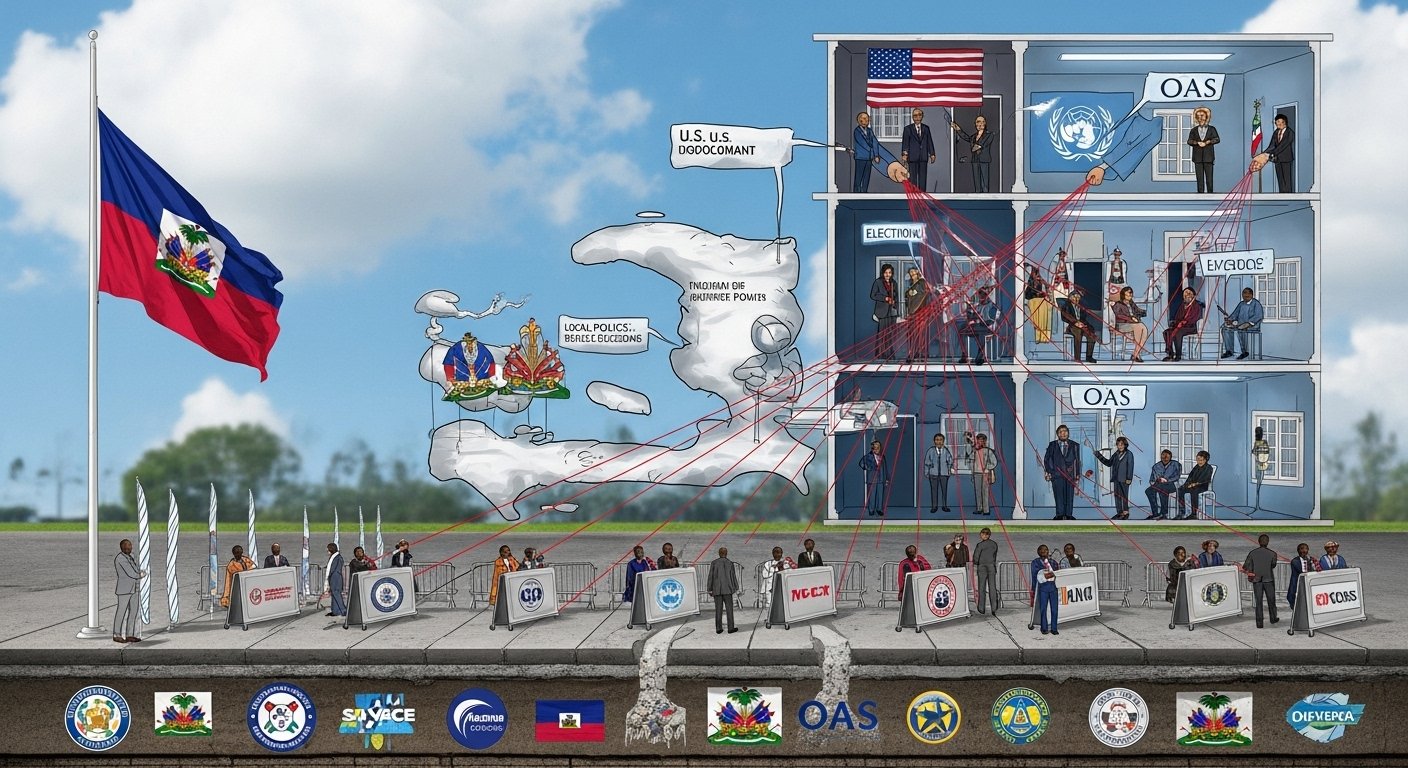
Explore the troubling reality of U.S., UN, and OAS control over Haiti's sovereignty.
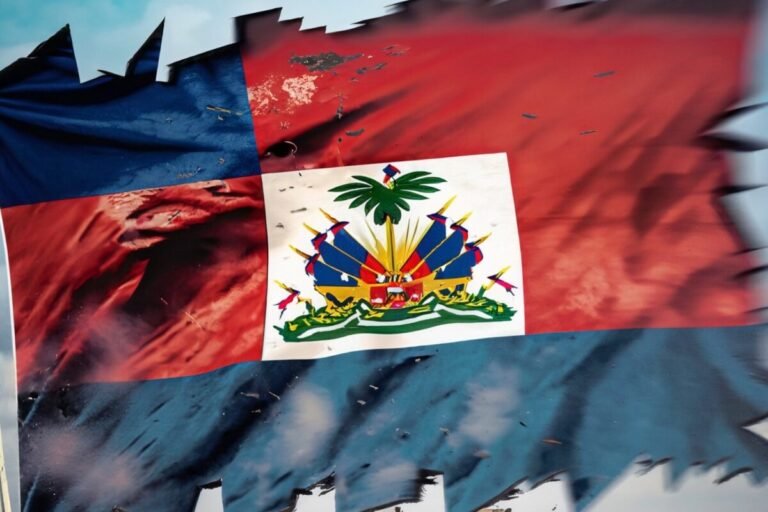
Haiti’s struggle for self-determination has been a longstanding issue, with the country’s sovereignty being influenced by external forces. The U.S., UN, and OAS have played significant roles in shaping Haiti’s political landscape.
The history of foreign intervention in Haiti is complex, with various factors contributing to the country’s current state. The impact of U.S. control and UN influence on Haiti’s governance and economy has been substantial.
Understanding the dynamics of Haiti’s sovereignty requires examining the roles of external actors and their effects on the country’s autonomy.
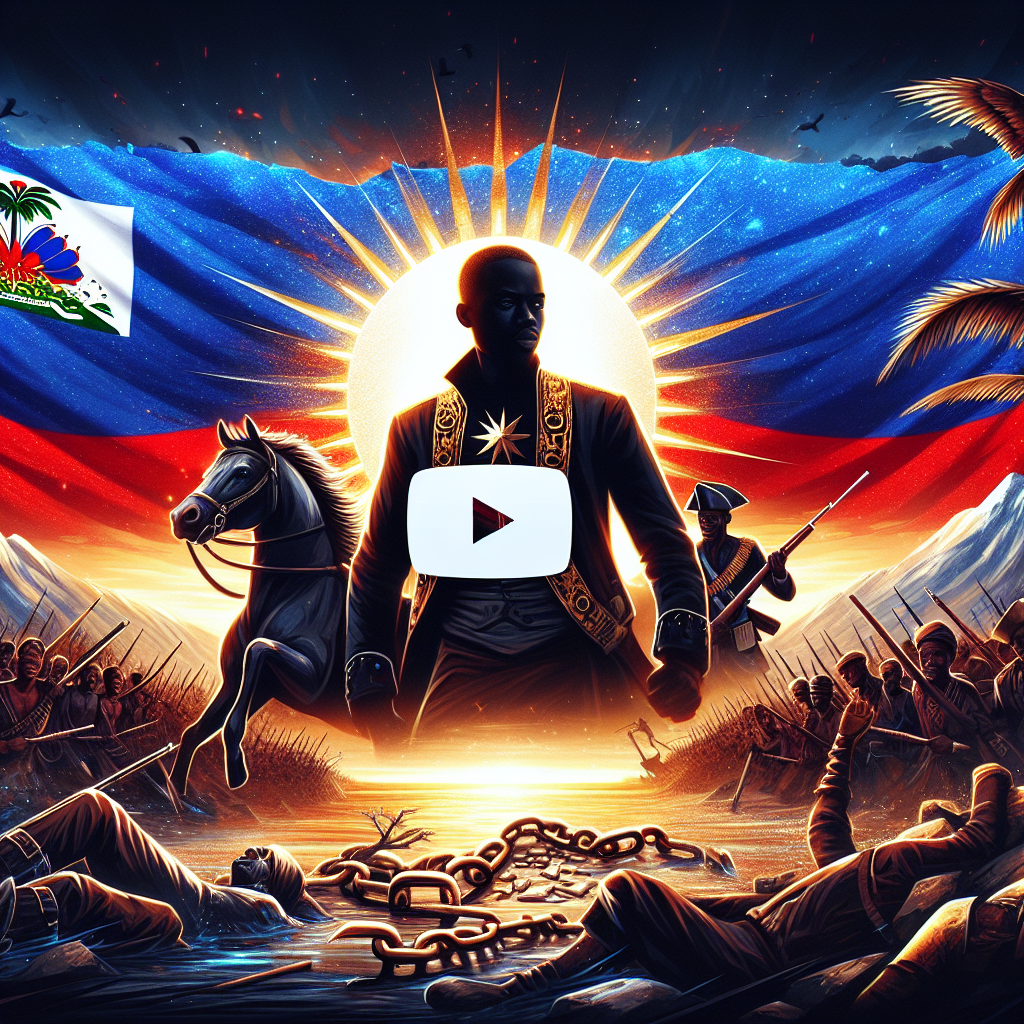
The historical narrative of Haiti is crucial in understanding the country’s ongoing battle for sovereignty. Haiti’s journey to becoming the world’s first black republic is a story of revolution, resilience, and international intrigue.
Haiti’s path to independence was paved by the Haitian Revolution, a successful slave revolt that began in 1791 and culminated in the declaration of independence in 1804. This revolution was not only a turning point in Haitian history but also a significant event in world history, challenging the colonial and slaveholding systems of the time.
As the world’s first black republic, Haiti set a precedent for decolonization and racial equality. The Haitian Revolution’s emphasis on liberty, equality, and fraternity resonated beyond its borders, influencing movements for independence and civil rights globally.
Despite its revolutionary achievements, Haiti faced severe international isolation following its independence. The newly formed nation was shunned by European powers and the United States, which feared the spread of slave revolts and saw Haiti as a threat to their colonial and economic interests.
| Year | Event | Significance |
|---|---|---|
| 1791 | Start of the Haitian Revolution | Beginning of the end of slavery in Haiti |
| 1804 | Declaration of Independence | Haiti becomes the world’s first black republic |
| 1804-1915 | International Isolation | Economic and political isolation impacts Haiti’s development |
This historical context is essential for understanding the complexities of Haiti’s sovereignty issues today. The legacy of the Haitian Revolution and the subsequent international isolation have shaped the country’s interactions with global powers and its own internal development.
The modern context of international relations demands a nuanced understanding of national sovereignty. Sovereignty is not just a legal concept but a practical framework that guides a nation’s interactions with the global community.
National sovereignty refers to a nation’s authority to govern itself without external interference. This concept is foundational to international relations, as it respects the independence and autonomy of states.
The legal dimension of sovereignty is enshrined in international law, which recognizes the sovereignty of states within their territorial boundaries. Practically, sovereignty enables nations to make decisions on domestic and foreign policies without external coercion. It is crucial for maintaining peace and stability in international relations.
Small nations, like Haiti, face unique challenges in maintaining their sovereignty. These challenges often stem from economic vulnerabilities that can lead to political instability.
Economic vulnerability can compromise a nation’s political sovereignty by making it susceptible to external economic pressures. For small nations, maintaining economic stability is crucial to preserving their sovereignty. Economic aid and cooperation must be carefully managed to avoid undermining a nation’s autonomy.
In conclusion, understanding sovereignty in the modern context requires acknowledging both its legal and practical dimensions, as well as the specific challenges faced by small nations. By doing so, we can better appreciate the complexities of international relations and the importance of respecting national sovereignty.
For over a century, Haiti has been subject to various forms of U.S. intervention, shaping its political, economic, and social landscape. This complex history has left lasting impacts on Haiti’s sovereignty and development.
The U.S. occupation of Haiti from 1915 to 1934 was a pivotal period in the country’s history. During this time, the U.S. exerted significant control over Haiti’s government and economy.
One of the most significant actions during the occupation was the rewriting of Haiti’s constitution to allow for foreign land ownership, a move that had long-lasting consequences for Haiti’s economic autonomy.
In the post-Cold War era, the U.S. continued to intervene in Haiti, often under the banner of promoting democracy and stability.
The 1994 intervention, code-named “Operation Uphold Democracy,” was justified as a means to restore democratic governance following a military coup against President Aristide.
Key aspects of the operation included:
The controversial removal of President Aristide in 2004 marked another significant intervention. The circumstances surrounding his removal remain a subject of debate.
The implications of this event were far-reaching, affecting Haiti’s political stability and sovereignty.
U.S. economic policies have played a crucial role in shaping Haiti’s economic landscape. Trade agreements and other economic measures have had significant consequences for Haiti’s autonomy.
Trade agreements between the U.S. and Haiti have often been criticized for favoring U.S. economic interests at the expense of Haitian industries.
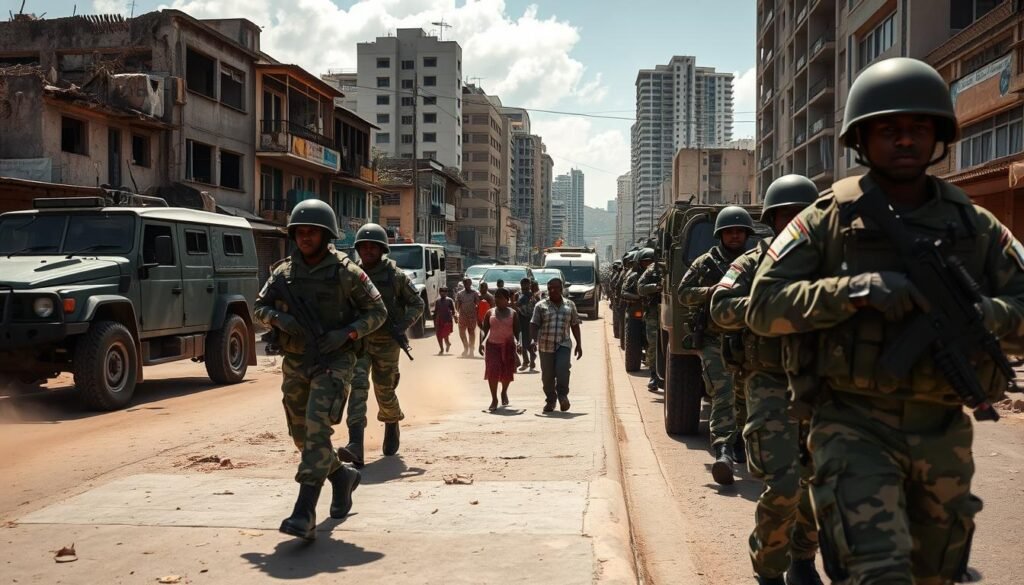
The United Nations’ involvement in Haiti, particularly through MINUSTAH and subsequent missions, has raised important questions about sovereignty and intervention. The UN’s presence in Haiti has been a complex mix of peacekeeping, humanitarian aid, and, controversially, military occupation.
MINUSTAH, established in 2004, was mandated to restore order and stabilize Haiti after political turmoil. However, its presence was soon marred by controversy, including allegations of sexual abuse and the introduction of cholera to the island.
The military presence of MINUSTAH and subsequent UN missions has been a point of contention, with many arguing it infringes upon Haiti’s sovereignty. Human rights concerns have been paramount, with allegations of abuse by peacekeepers.
| Year | Mission | Primary Objectives |
|---|---|---|
| 2004-2017 | MINUSTAH | Stabilization, Security |
| 2017-2019 | MINIJUSTH | Rule of Law, Human Rights |
| 2020-Present | BINUH | Human Rights, Institutional Strengthening |
The cholera outbreak in Haiti, attributed to UN peacekeepers, has been one of the most devastating health crises in recent history. The lack of accountability and legal immunity for the UN has been a significant point of contention.
The UN’s legal immunity has prevented victims of the cholera outbreak from seeking justice, raising serious questions about the implications for Haitian sovereignty and the rule of law.
UN Security Council resolutions have shaped the nature and scope of UN involvement in Haiti. However, the decision-making process often excludes Haitian representation, raising concerns about the legitimacy and fairness of these resolutions.
The absence of Haitian voices in UN Security Council discussions about Haiti’s future underscores the challenges of ensuring that international interventions respect national sovereignty.
In conclusion, the UN’s role in Haiti is multifaceted, involving peacekeeping, humanitarian aid, and military presence. While the intentions behind these interventions may be to stabilize and support Haiti, their execution has often been criticized for undermining Haitian sovereignty and failing to address the root causes of instability.
The OAS has played a crucial role in Haiti’s electoral history, with its interventions having far-reaching political consequences. Understanding the OAS’s influence requires examining its electoral interventions and the subsequent political outcomes.
The OAS has been actively involved in monitoring and influencing Haiti’s electoral processes. This involvement has had significant political consequences, shaping the country’s democratic trajectory.
The elections held in 2010-2011 were particularly contentious, with the OAS playing a key role in the electoral process. The controversy surrounding these elections highlighted the challenges faced by the OAS in ensuring fair and transparent electoral outcomes.
The OAS’s involvement in these elections was seen as crucial by some, while others criticized the organization’s role as an external influence on Haiti’s internal political processes.
In recent years, the OAS has continued to monitor Haiti’s elections, providing recommendations aimed at improving the electoral process. These efforts have been geared towards enhancing transparency and reducing electoral disputes.
The OAS’s recommendations have covered various aspects, including electoral law reforms and the strengthening of electoral institutions.
The OAS operates within a complex framework of regional power dynamics, with various member states exerting influence on its policies and interventions.
Haiti’s relationship with the OAS reflects its position within the broader inter-American system. The country’s engagement with the OAS is influenced by its historical, political, and economic ties with other member states.
Understanding Haiti’s position within the OAS framework is crucial for analyzing the organization’s impact on the country’s sovereignty and political development.
| Year | OAS Intervention | Political Consequence |
|---|---|---|
| 2010-2011 | Electoral monitoring | Contested election results |
| 2015 | Electoral law reform recommendations | Improved electoral transparency |
| 2020 | Post-election dispute resolution | Stabilization of political tensions |
The table above illustrates the OAS’s interventions in Haiti’s electoral processes over the years and the resulting political consequences. It highlights the organization’s role in shaping Haiti’s political landscape.
The complex interplay between the U.S., UN, and OAS in shaping Haiti’s destiny raises critical questions about the island nation’s sovereignty. The coordination among these entities has significant implications for Haiti’s governance and autonomy.
The U.S., UN, and OAS have been instrumental in shaping Haiti’s foreign policy through multilateral coordination. This cooperation has led to various interventions, ostensibly aimed at stabilizing the country. However, the impact of these interventions on Haiti’s sovereignty is a matter of concern.
The Core Group, an informal coalition of international actors, plays a crucial role in Haiti’s governance. This group has been instrumental in decision-making processes, often sidelining Haitian authorities. The influence of the Core Group raises questions about the decision-making power in Haiti.

The marginalization of Haitian voices in international forums is a significant issue. Despite being the primary stakeholders, Haitian leaders often find themselves on the periphery of decision-making processes. This marginalization is evident in the way international policies are implemented in Haiti without considering the local context.
Haitian representatives often face challenges in asserting their positions in international forums dominated by more powerful nations. This imbalance in foreign policy discussions further erodes Haiti’s sovereignty.
Several case studies illustrate the extent of external decision-making in Haiti. For instance, the UN’s MINUSTAH mission, while aimed at peacekeeping, has been criticized for its impact on Haitian autonomy. A detailed analysis of such cases is provided in the table below.
| Intervention | Objective | Impact on Sovereignty |
|---|---|---|
| MINUSTAH Mission | Peacekeeping | Reduced Haitian autonomy |
| OAS Electoral Interventions | Ensuring fair elections | Influence over political processes |
| U.S. Foreign Aid | Economic support | Dependency on foreign aid |
The table highlights the complex dynamics at play in Haiti, where external interventions, while well-intentioned, often compromise the country’s sovereignty.
Behind the façade of humanitarian aid, a complex web of geopolitical interests often influences the course of interventions in Haiti. The narrative surrounding these interventions is multifaceted, involving various stakeholders with different agendas.
The portrayal of Haiti as a “failed state” has been a recurring theme in justifying external interventions. This narrative is often perpetuated through media coverage that highlights instability and poverty.
Media portrayal plays a significant role in shaping public perception of Haiti. Sensationalized reporting can create a skewed view of the country’s situation, emphasizing chaos and despair. For instance, a study found that media coverage often focuses on negative aspects, reinforcing the “failed state” narrative.
“The way Haiti is portrayed in the media contributes to a broader narrative that justifies external control and intervention.”
The outcomes of humanitarian interventions in Haiti are subject to various interpretations. While some argue that these interventions have saved lives and provided essential services, others point to unintended consequences that have exacerbated the situation.
Evaluating the success of humanitarian interventions depends on the metrics used. Different stakeholders may prioritize different outcomes, leading to conflicting assessments of success.
External assistance, while well-intentioned, can have unintended consequences, such as creating dependency or disrupting local economies. It’s crucial to consider these potential outcomes when designing intervention strategies.
The complexity of humanitarian interventions in Haiti demands a nuanced understanding of the “failed state” narrative and its consequences. By examining the outcomes of these interventions and considering multiple perspectives, we can work towards more effective and sustainable solutions.
Haiti faces significant challenges in maintaining its economic sovereignty. The country’s economic future is heavily influenced by external forces, including international financial institutions and foreign aid.
International financial institutions, such as the International Monetary Fund (IMF), have played a significant role in shaping Haiti’s economic policies through structural adjustment programs. These programs have been criticized for imposing conditions that limit the country’s ability to make independent economic decisions.
The IMF’s conditions often include austerity measures and privatization policies that can have far-reaching consequences for the Haitian economy. For instance, the removal of subsidies on essential goods can lead to increased costs for citizens.
Haiti’s heavy reliance on foreign aid has significant implications for its governance. Foreign aid can create dependency and undermine the government’s ability to make decisions without external influence.
The presence of numerous non-governmental organizations (NGOs) in Haiti has led to the creation of a “parallel state.” NGOs often operate outside of government control, providing services that are typically the responsibility of the state.
Foreign investment in Haiti, particularly in the extractive industries, poses another challenge to the country’s economic sovereignty. The extraction of natural resources by foreign companies can lead to environmental degradation and limit the government’s ability to benefit from its own resources.
In conclusion, Haiti’s economic sovereignty is under threat from various external factors. Addressing these challenges will require a concerted effort to strengthen the country’s economic independence and ensure that external influences do not undermine its ability to govern itself.
As external control tightens its grip on Haiti, the Haitian people are increasingly demanding their right to self-determination. This growing resistance is multifaceted, involving various sectors of Haitian society.
Civil society movements in Haiti have been at the forefront of resistance against foreign interference. These movements are diverse, encompassing a wide range of organizations and initiatives.
Recent protests in Haiti have highlighted the community’s frustration with ongoing foreign control. Protesters are calling for an end to external interference and the recognition of Haiti’s sovereignty.
Haitian intellectuals and cultural leaders are also playing a crucial role in the resistance movement. Through various forms of expression, they are challenging external narratives and promoting Haitian identity.
Haitian scholars have been critical of foreign policies and their impact on Haiti’s development. Their research and critiques are essential in understanding the complexities of Haiti’s situation and in proposing alternative solutions.
Artistic expressions, including music, literature, and visual arts, are powerful tools in Haiti’s resistance movement. They provide a platform for Haitians to express their experiences, aspirations, and demands for sovereignty.
The collective efforts of Haitian civil society, intellectuals, and artists underscore the nation’s resilience and determination to achieve true self-determination.
Alternative approaches to supporting Haiti are not just desirable but necessary for ensuring the country’s long-term stability and self-determination. Traditional models of international cooperation have often been criticized for undermining Haitian sovereignty.
One promising avenue is South-South cooperation
, which involves collaboration between developing countries. This approach has been exemplified through partnerships between Haiti and other nations in the Global South.
Another critical aspect is the concept of reparations for historical injustices, such as the debt Haiti was forced to pay to France after its independence. Advocates argue that reparations could provide a form of restitution and help address some of the country’s development challenges.
A key to effective support is adopting Haitian-led solutions. This involves not just consulting with Haitian stakeholders but empowering them to take the lead in designing and implementing development and security initiatives.
| Initiative | Description | Potential Impact |
|---|---|---|
| Community-based security programs | Locally designed and implemented security initiatives | Improved trust and effectiveness in security |
| Economic empowerment projects | Programs focused on supporting local businesses and entrepreneurship | Enhanced economic resilience and autonomy |
The struggle for Haitian sovereignty is a complex issue, deeply rooted in the country’s history and influenced by external factors. The U.S., UN, and OAS have played significant roles in shaping Haiti’s political landscape, often with mixed results.
A new approach is needed, one that prioritizes Haitian self-determination and supports the development of robust, locally-led institutions. This path forward for Haitian sovereignty involves rethinking traditional models of international cooperation and aid, focusing instead on initiatives that empower Haitian communities and foster economic independence.
By supporting Haitian sovereignty, the international community can help create a more stable and prosperous Haiti. This requires a commitment to respecting Haiti’s autonomy and a willingness to engage in collaborative, equitable partnerships. The future of Haitian sovereignty depends on the ability of Haitians and their international partners to work together towards a common goal: a self-determined and thriving Haiti.
Haiti’s sovereignty issues stem from its complex history, including its revolutionary beginnings, declaration of independence, and subsequent international isolation, which have contributed to its ongoing struggles with self-determination.
External forces, particularly the U.S., UN, and OAS, have influenced Haiti’s sovereignty through various interventions, including military occupations, economic policies, and electoral monitoring, which have often undermined the country’s autonomy.
The UN has played a significant role in Haiti through peacekeeping missions like MINUSTAH, which have been controversial due to human rights concerns, the cholera crisis, and implications for Haiti’s sovereignty.
The OAS has influenced Haiti through electoral interventions and monitoring, which have had significant political consequences, and has also shaped regional power dynamics within the inter-American framework.
Foreign aid dependency has contributed to the marginalization of Haitian voices in international forums and has led to the emergence of a parallel state dominated by NGOs, undermining the government’s authority.
Haitians have resisted foreign interference through various forms of civil society movements, intellectual critiques, and cultural expressions of sovereignty, demanding greater self-determination and autonomy.
Alternative models of international cooperation, such as South-South cooperation, reparations, and Haitian-led solutions, can help support Haitian sovereignty by prioritizing the country’s needs and promoting self-determination.
Haitian resistance and demands for self-determination highlight the need for a new approach that respects and supports Haitian sovereignty, rather than perpetuating external control and interference.
International cooperation can be reformed by adopting models that prioritize Haitian-led solutions, promote South-South cooperation, and address historical injustices through reparations, ultimately respecting Haiti’s sovereignty.