Physical Address
304 North Cardinal St.
Dorchester Center, MA 02124
Physical Address
304 North Cardinal St.
Dorchester Center, MA 02124
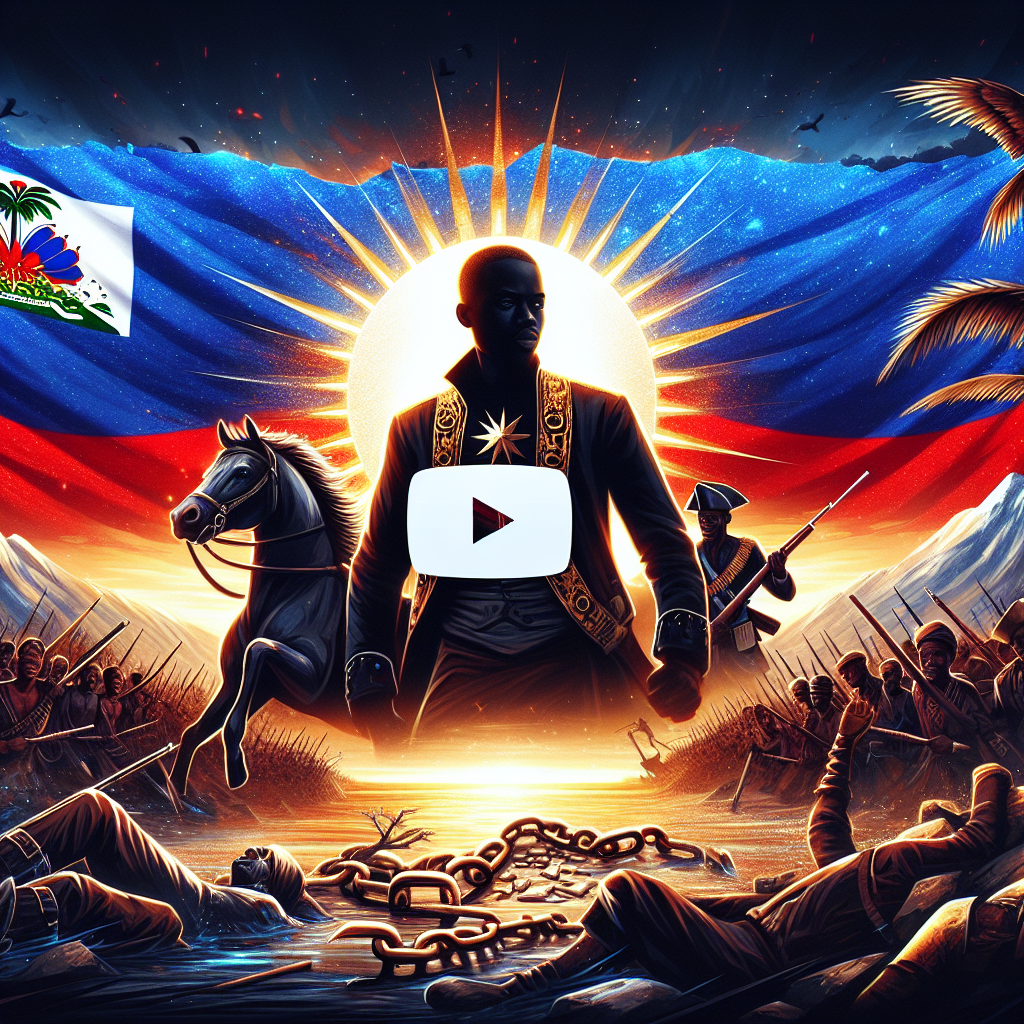

A carousel-like image that powerfully captures the cyclical nature of Haiti's leadership trap.
Haiti’s political landscape is characterized by a leadership trap, where a cyclical pattern perpetuates instability. This phenomenon is akin to a carousel-like mechanism, where leaders rise and fall in a repetitive cycle.
The cyclical image of Haiti’s leadership is marked by a lack of genuine progress, as the same issues persist despite changes in leadership. Understanding this carousel-like mechanism is crucial to grasping the complexities of Haiti’s political dynamics.
In understanding Haiti’s political instability, the carousel metaphor emerges as a powerful symbol of its leadership cycle. This metaphor vividly captures the repetitive and cyclical nature of Haiti’s political landscape, where leaders rise and fall in a seemingly endless pattern.
The carousel metaphor is rich in visual symbolism. A carousel is characterized by its circular motion, where horses or other figures move up and down in a repetitive cycle. Similarly, Haiti’s leadership cycle is marked by a repetitive pattern of leaders coming to power, only to eventually lose it, often in a violent or dramatic manner. This cyclical pattern is not just a matter of coincidence but is deeply rooted in Haiti’s political history and cultural dynamics.
The carousel metaphor perfectly captures Haiti’s political reality because it encapsulates the cyclical nature of power and the repetitive patterns of leadership. Just as a carousel rotates in a continuous loop, Haiti’s political history shows a loop of leadership crises, with each new leader often promising change but ultimately becoming part of the same cycle. This metaphor highlights the need to break this cycle to achieve true political stability.
By examining the carousel metaphor, we gain insight into the complexities of Haiti’s leadership challenges and the need for a new approach to break the cycle of instability.
The Haitian Revolution was a pivotal event that led to Haiti becoming the first independent black nation in the world. This revolution, which began as a slave uprising in 1791, not only changed the course of Haitian history but also had far-reaching implications for the world.
Haiti’s journey to independence was marked by significant turmoil and transformation. The successful slave revolt led to the establishment of Haiti as a sovereign state in 1804, following a prolonged struggle against French colonial rule. The leadership of figures such as Toussaint Louverture and Jean-Jacques Dessalines played a crucial role in this process. The revolution’s impact extended beyond Haiti, influencing the abolition of slavery in various parts of the world.
In the aftermath of independence, Haiti faced significant challenges in establishing a stable governance structure. The early years were characterized by power struggles, with various leaders vying for control. This period saw the rise and fall of several presidents, often under circumstances of violence and instability. The table below summarizes some key figures and their tenure during this period.
| President | Tenure | Notable Events |
|---|---|---|
| Jean-Jacques Dessalines | 1804-1806 | Declared independence, ruled as emperor |
| Henri Christophe | 1807-1820 | Rulled northern Haiti, established kingdom |
| Jean-Pierre Boyer | 1818-1843 | Unified Haiti, negotiated with France |
The early governance patterns and presidential instability set a precedent for the challenges Haiti continues to face today, including the cyclical nature of leadership and political upheaval.
In Haiti, the leadership carousel represents a persistent cycle of political instability, where leaders gain power amidst high expectations but frequently fall due to corruption and authoritarian tendencies.
This cycle is characterized by two main phases: the rise of new leaders and their eventual downfall. Understanding these phases is crucial to grasping the dynamics of Haiti’s political landscape.
Leaders in Haiti typically rise to power on the back of promises of reform and widespread popular support. They often campaign on platforms of change, vowing to address the country’s deep-seated issues such as poverty, inequality, and lack of access to basic services. Initially, they garner significant public backing, seen as saviors or champions of the people.
However, once in power, many of these leaders succumb to corruption and authoritarianism. They begin to consolidate power, often at the expense of democratic institutions and the rule of law. As their actions become more repressive and self-serving, public support wanes, and opposition grows. Eventually, this opposition can boil over into widespread unrest, protests, or even violent overthrow, marking the end of their tenure.
The cycle then repeats, as new leaders emerge with fresh promises, perpetuating the carousel-like rotation of power in Haiti.
The carousel metaphor serves as a potent visual representation of Haiti’s political reality, where leaders rise and fall in a seemingly endless cycle. This image not only captures the essence of Haiti’s leadership trap but also highlights the country’s struggle with identity and governance.

The carousel metaphor is rich in visual elements that symbolize Haiti’s political turmoil. The cyclical motion of the carousel represents the repetitive nature of Haiti’s leadership cycle, where leaders come and go without significant change. The colorful and vibrant imagery associated with a carousel contrasts with the often bleak political reality, highlighting the disparity between appearance and actual governance.
The use of a carousel as a metaphor also implies a sense of being trapped, as riders are unable to easily exit the ride. This mirrors the experiences of the Haitian people, who often feel caught in a cycle of political instability and leadership failures.
The carousel metaphor effectively captures Haiti’s historical reality by illustrating the cyclical pattern of its political leadership. From the early days of independence to the present, Haiti has struggled with establishing stable governance. The image reflects this historical context, showing how different leaders have risen and fallen, often with similar outcomes.
By examining the carousel metaphor, we gain insight into Haiti’s ongoing struggle with identity and political stability. The image serves as a powerful reminder of the need for change and the importance of breaking the cycle of leadership failures.
Haiti’s leadership carousel reached its most extreme during the Duvalier dynasty, a period marked by terror and dynastic rule. This era, spanning nearly three decades, was characterized by brutal suppression, corruption, and a complete disregard for human rights.
François Duvalier, known as “Papa Doc,” ruled Haiti from 1957 until his death in 1971. His regime was marked by violence and intimidation, using the Tonton Macoutes, a paramilitary force, to suppress opposition. Papa Doc’s rule was a reign of terror, with thousands of Haitians killed or forced into exile.
Jean-Claude Duvalier, “Baby Doc,” succeeded his father at the age of 19, continuing the family’s dynastic rule. His regime was characterized by corruption and mismanagement, with the Tonton Macoutes continuing to terrorize the population. The Duvalier dynasty’s grip on power was only broken in 1986, when Baby Doc was ousted and exiled.
| Year | Event | Impact |
|---|---|---|
| 1957 | François Duvalier becomes President | Beginning of the Duvalier dynasty |
| 1971 | François Duvalier dies; Jean-Claude Duvalier succeeds him | Continuation of dynastic rule |
| 1986 | Jean-Claude Duvalier is ousted | End of the Duvalier dynasty |
Aristide’s rise to power brought initial hope, but his presidency was ultimately marred by controversy. Jean-Bertrand Aristide’s emergence as a champion of the poor was a significant event in Haitian politics.
Aristide’s early days were marked by his fervent advocacy for the impoverished majority in Haiti. His populist message resonated deeply with the masses, who saw him as a beacon of hope after decades of oppressive rule. As a Catholic priest, Aristide’s moral authority was initially unquestioned, lending credibility to his calls for reform.
The table below summarizes key aspects of Aristide’s rise to power:
| Aspect | Description | Impact |
|---|---|---|
| Populist Message | Aristide’s advocacy for the poor | Gained widespread support among the masses |
| Moral Authority | Aristide’s background as a Catholic priest | Lent credibility to his political stance |
Despite his initial popularity, Aristide’s presidency was soon clouded by allegations of authoritarianism and corruption. His second term was particularly tumultuous, marked by violent clashes between his supporters and opposition groups. The controversy surrounding his rule eventually led to his ousting in 2004.
The legacy of Aristide’s presidency remains complex, with some viewing him as a hero who fought for the rights of the poor, while others see him as a contributor to Haiti’s ongoing political instability.
The complex interplay of external forces has significantly influenced Haiti’s leadership carousel, shaping the country’s political trajectory in profound ways. Haiti’s history has been marked by interventions that have both supported and undermined its governance structures.
The United States has had a long-standing impact on Haiti, beginning with the occupation from 1915 to 1934. This period not only reshaped Haiti’s political and economic systems but also set a precedent for future interventions. The U.S. continues to exert influence through foreign aid and diplomatic channels, often with mixed results. While intended to stabilize the country, U.S. involvement has sometimes inadvertently supported authoritarian regimes or hindered democratic processes.
The United Nations and numerous NGOs have been involved in Haiti’s development, providing humanitarian aid and attempting to stabilize the political environment. Foreign aid has become a critical component of Haiti’s economy, but it has also created dependencies and sometimes fueled corruption. The challenge lies in balancing the need for external support with the imperative of fostering self-sustaining governance and economic structures.
In conclusion, external forces have played a pivotal role in Haiti’s leadership carousel. Understanding these dynamics is crucial for developing effective strategies to break the cycle of instability and promote sustainable governance in Haiti.
The Haitian people have long been caught in the relentless cycle of political instability, symbolized by the metaphor of a spinning carousel. This cycle affects every aspect of their lives, from economic opportunities to personal safety.
For ordinary Haitians, political instability means living with uncertainty. Basic services like healthcare and education are often disrupted, and economic opportunities are scarce. The constant changes in government lead to a lack of long-term planning and investment in critical infrastructure.
Despite the challenges, Haitian society has shown remarkable resilience and resistance. Community-led initiatives and grassroots movements are working towards change, pushing for greater accountability and transparency in governance. These efforts are crucial in building a more stable future.
| Aspect | Impact of Instability | Resilience/Resistance |
|---|---|---|
| Economy | Scarce opportunities, lack of investment | Informal economy thrives, community support |
| Healthcare | Disrupted services, lack of resources | Community health initiatives, NGO support |
| Education | Interrupted schooling, lack of infrastructure | Community-led education programs, online resources |
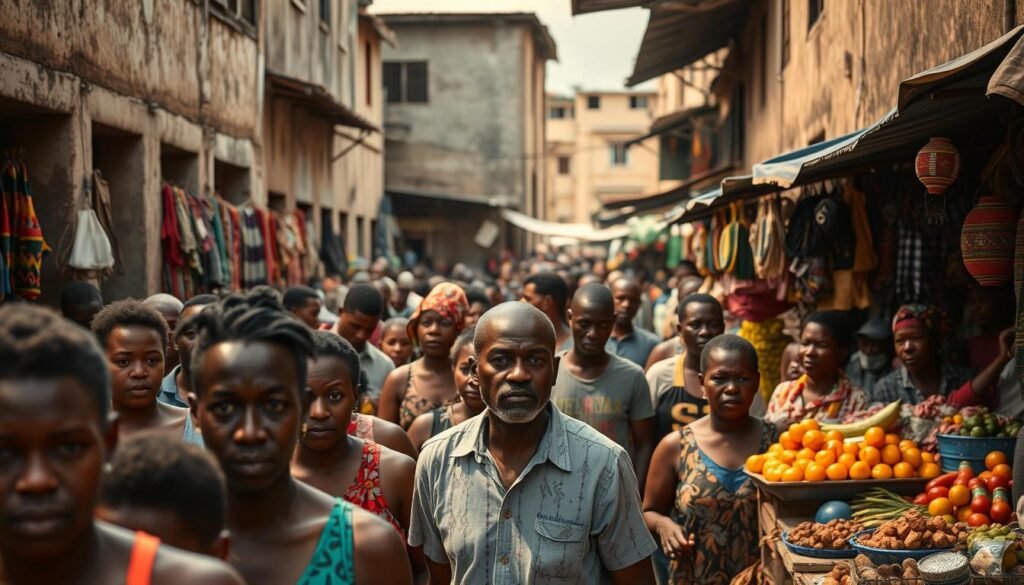
Haiti’s contemporary crisis deepened with the 2021 assassination of President Jovenel Moïse, plunging the nation into further instability. This event marked a significant escalation in the country’s ongoing political turmoil.
The assassination of President Moïse on July 7, 2021, created a power vacuum, as the perpetrators were not immediately identified or apprehended. This void led to a struggle for control among various political factions and gang leaders.
The aftermath saw a surge in political violence, with different groups vying for power. The lack of a clear leader or governing body exacerbated the situation, leaving the country without effective governance.
Gang violence has become a pervasive issue in Haiti, particularly in the wake of Moïse’s assassination. Without a strong central authority, gangs have expanded their territorial control, leading to a collapse in security.
The situation is dire, with widespread reports of kidnappings, robberies, and other violent crimes. The table below summarizes the key statistics related to gang violence and its impact on Haitian society.
| Indicator | Pre-Assassination | Post-Assassination |
|---|---|---|
| Kidnappings | 100 reported cases | 300 reported cases |
| Gang-Controlled Territories | 20% of urban areas | 60% of urban areas |
| Violent Crimes | 500 reported incidents | 1500 reported incidents |
The humanitarian crisis resulting from gang violence and security collapse has left many Haitians without access to basic necessities like food, water, and healthcare. The international community has been called upon to provide aid and support to stabilize the situation.
Breaking free from the cycle of authoritarianism and political upheaval requires a multifaceted approach that involves both local initiatives and international cooperation. For Haiti to transition towards a more stable political environment, it’s crucial to examine potential paths that can lead the country off the leadership carousel.
Grassroots movements and civil society organizations play a vital role in pushing for change in Haiti. These groups are at the forefront of advocating for democratic reforms, human rights, and social justice. By empowering local communities and supporting their initiatives, it’s possible to create a foundation for sustainable development and political stability. For instance, initiatives focused on education, healthcare, and economic empowerment can help address some of the root causes of political instability.
Institutional reforms are essential for creating a robust and transparent governance framework. This includes strengthening the judiciary, enhancing parliamentary oversight, and improving public administration. International partnerships can support these efforts by providing technical assistance, financial aid, and diplomatic support. Collaborative efforts between the Haitian government and international organizations can help build the capacity of local institutions, promote good governance, and foster economic development.
By combining grassroots initiatives with institutional reforms and international partnerships, Haiti can make significant strides towards breaking the cycle of political instability. This comprehensive approach not only addresses the symptoms of the problem but also tackles the underlying causes, paving the way for a more stable and prosperous future.
Haiti’s leadership cycle, depicted as a relentless carousel, has perpetuated instability and hindered progress. Understanding this cycle is crucial to breaking free from it.
Reimagining Haiti beyond the carousel requires a multifaceted approach. It involves strengthening institutions, promoting transparency, and empowering civil society. By doing so, Haiti can transition towards a more stable and prosperous future.
The path forward is challenging, but not impossible. Grassroots movements and international partnerships can play a vital role in driving change. As Haiti moves beyond the carousel, it is essential to focus on inclusive governance, economic development, and social justice.
By reimagining Haiti beyond the constraints of its current leadership trap, we can envision a brighter future for its people. A future where leaders are accountable, and citizens have access to basic rights and opportunities. This vision is within reach, and it starts with breaking the cycle of political instability.
The carousel metaphor represents the cyclical nature of Haiti’s political leadership, where leaders rise and fall in a repetitive pattern, often due to factors like corruption and authoritarianism.
Haiti’s revolutionary beginning and transition to independence laid the groundwork for its early governance patterns and presidential instability, which have perpetuated the leadership cycle.
The Duvalier dynasty, particularly François “Papa Doc” and Jean-Claude “Baby Doc,” exemplified the leadership carousel at its most extreme, characterized by brutal suppression and corruption.
External forces, including the U.S. occupation, the United Nations, NGOs, and foreign aid dynamics, have impacted Haiti’s political stability and contributed to the complexities of its leadership cycle.
Haitians face constant political instability, which affects their daily lives, but they also show resilience and resistance, coping with and challenging the status quo.
The 2021 presidential assassination led to a power vacuum, and the rise of gang violence has resulted in a collapse of security, posing significant challenges to Haiti’s future stability.
Grassroots movements, civil society solutions, institutional reforms, and international partnerships are potential paths towards breaking the cycle of political instability and achieving a more stable future.
By understanding the historical context, the mechanics of the leadership carousel, and the role of external forces, Haiti can work towards a more stable and prosperous future, breaking the cycle of political instability.