Physical Address
304 North Cardinal St.
Dorchester Center, MA 02124
Physical Address
304 North Cardinal St.
Dorchester Center, MA 02124

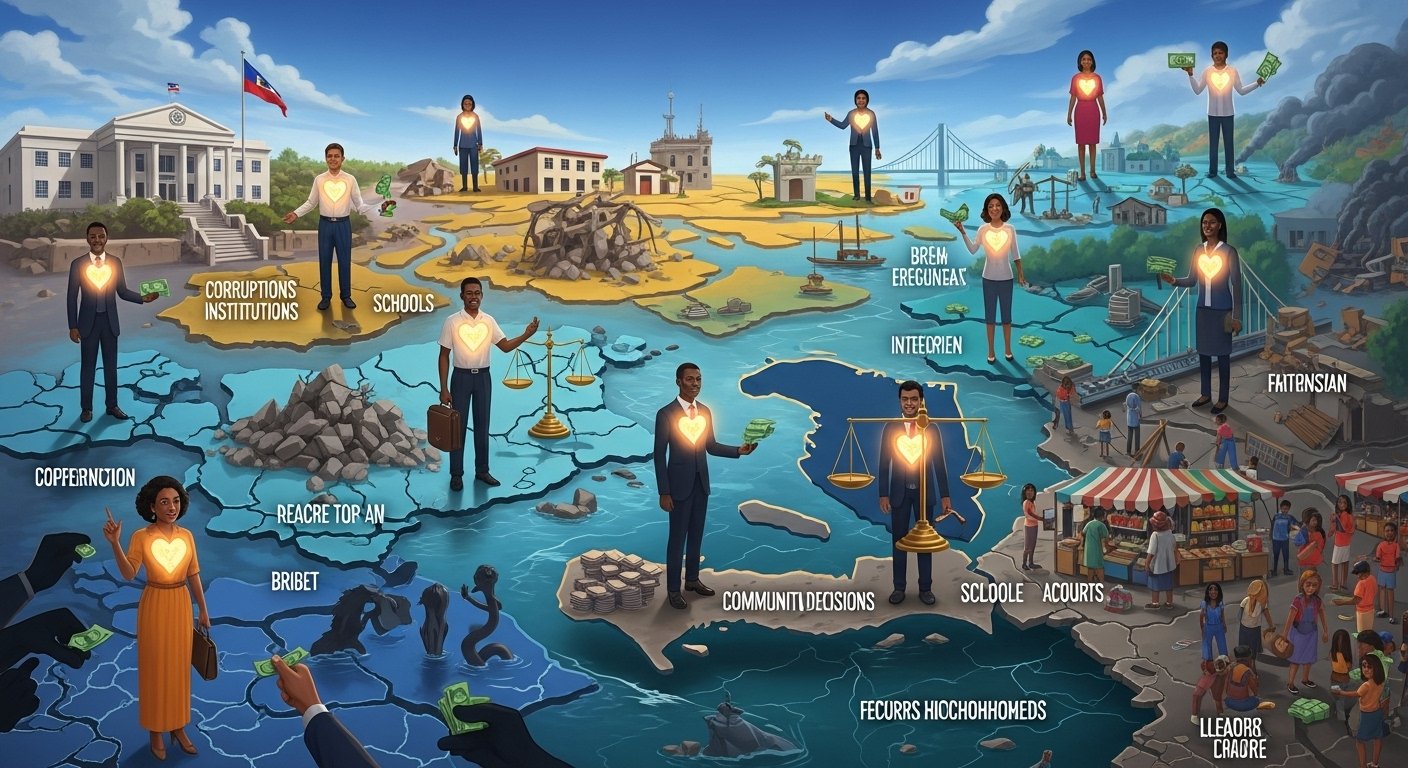
Uncover the path to Haiti's salvation through the power of integrity-driven leadership.
Haiti’s future is at a crossroads, and the need for integrity-driven leadership has never been more pressing. The country’s transformation hinges on the ability of its leaders to prioritize the welfare of their citizens and foster a culture of transparency and accountability.
The potential for positive change is vast, but it requires a collective effort from leaders, citizens, and international partners. By working together, Haiti can overcome its current challenges and embark on a path towards sustainable development and prosperity.
Haiti stands at a critical juncture, grappling with a multifaceted crisis that threatens its very foundation. The country’s challenges are deeply intertwined, making it imperative to understand the complexity of its situation.
Haiti’s political landscape is marked by persistent instability, with frequent changes in government and a lack of continuity in policy implementation. This instability is further complicated by weak institutional frameworks, which hinder effective governance. Key issues include:
The economic challenges facing Haiti are profound, with widespread poverty and limited access to resources being significant barriers to development. The country’s economy is characterized by:
Social unrest in Haiti is fueled by economic dissatisfaction and security concerns. The situation is exacerbated by gang violence and a strained relationship between citizens and law enforcement. The key factors contributing to this unrest include:
The cumulative effect of these challenges underscores the urgent need for integrity-driven leadership to address Haiti’s multifaceted crisis and pave the way for sustainable development.
To comprehend Haiti’s current predicament, it’s essential to examine its historical leadership patterns and the impact of colonialism. Haiti’s history is a complex tapestry woven from the threads of colonial legacy, post-independence struggles, and recent decades of political turmoil.
Haiti was a French colony, Saint-Domingue, known for its brutal slave regime. The colonial legacy left deep scars, including a hierarchical society and an economy dependent on a single crop, sugar. This history has influenced Haiti’s governance, with many leaders replicating the authoritarian and exploitative practices of their colonial predecessors.
After gaining independence in 1804, Haiti faced significant leadership challenges. The early leaders, including Jean-Jacques Dessalines and Henri Christophe, struggled to establish a stable government amidst internal conflicts and external pressures. This period was marked by power struggles, militarization, and a lack of institutional stability, setting the stage for future governance issues.
In recent decades, Haiti has experienced continued political instability, with frequent regime changes, coups, and natural disasters. This turmoil has been exacerbated by corruption, weak institutions, and external interference. The table below summarizes key events in Haiti’s recent political history.
| Year | Event | Impact |
|---|---|---|
| 1991 | Coup against President Aristide | Instability and economic sanctions |
| 2010 | Devastating earthquake | Massive humanitarian crisis |
| 2021 | Assassination of President Moïse | Escalating gang violence and political vacuum |
Understanding these historical contexts is crucial for addressing Haiti’s current challenges. By examining the colonial legacy, post-independence leadership struggles, and recent political turmoil, we can better grasp the complexities of Haiti’s situation and the need for leadership with integrity.
The leadership void in Haiti is a complex issue with deep-rooted causes. It is characterized by a lack of effective and visionary leaders who can drive the country towards sustainable development and stability.
Several factors contribute to this void, creating a challenging environment for progress.
Corruption is a pervasive issue in Haiti, affecting all levels of society and governance. It undermines trust in institutions and hinders economic development. The systemic nature of corruption means it is deeply ingrained, making it difficult to eradicate without comprehensive reforms.
Haiti faces a significant brain drain as many of its educated and skilled citizens emigrate in search of better opportunities. This exodus deprives the country of the talent needed to drive development and reform.
The loss of skilled professionals hampers Haiti’s ability to innovate and grow.
A widespread distrust in public institutions further complicates Haiti’s leadership challenges. When citizens lose faith in their government’s ability to deliver services and ensure justice, it erodes the foundation for stable governance.
Rebuilding this trust is crucial for creating a more stable and prosperous Haiti.
In conclusion, addressing Haiti’s leadership void requires a multifaceted approach that tackles corruption, retains talent, and restores faith in public institutions.
Haiti’s future hinges on the emergence of leaders who embody integrity, a quality that could potentially transform the nation. The presence of leaders with integrity can be a game-changer, addressing the multifaceted challenges that Haiti faces today.
Integrity in leadership is about having a strong moral compass, being transparent, and making decisions that are in the best interest of the people. It involves being accountable, ethical, and consistent in one’s actions and decisions. Leaders with integrity are not swayed by personal gain or external pressures but are guided by a commitment to serve the greater good.
Ethical governance has the power to transform Haiti by restoring public trust, promoting economic development, and ensuring that resources are used efficiently and effectively. When leaders govern with integrity, they create an environment that is conducive to investment, innovation, and social progress. This, in turn, can lead to improved living standards and a more stable society.
Public trust is a critical foundation for any meaningful change in Haiti. When citizens trust their leaders, they are more likely to support government initiatives and participate in the democratic process. Leaders with integrity can foster this trust by being transparent, accountable, and responsive to the needs of the people. The table below highlights the key aspects of how integrity in leadership can impact public trust and governance.
| Aspect of Integrity | Impact on Public Trust | Effect on Governance |
|---|---|---|
| Transparency | Increases citizen confidence | Improves decision-making processes |
| Accountability | Enhances trust in government | Reduces corruption |
| Responsiveness | Fosters a sense of being heard | Promotes citizen engagement |
By understanding and implementing these aspects of integrity, Haiti can move towards a more stable and prosperous future.
The key to unlocking Haiti’s potential lies in the attributes of its leaders, including a service-oriented approach and cultural sensitivity. For Haiti to transform and overcome its challenges, its leaders must embody certain key attributes that foster positive change and development.
Leaders with integrity prioritize transparency in their decision-making processes, ensuring that actions are open to scrutiny. This fosters an environment of trust, where citizens feel informed and involved. Accountability is also crucial, as it ensures that leaders are responsible for their actions and decisions, promoting a culture of answerability.
A service-oriented mindset is essential for leaders who aim to drive positive change. This involves prioritizing the needs of the nation over personal interests, demonstrating a commitment to serving the public good. Such leaders are more likely to implement policies that benefit the broader population.
Integrity-driven leaders focus on long-term vision, making decisions that may not yield immediate benefits but will ultimately strengthen the nation. This approach helps in building sustainable development projects and policies that stand the test of time, rather than opting for short-term gains that might be detrimental in the long run.
Leaders who are culturally sensitive and foster national pride can unite the populace and promote a sense of shared identity. By respecting and celebrating Haiti’s cultural heritage, these leaders can create a cohesive national narrative that inspires collective progress.
| Attribute | Description | Impact |
|---|---|---|
| Transparency | Open decision-making processes | Fosters trust and accountability |
| Service-Oriented Mindset | Prioritizing national needs over personal interests | Promotes policies for the public good |
| Long-term Vision | Decisions focused on sustainable development | Strengthens the nation over time |
| Cultural Sensitivity | Respecting and celebrating national heritage | Unites the populace and promotes national pride |
Transformative leadership with integrity has been a common thread in the success stories of several countries. By examining these case studies, we can identify key strategies and lessons that could be applied to Haiti’s context.
Rwanda’s journey since the 1994 genocide has been marked by significant progress in rebuilding and stabilizing the nation. Leadership with integrity played a crucial role in this process, fostering unity and promoting economic development. Rwanda’s recovery is a testament to the power of visionary leadership and the importance of national reconciliation.
Singapore’s transformation into one of the world’s least corrupt countries is a compelling example of effective governance. The establishment of the Corrupt Practices Investigation Bureau (CPIB) and the implementation of strict anti-corruption laws have been key factors in this success. Singapore’s approach demonstrates that with political will and institutional integrity, even deeply ingrained corruption can be eradicated.
Costa Rica stands out in Central America for its long-standing democratic stability and commitment to environmental conservation. The country’s focus on education and sustainable development has contributed to its stability and prosperity. Costa Rica’s example highlights the importance of long-term vision and the role of civic engagement in maintaining democratic institutions.
The experiences of Rwanda, Singapore, and Costa Rica offer valuable lessons for Haiti. Key takeaways include the importance of strong, integrity-driven leadership, the need for effective institutions, and the value of long-term planning. By studying these case studies, Haiti can identify potential pathways to overcome its current challenges.
| Country | Key Strategy | Outcome |
|---|---|---|
| Rwanda | National Reconciliation | Unity and Economic Growth |
| Singapore | Anti-Corruption Measures | Clean Governance |
| Costa Rica | Sustainable Development | Democratic Stability |

Building a culture of integrity requires the development of robust institutional frameworks. In Haiti, this involves creating a governance structure that is transparent, accountable, and fair. Institutional frameworks are the backbone of a functioning society, providing the necessary support for integrity-driven leadership.
Effective anti-corruption mechanisms are crucial in preventing the misuse of power and ensuring that leaders are held accountable. This can be achieved through the establishment of independent anti-corruption agencies, robust whistleblower protection laws, and stringent enforcement of corruption-related laws. For instance, Singapore’s Corrupt Practices Investigation Bureau is a model of effective anti-corruption enforcement.
An independent judiciary is essential for upholding the rule of law and ensuring that justice is served impartially. This involves safeguarding the independence of the judiciary, promoting merit-based appointments, and ensuring that the legal framework is robust and fair. Judicial independence is a cornerstone of a democratic society, and its absence can lead to a breakdown in trust and stability.
Professionalizing the civil service is vital for creating a merit-based, efficient, and effective public administration. This involves implementing reforms that promote professionalism, reduce political interference, and enhance the capacity of civil servants. Key strategies include training programs, competitive recruitment processes, and performance-based evaluations.
Ensuring the integrity of the electoral system is critical for maintaining public trust in the democratic process. This can be achieved through the use of transparent electoral processes, robust voter registration systems, and independent electoral commissions. Electoral integrity is fundamental to democratic stability and legitimacy.
The key elements for building institutional frameworks for integrity include:
By focusing on these areas, Haiti can create a robust institutional framework that supports integrity-driven leadership and fosters a culture of transparency and accountability.
The transformation of Haiti into a stable and prosperous nation hinges on the effectiveness of international aid and partnerships. International support can play a pivotal role in addressing Haiti’s multifaceted challenges, from governance and economic instability to social unrest.

Effective aid and development partnerships are crucial for Haiti’s progress. These partnerships should be designed to foster sustainable development, rather than merely providing temporary relief. By aligning aid with Haiti’s national development plans, international partners can help the country achieve its long-term goals.
A critical aspect of international support is the balance between capacity building and dependency creation. While aid is necessary, it’s essential that it is delivered in a way that enhances Haiti’s institutional capacity, rather than creating dependency. This can be achieved through training programs, technical assistance, and infrastructure development.
Engaging the Haitian diaspora is another vital component of international support. The diaspora can contribute significantly to Haiti’s development through knowledge transfer, investment, and advocacy. Programs that facilitate diaspora engagement can help bridge the gap between Haiti and its global community.
Finally, international support should focus on promoting sustainable economic development in Haiti. This involves supporting initiatives that stimulate economic growth, improve infrastructure, and enhance the business environment. By doing so, international partners can help Haiti achieve economic stability and reduce poverty.
In conclusion, the role of international support in Haiti’s transformation is multifaceted and critical. By focusing on effective aid partnerships, capacity building, diaspora engagement, and sustainable economic development, Haiti can make significant strides towards a more stable and prosperous future.
The key to transforming Haiti starts with grassroots leadership development. By focusing on the growth and empowerment of local leaders, Haiti can create a sustainable foundation for long-term change.
Education is the cornerstone of developing ethical leaders. Initiatives that incorporate ethics training into educational curricula can help cultivate a sense of integrity and public service among young Haitians. Programs that focus on character development alongside academic achievement are crucial.
Youth leadership programs are vital for empowering the next generation of Haitian leaders. These programs should include mentorship, community service, and leadership skills training to equip young people with the tools they need to drive positive change.
Community-based governance models encourage participatory governance and ensure that decision-making processes are inclusive and representative. By empowering local communities to take charge of their development, Haiti can foster a more equitable distribution of resources and opportunities.
Women’s leadership initiatives are essential for promoting gender equality and leveraging the unique perspectives and skills that women bring to leadership roles. Supporting women’s leadership can lead to more inclusive and effective governance.
By investing in these areas, Haiti can develop a robust pipeline of leaders who are committed to the public good and equipped to drive the country’s development forward.
Together, these initiatives can help create a brighter future for Haiti by cultivating tomorrow’s leaders today.
Haiti’s journey towards a brighter future hinges on the emergence of integrity-driven leadership. As discussed, the nation’s current state of crisis demands a transformative approach to governance, one that prioritizes transparency, accountability, and the welfare of its citizens.
The path forward for Haiti’s salvation involves a collective effort to support the development of ethical leadership. This can be achieved through grassroots leadership development programs, institutional reforms, and international support that fosters capacity building rather than dependency.
By embracing integrity-driven leadership, Haiti can overcome its historical challenges and unlock its potential for sustainable development. The future of Haiti is not solely dependent on its leaders but also on the active engagement of its citizens, diaspora communities, and international partners.
Together, they can pave the way for a stable, prosperous Haiti, where integrity and ethical governance are the guiding principles. As Haiti moves forward, the focus should remain on cultivating a culture of transparency and accountability, ensuring that the nation’s resources are utilized for the betterment of all its people.
Haiti is currently grappling with a multitude of challenges, including political instability, economic hardships, social unrest, and security concerns, all of which are intertwined and exacerbate one another.
Haiti’s history, including its colonial legacy and post-independence leadership struggles, has significantly impacted its current situation, shaping the nation’s governance, economy, and societal structures.
Integrity in leadership refers to the adherence to a moral code and ethical principles, which is vital for Haiti as it can help restore public trust, promote transparency, and drive sustainable development.
Haiti requires leaders with attributes such as transparency, accountability, a service-oriented mindset, a long-term vision, and cultural sensitivity to drive positive change and address the nation’s complex challenges.
Countries like Rwanda, Singapore, and Costa Rica have undergone significant transformations driven by integrity-led leadership, offering valuable lessons for Haiti, including the importance of anti-corruption mechanisms, judicial independence, and civil service reform.
International support can play a crucial role in Haiti’s transformation by providing effective aid and development partnerships, capacity building, diaspora engagement, and sustainable economic development support, all of which can help foster a more robust and transparent governance structure.
Grassroots leadership development is essential for cultivating a new generation of leaders who embody integrity and a commitment to the public good, and initiatives such as education and ethics training, youth leadership programs, and community-based governance models can help achieve this goal.
Strengthening anti-corruption mechanisms and enforcement in Haiti requires a multi-faceted approach, including the establishment of independent anti-corruption agencies, judicial reform, and the promotion of transparency and accountability.