Physical Address
304 North Cardinal St.
Dorchester Center, MA 02124
Physical Address
304 North Cardinal St.
Dorchester Center, MA 02124

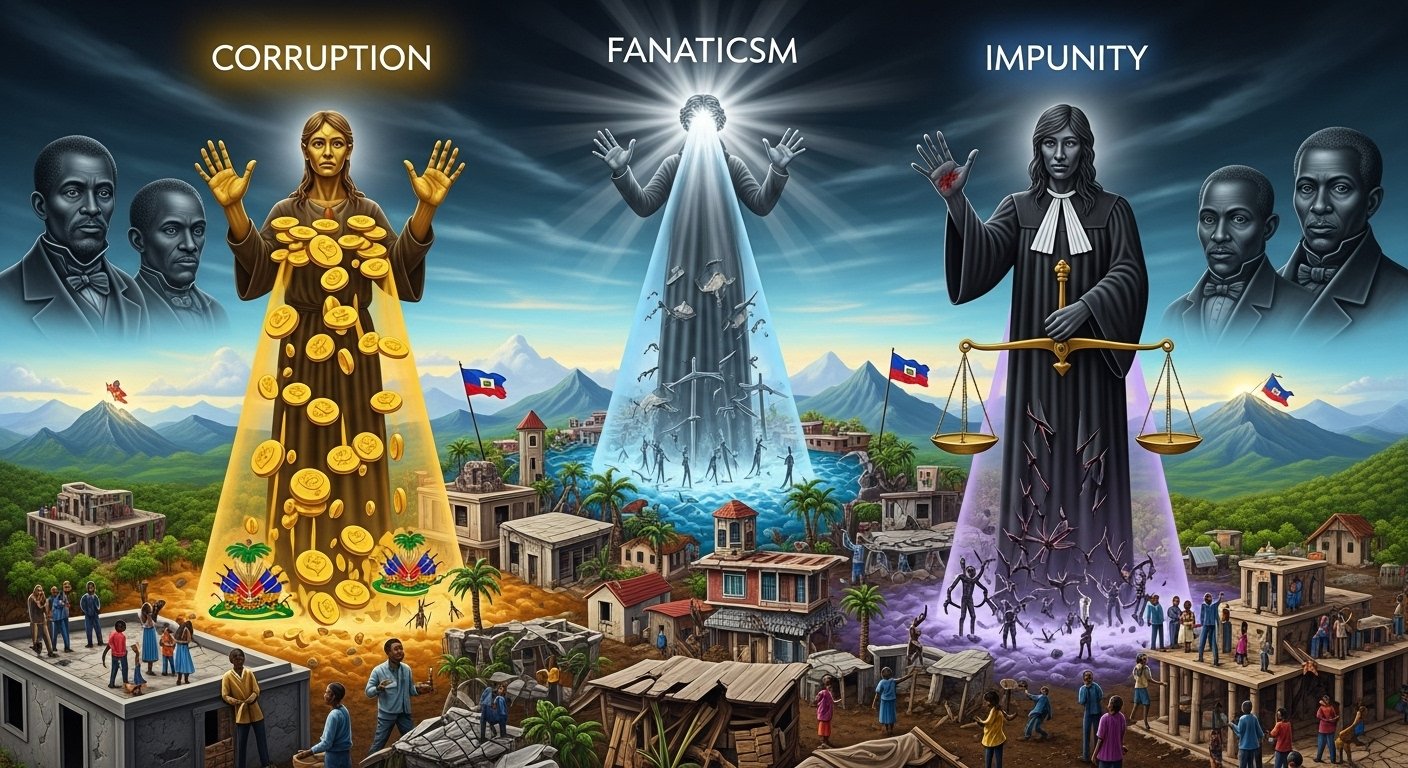
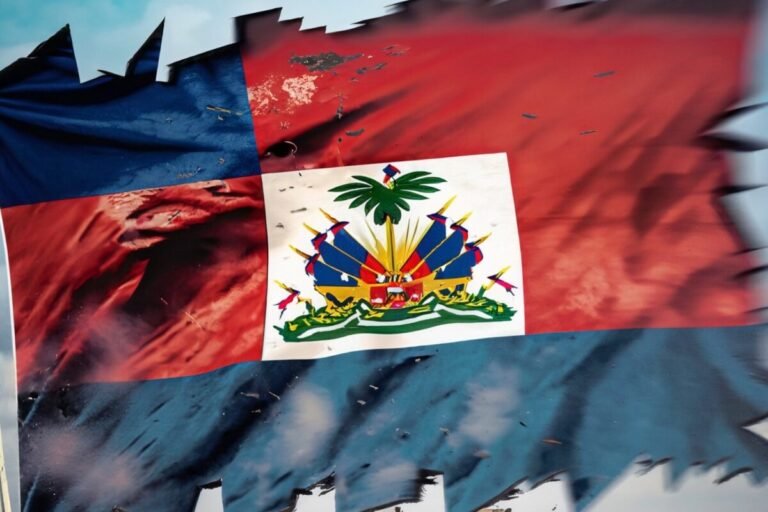
The Toxic Triumvirate: Corruption, fanaticism, and impunity threaten to poison Haiti's future.
Haiti is facing an unprecedented crisis, with corruption and impunity exacerbating the country’s problems.
The intertwining of fanaticism and corrupt practices has created a toxic environment, hindering the country’s progress.
This article will explore the Toxic Triumvirate of corruption, fanaticism, and impunity, and their devastating impact on Haiti’s future.
Haiti stands at a critical juncture, grappling with a multifaceted crisis that threatens its very foundation. The nation’s current situation is characterized by a complex interplay of political instability, economic hardship, and social unrest.
The socio-political landscape in Haiti has been steadily deteriorating, marked by increased violence, political gridlock, and a general sense of disillusionment among the populace. Gangs have filled the power vacuum, exerting control over large swaths of the capital, Port-au-Prince, and other urban areas.
This environment of lawlessness has severely impacted the daily lives of Haitians, with many facing extortion, kidnapping, and other forms of violence. The situation is further complicated by the lack of effective governance and the absence of a unified political leadership.
Several key indicators suggest that Haiti is on the path to becoming a failing state. These include:
As
“Haiti’s stability is fragile and requires immediate attention to prevent further deterioration.”
noted by experts, the international community must work together to address these pressing issues.
To comprehend Haiti’s present crisis, it’s essential to examine its complex and tumultuous past. Haiti’s history is a tapestry woven with threads of colonial exploitation, political upheaval, and foreign intervention.
Haiti’s colonial past has significantly shaped its modern challenges. As the first independent nation in the Caribbean, Haiti faced immense challenges in establishing a stable government and economy after its revolution against French colonial rule in 1804. The legacy of colonialism has left deep scars, including economic dependency and social inequality.
The impact of this history is still evident today, with Haiti struggling to overcome the economic and social disparities created by centuries of exploitation.
Haiti has experienced cycles of political instability and foreign intervention throughout its history. From US occupations to international interventions, these events have often disrupted the country’s path to stability and self-determination.
The consequences of these interventions have been profound, contributing to the ongoing issues of corruption, fanaticism, and impunity that plague Haiti today.
The intertwined forces of corruption, fanaticism, and impunity form a toxic triumvirate that is crippling Haiti’s potential for growth and stability. To grasp the full extent of Haiti’s crisis, it’s essential to understand the nature of these three destructive forces and how they interact.
Corruption in Haiti manifests as the abuse of power for personal gain, affecting all levels of government and society. Fanaticism, on the other hand, involves extreme and uncritical adherence to particular ideologies or beliefs, often leading to violence and social unrest. Lastly, impunity refers to the lack of accountability for crimes and human rights abuses, creating a culture where perpetrators feel they can act without consequence.
The toxic triumvirate is more than just the sum of its parts; the elements are interlinked in a way that each component exacerbates the others. For instance, corruption fuels impunity by allowing criminals to bribe their way out of punishment, while fanaticism can be both a cause and a result of the social tensions that corruption and impunity create. Understanding this symbiotic relationship is crucial for developing effective solutions to Haiti’s crises.
By examining the toxic triumvirate, it becomes clear that addressing Haiti’s challenges requires a comprehensive approach that tackles all three elements simultaneously.
The fabric of Haiti’s institutional integrity is being torn apart by rampant corruption. This pervasive issue affects every level of Haitian society, from government institutions to public services. As a result, the trust between the government and its citizens is continually eroded.
Government corruption in Haiti manifests in various forms, including the misappropriation of funds. According to a report, a significant portion of government funds is embezzled or misused, depriving essential public services of necessary resources. This not only hampers development but also exacerbates poverty and inequality.
For instance, funds allocated for infrastructure projects are often diverted, leading to substandard construction or abandoned projects. This mismanagement not only wastes public resources but also undermines the government’s ability to provide basic services.
The impact of corruption on public services and infrastructure in Haiti is profound. Corruption leads to inadequate healthcare, poor educational facilities, and insufficient infrastructure. As a result, citizens suffer from a lack of access to basic necessities.
A notable example is the healthcare system, where corruption has led to shortages of medical supplies and inadequate facilities.
“The healthcare system in Haiti is on the brink of collapse due to systemic corruption and mismanagement,”
said a recent report, highlighting the dire consequences of corruption.
The pervasive nature of corruption in Haiti has severe economic consequences, undermining trust in institutions and deterring investment. Corruption affects various aspects of the economy, from government contracts to the private sector, creating an environment where economic development is stifled.
Corruption undermines economic development by creating an uneven playing field where businesses that engage in corrupt practices are favored over those that operate transparently. This not only discourages legitimate business activities but also leads to a misallocation of resources, as funds are diverted for personal gain rather than being invested in productive sectors.
For instance, a study on corruption in infrastructure projects revealed that a significant portion of funds allocated for such projects is lost to corruption, resulting in substandard infrastructure that fails to meet the needs of the population.
International aid plays a crucial role in Haiti’s economy, but its misuse due to corruption can have detrimental effects. Aid that is diverted for personal gain or through corrupt practices reduces the effectiveness of development programs, perpetuating dependency and hindering sustainable development.
| Economic Indicator | Impact of Corruption |
|---|---|
| Foreign Investment | Decreased due to lack of trust |
| Economic Growth | Stunted by misallocated resources |
| Public Services | Underfunded due to corruption |
“Corruption is a major obstacle to achieving sustainable development in Haiti. It not only hampers economic growth but also erodes trust in government institutions.”
Haiti’s struggle with fanaticism is multifaceted, involving both political and religious extremism that threatens social cohesion. The manifestations of fanaticism are varied, impacting different aspects of Haitian society.
Political extremism in Haiti has often been associated with gang violence, creating a volatile environment that destabilizes the country. Gangs, sometimes backed by political figures, engage in violent turf wars, kidnappings, and other criminal activities that terrorize the population. This not only undermines the rule of law but also erodes trust in governmental institutions. The intertwining of political power and gang violence has led to a cycle of violence that is difficult to break.
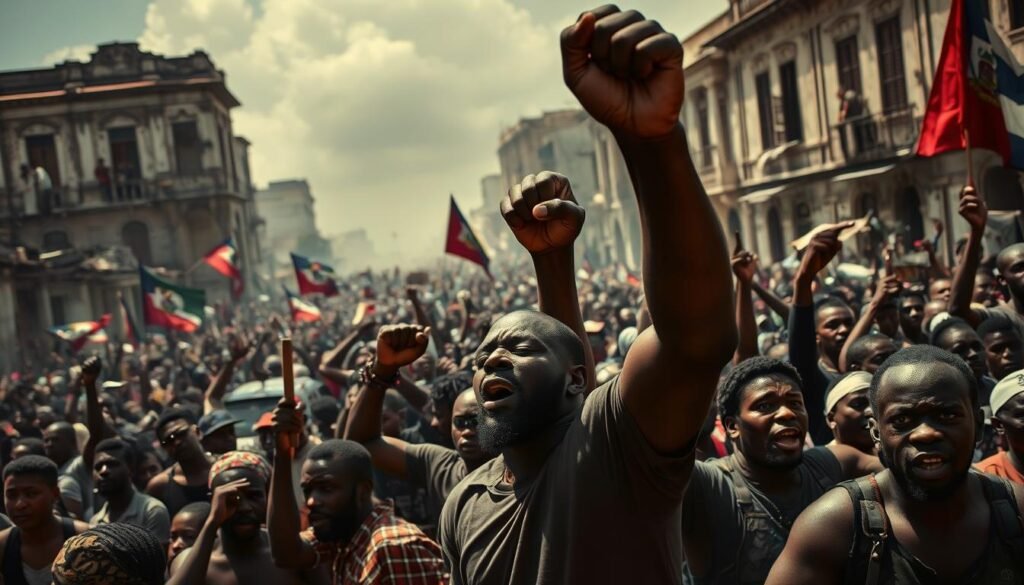
Religious fanaticism also plays a significant role in Haiti’s societal challenges. While religion can be a source of comfort and strength, fanaticism can lead to division and conflict. In Haiti, religious extremism can manifest in various ways, influencing social norms and behaviors. It can also intersect with political extremism, further complicating the socio-political landscape.
| Aspect | Political Extremism | Religious Fanaticism |
|---|---|---|
| Primary Manifestation | Gang Violence | Social Division |
| Impact on Society | Destabilization, Fear | Conflict, Intolerance |
The psychology behind fanaticism in Haiti reveals a disturbing trend where desperation paves the way for extremist beliefs. Understanding this psychological aspect is crucial to grasping the complexities of Haitian society today.
Desperation is a powerful catalyst for the adoption of extremist ideologies. In Haiti, where economic hardship and political instability are rampant, individuals become more susceptible to radical beliefs that promise change, albeit through extreme means. This desperation can lead to a loss of critical thinking, making individuals more prone to manipulation by charismatic leaders.
Power-hungry leaders often exploit the desperation and frustration felt by the populace to further their own agendas. By tapping into the emotions of the masses, these leaders can sway public sentiment in their favor, often using divisive rhetoric to galvanize support for their causes. This manipulation can have a profound impact on the societal fabric, leading to increased polarization and conflict.
Impunity is a toxic force in Haiti, eroding trust in institutions and perpetuating injustice. The consequences of this issue are far-reaching, affecting not only the judicial system but also the fabric of Haitian society.
The judicial system in Haiti is facing a severe crisis. Corruption and political interference have weakened the system’s ability to deliver justice, leading to a lack of confidence among citizens. As a result, many crimes go unpunished, and the rule of law is undermined.
The collapse of the judicial system has serious implications for human rights. Without a functioning judiciary, individuals are left vulnerable to abuses, and perpetrators are emboldened to commit further crimes.
Human rights violations are rampant in Haiti, and the lack of accountability is a significant concern. The failure to hold perpetrators accountable for their actions creates a culture of impunity, where abuses are tolerated and encouraged.
This situation is exacerbated by the fact that many human rights violators hold positions of power, making it even more challenging to bring them to justice. The international community has a crucial role to play in supporting efforts to address these violations and ensure that those responsible are held accountable.
By addressing impunity and strengthening the judicial system, Haiti can take a significant step towards a more just and equitable society.
Impunity has become a driving force behind the cycle of violence in Haiti, undermining efforts to establish a just and peaceful society. When individuals or groups commit crimes without facing consequences, it creates an environment where criminal behavior is normalized and encouraged.
The lack of accountability for crimes committed in Haiti has led to a surge in violent behavior. Criminals feel emboldened to act without fear of punishment, knowing that the judicial system is either too weak or too corrupt to hold them accountable. This has resulted in increased gang violence, kidnappings, and other serious crimes.
As impunity continues to fuel violence, the public’s trust in institutions such as the police and judiciary erodes. Citizens begin to lose faith in the system’s ability to protect them, leading to a breakdown in social cohesion. The feeling of being unprotected can drive individuals to take matters into their own hands, further exacerbating the cycle of violence.

The intertwined issues of impunity and violence in Haiti demand a comprehensive approach to break the cycle and rebuild trust in institutions.
For ordinary Haitians, the intertwined forces of corruption, fanaticism, and impunity have made survival a daily challenge. The consequences of these destructive elements are far-reaching, impacting various aspects of life in Haiti.
Daily life in Haiti is marked by uncertainty and fear. Corruption has eroded trust in institutions, while fanaticism has fueled violence and division. The lack of accountability due to impunity has emboldened criminal elements, making everyday activities a risk. Here are some key challenges faced by ordinary Haitians:
The dire situation has led to a significant diaspora, with many Haitians seeking better opportunities abroad. This brain drain has deprived the country of its most valuable resource: skilled and motivated individuals who could contribute to Haiti’s development. The consequences are twofold:
The human cost of the Toxic Triumvirate is not just about numbers; it’s about the stories of individuals and families torn apart by the crises in Haiti.
Potential solutions to Haiti’s crisis involve a combination of institutional reforms and international cooperation. To effectively address the intertwined issues of corruption, fanaticism, and impunity, a multi-faceted strategy is essential.
Strengthening Haiti’s institutions is crucial for combating corruption. This can be achieved through transparent governance, robust anti-corruption laws, and independent oversight bodies. International support can play a vital role in providing technical assistance and resources to bolster these efforts.
Combating extremism requires addressing the root causes of radicalization. Investing in education and creating economic opportunities can help mitigate the factors that drive individuals to extremist ideologies. Programs that promote critical thinking, tolerance, and social cohesion are particularly effective.
Reforming the justice system is critical to ending impunity in Haiti. This involves strengthening judicial institutions, ensuring the independence of the judiciary, and providing training for law enforcement officials. International cooperation can support these efforts through capacity-building programs and technical assistance.
Some key strategies for breaking the cycle include:
By adopting these strategies, Haiti can begin to break free from the toxic triumvirate of corruption, fanaticism, and impunity, paving the way for a more stable and prosperous future.
Haiti stands at a critical juncture, grappling with the toxic forces of corruption, fanaticism, and impunity that threaten its very foundation. Despite the dire circumstances, there is a glimmer of hope for Haiti’s future. By understanding the roots of these issues and working collectively towards institutional reforms, anti-corruption measures, and rebuilding the justice system, Haiti can pave the way for a brighter tomorrow.
Addressing extremism through education and opportunity is crucial in breaking the cycle of violence and impunity. The international community’s support plays a vital role in this endeavor, providing the necessary aid and expertise to help Haiti rebuild. As the nation moves forward, fostering a culture of transparency, accountability, and inclusivity will be essential in restoring public trust and ensuring a more equitable society.
With concerted efforts from both within and outside Haiti, there is hope that the country can overcome its current challenges. By focusing on the well-being of its citizens and promoting sustainable development, Haiti’s future can be reimagined, offering a better life for its people and a more stable, prosperous nation.
The “Toxic Triumvirate” refers to the interrelated issues of corruption, fanaticism, and impunity that are poisoning Haiti’s future. These three destructive forces compound each other’s negative impacts, hindering the country’s development and stability.
Corruption undermines economic development in Haiti by misappropriating funds, distorting markets, and discouraging investment. It also leads to the misuse of international aid, further exacerbating the country’s economic challenges.
Fanaticism, in its various forms, including political extremism and religious fanaticism, contributes to the destabilization of Haitian society. It fuels gang violence, social unrest, and the manipulation of public sentiment by power-hungry leaders.
Impunity, resulting from the breakdown of the judicial system, leads to human rights violations without accountability. This perpetuates a cycle of violence and criminal behavior, eroding public trust in institutions and undermining the rule of law.
The “Toxic Triumvirate” has a devastating impact on the daily lives of ordinary Haitians, who face poverty, insecurity, and a lack of access to basic services. It also leads to a diaspora and brain drain, as many Haitians seek better opportunities abroad.
Yes, potential solutions include institutional reforms, anti-corruption measures, addressing extremism through education and opportunity, and rebuilding the justice system to end impunity. International support and cooperation are crucial in implementing these solutions.
International aid can be used more effectively by ensuring it is targeted towards specific development goals, such as improving infrastructure, supporting education and healthcare, and promoting economic development. It is also essential to ensure that aid is not misappropriated by corrupt officials.
Education plays a critical role in addressing extremism by providing young people with the skills and knowledge they need to build a better future. It can help to promote tolerance, critical thinking, and social cohesion, reducing the appeal of extremist ideologies.