Physical Address
304 North Cardinal St.
Dorchester Center, MA 02124
Physical Address
304 North Cardinal St.
Dorchester Center, MA 02124

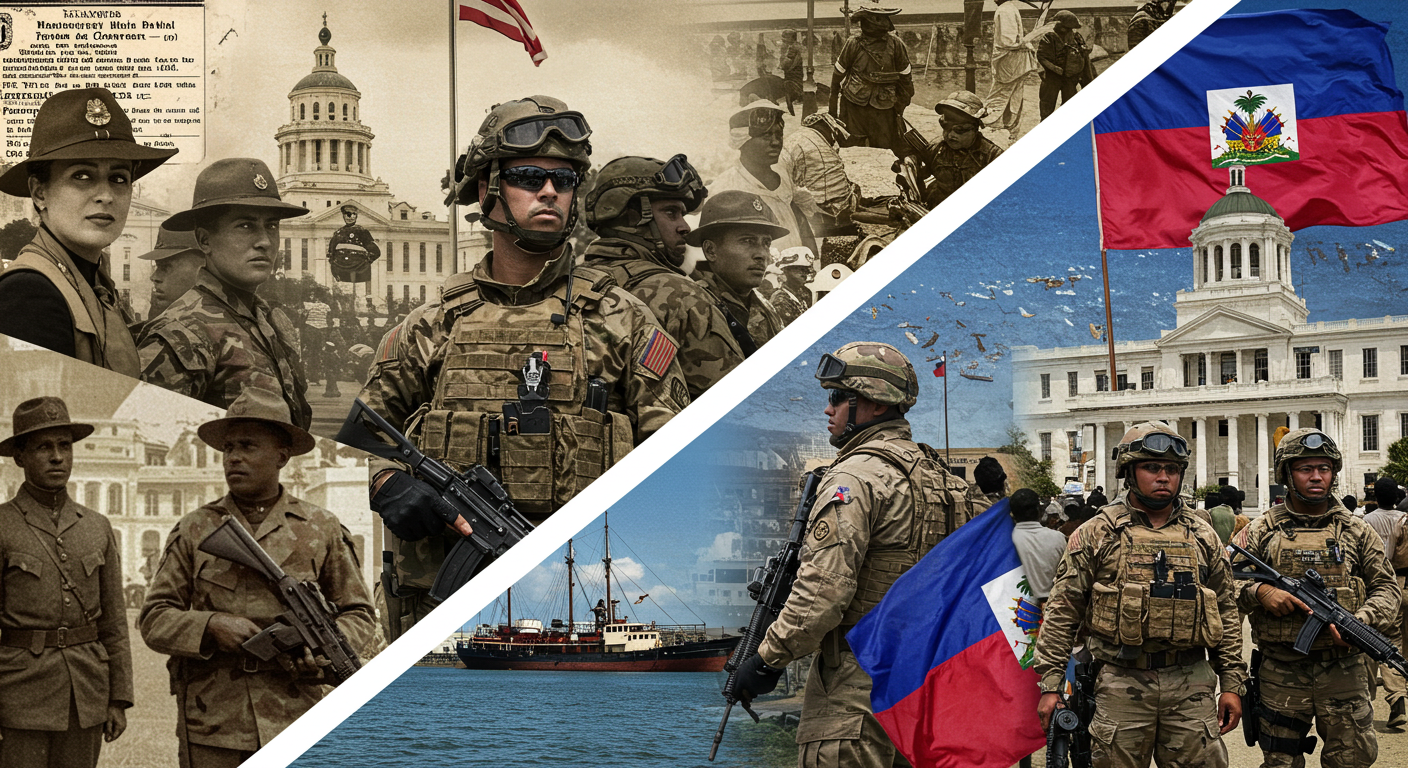
Discover how Erik Prince's illegal contract mirrors the 1915 occupation in this thought-provoking examination of history repeating itself.
The name Erik Prince is synonymous with controversy in the world of private military contractors. As the founder of Blackwater, Prince has been at the center of numerous debates surrounding the use of private armies in conflict zones.
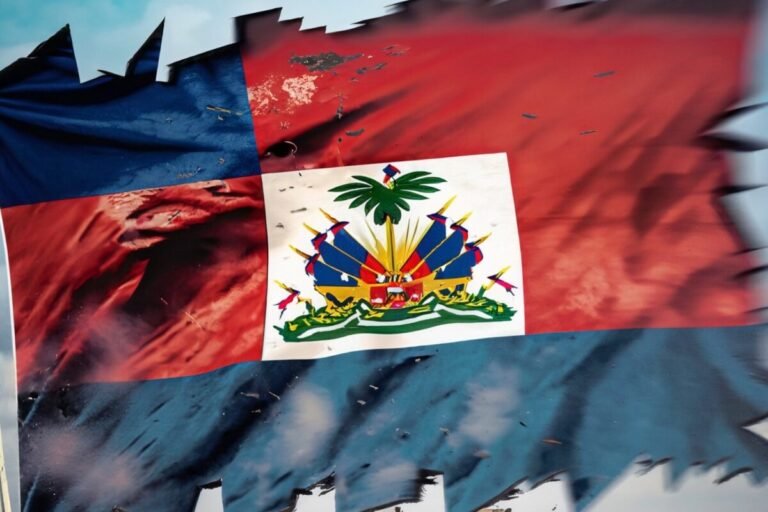
The U.S. occupation of Haiti in 1915 is a lesser-known but significant event in history. Lasting for nearly two decades, it had profound effects on the island nation. Today, parallels are being drawn between this historical event and the current situation involving private military contractors in Haiti.
The involvement of Erik Prince in Haiti has sparked concerns about the illegal contract and its implications. As we explore this modern-day occupation, we can see echoes of the past.
Erik Prince’s journey from the Navy SEALs to the forefront of private military contracting is a complex one. As the founder of Blackwater, Prince has been a pivotal figure in the private military industry.
Erik Prince’s background in the Navy SEALs provided a foundation for his later ventures. His experience in special operations influenced his approach to private military contracting.
Prince’s role in Blackwater has been marked by controversy, including incidents that have sparked international debate. Some of the notable incidents associated with Blackwater include:
A closer look at some of the scandals surrounding Erik Prince and Blackwater reveals a complex web of legal and ethical issues.
| Incident | Year | Description |
|---|---|---|
| Nisour Square massacre | 2007 | Blackwater guards killed 17 Iraqi civilians, sparking international outrage. |
| Allegations of excessive force | 2005-2007 | Multiple reports of Blackwater personnel using excessive force, leading to civilian casualties. |
| Investigations into Blackwater operations | 2005-2010 | Various investigations into Blackwater’s activities, including allegations of wrongdoing by Prince and other executives. |
Erik Prince’s career has been marked by both significant achievements and controversies. Understanding his background and the incidents associated with his companies provides insight into the private military industry.
On July 28, 1915, U.S. Marines landed in Haiti, initiating an occupation that would last nearly two decades. This significant event was not an isolated incident but part of a broader geopolitical strategy.
The early 20th century was a tumultuous period for Haiti, marked by political instability and economic turmoil. The U.S. government cited concerns over Haitian instability and German influence as primary reasons for the intervention.
The occupation was characterized by a mix of political and economic motivations. On one hand, the U.S. sought to stabilize the region and protect American business interests. On the other hand, there were underlying strategic interests, including the control of Haiti’s financial and natural resources.
Officially, the U.S. occupation aimed to modernize Haiti’s infrastructure and stabilize its government. However, critics argue that the actual motivations were more aligned with securing American economic interests and expanding U.S. influence in the Caribbean.
The occupation lasted until 1934, leaving a lasting impact on Haiti. The period was marked by both modernization efforts and human rights abuses. The legacy of this occupation continues to influence Haitian politics, economy, and culture to this day.
The occupation’s impact on Haiti’s development was multifaceted, with both positive and negative outcomes. Understanding this complex history is crucial for grasping the contemporary dynamics between Haiti and the U.S.
A closer examination of Erik Prince’s military operations reveals a complex web of legal violations and regulatory evasions. Prince, the founder of Blackwater, has been a controversial figure in the private military contracting industry.
Erik Prince’s military operations have been characterized by their extensive scope and lack of transparency. His companies have been involved in various military interventions and security services, often operating in gray areas of international law.
The use of private military contractors like Prince’s companies has raised concerns about accountability and the potential for human rights abuses.
Prince’s operations have been criticized for violating various national and international laws. These include allegations of mercenary activities, human rights abuses, and violations of arms control regulations.
Regulatory evasions have been a significant aspect of Prince’s business model, often involving complex financial structures and the use of shell companies.
The financial structures behind Prince’s military operations are complex and often opaque. There are allegations of hidden stakeholders and beneficiaries, making it difficult to track the flow of money and resources.
Investigating these financial structures is crucial to understanding the full extent of Prince’s activities and their implications.
A century apart, Erik Prince’s illegal contract and the 1915 U.S. occupation of Haiti share commonalities that shed light on the persistent dynamics of power and control in international interventions.
Both Erik Prince’s operations and the 1915 occupation were characterized by a significant imbalance of power, with external actors exerting control over local populations. In 1915, the U.S. military intervened in Haiti under the pretext of stabilizing the country, effectively taking control of its government and economy. Similarly, Erik Prince’s private military contracting has involved exerting influence over local security dynamics, often with minimal oversight.
Control mechanisms used in both scenarios include the deployment of military or paramilitary forces, manipulation of local political structures, and economic leverage. These tactics have been employed to achieve strategic objectives, often at the expense of local autonomy and sovereignty.
The justifications provided for both the 1915 occupation and Erik Prince’s illegal contract have centered around the need for stability and security. In 1915, the U.S. cited concerns over Haitian instability and the potential for German influence during World War I. Erik Prince has similarly justified his operations as necessary for combating terrorism and ensuring regional security.
Public narratives have played a crucial role in shaping perceptions of these interventions. In both cases, the intervening parties have sought to portray their actions as benevolent and necessary, often downplaying the more coercive aspects of their operations.
While the core objectives of intervention may remain similar, the tactics employed have evolved significantly over the past century. The 1915 occupation was characterized by direct military intervention, whereas Erik Prince’s operations involve private military contracting, often with a veneer of legitimacy provided by contractual agreements.
The use of private military companies represents a significant shift in how military power is exercised and controlled. This evolution raises important questions about accountability, oversight, and the potential for abuse of power in modern interventions.
The landscape of military power has shifted dramatically from traditional state-controlled forces to private entities. This transformation reflects a broader trend in the privatization of military power, where private military contractors (PMCs) now play a significant role in modern conflicts.
Historically, gunboat diplomacy was used as a tool of foreign policy, where naval power was deployed to exert influence over weaker nations. Today, this form of diplomacy has evolved into the use of private military contractors, who operate in a gray area between traditional military forces and civilian entities.
The modern military-industrial complex has grown significantly, with private companies influencing military operations and foreign policy decisions. This complex interplay between corporate interests and state actions has raised concerns about accountability and the motivations behind military interventions.
As private military contractors become more prevalent, the distinction between state-controlled military actions and corporate-driven operations becomes increasingly blurred. This blurring of lines raises important questions about the future of military power and the role of private entities in conflict zones.
Understanding the legal frameworks surrounding military occupations is crucial for assessing their legitimacy. The use of military force, whether by state actors or private contractors, is governed by a complex set of international laws and regulations.
International law provides clear guidelines on occupation and mercenary activity. The Fourth Geneva Convention, for instance, outlines the rules governing military occupation, emphasizing the protection of civilians and prohibiting the destruction of property. Mercenary activities, on the other hand, are regulated under various international protocols, including the International Convention against the Recruitment, Use, Financing and Training of Mercenaries.
“The use of mercenaries is a threat not only to the security and stability of the countries where they operate, but also to the integrity of the international order.”
The 1915 U.S. occupation of Haiti and Erik Prince’s modern military contracting activities have both raised significant legal concerns. In 1915, the U.S. violated Haitian sovereignty, and today, Prince’s activities have been scrutinized for potential violations of international law and U.S. domestic law.
| Legal Violation | 1915 Occupation | Erik Prince’s Contracting |
|---|---|---|
| Sovereignty Violation | Yes | Alleged |
| Mercenary Activity | No | Yes |
One of the significant challenges in addressing illegal military interventions is the accountability gap for military contractors. Unlike regular military personnel, contractors often operate in a legal gray area, making it difficult to prosecute them for violations.
The lack of clear legal frameworks and enforcement mechanisms enables military contractors to operate with relative impunity, undermining international law and accountability.
A closer look at the economic motivations behind these interventions exposes a tangled network of banking interests and resource control. Understanding these financial drivers is crucial to grasping the full context of both historical and modern military interventions.
In 1915, Haiti was a focal point for American financial interests, particularly in banking and resource extraction. The U.S. occupation was partly driven by the desire to control Haiti’s financial systems and natural resources.
Key banking interests included:
Erik Prince’s private military company operates on a business model that thrives on government contracts and lucrative revenue streams from military operations and security services.
Revenue streams include:
While the specific actors and mechanisms differ, the economic beneficiaries of both the 1915 occupation and modern private military operations share common characteristics.
| Economic Beneficiaries | 1915 Occupation | Modern Private Military Operations |
|---|---|---|
| Primary Beneficiaries | American banking interests, corporations | Private military companies, shareholders |
| Revenue Sources | Control of Haitian finances, resource extraction | Government contracts, private security services |
Local populations bear the brunt of military interventions, facing numerous challenges and hardships. The effects of such interventions are not limited to the immediate conflict but have long-lasting impacts on the social, economic, and cultural fabric of the affected communities.
The 1915-1934 U.S. occupation of Haiti was marked by significant resistance from the Haitian people. Cayos and rebels fought against the occupation, leading to considerable casualties. The occupation forces responded with force, leading to a cycle of violence and repression.
Modern private military operations, such as those led by Erik Prince, have also had significant civilian impacts. The use of private contractors often blurs the lines of accountability, leaving civilians vulnerable to abuses.
Testimonies from affected communities highlight the trauma and suffering caused by these operations. The lack of transparency and oversight in private military contracting exacerbates the problem, making it difficult to address civilian grievances.
Survivors of both historical and modern interventions recount stories of loss, displacement, and trauma. These testimonies provide a personal and poignant reminder of the human cost of military interventions.
“The occupation brought suffering and pain. Many lost their lives, and those who survived were left with deep scars.”

The human cost of military interventions, whether historical or modern, is a stark reminder of the need for accountability and oversight. Ensuring that the rights and dignity of local populations are respected is crucial in preventing future tragedies.
The use of private military contractors in contemporary conflicts raises complex questions about international relations and political stability. Historical and modern military interventions share a common thread – the profound effect on international relations and global politics.
The 1915 U.S. occupation of Haiti had a lasting impact on Caribbean politics, influencing regional dynamics for decades to come. The occupation not only shaped Haiti’s political landscape but also affected its neighbors, creating a ripple effect that resonated throughout the Caribbean.
“The occupation of Haiti by the United States has had a profound and lasting impact on the Caribbean region, shaping political dynamics and influencing regional relations for decades.”
Erik Prince’s military contracting activities have elicited strong reactions globally. Critics argue that such actions blur the lines between state and corporate military power, potentially destabilizing international relations.
| Aspect | 1915 U.S. Occupation of Haiti | Erik Prince’s Military Contracting |
|---|---|---|
| Global Reaction | Widespread criticism and local resistance | International condemnation and legal scrutiny |
| Impact on International Relations | Strained relations with other nations | Questions about accountability and regulatory oversight |
The long-term implications of these interventions for U.S. foreign policy are significant. They raise questions about the accountability of private military contractors and the need for clearer regulatory frameworks governing their activities.
The future of international relations will likely be shaped by how nations respond to the challenges posed by private military contracting and the legacy of historical interventions.
Breaking the cycle of historical repetition requires a multifaceted approach. To prevent the recurrence of interventions like Erik Prince’s illegal contract and the 1915 U.S. occupation of Haiti, it’s essential to address the systemic issues that allow such events to happen.
One crucial step is legislative and regulatory reform. Strengthening laws and oversight mechanisms can help prevent the misuse of private military contractors. This includes:
A free press and public oversight are vital in exposing and preventing abuses of power. Investigative journalism can uncover hidden details about military interventions and corporate malfeasance, holding those responsible accountable.
Establishing international norms and regulations for private military companies is critical. This could involve creating global standards for their operation, monitoring their activities, and enforcing compliance through international bodies.
By combining these approaches, we can work towards breaking the cycle of history repeating itself, fostering a more just and stable global environment.
The parallels between Erik Prince’s modern private military operations and the 1915 U.S. occupation of Haiti are striking. Both events highlight the dangers of unchecked power and the exploitation of foreign resources. By examining these historical patterns, we can better understand the complexities of private military interventions and their far-reaching consequences.
Learning from history is crucial in preventing the repetition of past mistakes. The legacy of the 1915 occupation continues to impact Haiti today, and the actions of private military contractors like Erik Prince threaten to perpetuate a cycle of violence and exploitation. It is essential that we hold those in power accountable and work towards creating a more transparent and regulated framework for military interventions.
By doing so, we can break the cycle of history repeating itself and create a more just and equitable world. Understanding the historical context of private military interventions is a critical step towards achieving this goal, and it is only by learning from the past that we can build a better future.
Erik Prince is a former Navy SEAL and the founder of Blackwater, a private military company. He has been involved in various controversies related to his military contracting activities.
The 1915 U.S. occupation of Haiti was a 19-year military intervention that began on July 28, 1915, when U.S. Marines invaded Haiti, ostensibly to restore order and protect American interests.
Private military contractors are companies or individuals that provide military services, including combat operations, logistics, and security, to governments or other entities.
Erik Prince’s contract has been criticized for violating international law and U.S. regulations, raising concerns about the accountability and oversight of private military activities.
The occupation had a profound impact on Haiti, shaping its politics, economy, and culture. It led to the suppression of Haitian resistance, the exploitation of natural resources, and the imposition of U.S.-backed governance.
Both involve the use of military force to achieve strategic objectives, often with limited transparency and accountability. They also highlight the blurred lines between state and corporate military actions.
The increasing reliance on private military contractors has significant implications for international relations, global security, and human rights, as it can create new challenges for accountability and oversight.
By examining historical patterns, such as the 1915 U.S. occupation of Haiti, we can gain insights into the complexities and risks associated with private military activities, helping to inform more effective policies and regulations.
Investigative journalism can play a crucial role in shedding light on the activities of private military contractors, exposing wrongdoing, and promoting transparency and accountability.
Reforms could include stricter regulations on the licensing and operation of private military companies, improved transparency and reporting requirements, and enhanced mechanisms for accountability and oversight.