Physical Address
304 North Cardinal St.
Dorchester Center, MA 02124
Physical Address
304 North Cardinal St.
Dorchester Center, MA 02124


The Mercenary Facade: Delve into why Haiti's Erik Prince contract is more about hidden interests than actual security.
A controversial contract involving Erik Prince, a well-known figure in the private military industry, has sparked intense debate regarding Haiti Security. The agreement, which has been deemed illegal by many, raises questions about the true motives behind it.
The presence of Private Military Contractors in Haiti has been a subject of concern, with many arguing that it serves hidden interests rather than enhancing the country’s security. As we delve into the details of this contract, it becomes clear that the situation is more complex than it initially seems.
As Haiti grapples with escalating violence, the need for effective security solutions has never been more pressing. The country’s security crisis is multifaceted, involving gang violence, political instability, and a lack of effective governance.
The situation on the ground in Haiti is dire. Gang violence has surged, with armed groups controlling large swaths of territory, including parts of the capital, Port-au-Prince. This has led to a significant increase in kidnappings, homicides, and other violent crimes, creating a climate of fear among the population.
Despite efforts by the Haitian government to address the security crisis, state interventions have largely been ineffective. The lack of a functioning national police force and the absence of a robust judicial system have created significant security gaps. These gaps have been exploited by various actors, including those looking to profit from the situation.
The failure of state interventions has paved the way for private security companies, like Erik Prince’s, to offer their services. However, these interventions often come with their own set of controversies and risks, further complicating Haiti’s security landscape.
With a history steeped in controversy, Erik Prince has been at the center of private military operations for decades. As the founder of Blackwater, Prince has been a pivotal figure in the private military contracting industry.
Erik Prince’s career in private security began with Blackwater, a company that became notorious for its involvement in various conflict zones. Since then, Prince has been involved in numerous ventures, expanding his reach in the private military sector. Some of his notable endeavors include:
Erik Prince’s involvement in conflict zones has been marked by controversy. His company’s actions in regions such as Iraq and Afghanistan have raised questions about the role of private military contractors in modern warfare. Some key aspects of his track record include:
Throughout his career, Erik Prince has faced numerous legal challenges and controversies. These have ranged from allegations of misconduct by Blackwater employees to legal issues related to his various business ventures. Some of the key controversies include:
The Erik Prince contract with Haiti has been shrouded in controversy due to its opaque terms and conditions. This lack of transparency has raised significant concerns about the potential implications of the contract and whether it serves the best interests of Haiti’s security.
The contract details reveal several aspects that warrant closer examination. Key among these are:
These elements are crucial in understanding the contract’s potential impact on Haiti’s security landscape.
Several legal questions and procedural irregularities have been highlighted regarding the contract. These include:
Addressing these questions is essential to understanding the legitimacy and potential consequences of the contract.
In conclusion, the Erik Prince contract with Haiti is fraught with controversy, primarily due to its lack of transparency and potential legal irregularities. A thorough examination of the contract details and adherence to legal standards is necessary to ensure that the contract serves Haiti’s security interests.
The Erik Prince contract has been touted as a solution to Haiti’s security crisis, but a closer examination reveals a different story. While the contract is presented as a means to enhance security, it raises several red flags regarding its true objectives and the entities it benefits.
The primary argument in favor of the Erik Prince contract is that it will bolster Haiti’s security apparatus. However, security claims made by proponents of the contract do not align with the reality on the ground. For instance, the contract’s focus on deploying private security forces has sparked concerns about the potential for mercenary activities that could exacerbate the existing security vacuum rather than alleviate it.
Moreover, the lack of transparency regarding the contract’s terms and the operational details of the security forces raises questions about the true nature of the services being provided. It’s crucial to scrutinize whether the contract’s implementation adheres to international standards and respects human rights.
Upon closer inspection, it becomes evident that the Erik Prince contract may serve hidden interests that are not directly related to improving security in Haiti. The contract’s structure and the parties involved suggest that the primary beneficiaries might be those with vested interests in influencing Haiti’s security landscape for their own gain.
The involvement of private security entities, particularly those with a history of controversial operations, indicates that the contract could be a vehicle for advancing particular agendas or securing economic advantages. It is essential to identify these beneficiaries and understand their motivations to grasp the full implications of the contract.
The contractual agreement between Erik Prince and Haiti is fraught with legal ambiguities that require a thorough analysis under international and Haitian law. This examination is crucial for understanding the legitimacy and implications of the contract.
The contract between Erik Prince and Haiti has raised several red flags regarding compliance with Haitian procurement laws. Key issues include:
These irregularities suggest significant violations of Haitian procurement laws, undermining the contract’s legitimacy.
From an international law perspective, the contract is also scrutinized under frameworks regulating mercenary activities. The International Convention against the Recruitment, Use, Financing and Training of Mercenaries is particularly relevant. Key provisions include:
Analyzing the Erik Prince contract under these frameworks reveals potential breaches of international law, particularly concerning mercenary activities and their impact on national sovereignty.
The financial backing of Erik Prince’s contract in Haiti reveals a complex web of interests. To understand the true nature of this deal, it’s essential to examine the funding sources and the economic implications of such a contract.
The funding for Erik Prince’s contract in Haiti has raised several eyebrows due to its opaque nature. Investigations have pointed to various sources, including government allocations and private investors. The allocation of these funds is particularly concerning, as it appears that a significant portion is directed towards private security firms rather than addressing the root causes of Haiti’s security crisis.

Haiti has long been a victim of economic exploitation, and the Erik Prince contract seems to follow this troubling pattern. The contract’s focus on security rather than sustainable development raises questions about the true beneficiaries. It’s crucial to analyze how such contracts perpetuate economic exploitation and hinder Haiti’s ability to achieve economic stability.
By delving into the financial interests behind the Erik Prince contract, it becomes clear that the deal serves more than just security interests. It is imperative to scrutinize these financial dealings to ensure that they align with Haiti’s best interests and contribute to its long-term stability.
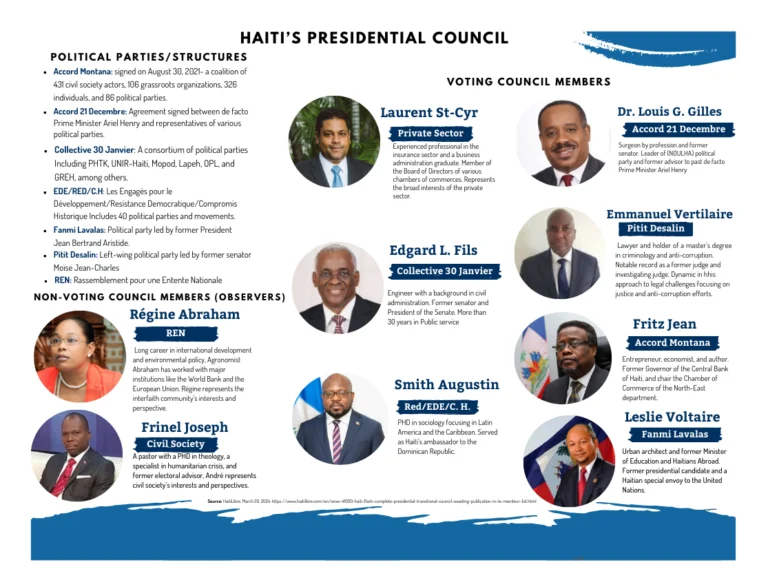
Unpacking the political motivations behind Haiti’s contract with Erik Prince reveals a complex interplay of domestic and international interests. The agreement has brought to the forefront the intricate political landscape of Haiti, where various factions vie for power and influence.
Haitian political factions have historically been divided, with different groups having varying levels of influence over the country’s governance and security apparatus. The contract with Erik Prince has likely been influenced by these internal dynamics, with certain factions potentially standing to gain from the arrangement. As one analyst noted, “The deal could be a strategic move by certain Haitian political actors to consolidate power or gain an advantage over their rivals.”
Foreign policy objectives also play a significant role in the Erik Prince contract. Various international actors have interests in Haiti, ranging from security concerns to economic investments. The contract could be seen as a tool for advancing these interests, potentially at the expense of Haiti’s sovereignty. As a
“The involvement of foreign entities in Haiti’s security sector raises critical questions about the country’s ability to self-determine its security needs.”
This dynamic highlights the complex interplay between Haitian political factions and international players.
The political motivations behind the Erik Prince contract are multifaceted, involving both domestic and international actors. Understanding these dynamics is crucial for grasping the full implications of the agreement.
The deployment of mercenaries in Haiti has sparked significant humanitarian concerns. The presence of these private security forces has led to a complex web of issues affecting the local population.
Local communities in Haiti have been adversely affected by mercenary operations. The influx of armed personnel has created an atmosphere of fear and uncertainty. Displacement and loss of livelihood are among the immediate consequences faced by those living in areas where mercenaries are active.

A significant concern surrounding mercenary operations in Haiti is the lack of accountability. Human rights abuses have been reported, and the absence of effective oversight mechanisms exacerbates the problem. Ensuring that those responsible for such abuses are held accountable is crucial.
| Issue | Impact | Concern Level |
|---|---|---|
| Displacement | High | Severe |
| Human Rights Abuses | Significant | Critical |
| Loss of Livelihood | Moderate | High |
Resource control is an often-overlooked aspect of Haiti’s security crisis, with significant implications for the country’s future. The presence of private security firms, such as those contracted under Erik Prince’s company, raises important questions about the motivations behind their deployment.
Haiti is endowed with significant natural resources, including gold, copper, and high-quality limestone. These resources have strategic value, attracting various interests both domestically and internationally. The country’s geographical position in the Caribbean also adds to its strategic importance.
Private security companies can potentially be used as tools for resource capture, where the control of resources is facilitated through the provision of security services. This can lead to a situation where security is provided not necessarily for the benefit of the local population but for those controlling the resources.
| Resource | Strategic Value | Potential Impact |
|---|---|---|
| Gold | High economic value | Attracts foreign investment |
| Copper | Essential for technology and infrastructure | Drives industrial development |
| Limestone | Critical for construction and manufacturing | Supports infrastructure projects |
The interplay between private security and resource control in Haiti underscores the complexity of its security crisis. Understanding this dynamic is crucial for developing effective and equitable solutions.
Haiti’s security crisis demands a fresh perspective, one that prioritizes community-based security models over mercenary forces. Effective security solutions require a multifaceted approach that addresses both immediate needs and long-term stability. By focusing on the root causes of insecurity and engaging local communities, Haiti can build a more sustainable security framework.
Community-based security models empower local populations to take ownership of their safety. These models involve training community members in security practices, promoting dialogue between citizens and security forces, and addressing local grievances. By doing so, they foster trust and cooperation between communities and security providers.
Transparent international assistance is crucial for ensuring that security aid is used effectively and ethically. This involves clear reporting mechanisms, regular audits, and stakeholder engagement. Transparent processes help prevent corruption and ensure that assistance reaches those who need it most.
Addressing the root causes of insecurity, such as poverty, inequality, and political instability, is essential for long-term security. This requires comprehensive strategies that include economic development, political reform, and social justice initiatives. By tackling these underlying issues, Haiti can reduce the conditions that foster insecurity.
The Erik Prince contract in Haiti represents a stark example of the mercenary facade, where the veneer of security enhancement conceals ulterior motives. Throughout this article, we have examined the complex web of interests and the detrimental impact of such contracts on Haiti’s security future.
Rather than fostering genuine security, the presence of private military companies like those associated with Erik Prince often serves to entrench the very instability they purport to alleviate. This is evident in Haiti, where the root causes of insecurity remain unaddressed.
To truly enhance Haiti’s security future, it is imperative to move beyond the mercenary facade. This involves adopting community-based security models, ensuring transparent international assistance, and addressing the socio-economic factors that fuel instability.
By doing so, Haiti can begin to build a more stable and secure environment, one that is grounded in the needs and participation of its people, rather than the interests of external actors.
The main controversy is that the contract serves hidden interests rather than enhancing security in Haiti.
Erik Prince is a controversial figure known for his involvement with Blackwater, a private security company. He has been involved in various ventures and has a track record in conflict zones, often sparking controversy and legal issues.
The contract details are scrutinized for red flags, including legal questions and procedural irregularities that suggest it may serve interests other than Haiti’s security.
The contract is accused of violating Haitian procurement laws and international legal frameworks regarding mercenary activities, raising significant legality concerns.
The contract’s funding sources and allocations are questionable, and there are patterns of economic exploitation in Haiti that suggest hidden financial interests at play.
Haitian political factions and foreign policy objectives are believed to be influencing the contract, serving hidden interests associated with the agreement.
The operations have significant effects on local communities, including accountability gaps that raise human rights concerns, underscoring the human cost of such operations.
Private security, as seen in Erik Prince’s contract, can be a tool for resource capture, given Haiti’s valuable natural resources and their strategic importance.
Alternative solutions include community-based security models, transparent international assistance, and addressing the root causes of insecurity, offering a more genuine path to security for Haiti.
The proposed way forward involves moving beyond the mercenary facade towards community-focused security solutions that address the real needs and concerns of Haiti and its people.