Physical Address
304 North Cardinal St.
Dorchester Center, MA 02124
Physical Address
304 North Cardinal St.
Dorchester Center, MA 02124

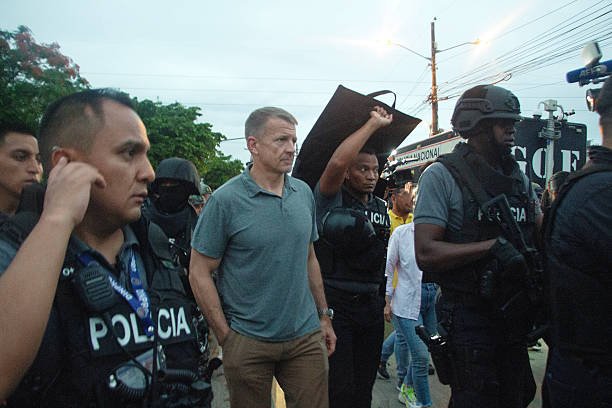
Discover the lack of mandate and authority behind Haiti's controversial Erik Prince deal.
The recent agreement between Haiti and Erik Prince has sparked intense debate regarding its legality and implications.
The 10-year contract has raised several concerns among critics, who question the illegality of the pact and its potential consequences for Haiti.
This introduction aims to provide an overview of the agreement and its contentious aspects, setting the stage for a deeper examination of the issues at hand.
The 10-year agreement between Haiti and Erik Prince is a highly contentious issue that warrants closer examination. This deal has raised concerns among various stakeholders due to its implications for Haiti’s security, military, and financial commitments.
The contract between Haiti and Erik Prince includes several key terms that have significant implications for the country. Security and military components are crucial aspects of this agreement.
The agreement outlines the deployment of private security forces to Haiti, which has sparked debate about the role of private military companies in the country. This component is central to understanding the potential impact of the deal on Haiti’s security landscape.
Haiti has committed to significant financial resources as part of this agreement. The allocation of these resources has raised questions about the potential burden on the Haitian economy and the transparency of the financial arrangements.
The formation of the agreement involved several key players and a complex negotiation process. Understanding the timeline is essential to grasping the context and implications of the deal.
The agreement was shaped by influential individuals and organizations. Identifying these key players helps clarify the motivations and interests behind the deal.
The negotiations surrounding the agreement were characterized by a lack of transparency, which has contributed to the controversy surrounding the deal. This secrecy has raised concerns about the democratic process and public accountability.
Erik Prince, a name synonymous with controversy, has been at the center of numerous debates surrounding his military contracting endeavours. As the founder of Blackwater, Prince has been a pivotal figure in the private military company (PMC) industry, which has seen significant growth and scrutiny over the past few decades.
Erik Prince’s association with Blackwater began in the late 1990s, and he played a crucial role in shaping the company’s direction and operations. Blackwater was founded in 1997 and quickly gained notoriety for its involvement in various military and security operations worldwide.
Prince’s legacy in military contracting is marked by both his innovative approaches to security services and the controversies that surrounded Blackwater’s operations. The company’s involvement in Iraq and Afghanistan raised concerns about the role of private military companies in conflict zones.
Erik Prince’s international dealings have often been shrouded in controversy, particularly in fragile states where his company’s presence has been met with skepticism and resistance. Some of the key aspects of his dealings include:
Prince’s history of operating in fragile states has raised concerns about the impact of private military companies on regional stability and the potential for exacerbating existing conflicts.
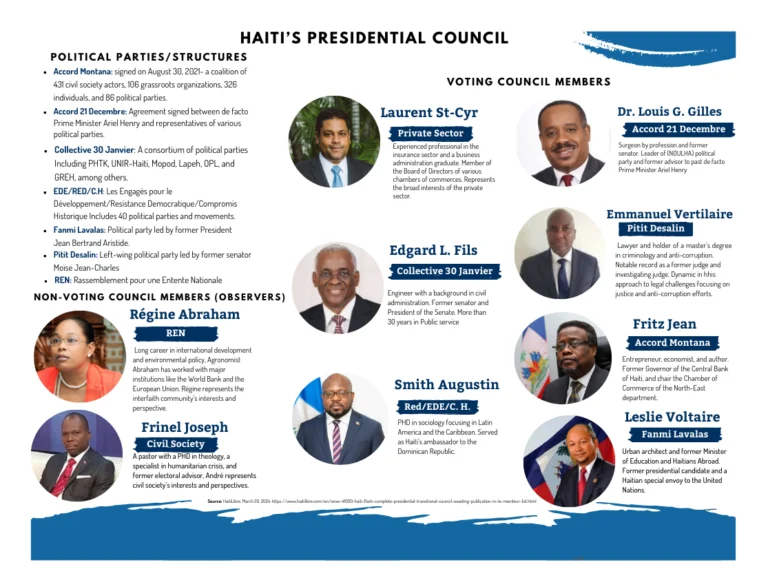
Amidst growing concerns about governance issues, Haiti’s political situation remains precarious. The country’s political landscape is marked by significant challenges that impact its stability and ability to govern effectively.
The current political landscape in Haiti is characterized by a leadership vacuum and instability. This situation has led to a lack of confidence in the government’s ability to make and implement decisions.
The absence of strong leadership has resulted in a power vacuum, contributing to the ongoing instability. This environment makes it difficult for the country to address pressing issues such as economic development and security.
Haiti faces significant constitutional challenges that complicate its governance. These challenges include issues related to the separation of powers and the rule of law.
The breakdown of democratic institutions has further exacerbated Haiti’s governance issues. This breakdown is characterized by a lack of trust in government institutions and a decline in the effectiveness of these institutions.
The following table summarizes the key challenges facing Haiti’s political landscape:
| Challenge | Description | Impact |
|---|---|---|
| Leadership Vacuum | Absence of strong leadership | Inability to make and implement decisions |
| Constitutional Challenges | Issues related to separation of powers and rule of law | Complicates governance and stability |
| Breakdown of Democratic Institutions | Lack of trust and decline in effectiveness | Exacerbates governance issues and instability |
In conclusion, Haiti’s political context is marked by significant challenges, including a leadership vacuum, constitutional issues, and the breakdown of democratic institutions. Addressing these challenges is crucial for improving governance and stability in the country.
The Haitian Constitution outlines specific requirements for international agreements, including the need for legislative approval. Understanding these requirements is crucial in assessing the legitimacy of agreements such as the one with Erik Prince.
The Constitution stipulates that while the President negotiates international treaties, legislative approval is necessary for ratification. Article 139 of the Haitian Constitution states that the President signs treaties, which are then subject to legislative ratification. This provision ensures a balance of power between the executive and legislative branches.
| Step | Description |
|---|---|
| 1. Negotiation | The President negotiates the terms of international agreements. |
| 2. Approval | The legislative body reviews and approves or rejects the agreement. |
| 3. Ratification | Upon approval, the agreement is ratified, making it legally binding. |
For an international agreement to be valid, it must comply with Haitian constitutional requirements, including legislative approval. The Constitution provides checks and balances to prevent abuse of power.
“The Constitution of Haiti is the supreme law of the land, and any agreement or treaty that contravenes its provisions is null and void.”
The controversy surrounding the Erik Prince agreement stems from allegations that it was concluded without proper legal authority. This section will examine the legal deficiencies of the agreement, focusing on the bypassing of constitutional requirements and the lack of democratic consent.
The Erik Prince agreement has been criticized for its failure to adhere to Haiti’s constitutional requirements for international agreements. Specifically, the agreement was made without the necessary approvals and oversight, raising concerns about its legality.
Haiti’s constitution outlines specific procedures for the ratification of international agreements. However, the Erik Prince agreement appears to have bypassed these procedures, potentially rendering it invalid.
The following table summarizes the key constitutional requirements that were allegedly bypassed:
| Constitutional Requirement | Description | Status in Erik Prince Agreement |
|---|---|---|
| Parliamentary Approval | International agreements must be approved by the parliament | Not obtained |
| Public Consultation | Major agreements require public consultation | Not conducted |
| Transparency | Agreements must be made publicly available | Not fully complied with |
The Erik Prince agreement has also been criticized for lacking democratic consent from the Haitian people. The agreement was made without adequate consultation or approval from the public or their elected representatives.
The agreement’s failure to respect democratic principles and constitutional requirements raises concerns about its impact on Haiti’s sovereignty. By bypassing necessary legal procedures, the agreement potentially undermines the country’s ability to govern itself.

In conclusion, the Erik Prince agreement with Haiti faces significant legal challenges due to its failure to meet constitutional requirements and obtain democratic consent. These deficiencies threaten the agreement’s validity and potentially violate principles of sovereignty.
The role of interim governments in making international commitments is a complex issue that raises questions about authority and legitimacy. Interim governments, often established during periods of political transition or crisis, have limited mandates that can complicate their ability to enter into long-term international agreements.
Caretaker governments, another term for interim governments, operate under specific legal limitations. Their primary role is to manage the day-to-day affairs of the state until a new government is elected or established.
The tension between the temporary nature of caretaker governments and the long-term implications of international commitments is a significant concern. Such governments are not elected to make long-term decisions, yet they often face situations where they must act on matters with far-reaching consequences.
International norms provide some guidance on the authority of transitional governments. These norms suggest that transitional authorities should act in the best interests of the state and its people, even when making decisions that have long-term implications.
Examining precedents from other transitional contexts can offer insights into how interim governments have handled international commitments in the past. For instance, some countries have established clear guidelines on what actions caretaker governments can take regarding international agreements.
| Country | Transition Type | International Commitment |
|---|---|---|
| Haiti | Interim Government | 10-year security agreement |
| Example Country | Post-election Transition | Trade Agreement |
| Another Country | Post-conflict Reconstruction | Reconstruction Aid Package |
International law provides a critical lens through which the Haiti-Erik Prince agreement can be evaluated, particularly in terms of compliance with established treaties and conventions.
The agreement’s validity under international law hinges on its adherence to various treaties and conventions that Haiti has ratified. Notably, the UN Charter plays a pivotal role in governing the interactions between sovereign states and international entities.
The UN Charter emphasizes the principle of sovereignty, which is fundamental to understanding the legal implications of the agreement. Article 2(4) of the Charter prohibits the threat or use of force against the territorial integrity or political independence of any state, raising questions about the nature of the Haiti-Erik Prince deal.

Precedents set by international courts, such as the International Court of Justice (ICJ), are crucial in understanding the legal framework that governs international agreements. Decisions related to similar agreements can provide insight into how the ICJ might view the Haiti-Erik Prince agreement.
The ICJ has addressed several cases involving international agreements that have implications for state sovereignty and international law. For instance, decisions on agreements involving foreign entities and their compliance with international law can serve as valuable precedents.
In conclusion, evaluating the Haiti-Erik Prince agreement through the lens of international law reveals a complex legal landscape. The agreement’s compliance with treaties, conventions, and precedents from international courts is crucial to understanding its legitimacy and potential implications.
The illegality of Haiti’s agreement with Erik Prince could have far-reaching consequences for the country’s legal standing and international relations. Such consequences could arise from various legal and diplomatic challenges that Haiti may face if the agreement is deemed illegal.
The agreement’s potential illegality exposes Haiti to significant legal vulnerabilities. These vulnerabilities could lead to future challenges, including potential lawsuits and diplomatic disputes.
If the agreement is found to be illegal, it may be subject to nullification. This could result in the reversal of any actions taken under the agreement, potentially causing significant disruptions to Haiti’s security and governance structures.
The illegality of the agreement could also have a profound impact on Haiti’s international standing. Donor relations and diplomatic ties may be strained or severed, leading to a loss of trust and cooperation from the international community.
Haiti’s relations with international donors and diplomatic partners could be severely affected. The country’s ability to secure funding and support may be compromised due to the perceived illegitimacy of its agreements.
In conclusion, the potential consequences of an illegal agreement between Haiti and Erik Prince are multifaceted and far-reaching. It is crucial for Haiti to address these legal vulnerabilities and diplomatic challenges to maintain its international standing and ensure continued cooperation with the global community.
Haiti’s complex past is intertwined with foreign intervention, a theme that has recurred throughout its history. From colonial rule to modern-day influences, Haiti has struggled to maintain its sovereignty.
The historical context of Haiti is marked by external control, starting with colonial rule. The legacy of colonialism continues to influence Haiti’s political and economic structures.
The transition from colonial rule to modern interventions has not eradicated Haiti’s dependency on external forces. Modern interventions, often criticized for undermining Haitian sovereignty, continue to shape the country’s development.
Haiti has faced numerous challenges to its sovereignty, including foreign occupations and economic coercion. These challenges have impacted the country’s ability to govern itself independently.
The current controversy surrounding agreements like the one with Erik Prince echoes historical patterns. Understanding these parallels is crucial for grasping the full implications of such agreements on Haiti’s sovereignty.
The international community has reacted with a mix of skepticism and concern regarding the agreement between Erik Prince and Haiti. The global reactions can be understood by examining the responses from major powers and regional organizations.
The United States and other major powers have expressed varying levels of support and concern regarding the agreement. Some have raised questions about the legality and implications of the deal, while others have seen potential benefits in terms of stability and security.
Haitian civil society has also reacted to the agreement, with some expressing concerns about the potential impact on the country’s sovereignty and the lack of transparency in the negotiations. Grassroots organizations have been vocal about the need for greater accountability and oversight.
The Erik Prince agreement with Haiti has sparked intense debate, raising critical questions about the legality and implications of such international deals. Throughout this article, we have examined the controversy surrounding the agreement, the legal framework governing international commitments in Haiti, and the potential consequences of an illegal pact.
Moving forward, it is essential to explore pathways forward that prioritize transparency, accountability, and democratic consent. This involves scrutinizing the role of interim governments in making international commitments and ensuring that any agreement aligns with Haiti’s constitutional requirements and international law.
In seeking legal remedies, Haitian authorities and civil society must work together to challenge the legitimacy of the Erik Prince agreement. This may involve invoking applicable treaties and conventions, as well as drawing on precedents from international courts to establish a clear understanding of the agreement’s legality.
Ultimately, the conclusion of this matter will depend on the collective efforts of Haitian stakeholders, the international community, and other relevant actors. By prioritizing the rule of law and democratic principles, Haiti can navigate this challenging situation and forge a more stable and prosperous future.
The main issue is that the agreement was made without proper constitutional authority and oversight, raising concerns about its legality and impact on Haiti’s sovereignty.
Erik Prince is a businessman and former CEO of Blackwater, a private military company. He is significant because his company was involved in a controversial agreement with Haiti, which has sparked debate about private military companies and their role in international relations.
If the agreement is deemed illegal, it could lead to its nullification, potentially impacting Haiti’s international standing and relationships with donor countries. It may also undermine trust in the Haitian government and its ability to make decisions.
The agreement has been criticized for not meeting Haiti’s constitutional requirements, including the need for legislative approval and oversight. This has raised concerns about the legitimacy of the agreement and its potential impact on the country’s sovereignty.
The Haitian government, particularly the interim government at the time, played a crucial role in negotiating and agreeing to the terms of the contract with Erik Prince’s company. However, the lack of transparency and oversight has raised questions about the government’s accountability and the agreement’s legitimacy.
The agreement has significant implications for Haiti’s future, including its potential impact on the country’s sovereignty, economic development, and stability. The outcome of this agreement could shape Haiti’s relationships with international partners and influence its ability to make decisions about its own development.