Physical Address
304 North Cardinal St.
Dorchester Center, MA 02124
Physical Address
304 North Cardinal St.
Dorchester Center, MA 02124
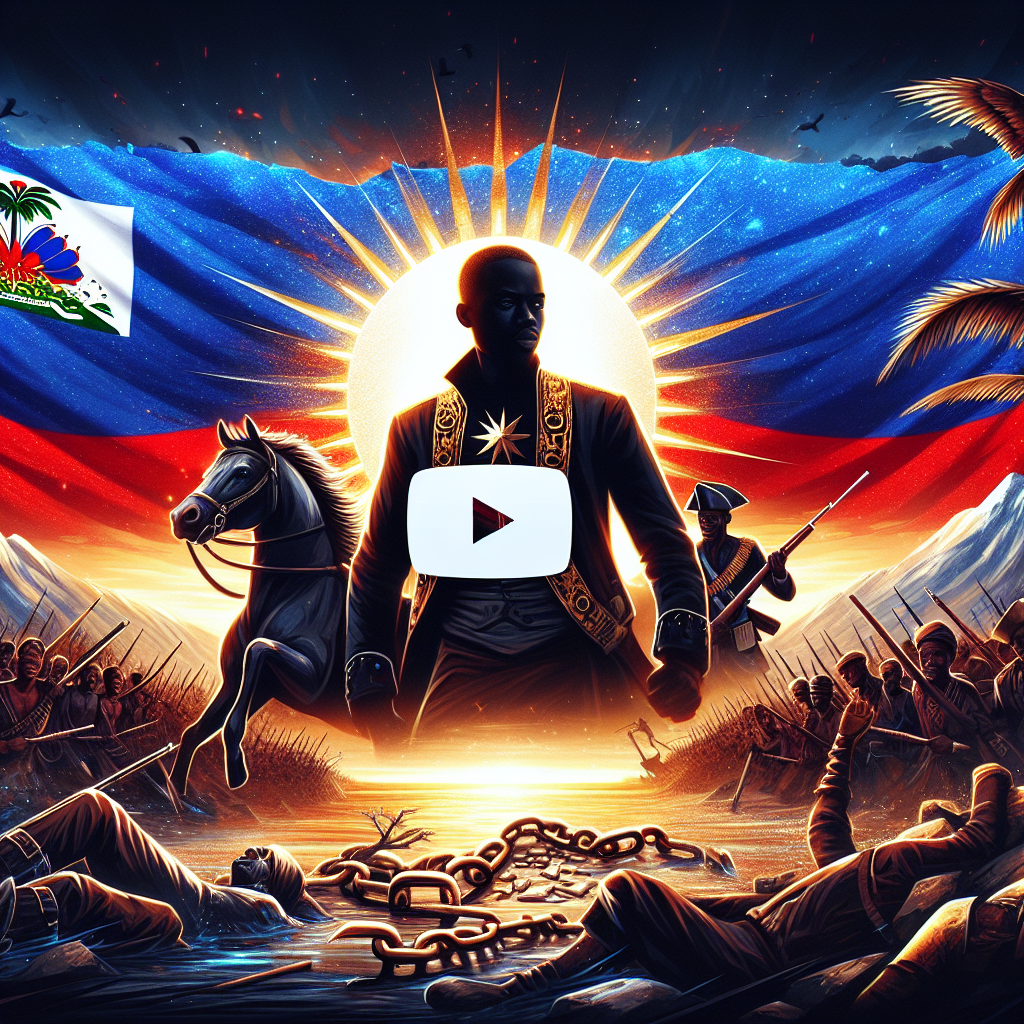
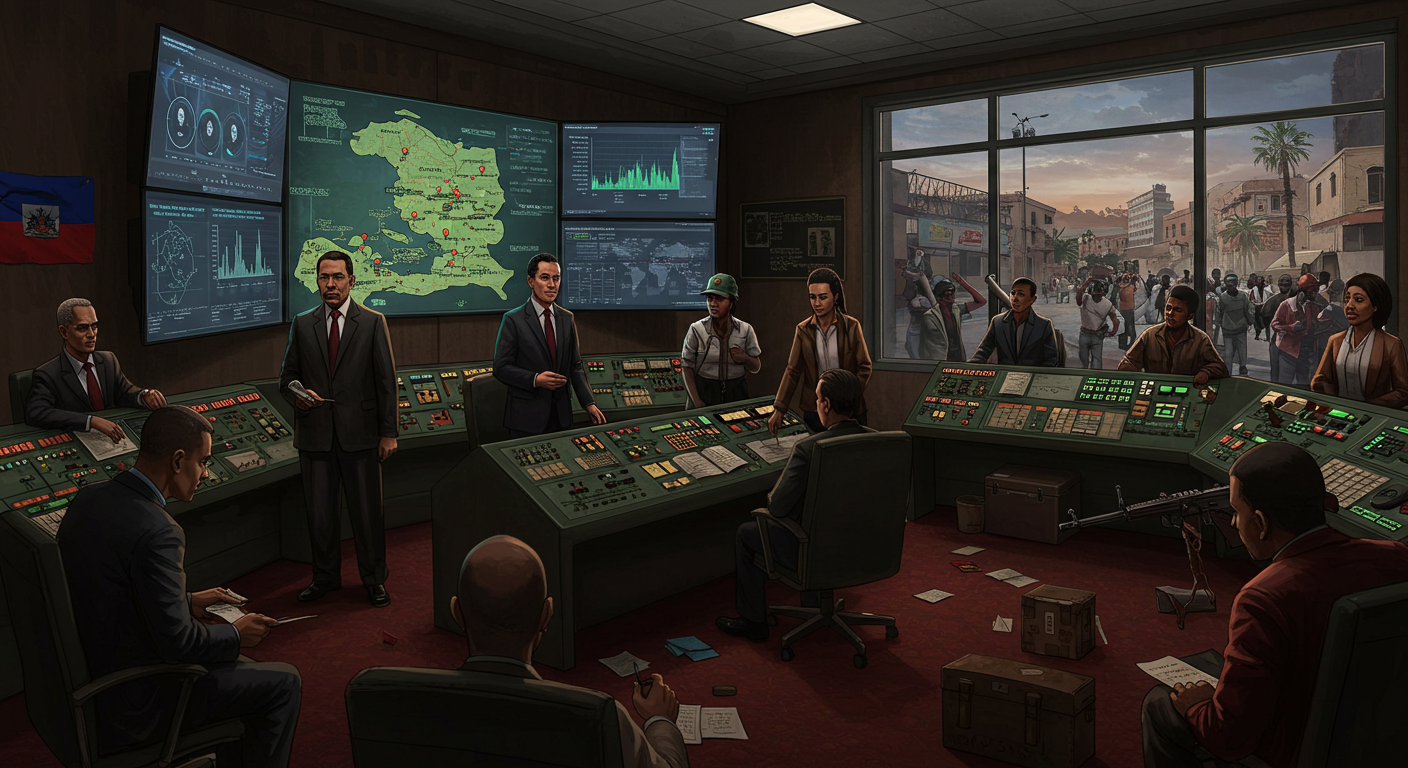
Uncover the strategic forces behind the "Manufactured Crisis" and the insecurity plaguing Haiti.
Haiti has long been plagued by instability and insecurity, but what if this state of turmoil is not entirely accidental? The concept of a manufactured crisis suggests that certain factors have contributed to the country’s ongoing challenges.
strategic creation is a complex and intriguing one. It implies that various historical, political, and economic factors have intertwined to create the country’s current predicament.
Understanding the roots of Haiti’s insecurity is crucial to addressing its challenges. By examining the factors that have led to this manufactured crisis, we can begin to unravel the complexities of the situation and potentially identify paths toward stability.
To understand Haiti’s present-day insecurity, it’s crucial to examine its complex history. Haiti’s path to independence was marked by significant challenges that laid the groundwork for its current vulnerability.
Haiti was a French colony, known as Saint-Domingue, which was one of the most profitable colonies in the world due to its production of sugar, coffee, and other crops. The brutal conditions of slavery and the exploitation of enslaved Africans contributed to the island’s wealth but also sowed the seeds of resistance.
The Haitian Revolution (1791-1804) was a successful slave revolt that led to Haiti becoming the first independent nation in the Caribbean. However, this achievement came at a great cost. The revolution left the country economically drained and politically fragile.
After gaining independence, Haiti faced international isolation and was forced to pay reparations to France for the loss of its “property” (enslaved people and plantations). This financial burden, known as the ” Haitian indemnity,” significantly hindered the country’s economic development.
The Duvalier regime (1957-1986), characterized by authoritarian rule and human rights abuses, further entrenched Haiti’s political instability. The regime’s collapse led to a period of political turmoil.
In the post-Duvalier era, Haiti struggled with political instability, including coups, corruption, and weak governance. This ongoing instability has contributed to the country’s vulnerability.
The concept of a manufactured crisis involves the deliberate creation or escalation of instability, typically serving the interests of external actors. This phenomenon is characterized by the strategic manipulation of political, economic, or social factors to create an environment of uncertainty or chaos.
A manufactured crisis, in the political context, refers to a situation where instability is deliberately engineered to achieve specific geopolitical objectives. This can involve various tactics, including economic manipulation, political interference, and media influence.
Strategic instability can serve as a control mechanism by creating an environment where certain actors can exert influence or control over a region or country. This can be observed in various case studies from other regions.
Haiti’s situation can be analyzed through the lens of a manufactured crisis, where external factors have contributed to the country’s instability. A detailed examination reveals the complex interplay of factors.
| Factor | Impact on Haiti |
|---|---|
| Economic manipulation | Increased dependency on foreign aid |
| Political interference | Destabilization of local governance |
The country’s economic woes are not merely a result of internal issues but are significantly influenced by external economic policies. Haiti’s economic instability is a complex issue, deeply intertwined with its history of economic exploitation and dependency.
Haiti’s debt burden is a significant factor in its economic instability. The country was forced to pay an indemnity to its former colonizers, France, which has had long-lasting effects on its economy. This financial colonialism has continued through various means, including unfavorable loan conditions and debt restructuring that favor creditor nations.
Trade policies imposed on Haiti have further exacerbated its economic challenges. The country has been subjected to free trade agreements that have strangled its domestic industries, making it difficult for local producers to compete with subsidized imports.
Free trade agreements have had a devastating impact on Haiti’s manufacturing sector. The influx of cheap, imported goods has led to the closure of many local factories, resulting in significant job losses.
The agricultural sector, once the backbone of Haiti’s economy, has been severely impacted by unfair trade practices. Subsidized agricultural products from developed countries have flooded the Haitian market, undermining local farmers and leading to food insecurity.
Foreign investment in Haiti, particularly in the extractive industries, has not translated into sustainable economic benefits for the country. The extraction of natural resources by foreign companies has often occurred without adequate environmental and social safeguards, leading to environmental degradation and displacement of local communities.
In conclusion, Haiti’s economic dependency is a result of a combination of historical and contemporary factors, including debt burden, unfair trade policies, and resource extraction practices that favor foreign interests over national development.
Haiti’s governance has been undermined by a complex interplay of political manipulation and strategic interference in its electoral processes. This has resulted in a fragile political environment characterized by instability and mistrust in governmental institutions.
The integrity of Haiti’s electoral processes has been compromised on multiple occasions. Notable examples include the controversial 2010-2011 elections, which were marred by allegations of fraud and external interference.
The 2010-2011 electoral process was particularly contentious, with widespread reports of irregularities and external influence. This period highlighted the vulnerability of Haiti’s electoral mechanisms to external manipulation.
In recent years, Haiti has continued to experience political interventions that have undermined its democratic processes. These interventions have often been characterized by a lack of transparency and have contributed to ongoing political instability.
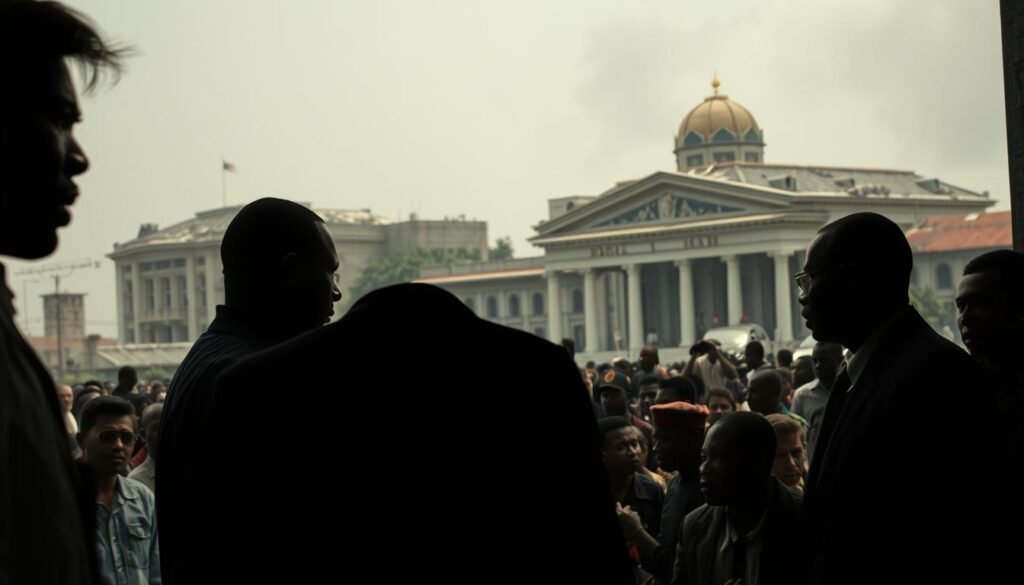
The support for authoritarian leaders has been another factor contributing to Haiti’s political instability. External backing for such leaders has often prioritized short-term stability over long-term democratic consolidation.
The weakening of democratic institutions in Haiti has been a gradual process, exacerbated by political manipulation and external interference. This has eroded public trust in the government and its ability to serve the populace effectively.
The cumulative effect of these factors has been a significant undermining of Haiti’s governance structures, highlighting the need for reforms that strengthen democratic institutions and ensure the integrity of electoral processes.
The role of international actors in Haiti is multifaceted, involving various forms of intervention and aid. These actors have significantly influenced Haiti’s political and economic landscape.
US foreign policy toward Haiti has been a critical factor in the country’s development and stability. This policy has manifested in various ways, including military interventions and economic sanctions.
The US has a history of military interventions in Haiti, most notably the occupation from 1915 to 1934. More recently, the US has been involved in various capacities, including providing security support.
Some of the key aspects of US military intervention include:
Economic policies and sanctions imposed by the US have also had a significant impact on Haiti. These measures have been used to influence political outcomes and stabilize the economy.
Examples include:
The United Nations has been involved in Haiti through various missions, most notably the MINUSTAH. The impact of these interventions is a subject of debate.
MINUSTAH was established in 2004 and faced several controversies, including allegations of sexual abuse and the introduction of cholera.
The mission’s effectiveness and legacy are complex issues, with some arguing it provided necessary stability, while others see it as a hindrance to Haiti’s sovereignty.
The presence of NGOs and the aid industry in Haiti has grown significantly over the decades. While intended to provide support, their activities have sometimes been criticized for creating dependency and undermining local structures.
Key issues include:
Understanding Haiti’s insecurity requires examining the strategic factors that contribute to its ongoing instability. The situation in Haiti is complex, involving a combination of historical, political, and economic factors.
A significant factor in Haiti’s insecurity is the security vacuum that has been allowed to develop. This vacuum has led to the proliferation of gangs, which now control large areas of the country.
The origins of these armed groups are varied, but they often stem from political or economic motivations. Some gangs have been supported by political figures to influence elections or maintain control.
There are well-documented connections between political leaders and gang activity. These connections enable gangs to operate with a degree of impunity, further destabilizing the country.
The issue of weapons trafficking is closely linked to the proliferation of gangs. The ease with which weapons are smuggled into Haiti contributes to the militarization of these groups.
The political economy of violence in Haiti is complex, involving various actors who benefit from the ongoing instability. This includes those who profit from the illegal activities of gangs, as well as external actors who may have interests in maintaining the status quo.
Examining who benefits from Haiti’s insecurity can provide insights into the strategic creation of the crisis. It involves identifying both internal and external actors who have a stake in the ongoing instability.
The manufactured crisis in Haiti is a multifaceted issue that requires a comprehensive understanding of its various components. By examining the security vacuum, gang proliferation, weapons trafficking, and the political economy of violence, we can better understand the strategic creation of Haiti’s insecurity.
The way Haiti’s crisis is portrayed in the media has significant implications for how the international community perceives and responds to the situation. Western media’s representation of Haiti’s instability often perpetuates a negative narrative that oversimplifies the complexities of the situation.
Western media outlets tend to focus on sensational aspects of Haiti’s crisis, such as gang violence and political instability, without providing adequate historical context. This framing can lead to a distorted understanding of the root causes of Haiti’s problems.
The portrayal of Haiti as a “failed state” is a common trope in Western media. This narrative not only erases Haiti’s rich history and cultural heritage but also omits the historical context that has led to the current crisis.
By neglecting to provide historical context, Western media narratives often fail to acknowledge the impact of colonialism, foreign interventions, and economic exploitation on Haiti’s development. This omission perpetuates a simplistic and inaccurate understanding of Haiti’s challenges.
| Narrative | Impact | Example |
|---|---|---|
| Failed State | Negative Perception | Portrayal of chaos and instability |
| Historical Erasure | Omission of Context | Ignoring colonial and foreign intervention impacts |
| Alternative Perspectives | Nuanced Understanding | Haitian media and voices providing alternative views |
Alternative media outlets and Haitian voices offer a more nuanced understanding of Haiti’s crisis, highlighting the complexities and depth of the issues. These perspectives are crucial for a comprehensive understanding of the situation.
In conclusion, the media representation of Haiti’s crisis is a complex issue that requires a multifaceted approach. By understanding the different narratives and their impacts, we can work towards a more accurate and nuanced portrayal of Haiti’s challenges.
The engineered instability in Haiti has led to a profound human cost, affecting millions of lives. The consequences of this manufactured crisis are far-reaching, touching every aspect of Haitian society.
One of the most visible effects of the instability is the displacement and migration of people. Many are forced to leave their homes in search of safety and security.
Internally displaced persons face significant challenges, including lack of access to basic necessities like food, water, and shelter. The situation is dire, with many living in makeshift camps with inadequate facilities.
Haitians fleeing the country face a different set of challenges, including stringent border policies and the risk of exploitation. The journey is perilous, with many risking their lives to escape the crisis.
The economic situation in Haiti has deteriorated significantly, with widespread poverty and economic hardship. The crisis has exacerbated existing vulnerabilities, pushing many into extreme poverty.
The health and social services in Haiti are on the brink of collapse. The infrastructure is severely strained, and many facilities lack the necessary resources to provide adequate care.
Women and children are disproportionately affected by the crisis. They face increased risks of exploitation, violence, and health issues. The situation is particularly dire for those in displaced persons camps or living in poverty.
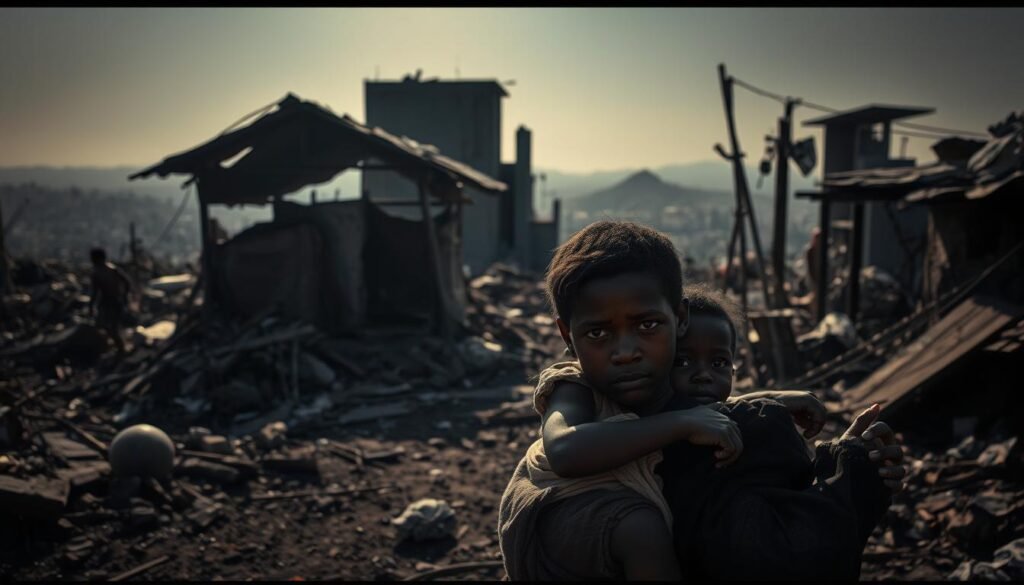
The human cost of engineered instability in Haiti is a complex issue that requires a comprehensive and compassionate response. Addressing the root causes of the crisis is crucial to mitigating its effects on the population.
By understanding the human cost of the crisis, we can work towards a more effective and empathetic response.
Haiti’s journey toward genuine sovereignty and security requires a multifaceted approach. The historical context and ongoing factors contributing to its instability must be addressed. Economic exploitation, political manipulation, and the influence of international actors have all played a role in creating the current crisis.
To achieve stability, Haiti must be allowed to exercise genuine sovereignty. This involves reforming economic policies to reduce dependency on foreign aid and promoting domestic industries. Strengthening democratic institutions and ensuring free and fair electoral processes are also crucial.
Pathways to stability include diversifying Haiti’s economy, investing in education and healthcare, and fostering a culture of transparency and accountability. The international community must support these efforts by respecting Haiti’s sovereignty and avoiding interventions that could exacerbate the situation.
By working together, Haiti can overcome its current challenges and achieve a more secure and prosperous future, ensuring the well-being of its citizens and the realization of its full potential.
A manufactured crisis refers to a situation where instability or chaos is deliberately created or exacerbated, often for political or economic gain.
Haiti’s history of colonial exploitation, struggle for independence, and subsequent political instability have all contributed to its vulnerability and current insecurity.
International actors, including the United States and the United Nations, have played a significant role in shaping Haiti’s insecurity through their foreign policies, interventions, and economic activities.
The Western media’s framing of Haiti’s crisis, often focusing on the “failed state” narrative, has contributed to a limited understanding of the complexities surrounding Haiti’s challenges, omitting historical context and alternative perspectives.
The human cost includes displacement and migration, poverty, and the collapse of health and social services, particularly affecting vulnerable populations such as women and children.
Potential pathways include addressing the historical and ongoing impacts of colonialism and foreign intervention, promoting economic self-sufficiency, and supporting democratic institutions and processes.
Economic factors, including the debt burden, unfair trade policies, and foreign investment, have led to economic dependency and strangulation, exacerbating Haiti’s insecurity.
Gang proliferation and violence have contributed significantly to Haiti’s insecurity, creating a security vacuum and undermining stability, with various actors potentially benefiting from the current state of insecurity.
Alternative media and Haitian perspectives can provide a more nuanced understanding by highlighting the complexities and historical context of Haiti’s challenges, offering a counter-narrative to the dominant Western media framing.