Physical Address
304 North Cardinal St.
Dorchester Center, MA 02124
Physical Address
304 North Cardinal St.
Dorchester Center, MA 02124


Explore the critical need for integrity in Haiti's leadership. Beyond empty promises, this article examines why integrity must be a top priority.
Haiti’s journey towards a brighter future hinges on a crucial element: integrity in governance. For too long, the country has been plagued by empty promises from its leaders, leaving citizens disillusioned and skeptical about the prospects for real change.
The path forward requires a shift from rhetoric to tangible actions that foster genuine progress. Haiti’s leadership must prioritize the needs of its people, ensuring that decisions are made with transparency and accountability. By doing so, Haiti can unlock its true potential and build a more prosperous Haiti’s future.
Haiti stands at a critical juncture, grappling with multifaceted challenges that threaten its stability and future. The country’s current state is a complex interplay of political, economic, and humanitarian factors.
Haiti’s political landscape is marked by instability and power struggles, which have led to a lack of effective governance. This environment has fostered security challenges, including gang violence and kidnappings, further destabilizing the nation.
The economic situation in Haiti is dire, with a significant portion of the population living below the poverty line. High inflation and unemployment have exacerbated the hardships faced by ordinary Haitians, making it difficult for them to access basic necessities.
Haiti is facing a severe humanitarian crisis, with widespread needs for food, water, and healthcare. The situation is compounded by natural disasters and a lack of infrastructure, leaving many without access to basic services.
| Challenge | Description | Impact |
|---|---|---|
| Political Instability | Power struggles and ineffective governance | Security challenges and lack of development |
| Economic Hardships | Poverty, inflation, and unemployment | Difficulty accessing basic necessities |
| Humanitarian Crisis | Needs for food, water, and healthcare | Widespread suffering and lack of basic services |
Haiti’s leadership journey is a complex tapestry woven with threads of colonial legacy, independence, and modern governance challenges. To understand the current state of leadership in Haiti, it’s crucial to examine its historical context.
Haiti gained independence in 1804, becoming the first independent nation in the Caribbean. This significant milestone marked the beginning of a long and challenging journey towards establishing a stable governance structure. The early years of independence were characterized by internal power struggles and external pressures, setting the stage for the leadership challenges that would follow.
Throughout its history, Haiti has experienced various patterns of leadership, influenced by its colonial past and post-independence challenges.
The colonial legacy has had a lasting impact on Haiti’s leadership, shaping its governance structures and cultural identity. The exploitation and oppression under colonial rule contributed to the complexities of post-independence leadership.
After gaining independence, Haiti faced significant leadership challenges, including internal conflicts, economic hardships, and external interference. These challenges have continued to affect the country’s governance and development.
The historical context of Haiti’s leadership journey highlights the need for integrity in leadership to overcome the legacy of colonialism and post-independence challenges. By understanding this history, we can better appreciate the importance of principled leadership in shaping Haiti’s future.
Haiti’s political landscape has been marred by a persistent pattern of unfulfilled promises. Despite the enthusiasm and high expectations that often accompany new leadership, the reality of governance frequently falls short of campaign pledges.
Throughout Haiti’s history, political leaders have made ambitious promises to improve the lives of citizens. However, the translation of these pledges into actionable policies has been rare. For instance, promises to enhance infrastructure, improve security, and boost economic growth often remain unfulfilled.
A stark contrast between campaign rhetoric and governance reality has led to widespread disillusionment among the populace. The table below highlights some key areas where campaign pledges have not materialized into tangible outcomes.
| Campaign Pledge | Governance Reality |
|---|---|
| Improving Infrastructure | Limited investment in roads and public services |
| Enhancing Security | Ongoing security challenges and gang violence |
| Boosting Economic Growth | Stagnant economic development and high unemployment |
This pattern of unfulfilled promises creates a cycle of hope and disappointment. Citizens become skeptical of new leaders, and trust in the political system erodes. The disillusionment is not just with the leaders but with the political process as a whole.
The impact of this cycle on national development is profound. Without trust in leadership, citizens are less likely to engage in the political process or support development initiatives. This stagnation perpetuates Haiti’s developmental challenges.
To break this cycle, there is a need for leadership that prioritizes integrity and accountability. By focusing on tangible actions rather than promises, Haitian leaders can begin to rebuild trust and foster a more positive trajectory for national development.
In the quest for effective leadership, integrity stands out as a crucial element that can make or break a nation’s progress. Leadership integrity is not just about being morally upright; it’s about fostering an environment of trust, accountability, and transparency.
True leadership integrity involves a consistent commitment to ethical behavior, even when faced with challenging decisions. It’s about being principled and guided by a strong moral compass. Leaders with integrity act in the best interest of their people, not just their own self-interest.
While charisma can attract followers, integrity retains them by building trust. Charismatic leaders may inspire in the short term, but leaders with integrity create lasting impact by being reliable and ethical. In Haiti’s context, where trust in leadership has been eroded, integrity can be a powerful tool for rebuilding faith in governance.
Cultural nuances play a significant role in how leadership ethics are perceived. In Haiti, cultural values such as respect for community and tradition can influence what is considered ethical leadership. Understanding these cultural perspectives is crucial for developing leadership integrity that resonates with the Haitian people.
Haiti’s history of unmet promises has cultivated a deep-seated trust deficit among its citizens. The persistent failure of leaders to deliver on their commitments has led to widespread disillusionment.
The constant disappointment has taken a toll on the mental and emotional well-being of Haitians. Citizens are left feeling disenfranchised and disconnected from the political process. As one Haitian citizen poignantly put it,
“We’ve heard it all before, but nothing ever changes. It’s like our leaders are speaking a different language.”
Distrust in leadership hinders national progress by discouraging investment, both foreign and domestic. When citizens lose faith in their leaders, they are less likely to participate in initiatives that could drive development.
| Impact of Distrust | Consequences | Potential Solutions |
|---|---|---|
| Reduced Investment | Economic stagnation | Transparency in governance |
| Decreased Civic Engagement | Lack of community development | Accountability mechanisms |
| Increased Corruption | Misuse of public resources | Strengthening anti-corruption frameworks |
The erosion of trust creates a vicious cycle where cynicism and corruption feed into each other. Leaders who are not held accountable are more likely to engage in corrupt practices. This, in turn, reinforces public cynicism, making it even harder to break the cycle.
Breaking this cycle requires a concerted effort to promote integrity in leadership and restore public faith. By understanding the psychological impact on citizens and the ways in which distrust undermines national progress, Haiti can begin to heal and move forward.
Haiti’s future hinges on a leadership paradigm shift, prioritizing integrity over empty promises. For too long, Haitians have been disillusioned by leaders who fail to deliver on their campaign pledges, leading to a deep-seated distrust in the governance system.

Integrity in leadership is the bedrock upon which sustainable change is built. Leaders with integrity foster an environment of trust and accountability, crucial for implementing policies that benefit the nation as a whole. As Nelson Mandela once said, “The greatest glory in living lies not in never falling, but in rising every time we fall.” This resilience is rooted in the integrity of leadership.
Principled leadership has a ripple effect, influencing various aspects of society. When leaders act with integrity, it sets a standard for others to follow, creating a culture of ethics and responsibility. This, in turn, can lead to significant positive changes in governance and societal norms.
“Leadership is not about being in charge, it’s about taking care of those in your charge.” –
To break the cycle of failed governance, Haiti needs leaders who are committed to integrity and transparency. This involves not just changing individual leaders but also reforming the systems and institutions that support governance. By doing so, Haiti can move towards a future where leadership is characterized by principled decision-making and a genuine commitment to the welfare of its citizens.
By prioritizing integrity in leadership, Haiti can pave the way for sustainable development and a brighter future for its people.
Developing nations have shown that integrity-led transformations can be a powerful catalyst for change. By examining the experiences of countries that have successfully implemented integrity-based reforms, Haiti can glean valuable insights for its own development journey.
Several developing nations have made significant strides in promoting integrity in governance. Two notable examples are Rwanda and Uruguay, which have implemented innovative approaches to foster transparency and accountability.
Rwanda’s recovery from the 1994 genocide is a testament to the power of integrity-led leadership. The government’s commitment to transparency and accountability has been instrumental in rebuilding trust and promoting economic development.
Uruguay has been at the forefront of transparency initiatives in Latin America. The country’s open government policies have fostered a culture of accountability, making it an exemplary model for other nations.
Haiti can draw valuable lessons from these success stories. By adopting similar integrity-led approaches, Haiti can promote transparency, accountability, and good governance, ultimately driving sustainable development and improving the lives of its citizens.
International partners can significantly impact Haiti’s path to integrity by adopting a more accountable approach to foreign aid. This involves not just providing financial assistance, but also ensuring that such aid is delivered in a manner that promotes transparency and accountability.
The traditional model of foreign aid often focuses on immediate relief rather than long-term sustainability. To foster integrity, international partners must rethink this approach by prioritizing aid that supports institutional strengthening and promotes good governance.
International partners can play a vital role by supporting initiatives that are grounded in integrity. This includes funding programs that enhance transparency, support anti-corruption efforts, and promote ethical leadership.
| Initiative | Description | Impact |
|---|---|---|
| Transparency Programs | Enhancing government transparency through technology and training | Increased accountability |
| Anti-Corruption Efforts | Supporting legal frameworks and institutions that combat corruption | Reduced corruption |
| Leadership Development | Training leaders in ethical governance and leadership | Improved governance |
It’s equally important for international partners to avoid intervention patterns that have historically undermined Haiti’s sovereignty and integrity. This includes refraining from imposing external solutions that disregard local contexts and priorities.
By adopting a more thoughtful and collaborative approach, international partners can significantly contribute to fostering integrity in Haiti.
In Haiti, the push for integrity in leadership is being driven from the ground up by vibrant grassroots movements. These movements are crucial in fostering a culture of accountability and transparency.
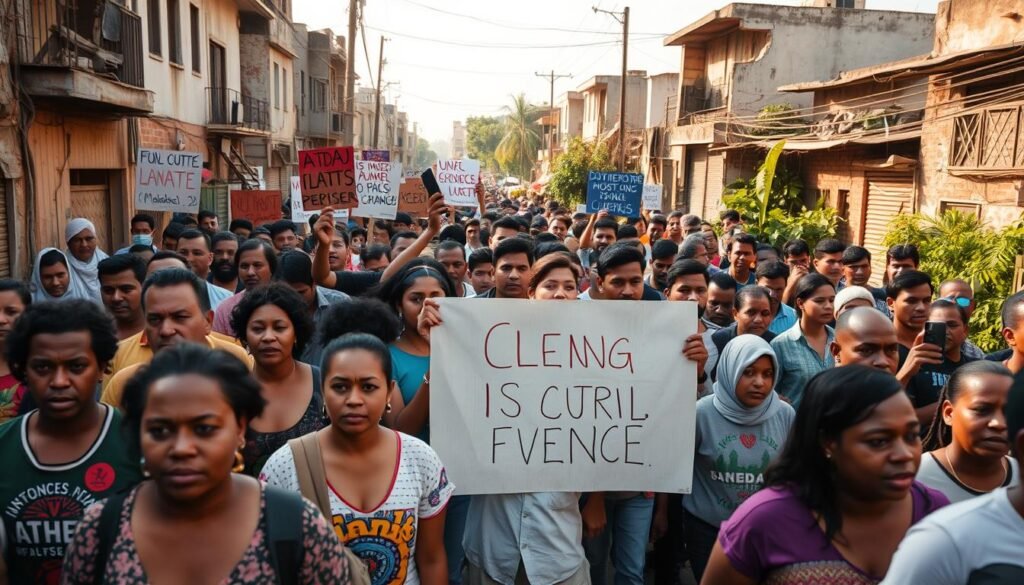
Community-led initiatives are at the forefront of demanding accountability from leaders. These initiatives empower local communities to monitor governance and report irregularities, creating a robust system of checks and balances.
Youth movements are playing a pivotal role in advocating for ethical leadership. By leveraging social media and other platforms, young Haitians are raising awareness about the importance of integrity in governance and mobilizing their peers to demand better leadership.
“The youth are not just the leaders of tomorrow; they are the change-makers of today. Their energy and idealism are crucial in pushing for a more transparent and accountable government.”
Civil society organizations are vital in supporting grassroots movements. They provide training, resources, and a platform for these movements to amplify their voices. By working together, they can create a powerful force for change.
As Haiti continues on its path towards sustainable development, the role of grassroots movements, youth initiatives, and civil society organizations will be indispensable in building a leadership culture grounded in integrity.
Institutional reforms are crucial for supporting integrity and good governance in Haiti. The country’s development is contingent upon creating a robust framework that promotes transparency, accountability, and fairness.
One of the key areas of focus is strengthening anti-corruption frameworks. This involves creating laws and regulations that prevent corrupt practices and ensuring their effective enforcement. Anti-corruption agencies must be empowered to investigate and prosecute corruption cases without interference.
Transparency is essential for good governance. This can be achieved through judicial independence and public financial management reforms. Ensuring that the judiciary is independent and impartial is crucial for upholding the rule of law.
An independent judiciary is vital for ensuring that justice is served without bias. This requires reforms to protect judicial autonomy and ensure that judges are appointed based on merit.
Effective public financial management is critical for transparency. This involves implementing systems that track government spending and ensure that public funds are used efficiently.
Reforming the electoral system is also crucial. This includes ensuring that elections are free, fair, and transparent. Electoral reforms can help restore public trust in the political process.
| Reform Area | Description | Expected Outcome |
|---|---|---|
| Anti-Corruption Frameworks | Strengthening laws and enforcement | Reduced corruption |
| Transparency in Governance | Judicial independence and public financial management | Increased trust in government |
| Electoral System Reforms | Free, fair, and transparent elections | Enhanced public confidence in electoral process |
The economic case for integrity-based leadership in Haiti is compelling, as corruption continues to stifle national progress. When leaders prioritize integrity, they create an environment conducive to economic growth and development.
Corruption acts as a significant barrier to Haiti’s development by diverting resources away from essential public services and infrastructure. This not only hampers economic growth but also erodes public trust in government institutions.
On the other hand, integrity in leadership can serve as a powerful economic catalyst. It fosters a transparent and predictable business environment, encouraging both domestic and foreign investment.
Integrity-based leadership enhances investor confidence by ensuring a level playing field and reducing the risks associated with corruption. This, in turn, boosts Haiti’s national reputation, making it a more attractive destination for investors.
| Economic Indicator | Corruption Scenario | Integrity-Based Leadership Scenario |
|---|---|---|
| Investor Confidence | Low due to corruption risks | High due to transparency and accountability |
| Economic Growth | Stunted by misallocated resources | Fostered by efficient resource allocation |
| National Reputation | Damaged by corruption scandals | Enhanced by transparent governance |
Haiti stands at a critical juncture, where the path chosen will determine its future. Prioritizing integrity in leadership is crucial for a brighter tomorrow. By adopting integrity-led governance, Haiti can break the cycle of failed promises and usher in a new era of sustainable development.
A vision for Haiti’s future centered on integrity will foster a culture of transparency and accountability. This shift can stimulate economic growth, enhance national reputation, and attract investor confidence. As Haiti moves forward, it is essential that its leaders embody the principles of integrity, ensuring that the nation’s resources are managed for the benefit of all citizens.
By learning from success stories and adapting lessons to its unique context, Haiti can navigate its challenges and achieve a more prosperous future. The journey towards an integrity-led future is not just a moral imperative but an economic necessity, paving the way for a resilient and thriving Haiti.
The main issue facing Haiti’s leadership is a lack of integrity, resulting in unfulfilled promises and a trust deficit among citizens.
Haiti’s history, including its colonial legacy and post-independence challenges, has contributed to the current leadership challenges, including a pattern of unfulfilled promises and a lack of integrity.
International partners can play a crucial role in fostering integrity in Haiti by rethinking foreign aid and accountability, supporting integrity-based initiatives, and avoiding harmful intervention patterns.
Grassroots movements, including community-led accountability initiatives and youth movements for ethical leadership, can contribute to building integrity in Haiti by promoting transparency and accountability from the ground up.
Institutional reforms, including strengthening anti-corruption frameworks, creating transparency in governance, and reforming the electoral system, are necessary to support integrity in Haiti.
Integrity-based leadership can have a positive impact on Haiti’s economy by acting as an economic catalyst, improving investor confidence, and enhancing the national reputation.
Examples of successful integrity-led transformations include Rwanda’s post-genocide leadership and Uruguay’s transparency initiatives, which can serve as models for Haiti.
Integrity is more important than charisma in leadership because it provides a foundation for sustainable change, promotes trust, and ensures accountability.