Physical Address
304 North Cardinal St.
Dorchester Center, MA 02124
Physical Address
304 North Cardinal St.
Dorchester Center, MA 02124

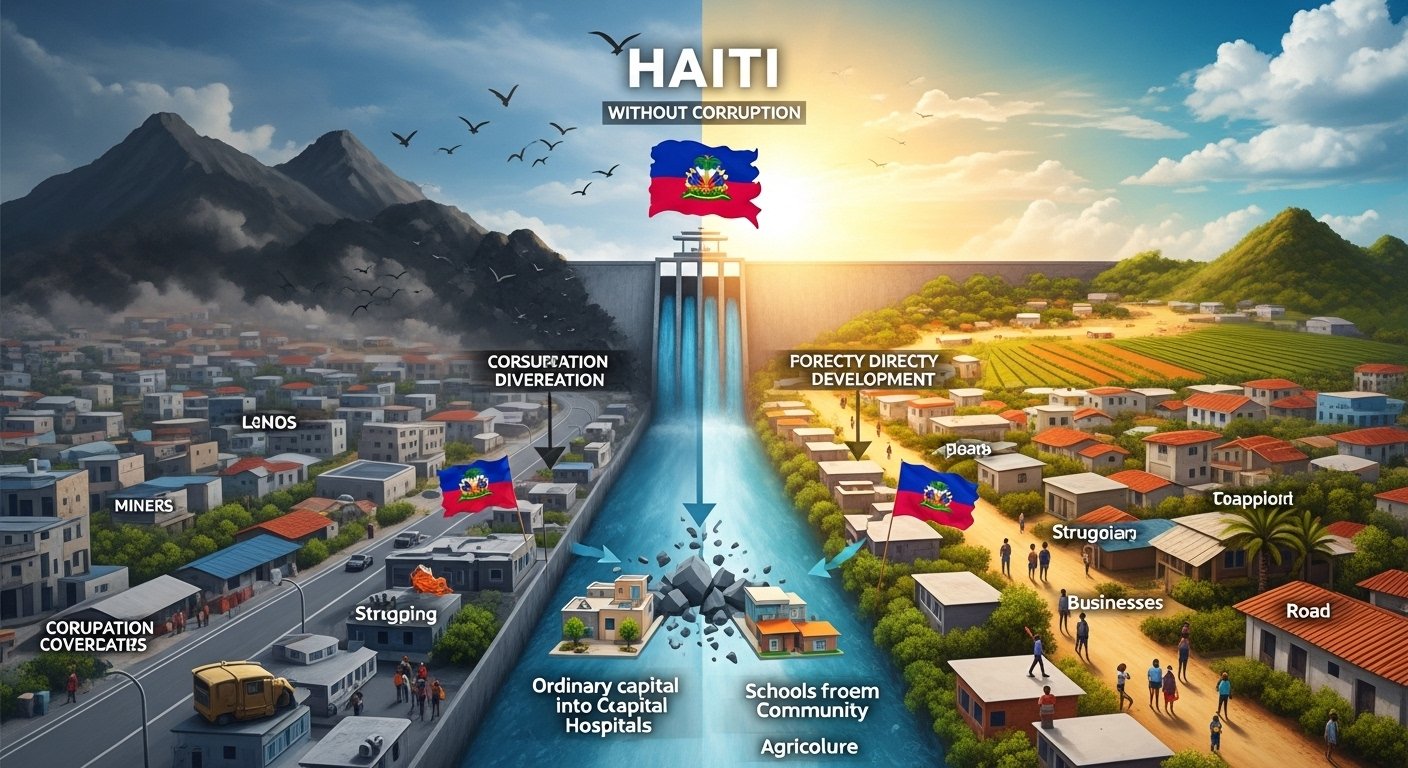
Explore the untapped potential of Haiti and discover how ending corruption could reverse its poverty.
Haiti, a country with a rich history and culture, is currently facing significant economic challenges. Poverty in Haiti is a pervasive issue, affecting a large portion of the population. Corruption is a major factor contributing to this poverty, hindering economic growth and development.
The relationship between corruption in Haiti and economic stagnation is complex. Corruption not only discourages foreign investment but also diverts resources away from essential public services, further exacerbating poverty. By addressing corruption, Haiti could potentially unlock economic growth, improving the lives of its citizens.
Haiti’s economic landscape is characterized by stark contrasts, with vast potential hindered by pervasive poverty. Understanding the current economic reality requires examining key statistics, historical context, and the paradox of poverty amidst potential.
Haiti faces significant development challenges, with high poverty rates and limited access to basic services. According to recent statistics, over 60% of Haiti’s population lives below the poverty line, with many lacking access to quality education and healthcare.
| Indicator | Value | Year |
|---|---|---|
| Poverty Rate | 62% | 2022 |
| Human Development Index (HDI) | 0.503 | 2021 |
| Life Expectancy | 63.5 years | 2022 |
Haiti’s economic struggles are deeply rooted in its history, including the legacy of colonialism and subsequent political instability. The country has faced numerous challenges, from foreign debt obligations to internal corruption, which have hindered its economic development.
Despite the challenges, Haiti possesses significant potential, including rich natural resources and a resilient population. The paradox of widespread poverty amidst such potential is a critical issue that needs to be addressed through effective economic policies and anti-corruption measures.
Haiti, a country often overshadowed by its challenges, holds within it a treasure trove of untapped potential waiting to be unleashed. The country’s diverse assets, from natural resources to human capital, position it for significant economic growth and development.
Haiti is endowed with a rich array of natural resources and geographic advantages that could drive its economic future.
The country’s terrain is rich in minerals such as gold, copper, and iridium, offering substantial mining potential. Additionally, Haiti’s fertile land and favorable climate make it suitable for a variety of agricultural products, including coffee, mangoes, and cocoa.
Haiti’s unique cultural heritage and breathtaking natural beauty, including its beaches and mountains, provide a strong foundation for tourism. Its strategic location in the Caribbean also makes it an important hub for trade and commerce.
Key tourism assets include:
Haiti’s population is its greatest asset, with a rich cultural heritage and a resilient spirit. The country’s cultural assets, including its music, art, and literature, are not only valuable in themselves but also contribute to its tourism appeal.
The Haitian diaspora also plays a crucial role in the country’s potential, providing a global network of talent and resources that could be leveraged for development.
Despite the challenges, there are already signs of economic vitality in Haiti. The growth of certain industries and the emergence of new businesses indicate a potential for broader economic expansion.
Examples include:
Understanding the nuances of corruption in Haiti is crucial for devising effective anti-corruption strategies. Corruption is a complex issue that permeates various levels of Haitian society, from political and bureaucratic to petty corruption.
Corruption in Haiti manifests in multiple forms, each with distinct characteristics and impacts.
Political corruption involves the misuse of power by government officials for personal gain, often through patronage networks. These networks distribute benefits and favors to loyal supporters, creating a system of dependency and loyalty.
Bureaucratic corruption occurs within government agencies, where officials may demand bribes or other forms of compensation for services. Petty corruption, on the other hand, involves small-scale bribery and corruption in everyday interactions, such as with traffic police or when accessing public services.
Haiti’s history has significantly contributed to the current state of corruption. Historical events, including foreign interventions and dictatorial regimes, have fostered an environment where corruption can thrive.
Corruption has become deeply ingrained in Haiti’s modern institutions, including government agencies, the judiciary, and law enforcement. This entrenchment is perpetuated by a lack of transparency, inadequate legal frameworks, and weak enforcement mechanisms.
| Forms of Corruption | Description | Impact |
|---|---|---|
| Political Corruption | Misuse of power for personal gain through patronage networks. | Undermines trust in government, distorts economic opportunities. |
| Bureaucratic Corruption | Bribes and corruption within government agencies. | Delays services, increases costs for citizens and businesses. |
| Petty Corruption | Small-scale bribery in everyday interactions. | Erodes public trust, affects daily life and economic activities. |
By understanding these different forms and their impacts, it’s possible to develop targeted strategies to combat corruption and promote a more transparent and equitable society in Haiti.
Corruption exacts a heavy toll on Haiti’s economy, manifesting in financial losses, a deteriorated investment climate, and social disparities. The pervasive nature of corruption in Haiti means that its economic costs are not only financial but also deeply social, affecting trust in institutions, the flow of investment, and overall development.
The direct financial losses due to corruption in Haiti are substantial. Corruption diverts public funds meant for infrastructure, healthcare, and education into private pockets. For instance, embezzlement and bribery in government contracts lead to suboptimal infrastructure projects, increasing costs and reducing the quality of public services. According to some estimates, corruption costs Haiti approximately 5% of its GDP annually, a figure that could be redirected towards vital public services.
A significant portion of Haiti’s budget is lost to corrupt practices, including:
| Corruption Type | Estimated Annual Loss | Potential Use of Funds |
|---|---|---|
| Embezzlement | $100 million | Healthcare Infrastructure |
| Bribery in Contracts | $150 million | Education and Training Programs |
| Procurement Fraud | $200 million | Public Infrastructure Projects |
Corruption also has significant indirect costs, particularly in deterring investment and hindering economic development. A corrupt environment discourages both domestic and foreign investors, as they perceive the business climate as risky and unpredictable. This results in reduced investment inflows, stifling economic growth and job creation.
The impact on the investment climate can be seen in several areas:
The social costs of corruption in Haiti are profound, eroding trust in public institutions, fueling brain drain, and exacerbating inequality. When corruption is rampant, citizens lose faith in their government’s ability to serve their interests, leading to widespread disillusionment and social unrest.
Furthermore, corruption drives the most skilled and educated Haitians to seek opportunities abroad, resulting in a significant brain drain. This loss of human capital deprives the country of the talent needed to drive development and reform.
Corruption also perpetuates inequality by concentrating wealth and opportunities among a corrupt elite, leaving the majority of the population in poverty. Addressing corruption is thus crucial to reducing inequality and promoting inclusive economic growth.
Ending corruption in Haiti could unlock significant economic potential. By examining various economic models and projections, it becomes clear that a corruption-free environment could lead to substantial growth and development.
Economic models suggest that reducing corruption can lead to increased foreign investment, improved government revenue, and more efficient public services. For Haiti, this could mean a significant boost in economic activity. Studies have shown that countries that successfully combat corruption can see improvements in their GDP growth rates. For instance, a reduction in corruption could lead to better allocation of resources, as funds are directed towards projects that are truly needed rather than those that benefit a select few.
Projections based on these models indicate that Haiti could experience a considerable increase in economic output if corruption is tackled effectively. This involves not just legal and institutional reforms but also a shift in societal attitudes towards corruption.
Without the burden of corruption, Haiti’s GDP could potentially grow at a much faster rate. Estimates suggest that reducing corruption could add several percentage points to Haiti’s annual GDP growth rate. This growth would be driven by increased investment, both domestic and foreign, as well as improved economic efficiency.
Increased foreign investment is a key factor here, as investors are more likely to invest in a country with transparent and fair business practices. Moreover, a reduction in corruption would lead to more effective governance, allowing for better implementation of economic policies and projects.
Ending corruption would also have a significant redistribution effect, shifting wealth from the elite to the broader population. Currently, corruption tends to concentrate wealth among a small group of individuals. By combating corruption, Haiti can create a more equitable distribution of resources, benefiting the wider population.
This redistribution can lead to increased economic activity at the grassroots level, as more people have access to resources and opportunities. It can also lead to improved social outcomes, as the general population benefits from better access to public services and infrastructure.
Nations like Rwanda, Georgia, and Singapore have demonstrated that effective anti-corruption strategies can lead to substantial economic gains. These countries have implemented various measures to combat corruption, resulting in significant improvements in their economic and social landscapes.
Rwanda’s transformation is a compelling example of successful anti-corruption efforts. After facing significant challenges, including the aftermath of the genocide, Rwanda has made substantial strides in reducing corruption. The government has implemented reforms such as improving transparency in government procurement and enhancing accountability mechanisms. As a result, Rwanda has seen improvements in its business climate and economic growth.

Georgia’s anti-corruption reforms have been particularly noteworthy. The country has implemented a zero-tolerance policy towards corruption, simplifying regulations and reducing bureaucratic hurdles. This has led to a significant decrease in corruption levels and an improvement in the business environment, making Georgia an attractive destination for foreign investment.
Singapore is renowned for its strict anti-corruption measures. The city-state has implemented robust laws and enforcement mechanisms to prevent corruption. Singapore’s approach includes severe penalties for corrupt practices, as well as a high level of transparency in government and business operations. This has resulted in Singapore being consistently ranked as one of the least corrupt countries globally.
The experiences of Rwanda, Georgia, and Singapore offer valuable lessons for Haiti. Key takeaways include the importance of strong political will, the need for comprehensive reforms, and the value of transparency and accountability. By studying these examples, Haiti can develop effective strategies to combat corruption and foster economic development.
Haiti’s path to reducing corruption involves strengthening its institutions, enhancing judicial independence, and leveraging technology. This multi-faceted approach is crucial for creating a transparent and accountable governance system.
Strengthening institutions is a cornerstone of anti-corruption efforts. This involves enhancing the capacity and independence of key government bodies.
A crucial aspect of institutional reform is ensuring the independence of the judiciary. This means providing judges with the necessary training and resources to investigate and prosecute corruption cases without interference. Judicial independence is vital for holding corrupt officials accountable and restoring public trust in the legal system.
Implementing transparency and accountability mechanisms is essential for preventing corruption. This can be achieved through measures such as open budgeting, public procurement reforms, and the establishment of anti-corruption agencies. Transparency in government operations helps to deter corrupt practices and ensures that public resources are used effectively.
Grassroots and civil society organizations play a vital role in combating corruption. They can mobilize public support for anti-corruption initiatives, monitor government activities, and advocate for policy reforms. Empowering these groups is crucial for creating a societal demand for transparency and accountability.
Technology offers innovative solutions for enhancing transparency and reducing corruption. Digital governance platforms can facilitate citizen engagement, improve service delivery, and provide real-time monitoring of government activities. For instance, digital platforms can enable citizens to report corruption instances or access public information easily.
By combining institutional reforms, grassroots mobilization, and technological innovation, Haiti can make significant strides in reducing corruption and promoting economic development.
The role of international partners and the Haitian diaspora is pivotal in Haiti’s fight against corruption. Their contributions can significantly impact the country’s ability to implement effective anti-corruption measures.
Foreign aid has been a significant factor in Haiti’s economy, but its effectiveness is often hampered by corruption. Reforming foreign aid to ensure accountability is crucial. This can be achieved by:
Such reforms can help ensure that aid reaches its intended beneficiaries and contributes to sustainable development.

International partners can exert diplomatic and economic pressure to encourage anti-corruption efforts in Haiti. This can involve:
These measures can create a strong incentive for Haitian leaders to prioritize anti-corruption efforts.
The Haitian diaspora is a valuable resource for the country’s development. Engaging the diaspora in investment and development initiatives can bring in much-needed capital and expertise. This can be facilitated by:
Diaspora engagement can also help in transferring knowledge and skills back to Haiti.
While international support is crucial, it’s equally important to balance this with respect for Haiti’s sovereignty. This involves ensuring that international interventions are aligned with Haitian priorities and are implemented in a way that respects national ownership.
Haiti’s journey towards prosperity is intricately linked with its ability to combat corruption. By understanding the depth of corruption’s impact on the economy and society, Haitians and international partners can work together to implement meaningful reforms.
Anti-corruption efforts can unlock Haiti’s vast potential, driving economic growth and improving living standards. Institutional reforms, civil society engagement, and international support are crucial components of this process. By learning from successful anti-corruption strategies around the world, such as those implemented in Rwanda and Georgia, Haiti can chart a path towards a more transparent and equitable society.
The path forward for Haiti requires a sustained commitment to anti-corruption efforts. By working together, Haitians and their international partners can create a brighter future, one that is characterized by economic opportunity, social justice, and peace. As Haiti moves forward, the focus should remain on building robust institutions, promoting civic engagement, and leveraging technology to enhance governance.
A corruption-free Haiti is within reach, and the benefits of such a future are undeniable. With a concerted effort, Haiti can overcome its current challenges and emerge as a thriving nation, where the wealth within is realized and shared by all.
Corruption is a significant factor contributing to Haiti’s poverty, as it hinders economic growth, distorts the allocation of resources, and undermines trust in institutions.
Corruption results in direct financial losses, discourages investment, and hinders development, ultimately exacerbating poverty and inequality in Haiti.
Countries like Rwanda, Georgia, and Singapore have implemented effective anti-corruption measures, including institutional reforms, transparency, and accountability mechanisms, which could serve as models for Haiti.
International partners can play a crucial role by promoting foreign aid reform, applying diplomatic and economic pressure, and engaging with the Haitian diaspora to support anti-corruption initiatives.
Digital governance and technology can enhance transparency, facilitate reporting of corruption, and improve accountability, thereby supporting anti-corruption efforts in Haiti.
Institutional reforms, such as ensuring judicial independence and implementing transparency and accountability mechanisms, can help reduce corruption by promoting good governance and the rule of law.
Ending corruption could lead to significant economic growth, increased GDP, and a more equitable distribution of wealth, ultimately contributing to poverty reduction in Haiti.