Physical Address
304 North Cardinal St.
Dorchester Center, MA 02124
Physical Address
304 North Cardinal St.
Dorchester Center, MA 02124
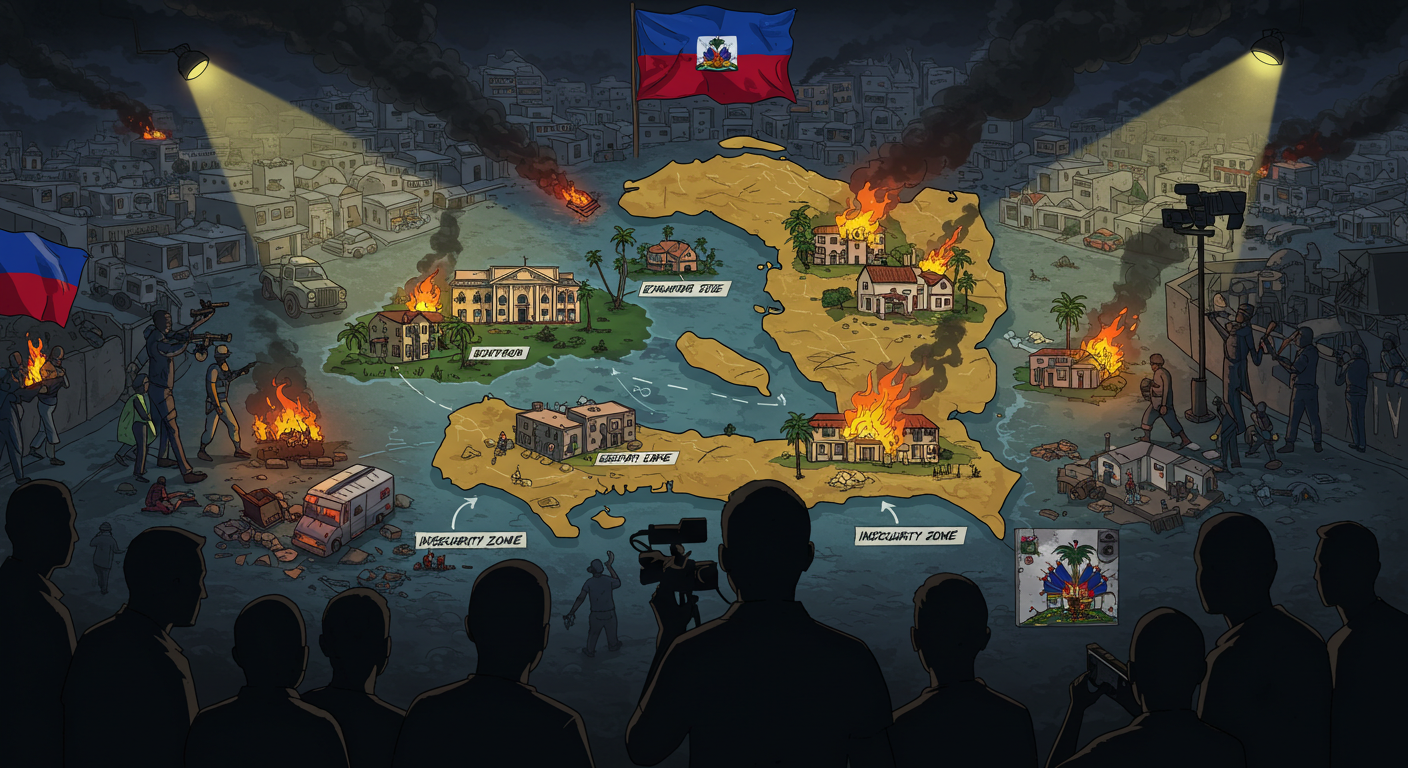
Delve into the intricacies of Haiti's 'insecurity' situation and discover who stands to gain from the ongoing turmoil in "Chaos by Design."
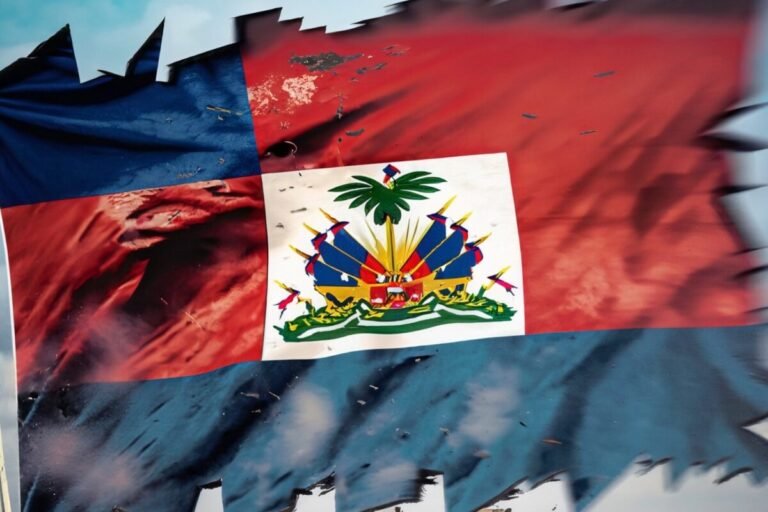
Haiti is currently facing a severe crisis, marked by insecurity and political instability. The situation is dire, with gang violence on the rise, affecting the daily lives of Haitian citizens.
The country’s instability has far-reaching consequences, impacting not just the local population but also the broader region. As the situation continues to deteriorate, questions arise about who is benefiting from this chaos by design.
Gang violence has taken center stage in Haiti, contributing to an unprecedented security crisis that affects every aspect of life. The capital city, Port-au-Prince, is particularly affected, with gangs controlling large swaths of territory.
The security situation in Haiti is dire. Recent statistics highlight the severity of the crisis:
Gangs now control over 50% of Port-au-Prince, with some areas being completely off-limits to government forces. This control has led to a surge in kidnapping and other violent crimes.
The number of kidnappings has seen a significant increase, with reports indicating a rise of over 150% in the past year alone. This has created a climate of fear among the population.
The security crisis has had a devastating impact on the daily lives of Haitian citizens. Two major consequences are:
The violence has disrupted agricultural production and distribution, leading to increased food insecurity. Many have been forced to flee their homes, resulting in significant displacement.
The crisis has also led to the collapse of essential services such as healthcare and sanitation. Hospitals are often unable to operate due to the violence, and basic services like water and electricity are frequently interrupted.
The 2010 earthquake marked a critical turning point in Haiti’s history, leading to a cascade of events that have contributed to the country’s ongoing instability.
The devastating 2010 earthquake not only caused immediate destruction but also set off a chain reaction of challenges for Haiti. Subsequent natural disasters have compounded the country’s problems.
Haiti has faced numerous natural disasters since 2010, including hurricanes and tropical storms. The recovery efforts have been marred by inefficiencies and corruption, exacerbating the country’s vulnerability.
Political assassinations have created power vacuums, further destabilizing the country. The lack of stable governance has hindered effective recovery and development.
International interventions, including UN peacekeeping missions, have had mixed results. While intended to stabilize the country, these efforts have sometimes led to unintended consequences.
The UN peacekeeping missions in Haiti have been criticized for their handling of local issues and for introducing new problems, such as the cholera epidemic.
Foreign-backed political transitions have often been met with skepticism and resistance from the local population, undermining their legitimacy and effectiveness.
Understanding the concept of ‘chaos by design’ is crucial to unraveling the complexities of Haiti’s insecurity situation. This involves examining the theoretical frameworks that underpin strategic instability and exploring historical precedents in the Caribbean.
The idea of manufactured chaos refers to the deliberate creation or exacerbation of instability for strategic gain. In the context of Haiti, this concept is particularly relevant.
Strategic instability is often achieved through the manipulation of political, economic, and social factors. In Haiti’s case, gang violence and political gridlock have contributed significantly to the prevailing instability.
The Caribbean has a history of political instability, with various interventions and manipulations by external actors. For instance, the history of U.S. interventions in the region provides a backdrop for understanding the current situation in Haiti.
Power vacuums in Haiti have created opportunities for various actors to exert influence. This includes both local and international entities.
The economics of disorder refers to how instability can become a lucrative business. In Haiti, this is evident in the rise of black markets and smuggling operations.
Security has become a valuable commodity in Haiti, with various groups and individuals offering protection services, often at a high cost. This has led to a complex web of security dynamics.
Key aspects of this include:
By examining these factors, we can better understand who benefits from Haiti’s ‘insecurity’ situation and how the concept of ‘chaos by design’ applies.
The complex interplay between Haitian political elites, government officials, and opposition groups defines the country’s political reality. Understanding these dynamics is crucial to grasping who benefits from Haiti’s ‘insecurity’ situation.
Haitian political elites, including the oligarchy, play a significant role in shaping the country’s political and economic landscape. Their interests often align with maintaining the status quo, which can perpetuate instability.
The Haitian oligarchy has historically controlled significant portions of the country’s economy and political apparatus. This concentration of power can lead to corruption and further entrench inequality.
Government officials in Haiti often find themselves entangled in corruption networks. These networks can undermine efforts to address the country’s security crisis and perpetuate a cycle of instability.
Opposition groups in Haiti have varying motivations, from seeking genuine reform to attempting to seize power for themselves. Understanding these motivations is key to analyzing their impact on the country’s stability.
Different opposition groups have competing visions for Haiti’s future, ranging from radical change to more moderate reforms. These visions often reflect broader societal divisions.
Grassroots movements in Haiti often push for more inclusive and equitable solutions, contrasting with elite opposition groups that may prioritize their own power and influence.
| Group | Interests | Impact on Stability |
|---|---|---|
| Haitian Oligarchy | Maintaining economic and political control | Perpetuates inequality and instability |
| Government Officials | Personal gain through corruption | Undermines anti-corruption efforts and stability |
| Opposition Groups | Varies; from reform to power seizure | Can either stabilize or destabilize depending on their methods and goals |
| Grassroots Movements | Advocating for inclusive and equitable change | Potential to bring about positive change and stability |
Gang violence is not just a symptom of Haiti’s instability; it’s a significant factor in the country’s power structure. The intricate web of gang coalitions, their control over territories, and their influence on political processes underscore the complexity of Haiti’s security crisis.
The G9 Alliance, a powerful gang coalition, has been a dominant force in Haiti’s capital, Port-au-Prince. Other significant groups have also emerged, controlling various neighborhoods and strategic infrastructure.
The G9 Alliance, led by Jimmy “Barbecue” Cherizier, has been instrumental in controlling large swaths of territory. Other groups have formed alliances and rivalries, further complicating the security landscape.
Gangs have taken control of key infrastructure, including ports and major roads, disrupting economic activities and exacerbating the humanitarian crisis.
| Gang Coalition | Territory | Notable Leaders |
|---|---|---|
| G9 Alliance | Port-au-Prince | Jimmy “Barbecue” Cherizier |
| Other Groups | Various Neighborhoods | Multiple Leaders |
Gang leaders have established connections with political elites, often serving as both enforcers and community providers. This dual role complicates efforts to address gang violence.
In some areas, gang leaders have become de facto authorities, providing services and protection to local residents. This has fostered a level of community support, making it challenging to distinguish between criminal activity and social service provision.
Gangs have been known to influence electoral processes, either by supporting certain candidates or by suppressing voter turnout through violence and intimidation.
The complex interplay between gang violence, political power, and community dynamics in Haiti requires a nuanced understanding to address the root causes of the country’s instability.
Amidst Haiti’s turmoil, certain economic interests have found opportunities to flourish. The country’s instability has created an environment where various actors can profit from the chaos.
The informal economy in Haiti has grown significantly due to the instability, with black markets thriving as a result. This has led to the rise of smuggling networks and contraband.
Smuggling networks have become a significant part of Haiti’s informal economy, with contraband goods being traded extensively. This illicit trade not only undermines the formal economy but also contributes to the perpetuation of instability.
Furthermore, the lack of effective governance has enabled price gouging and the creation of artificial scarcity, further exacerbating the economic hardship faced by ordinary Haitians.
Business elites in Haiti have also benefited from the instability by engaging in monopolistic practices. They have managed to control key sectors of the economy.
Some business elites have established import monopolies, allowing them to control the market and dictate prices. This has stifled competition and contributed to the economic challenges faced by the broader population.
Additionally, the ongoing need for reconstruction in Haiti has led to lucrative construction and reconstruction contracts being awarded to favored companies, often with little transparency.
As Haiti navigates its current crisis, the involvement of international stakeholders becomes increasingly pivotal, influenced by a mix of foreign policy considerations and geopolitical interests. The complexity of Haiti’s situation attracts a wide array of international actors, each with their own agendas and objectives.
The United States has historically played a significant role in Haitian affairs, driven by a combination of security concerns, migration management, and economic and strategic interests. U.S. policy toward Haiti is multifaceted, aiming to stabilize the country while advancing American geopolitical objectives in the region.
One of the primary U.S. concerns is the security situation in Haiti, which has implications for regional stability. The U.S. has been involved in efforts to enhance Haitian security forces’ capabilities, alongside managing migration flows from Haiti. “The U.S. Coast Guard intercepted over 13,000 Haitian migrants in 2022 alone,” highlighting the scale of the issue.
Beyond security, the U.S. has significant economic and strategic interests in Haiti. The country’s location in the Caribbean makes it a crucial point for regional security and trade. Economic assistance and investment are key components of U.S. policy, aimed at fostering stability and growth.
Apart from the U.S., other regional and global powers have significant interests in Haiti. These include neighboring countries and global players with diverse geopolitical and economic agendas.
The Dominican Republic, sharing a border with Haiti, has a vested interest in Haiti’s stability due to historical and economic reasons. Cuba and Venezuela, as neighboring countries with historical ties to Haiti, also play significant roles, often driven by ideological and regional solidarity.
Global players like China, Canada, and France are involved in Haiti through various means, including economic investment, development aid, and diplomatic engagement.
“China’s growing presence in the Caribbean, including Haiti, is part of its broader strategy to expand its global influence.”
Canada and France, with historical ties to Haiti, continue to play significant roles in the country’s development and security efforts.
Haiti’s crisis has given rise to a humanitarian response that is both multifaceted and controversial. The presence of numerous non-governmental organizations (NGOs) has created what some refer to as the “Republic of NGOs,” a situation where these organizations play a significant role in the country’s social and economic fabric.
The proliferation of NGOs in Haiti has led to the establishment of parallel governance structures, where these organizations often assume responsibilities that would typically fall under the purview of the state. This can include everything from healthcare and education to infrastructure development.
These parallel structures can sometimes undermine the authority of the Haitian government, creating a complex web of governance that is not always accountable to the local population. For instance, NGOs may establish their own systems for delivering services, which can lead to duplication of efforts and inefficiencies.
One of the significant challenges with the NGO-driven humanitarian response is ensuring accountability. With numerous organizations operating in the country, it can be difficult to track their activities, funding, and impact, leading to concerns about transparency and effectiveness.
The humanitarian aid flowing into Haiti, while crucial for immediate relief, also raises concerns about aid dependency. The reliance on external assistance can hinder long-term development by creating dependency rather than fostering self-sufficiency.
The tension between providing short-term relief and promoting long-term development is a persistent challenge. Humanitarian responses often focus on immediate needs, but it’s equally important to invest in initiatives that can lead to sustainable development and reduce reliance on aid.
The humanitarian industry is not just about altruism; it’s also a multi-billion-dollar industry. The business of humanitarian response involves complex financial transactions, with funds flowing from donors to NGOs and other implementing partners. This aspect of humanitarian aid raises questions about the motivations behind certain interventions and the distribution of resources.
In conclusion, the humanitarian industry’s role in Haiti is complex, with both positive and negative impacts. Understanding these dynamics is crucial for improving the effectiveness of humanitarian responses and promoting sustainable development in the country.
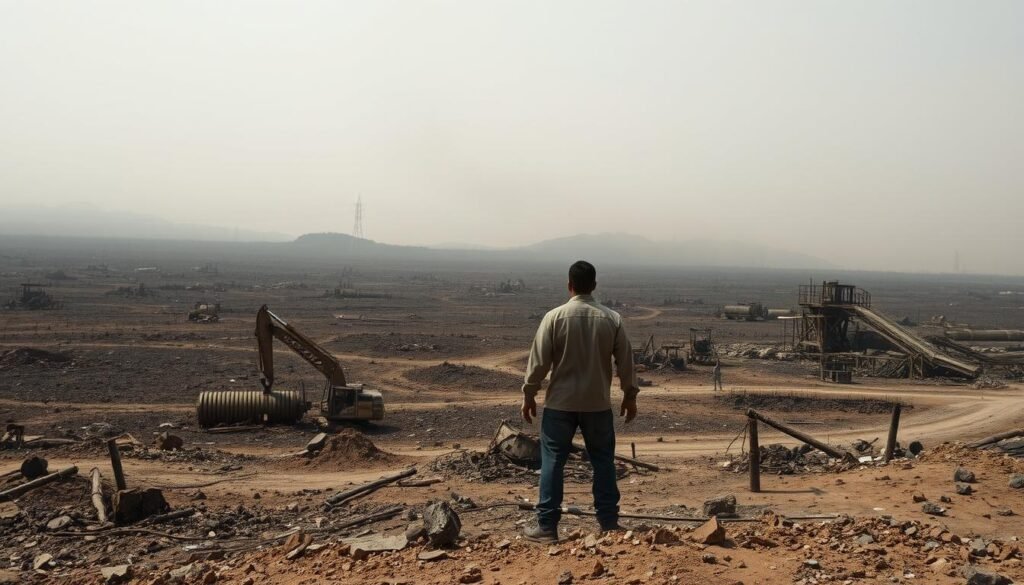
As Haiti struggles with instability, the role of resource extraction in its environmental exploitation cannot be overstated. The country’s rich natural resources, including gold, copper, and bauxite, have attracted significant mining interests.
The exploitation of Haiti’s mineral resources has led to numerous land grabs, often displacing rural communities and causing environmental degradation. Gold, copper, and bauxite concessions have been granted to various mining companies, often without adequate consultation with local populations.
The granting of mining concessions has led to the displacement of rural communities, as their lands are taken over for mining operations. This displacement exacerbates poverty and social unrest.
The environmental consequences of unregulated resource extraction in Haiti are severe. Deforestation and erosion are significant issues, as forests are cleared for mining and agricultural activities.
Deforestation leads to soil erosion, which in turn affects agricultural productivity and increases the risk of natural disasters.
Transnational criminal networks have exploited Haiti’s instability to establish a significant foothold in the narcotics trade. Haiti’s geographical location in the Caribbean makes it a strategic transit point for drugs smuggled from South America to the United States and Europe.
The narcotics trade in Haiti is characterized by its role as a transit country. Drugs are smuggled through various routes, exploiting both maritime and air trafficking channels.
The Caribbean region, including Haiti, has seen shifting drug trafficking routes over the years. These routes are often influenced by law enforcement efforts and the level of corruption within local governments.
Drugs are smuggled into Haiti primarily through maritime routes, using cargo ships and boats. Air trafficking also plays a role, with some drugs being transported via small aircraft.
Corruption is a significant factor enabling the narcotics trade in Haiti. Both law enforcement and the judicial system have been compromised by criminal networks.
Law enforcement agencies in Haiti have been infiltrated by criminal elements, undermining their ability to combat the narcotics trade effectively.
The judicial system in Haiti has also been compromised, with cases involving narcotics trafficking often being influenced or dismissed due to corruption.
The intertwining of corruption and institutional capture with the narcotics trade has created a complex challenge for Haiti, requiring comprehensive reforms to address.
Haiti’s image in the global media landscape affects not only public perception but also policy decisions related to the country. The portrayal of Haiti in the media is a complex issue that involves various stakeholders and interests.
International media coverage of Haiti often focuses on crisis narratives, portraying the country as a hub of violence and instability. This kind of coverage can lead to stereotyping and oversimplification of the complex issues facing Haiti.
Crisis narratives in the media can create a skewed public perception, emphasizing chaos and disorder without providing context or depth. For instance, a study found that media outlets tend to focus on sensational aspects of Haitian politics, rather than providing in-depth analysis.
There is often a lack of contextual understanding in international media coverage, failing to explain the historical and political background of Haiti’s current situation. This gap can lead to misinformed public opinion and misguided policy decisions.
Social media and citizen journalism have emerged as significant factors in shaping the narrative around Haiti. They provide alternative voices and perspectives, challenging traditional media narratives.
Haitian voices on social media offer counter-narratives to the dominant crisis discourse, providing insights into the daily lives and struggles of Haitian citizens. For example, hashtags like #Haiti and #PortauPrince allow Haitians to share their experiences and opinions.
The Haitian diaspora plays a crucial role in information dissemination, using social media to inform and mobilize both local and international communities. Diaspora networks help to amplify Haitian voices and promote a more nuanced understanding of the country’s issues.
| Media Platform | Type of Coverage | Impact |
|---|---|---|
| Traditional Media | Crisis-oriented | Reinforces stereotypes |
| Social Media | Diverse, counter-narratives | Promotes nuanced understanding |
| Citizen Journalism | Grassroots, firsthand accounts | Humanizes the narrative |
The interplay between traditional media, social media, and citizen journalism is reshaping the narrative around Haiti, offering a more complex and nuanced understanding of the country’s challenges.
Haiti’s protracted instability is a complex issue, influenced by a multitude of factors including local power dynamics, international geopolitical interests, and economic exploitation. To break the cycle of designed chaos, it is essential to understand these underlying forces and how they perpetuate instability.
The path to a more stable future for Haiti involves addressing the root causes of its insecurity, including the influence of gang violence, economic monopolies, and foreign policy interests. By acknowledging the role of these factors, stakeholders can work towards creating a more equitable society.
Breaking the cycle of designed chaos requires a multifaceted approach that involves local communities, national leaders, and international actors. By working together, it is possible to envision a future where Haiti can overcome its current challenges and achieve lasting stability, ultimately securing a brighter future for its citizens.
Haiti is experiencing a severe security crisis, with gang control over large parts of Port-au-Prince, high levels of kidnapping and violence, and a resulting humanitarian crisis with food insecurity, displacement, and a collapse of essential services.
Historical events, including the 2010 earthquake, subsequent natural disasters, and recovery failures, as well as political assassinations and power vacuums, have all contributed to Haiti’s current instability. International interventions, such as UN peacekeeping missions and foreign-backed political transitions, have also had a lasting impact.
Various groups benefit from Haiti’s ‘insecurity’ situation, including certain political elites, business elites, and gang leaders. These groups may exploit the situation for economic gain, maintain their power and influence, or further their own interests.
Gang violence plays a significant role in Haiti’s power structure, with major gang coalitions controlling territories and strategic infrastructure. Gang leaders often have political connections and may act as community providers, influencing electoral processes and voter suppression.
International stakeholders, including the U.S., regional powers like the Dominican Republic, Cuba, and Venezuela, and global players like China, Canada, and France, all have foreign policy and geopolitical interests in Haiti. These interests can shape the country’s trajectory and impact its stability.
The humanitarian industry, including NGOs, has a significant presence in Haiti, sometimes creating parallel governance structures and accountability challenges. While providing essential aid, the industry can also perpetuate aid dependency and create tensions between short-term relief and long-term development.
Resource extraction, including mining, can have devastating environmental consequences in Haiti, such as deforestation, erosion, water pollution, and public health impacts. Unregulated development can displace rural communities and exacerbate environmental degradation.
Haiti is used as a transit point for drugs, with shifting drug routes through the Caribbean and maritime and air trafficking. Corruption and institutional capture, including infiltration of law enforcement and compromises within the judicial system, facilitate the narcotics trade.
International media coverage of Haiti often focuses on crisis narratives and stereotyping, with gaps in contextual understanding. Social media and citizen journalism provide alternative perspectives, highlighting Haitian voices and counter-narratives, as well as diaspora information networks.
“Chaos by design” refers to the concept that certain groups or individuals may be perpetuating or exploiting Haiti’s instability for their own gain, rather than working towards a more stable and secure future.
Continued instability in Haiti can lead to the growth of informal economies and black markets, with smuggling networks, price gouging, and artificial scarcity. Business elites may also engage in monopolistic practices, controlling imports, construction, and reconstruction contracts.