Physical Address
304 North Cardinal St.
Dorchester Center, MA 02124
Physical Address
304 North Cardinal St.
Dorchester Center, MA 02124

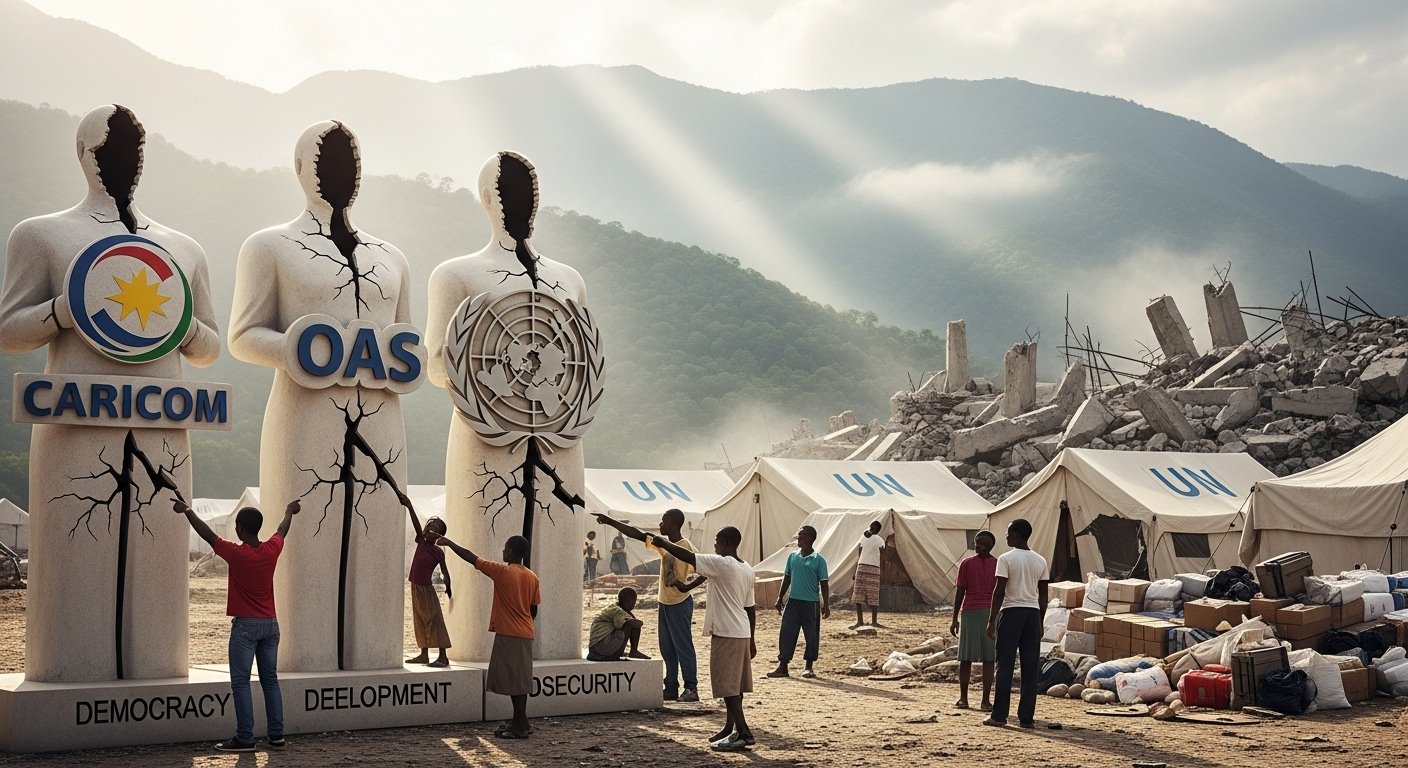
This article examines the symbolic nature of CARICOM, OAS, and UN's efforts in Haiti, and their inability to drive real progress.
Haiti continues to face severe crises, and despite efforts from major international organizations, the country remains in a state of instability. The Caribbean Community (CARICOM), Organization of American States (OAS), and United Nations (UN) have been involved in addressing Haiti’s issues, but their interventions have yielded little substantial progress.
The historical context of Haiti’s struggles and the role of these international organizations are crucial in understanding the reasons behind their ineffectiveness. Despite their presence, Haiti’s problems persist, raising questions about the efficacy of their strategies.
The historical context of Haiti’s crisis reveals a narrative of resilience amidst challenges posed by external interventions and internal conflicts. To understand the depth of Haiti’s current situation, it’s crucial to explore its past.
Haiti’s history is marked by significant events that have shaped its current state. From its colonial past to its struggle for independence, Haiti has faced numerous challenges.
Haiti gained independence in 1804, becoming the first independent nation in the Caribbean. However, this independence came with a heavy price: a significant debt imposed by France, which has had long-lasting economic implications.
Haiti has experienced considerable political instability, with frequent regime changes and power struggles. This instability, coupled with economic fragility, has hindered the country’s development.
Foreign interventions have played a significant role in Haiti’s history. The U.S. occupations, in particular, have had a lasting impact.
The U.S. occupied Haiti from 1915 to 1934, leaving a legacy of infrastructure development but also of cultural and economic dependency.
The Duvalier regime, which lasted from 1957 to 1986, was marked by authoritarian rule and human rights abuses. International relations during this period were strained, with varying degrees of support and sanctions from the international community.
As noted by a historian, “Haiti’s history is a complex tapestry of external influences and internal dynamics, shaping its current crisis.”
“Haiti’s struggle for stability and prosperity is deeply rooted in its historical context, marked by foreign interventions and internal conflicts.”
| Period | Event | Impact |
|---|---|---|
| 1915-1934 | U.S. Occupation | Infrastructure development, cultural and economic dependency |
| 1957-1986 | Duvalier Regime | Authoritarian rule, human rights abuses |
International bodies have pledged substantial support to Haiti, but the effectiveness of this aid is often questioned. The involvement of organizations like CARICOM, OAS, and UN has been significant, with various initiatives aimed at addressing Haiti’s multifaceted crises.
The initial mandates of these international organizations have typically included broad goals such as promoting stability, supporting economic development, and enhancing governance in Haiti.
The stated goals often encompass improving infrastructure, enhancing security, and promoting democratic processes. For instance, the UN has historically focused on peacekeeping and humanitarian assistance.
Funding pledges have been substantial, with international donors committing billions to support Haiti’s recovery and development. However, the allocation of these resources often faces challenges, including bureaucratic delays and mismanagement.
The gap between public expectations and the actual capabilities of international organizations in Haiti is significant. While the public expects tangible results, institutional limitations often hinder effective delivery.
There is a persistent gap between the promises made by international organizations and their actual delivery on the ground. This discrepancy can erode trust and diminish the perceived value of their interventions.
International organizations face structural limitations, including bureaucratic inefficiencies and limited local engagement, which can impede their effectiveness in Haiti.
Despite the rhetoric of regional solidarity, CARICOM’s efforts in Haiti have yielded little tangible results. The organization’s initiatives have been hampered by various challenges, both internal and external.
Haiti’s integration into the Caribbean community is complex, influenced by cultural, linguistic, and economic factors.
The cultural and linguistic differences between Haiti and other CARICOM member states have created barriers to effective cooperation. Haitian Creole and French are predominantly spoken in Haiti, whereas other CARICOM nations primarily speak English.
Economic disparities within the CARICOM region further complicate Haiti’s integration. Significant economic gaps exist between Haiti and more prosperous member states like Jamaica and Trinidad and Tobago.
CARICOM has launched several initiatives aimed at supporting Haiti, but these have often failed to translate into concrete actions.
Efforts to enhance trade agreements and economic integration have been met with limited success. The lack of infrastructure and logistical challenges have hindered the effective implementation of these agreements.
While CARICOM has facilitated political dialogue, the outcomes have not led to significant improvements on the ground. The absence of concrete action has undermined the effectiveness of these efforts.
The limitations of regional solutions are evident in the resource constraints among CARICOM member states and the competing national interests that often take precedence over collective regional goals.
Many CARICOM member states face their own economic challenges, limiting their ability to provide substantial support to Haiti.
The diverse national interests within CARICOM often lead to a lack of cohesion in addressing Haiti’s needs, as individual member states prioritize their own agendas.
The OAS’s involvement in Haiti has been characterized by a series of controversies, particularly surrounding its electoral missions. Despite its mission to promote democracy and stability, the organization’s efforts have often been criticized for being ineffective or counterproductive.
The OAS has been involved in various electoral missions in Haiti, but these efforts have been marred by controversy. Critics argue that the OAS has legitimized problematic electoral processes, often under the guise of promoting democracy.
The OAS’s election observation missions have been disputed on several occasions. Critics argue that these missions have failed to adequately address irregularities and have instead served to legitimize flawed electoral processes.
By observing and commenting on Haitian elections, the OAS has sometimes been seen as endorsing the overall legitimacy of the electoral process, even when there have been significant irregularities. This has led to accusations that the OAS is more interested in maintaining stability than in promoting genuine democratic processes.
The OAS’s engagement in Haiti has also been criticized for being influenced by external political factors, particularly U.S. interests. This has led to concerns that the organization’s efforts are driven more by geopolitical considerations than by a genuine desire to assist Haiti.
The United States has significant influence within the OAS, and its policies often shape the organization’s approach to Haiti. Critics argue that this influence has led to decisions that prioritize U.S. interests over Haitian needs.
The OAS’s engagement in Haiti has been selective, often focusing on issues that align with the geopolitical interests of its influential member states. This selective engagement has led to accusations that the organization is not committed to addressing Haiti’s deeper structural issues.
Beyond the issues of political influence, the OAS’s effectiveness in Haiti is also hampered by structural weaknesses. These include bureaucratic inefficiencies and a lack of enforcement mechanisms, which have limited the organization’s ability to achieve its objectives.
The OAS’s bureaucratic processes have been criticized for being slow and inefficient, hindering the organization’s ability to respond effectively to Haiti’s needs.
The OAS lacks robust enforcement mechanisms to ensure that its recommendations are implemented. This has limited the organization’s impact, as Haitian authorities have not always felt compelled to act on its suggestions.
| OAS Initiatives | Objectives | Outcomes |
|---|---|---|
| Electoral Missions | Promote democratic processes | Controversy and disputed legitimacy |
| Political Engagement | Stabilize political environment | Criticism of political interference |
| Structural Reforms | Improve governance | Limited impact due to bureaucratic inefficiencies |
The history of UN engagement in Haiti is complex, marked by efforts to stabilize the country amidst numerous challenges. The UN’s presence has evolved significantly over the years, from peacekeeping missions to humanitarian aid and development programs.
The UN’s involvement in Haiti has seen several transitions, most notably from the MINUSTAH mission to the current BINUH configuration. MINUSTAH, established in 2004, was initially tasked with maintaining stability and promoting democratic processes.
Over the years, the UN’s mandate in Haiti has shifted in response to changing circumstances on the ground. Initially focused on security, the mandate later incorporated broader development and humanitarian objectives.
Despite the evolving nature of its mandate, the UN has faced significant budget reductions and operational constraints. These challenges have impacted the effectiveness of its missions in Haiti.
One of the most significant controversies surrounding the UN’s presence in Haiti is the cholera crisis that emerged in 2010. The epidemic, attributed to UN peacekeepers, resulted in thousands of deaths and widespread suffering.
Investigations revealed that UN peacekeepers from Nepal were the source of the cholera outbreak. The UN’s initial response was criticized for being inadequate and lacking transparency.
The UN faced criticism for its delayed recognition of responsibility for the cholera outbreak. Efforts to provide compensation to victims have been slow and often insufficient, further exacerbating the humanitarian crisis.
Beyond the cholera crisis, the UN’s peacekeeping missions in Haiti have been marred by other controversies, including allegations of sexual exploitation and abuse.
There have been numerous reports of sexual exploitation and abuse by UN peacekeepers in Haiti. These allegations have highlighted significant shortcomings in the UN’s accountability mechanisms.
The UN has also faced criticism for its use of force and failures in protecting civilians, particularly during periods of heightened conflict and gang violence.
In conclusion, the UN’s presence in Haiti has been marked by both efforts to stabilize the country and significant controversies. Moving forward, it is crucial for the UN to address these challenges and work towards greater accountability and more effective engagement.
Haiti’s ongoing crises have elicited a plethora of symbolic responses from international organizations like CARICOM, OAS, and UN, without corresponding tangible results. Despite the flurry of activity, the fundamental challenges facing Haiti remain unaddressed.
The history of international intervention in Haiti is marked by high-profile summits and declarations that rarely translate into meaningful action. High-profile summits often result in empty declarations, with little follow-through on commitments made.
These events are typically characterized by grand rhetoric and ambitious plans, but the lack of implementation leaves the status quo unchanged. For instance, numerous declarations have been made regarding Haiti’s development, yet concrete steps are seldom taken.
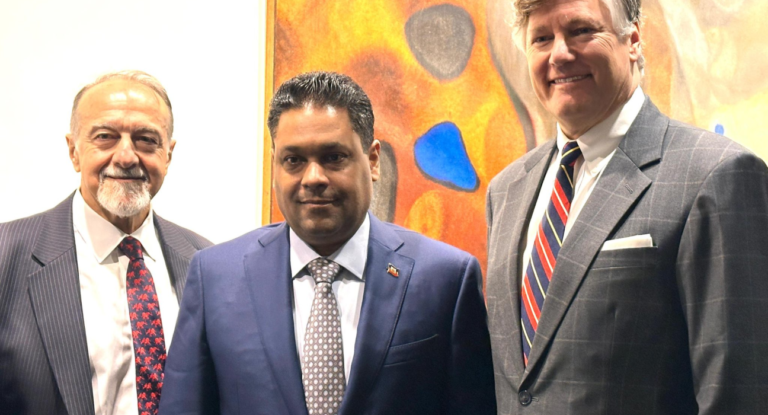
The focus on photo opportunities often overshadows the need for substantive action. Leaders and representatives from CARICOM, OAS, and UN are frequently seen participating in high-profile events, but the absence of follow-through on commitments is a recurring issue.
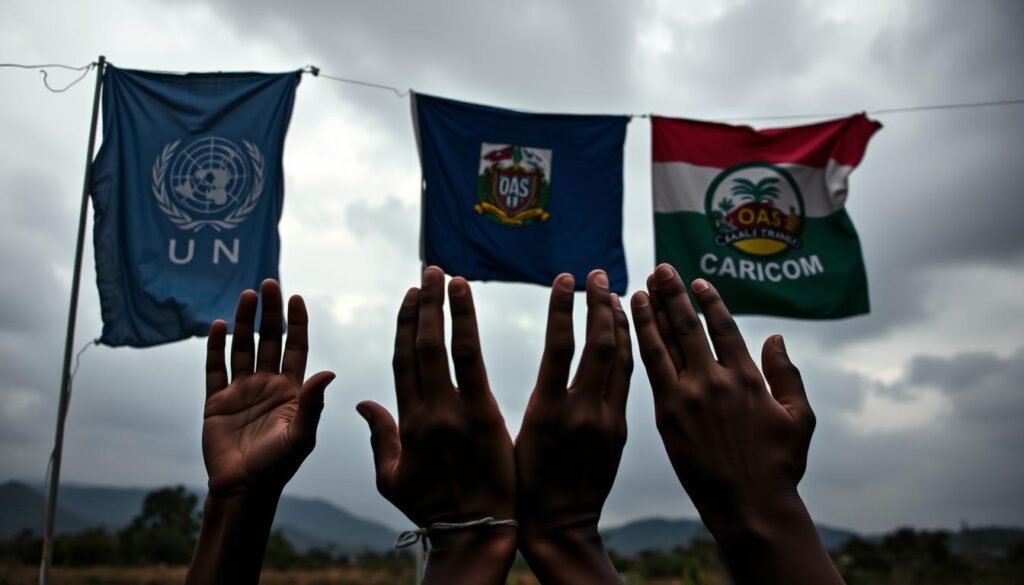
Institutional constraints, including competing member state agendas and funding shortfalls, significantly hinder the effectiveness of CARICOM, OAS, and UN in Haiti.
The diverse interests of member states often lead to conflicting priorities, making it challenging to achieve consensus on critical issues affecting Haiti.
Chronic funding shortfalls and donor fatigue further exacerbate the problem, as initiatives are often underfunded or abandoned due to lack of sustained support.
The disparity between the rhetoric of international organizations and the resources they commit to Haiti is stark. Unfulfilled financial commitments and a preference for short-term projects over long-term solutions are common issues.
Financial pledges are frequently not honored, leaving critical projects underfunded and undermining the potential for meaningful progress.
The focus on short-term projects, rather than long-term solutions, fails to address the root causes of Haiti’s challenges, perpetuating a cycle of dependency and underdevelopment.
The interventions by international organizations in Haiti have raised significant concerns regarding the country’s sovereignty and self-determination. The involvement of bodies like CARICOM, OAS, and UN has been a double-edged sword, providing necessary aid while also influencing domestic decision-making processes.
External decision-making has often overshadowed local empowerment in Haiti. International organizations, while well-intentioned, have sometimes imposed solutions that do not align with the needs or desires of the Haitian people.
Foreign-imposed solutions have led to a lack of trust in international interventions. For instance, the imposition of political leaders or economic policies without consulting Haitian civil society has undermined the legitimacy of these interventions.
Haitian civil society has been marginalized in decision-making processes. This marginalization has resulted in policies that do not address the root causes of Haiti’s problems, such as poverty and inequality.
The erosion of democratic institutions in Haiti has been another consequence of international interventions. Support for questionable leaders and the undermining of constitutional processes have weakened the country’s democratic fabric.
International support for leaders who do not have the support of the Haitian people has been particularly damaging. It has led to political instability and undermined trust in democratic institutions.
The undermining of constitutional processes has had long-term consequences for Haiti’s democracy. It has created a power vacuum that has been exploited by various factions, including gangs.
Aid dependency has created a cycle of dependency that has distorted Haiti’s economy. The reliance on foreign aid has hindered the development of local capacities and industries.
The influx of foreign aid has led to economic distortions. It has created a dependency on external funding rather than encouraging self-sustaining economic practices.
The brain drain resulting from the lack of opportunities in Haiti has further exacerbated capacity challenges. Skilled Haitians have sought opportunities abroad, leaving behind a depleted human resource base.
Examining specific instances of international failure in Haiti reveals a pattern of ineffectiveness that has hindered the country’s progress. The international community’s interventions, though well-intentioned, have often been marred by significant shortcomings.
The response to the 2010 earthquake was a critical moment that exposed the weaknesses in international coordination and management. The massive destruction and loss of life necessitated a swift and effective response, but the reality was far from it.
The earthquake response was characterized by coordination failures among various international organizations. The lack of a unified command structure and clear communication channels led to duplicated efforts in some areas and gaps in others.
The mismanagement of relief funds was another significant issue. Billions of dollars were pledged in aid, but the distribution was slow, and a substantial amount was either misappropriated or inefficiently used.
Haiti has faced numerous political crises, including the assassination of President Moïse, which further highlighted the international community’s inability to provide effective support.
The international response to President Moïse’s assassination was initially characterized by condemnation and pledges of support. However, the subsequent actions failed to address the underlying issues, leading to a continued power vacuum.
The aftermath of the assassination saw a power vacuum that international organizations struggled to address. The lack of a functioning government and the collapse of institutional structures further complicated the situation.
Gang violence has become a pervasive issue in Haiti, with the international community’s efforts to address it being largely ineffective.
Attempts at security sector reform have been met with limited success. The training and equipping of local security forces have been hindered by corruption, lack of resources, and inadequate planning.
The humanitarian impact of these failed interventions has been severe. The continued gang violence has led to significant displacement, human rights abuses, and a general deterioration in living conditions.
| Event | International Response | Outcome |
|---|---|---|
| 2010 Earthquake | Massive aid pledge | Mismanagement of funds, slow distribution |
| President Moïse’s Assassination | Condemnation, pledges of support | Power vacuum, institutional collapse |
| Gang Violence | Security sector reform efforts | Ineffective, continued violence |
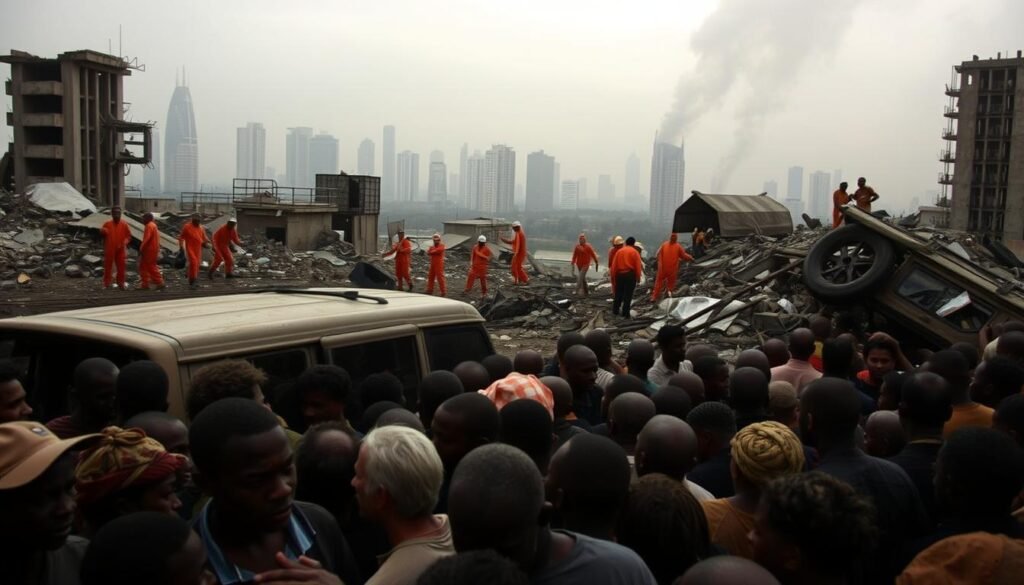
To effectively address Haiti’s challenges, it’s crucial to explore alternative approaches that prioritize local empowerment. The current international interventions have shown limitations, and it’s time to consider new strategies that focus on Haitian-led solutions and enhance accountability within international organizations.
Empowering local communities is vital for sustainable development. Haitian-led initiatives can better understand and address the specific needs of their communities.
Grassroots initiatives are often more effective as they are tailored to the local context. Supporting these initiatives can lead to more sustainable outcomes.
Haitian communities have shown remarkable resilience. Building on this resilience can help in creating robust and sustainable development programs.
For international interventions to be effective, there must be robust accountability mechanisms in place.
Implementing transparent monitoring and evaluation systems can help track the progress and impact of international aid.
Involving civil society in overseeing international programs can enhance accountability and ensure that the programs meet local needs.
The traditional aid and development paradigms have shown their limitations. It’s essential to adopt sustainable economic development models that focus on long-term capacity building.
Models that promote economic sustainability can help Haiti achieve lasting stability and growth.
While short-term relief is necessary, prioritizing long-term capacity building can lead to more sustainable outcomes.
| Approach | Key Features | Benefits |
|---|---|---|
| Haitian-Led Solutions | Local ownership, community engagement | Sustainable outcomes, community empowerment |
| Accountability Mechanisms | Transparent monitoring, civil society oversight | Enhanced accountability, effective aid utilization |
| Sustainable Development Models | Long-term focus, economic sustainability | Lasting stability, economic growth |
The ongoing crises in Haiti have been met with a plethora of international interventions, yet the impact remains minimal. The efforts of CARICOM, OAS, and UN have been characterized by symbolism rather than substance, failing to address the root causes of Haiti’s problems.
To achieve substantive change, there needs to be a fundamental shift in how these organizations approach their engagement with Haiti. This involves prioritizing Haiti development through Haitian-led solutions and enhancing accountability mechanisms.
By adopting sustainable development models and moving beyond symbolism, it’s possible to create a more effective and genuine international response to Haiti’s crises. This requires a commitment to empowering local communities and fostering democratic institutions.
The path forward demands a collaborative effort that prioritizes the needs and voices of the Haitian people, ensuring that international interventions are both meaningful and sustainable.
The main issue is that their efforts are often symbolic rather than substantive, failing to deliver meaningful results for Haiti.
Haiti’s colonial past, debt, political instability, and foreign interventions have all contributed to its current challenges.
CARICOM faces challenges such as cultural and linguistic barriers, economic disparities within the region, and resource constraints among member states.
The OAS has faced criticism for disputed election observations, legitimizing problematic processes, and political interference, often influenced by U.S. interests.
The UN’s presence has been marked by controversies, including the cholera crisis, peacekeeping abuses, and human rights concerns, highlighting the need for accountability and reform.
External decision-making has marginalized Haitian civil society, eroded democratic institutions, and created dependency cycles that undermine Haiti’s self-determination.
Haitian-led solutions, local ownership, accountability mechanisms, and sustainable development models could offer a more effective path forward.
Grassroots initiatives can provide critical support and build on existing community resilience, offering a more sustainable and locally grounded approach to development.
Reforming aid requires a shift towards long-term capacity building, transparent monitoring, and civil society oversight to ensure that aid is effective and accountable.
Supporting Haitian-led solutions is crucial for ensuring that development initiatives are tailored to Haiti’s specific needs and contexts, enhancing their effectiveness and sustainability.