Physical Address
304 North Cardinal St.
Dorchester Center, MA 02124
Physical Address
304 North Cardinal St.
Dorchester Center, MA 02124

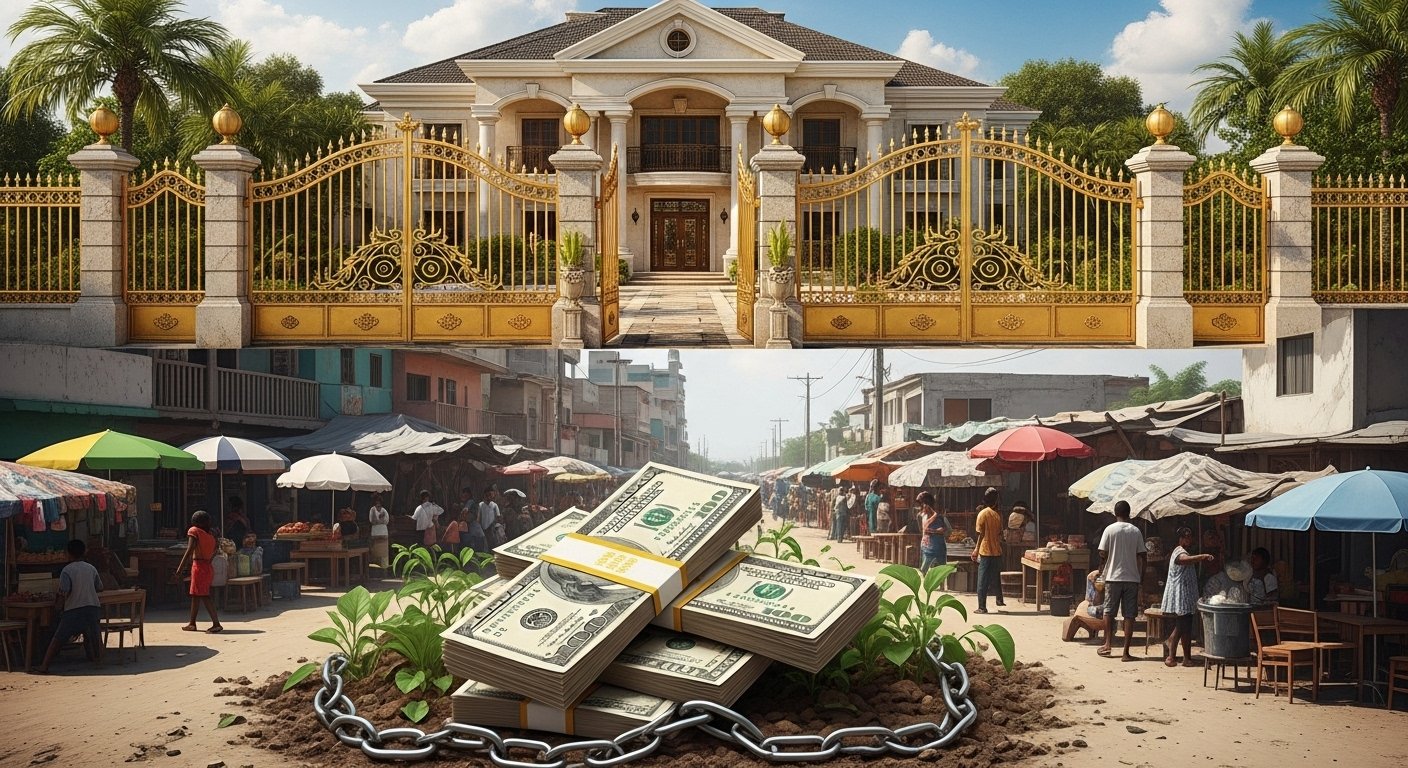
Explore the paradox of Haiti's economic power structure, where money flows without development. Discover the complexities of this nation's economic landscape.
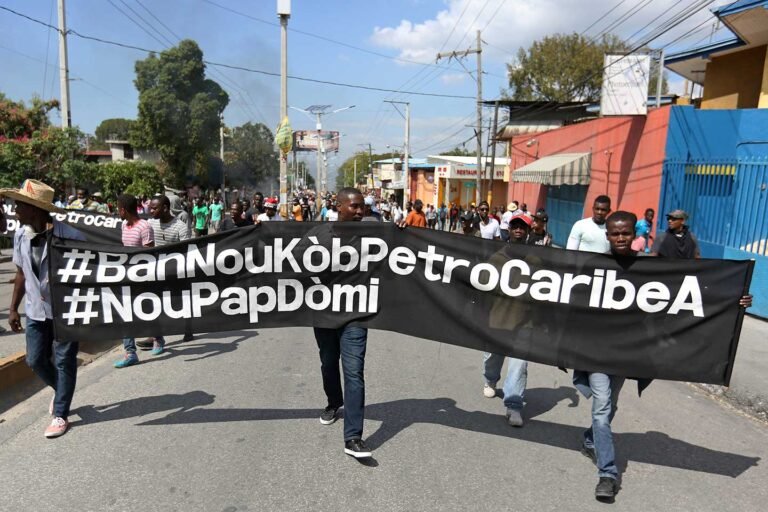
Haiti’s economy is a complex web of financial resources and underdevelopment. Despite having significant economic power, the country struggles to translate this into tangible development. This economic paradox is a pressing concern that warrants closer examination.
The situation in Haiti is characterized by a stark contrast between its economic potential and the lack of development. This disparity is not just a matter of economic mismanagement but is deeply rooted in the country’s historical and structural issues.
In Haiti, the stark contrast between economic prosperity and widespread poverty presents a puzzling enigma. The country’s financial landscape is a complex interplay of various factors, including historical legacies, political instability, and external influences.
Haiti is characterized by extreme economic disparities, where pockets of wealth exist alongside widespread poverty. This dichotomy is reflected in its economic indicators, which often present a paradoxical picture.
While Haiti’s GDP may suggest a certain level of economic activity, its Human Development Index (HDI) tells a different story, highlighting the development challenges faced by the country.
Despite receiving significant investment flows, Haiti’s infrastructure development remains stagnant, pointing to inefficiencies in its financial system.
| Economic Indicator | Value | Implication |
|---|---|---|
| GDP | $14.6 billion (2020 est.) | Indicates economic activity |
| Human Development Index (HDI) | 0.503 (2020) | Reflects poor development outcomes |
| Investment Flows | $456 million (2020 est.) | Suggests potential for growth |
| Infrastructure Development Index | 2.4/5 (2020) | Highlights infrastructure deficiencies |
The data underscores the need for a more nuanced understanding of Haiti’s economic situation, focusing on both the challenges and potential pathways to development.
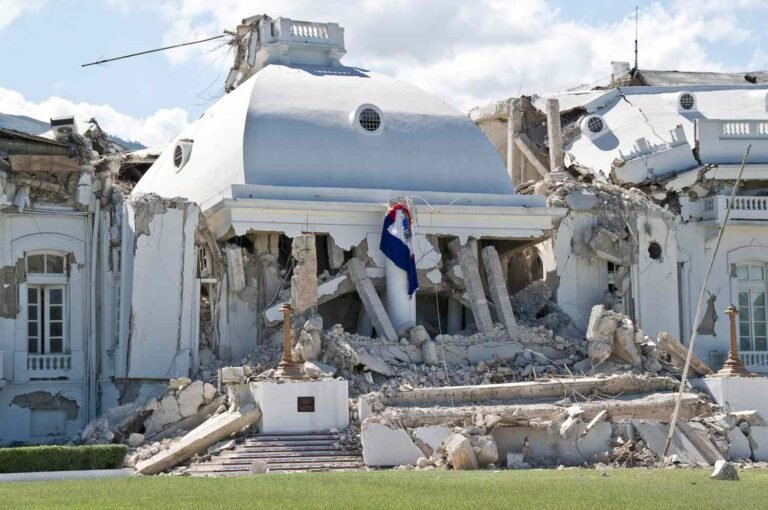
The historical narrative of Haiti is crucial to grasping its economic predicaments. Haiti’s journey to becoming the first independent black nation in the world was marked by significant economic challenges from the outset.
Haiti was once a lucrative colony for France, known as Saint-Domingue. The exploitation of enslaved Africans and the extraction of natural resources laid the groundwork for the country’s future economic struggles. After gaining independence in 1804, Haiti faced significant economic isolation and hostility from colonial powers.
In 1825, France demanded that Haiti pay an indemnity of 150 million gold francs as compensation for the loss of its “property” (enslaved people and assets). This debt burden significantly hampered Haiti’s ability to invest in its development.
The 20th century saw prolonged periods of political instability, including the Duvalier regime.
François Duvalier’s rule (1957-1971) was characterized by authoritarianism and economic mismanagement, further weakening the economy.
After Jean-Claude Duvalier’s departure in 1986, Haiti faced challenges in transitioning to a stable democracy and a healthy economy.
| Period | Economic Impact | Key Events |
|---|---|---|
| Colonial Era | Exploitation of resources and enslaved people | French colonization |
| Independence (1804) | Economic isolation | Declaration of Independence |
| 1825 | Debt burden imposed by France | Indemnity demanded by France |
| Duvalier Era (1957-1986) | Economic mismanagement and extraction | Authoritarian rule |
Haiti’s economic dysfunction is a complex issue rooted in its history. Understanding these historical roots is essential for addressing the country’s current economic challenges.
In Haiti, a unique economic paradox exists where capital flows into the country, yet development remains elusive. This phenomenon is characterized by significant financial inflows, including remittances and foreign aid, which fail to translate into sustainable economic growth or meaningful development.
The economic paradox in Haiti is multifaceted, involving a complex interplay of historical, political, and economic factors. At its core, it is about the disconnect between the availability of financial resources and the inability to utilize these resources effectively for development.
A significant portion of the capital flowing into Haiti is not invested productively. Remittances, while crucial for individual families, are primarily used for consumption rather than investment. Foreign aid often gets channeled through NGOs, creating a parallel economy that doesn’t necessarily strengthen Haiti’s economic infrastructure.
The missing link in Haiti’s economic narrative is the lack of productive investment and institutional capacity. Despite the influx of capital, the economy suffers from inadequate infrastructure, corruption, oligarchy and a lack of economic diversification, hindering sustainable development.
Comparing Haiti with other economies facing similar challenges provides valuable insights. The following table highlights key economic indicators for Haiti and comparable countries.
| Country | GDP Per Capita ($) | Remittances (% of GDP) | Foreign Aid (% of GNI) |
|---|---|---|---|
| Haiti | 720 | 33 | 4.5 |
| Guinea-Bissau | 640 | 8 | 10.3 |
| Liberia | 340 | 20 | 23.1 |
This comparative analysis underscores the unique challenges faced by Haiti, particularly its heavy reliance on remittances and the relatively lower impact of foreign aid compared to other nations.
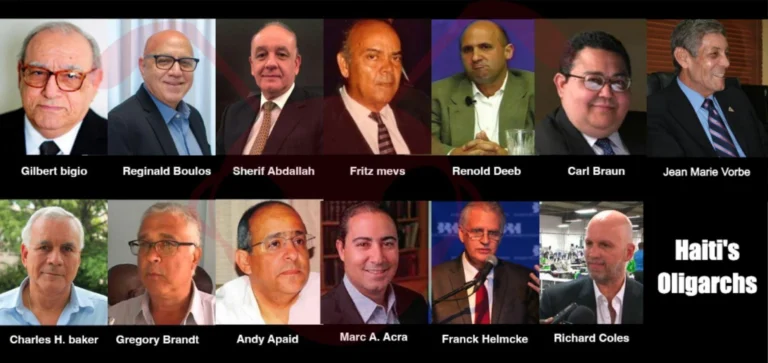
The concentration of economic power in Haiti’s elite has far-reaching implications for the nation’s development. This small but influential group has shaped the country’s financial landscape, often to the detriment of broader economic progress.
Haiti’s elite economic class has been described by some as “morally repugnant” due to their practices that prioritize personal gain over national development. This characterization highlights the tension between the interests of the elite and the needs of the broader population.
The elite in Haiti have managed to concentrate economic power through various means, including monopolistic control of key industries and leveraging political connections for economic privilege.
By dominating key sectors, the elite have been able to dictate market terms, limit competition, and maximize their profits. This control has stifled innovation and hindered the growth of a more diverse and resilient economy.
The close ties between Haiti’s economic elite and political leaders have facilitated the granting of favourable treatment, such as tax breaks and lucrative contracts. This has further entrenched the elite’s economic position, creating a cycle of privilege and power.
The business practices of Haiti’s elite have significant implications for the country’s development. While these practices have enriched the elite, they have often done so at the expense of broader economic growth and social welfare.
| Economic Indicator | Impact on Development | Elite’s Role |
|---|---|---|
| Monopolistic Control | Stifles competition and innovation | Dominates key industries |
| Political Connections | Grants unfair economic advantages | Leverages connections for privilege |
| Wealth Concentration | Exacerbates wealth disparity | Accumulates wealth through monopolistic practices |
In conclusion, the elite economic class in Haiti plays a crucial role in shaping the country’s economic power structure. Understanding their practices and impact is essential for addressing the challenges of wealth disparity and promoting more inclusive economic development.
Haiti’s economic landscape has been significantly influenced by foreign aid, but the outcomes have been mixed. The country has received substantial international assistance over the years, aimed at alleviating poverty and promoting development.
The scale of foreign aid to Haiti is vast, with billions of dollars in assistance flowing into the country. This aid comes in various forms, including humanitarian relief, development projects, and financial support. However, the effectiveness of this aid in achieving its intended goals is a matter of debate.
The presence of Non-Governmental Organizations (NGOs) in Haiti has grown significantly, leading to what some have termed a “parallel economy.” These NGOs often operate independently of the local government, creating their own infrastructure and service delivery systems.
Haiti has been referred to as the “Republic of NGOs” due to the high concentration of these organizations. While NGOs provide essential services, their proliferation has also been criticized for undermining the government’s authority and creating dependency on external aid.
One of the unintended consequences of foreign aid is the bypassing of local institutions. By directly implementing projects, NGOs often circumvent government agencies, potentially weakening the capacity of local institutions.
The reliance on foreign aid can lead to aid dependency, where the government and local economy become heavily reliant on external assistance. This dependency can undermine efforts to build a self-sustaining economy and strengthen local institutions.
Some of the key issues with foreign aid in Haiti include:
Addressing these challenges is crucial for ensuring that foreign aid contributes to sustainable development in Haiti.
Remittances are a double-edged sword in Haiti, providing essential financial support while also presenting economic challenges. On one hand, they serve as a vital lifeline for many families, helping them meet basic needs.
The Haitian diaspora plays a crucial role in supporting the country’s economy through remittances. These funds are a major source of foreign exchange, significantly influencing Haiti’s economic stability.
According to recent data, remittances account for a substantial portion of Haiti’s GDP, highlighting their importance in household economics. The influx of these funds helps improve living standards for many Haitian families.
While remittances provide immediate financial relief, they often lead to consumption rather than investment.
“The reliance on remittances can create dependency, hindering economic development by discouraging productive investment.”
This pattern can have long-term negative implications for Haiti’s economic growth.
The dependency on remittances also has significant social implications. It can lead to a culture of dependency, where families rely heavily on external financial support rather than internal economic activities. 
In conclusion, while remittances are crucial for Haiti’s economy, their impact is complex. Balancing the immediate benefits with long-term economic strategies is essential for sustainable development.
Haiti’s informal economy thrives as a means of survival amidst widespread poverty. This sector is characterized by its vast scale and significance, providing livelihoods for a substantial portion of the population.
The informal economy in Haiti encompasses a wide range of activities, from street vending to small-scale manufacturing. It is estimated that a significant majority of Haiti’s workforce is engaged in informal economic activities.
While the informal economy showcases the entrepreneurial spirit of Haitians, it is marked by a lack of opportunities for expansion. Many informal businesses operate at a subsistence level, with limited access to resources and markets.
Several barriers hinder the formalization of informal businesses. These include:
Addressing these barriers is crucial for promoting economic development and reducing poverty in Haiti.
Despite its economic potential, Haiti faces significant structural obstacles to achieving inclusive development. These barriers are multifaceted, affecting various aspects of the economy and society.
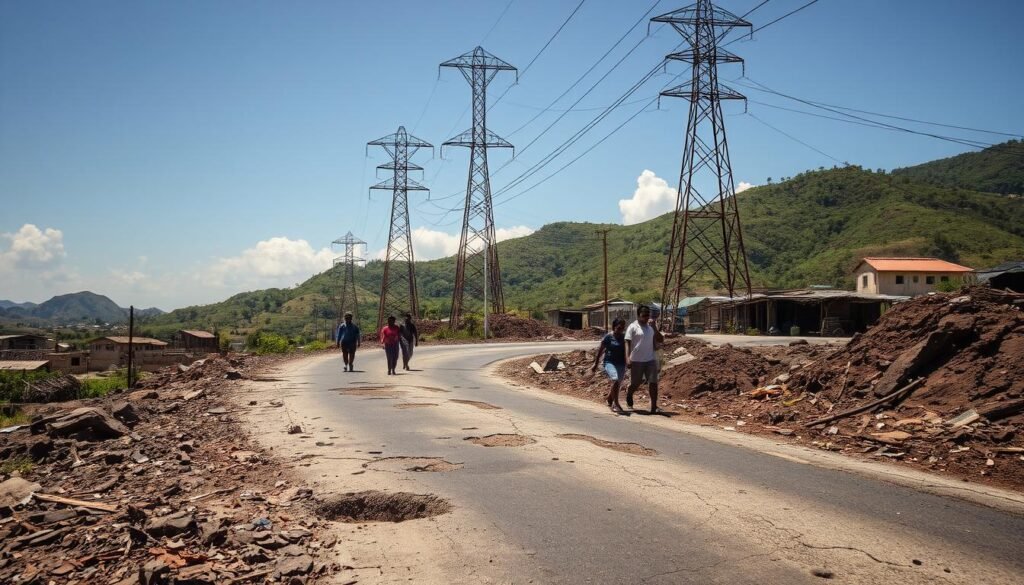
Haiti’s infrastructure is a critical area where deficiencies are pronounced. The lack of reliable energy sources and inadequate transportation networks hinder economic activities.
The energy sector in Haiti is characterized by frequent power outages and a heavy reliance on imported fossil fuels, making energy expensive and unreliable. Similarly, the transportation infrastructure, including roads and ports, is underdeveloped, increasing the cost and complexity of moving goods and people.
Digital connectivity is another area where Haiti faces significant challenges. Limited access to high-speed internet and a lack of digital literacy among the population constrain the country’s ability to participate in the global digital economy.
The educational system in Haiti is fraught with challenges, including inadequate infrastructure, a shortage of qualified teachers, and a curriculum that is not aligned with the needs of the modern economy. As former US President once noted, “Investing in education is investing in the future.”
“Education is the most powerful tool which you can use to change the world.”
Legal and regulatory frameworks also pose significant barriers to development in Haiti. Issues such as complex business registration processes and insecure property rights deter investment.
Unclear or insecure property rights can lead to disputes and make it difficult for businesses and individuals to secure loans or investments.
The process of registering a business in Haiti is often cumbersome, involving multiple steps and significant bureaucratic delays.
Addressing these structural barriers is crucial for Haiti to achieve inclusive development and unlock its economic potential. As the country moves forward, it is essential to prioritize reforms that improve infrastructure, enhance the educational system, and streamline legal and regulatory frameworks.
Haiti’s economic landscape is intricately tied to its political framework, creating a complex nexus that influences the nation’s development trajectory. This intricate relationship between politics and economics is crucial in understanding the persistent challenges Haiti faces in achieving sustainable development.
Governance failures in Haiti have led to significant economic consequences, including a lack of investment in critical infrastructure and public services. The absence of effective governance has resulted in a business environment that is not conducive to growth, discouraging both domestic and foreign investment.
The impact of poor governance is evident in various sectors, including energy and transportation, where inefficiencies and a lack of investment have hindered economic progress.
Corruption is a pervasive issue in Haiti, with far-reaching economic costs. It undermines trust in institutions, distorts market mechanisms, and discourages investment. The economic costs of corruption are multifaceted, affecting not only the business environment but also the delivery of public services.
Corruption also perpetuates inequality by allowing those with power and connections to exploit resources and opportunities at the expense of the broader population.
Haiti’s international relations play a significant role in shaping its economic sovereignty. Trade agreements and foreign political influence can either support or undermine Haiti’s economic autonomy, depending on how they are negotiated and implemented.
Trade agreements can provide Haiti with access to new markets and technologies, potentially boosting its economic growth. However, the implementation of these agreements must be carefully managed to ensure they benefit the local economy rather than just a select few.
Foreign political influence can significantly impact Haiti’s economic policy, sometimes leading to decisions that favor external interests over domestic needs. It is crucial for Haiti to maintain a balance between engaging with the international community and preserving its economic sovereignty.
Haiti’s economy is characterized by a striking paradox: the presence of money without development. Despite the influx of capital, the country struggles with poverty, inequality, and underdevelopment. To address this economic enigma, it is essential to understand the historical roots of Haiti’s economic dysfunction and the structural barriers that hinder inclusive development.
The concentration of economic power among the elite and the proliferation of foreign aid have contributed to the country’s development challenges. Moreover, the reliance on remittances has created a double-edged economic sword, providing a financial lifeline while also perpetuating consumption patterns over investment.
To break this cycle, Haiti must adopt a multifaceted approach that addresses its infrastructure deficiencies, educational system challenges, and legal and regulatory obstacles. By fostering a more inclusive and sustainable economic environment, Haiti can unlock its growth potential and reduce poverty. This requires a coordinated effort from the government, international partners, and the private sector to drive transformative economic change in Haiti’s economy and overcome the existing economic paradox.
The main reason is the complex interplay between historical, political, and economic factors, including colonial exploitation, debt burden, and political instability, which have hindered the country’s development.
Remittances serve as a financial lifeline for many households, but they also promote consumption over investment, creating a dependency that can hinder long-term economic growth.
The elite economic class concentrates economic power, controls key industries, and maintains political connections that perpetuate their economic privilege, contributing to the paradox.
Foreign aid has created a parallel economy dominated by NGOs, leading to aid dependency, corruption and institutional weakening, which has unintended consequences on Haiti’s economic development.
Infrastructure deficiencies, educational system challenges, and legal and regulatory obstacles, including property rights issues and business registration complexities, hinder inclusive development.
Corruption has significant economic costs, distorting economic activity and undermining trust in institutions, which further exacerbates Haiti’s economic challenges.
The informal economy is a vital survival mechanism for many, but it also indicates a lack of opportunities for formal employment and entrepreneurship, highlighting the need for economic diversification.
International relations, including trade agreements and foreign political influence, can affect Haiti’s economic policy and sovereignty, sometimes limiting the country’s ability to make independent economic decisions.
Potential pathways include addressing the historical and structural causes of the economic paradox, promoting inclusive development, education, reducing corruption, and fostering a more diversified and sustainable economy.