Physical Address
304 North Cardinal St.
Dorchester Center, MA 02124
Physical Address
304 North Cardinal St.
Dorchester Center, MA 02124
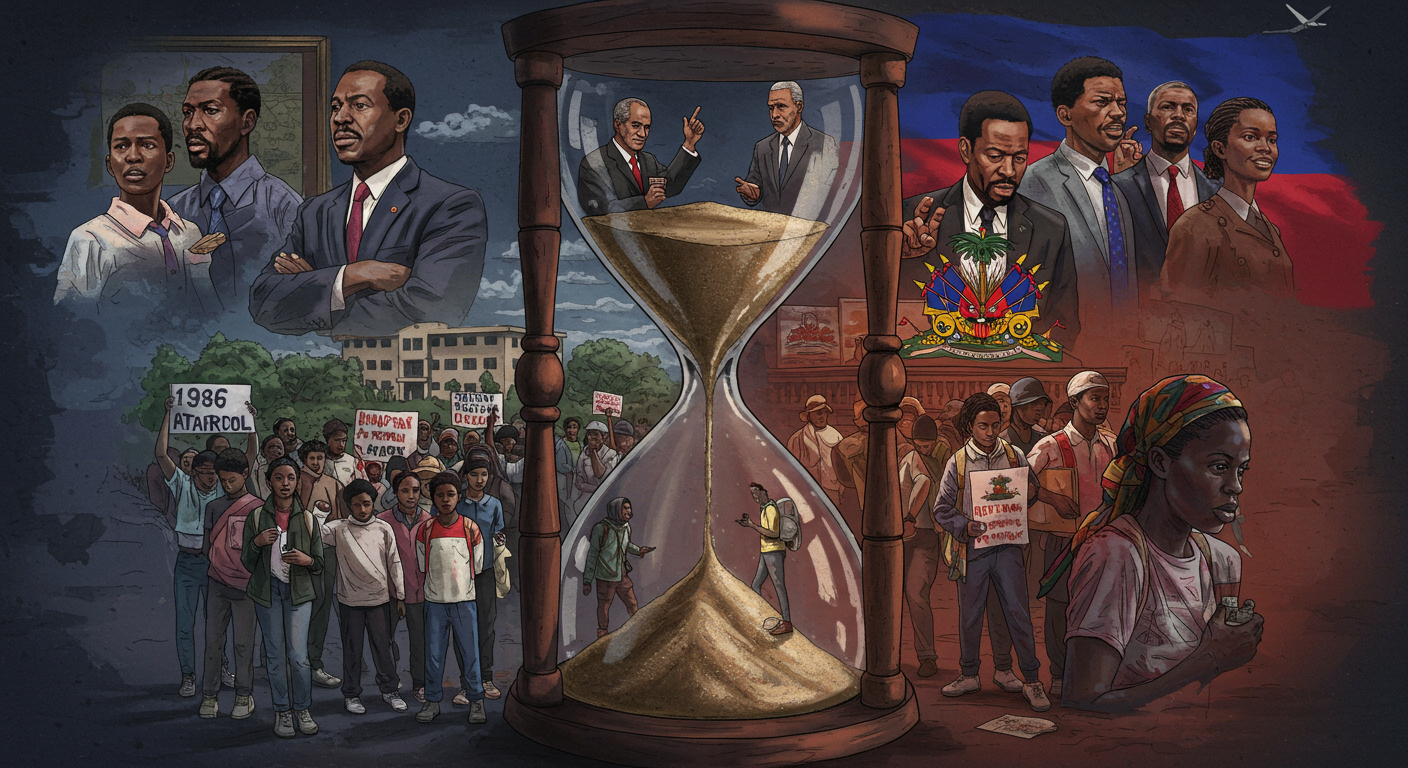
Discover how Haiti's youth have been failed by corrupt leaders since 1986 in this eye-opening article.
The fall of the Duvalier dynasty in 1986 marked a significant turning point in Haiti’s history. However, the years that followed have been marred by the rise of false leaders who have consistently prioritized their own interests over the welfare of the nation, particularly its younger generation.
The Haiti youth potential remains one of the country’s most underutilized resources. Despite their potential, many young Haitians have been left disillusioned and disconnected from the opportunities that could help them thrive.
The legacy of the Duvalier regime continues to influence the country’s trajectory, with many of its youth being misled by leaders who promise change but deliver stagnation.
The end of the Duvalier dynasty in 1986 was more than just a change in leadership; it was a chance for Haiti to redefine its future. After decades of authoritarian rule, the Haitian people, particularly the youth, saw this as an opportunity to shape a new, democratic Haiti.
The departure of Jean-Claude Duvalier marked the end of a nearly three-decade-long family dictatorship that had deeply entrenched itself in Haitian politics and society. The Duvalier regime’s collapse was met with widespread jubilation, as Haitians looked forward to a future free from the shackles of authoritarian rule.
In the immediate aftermath, there was a surge in optimism about the potential for democratic reform. Haitians hoped for a government that was truly representative of their needs and aspirations. The international community also watched with anticipation as Haiti embarked on this new path.
The youth played a crucial role in the post-Duvalier era, mobilizing to demand their rights and push for change. Youth mobilization became a significant force, driving efforts towards creating a more inclusive and equitable society. Their energy and idealism were seen as key to unlocking Haiti’s potential.
| Aspect | Pre-Duvalier Fall | Post-Duvalier Era |
|---|---|---|
| Political Climate | Authoritarian rule | Transition to democracy |
| Youth Role | Limited political participation | Active mobilization for change |
| Economic Expectations | Stable under a dictatorship | Hopes for growth and development |
The ousting of Duvalier in 1986 marked the beginning of a tumultuous era in Haiti, characterized by political upheaval and its detrimental impact on young Haitians. The period that followed was marked by significant challenges that would shape the future of the country’s youth.
Between 1986 and 1990, Haiti experienced a series of military coups, creating an environment of uncertainty and fear. This political instability had a devastating impact on the nation’s infrastructure, including its education system. Young Haitians were particularly affected as schools became battlegrounds or were forced to close.
The transitional governments that followed Duvalier’s regime failed to prioritize education, leading to a deterioration of the education system. Schools lacked resources, and many teachers were underqualified, resulting in a lack of opportunities for young Haitians to receive a quality education.
As political instability continued, corruption and economic opportunities for young Haitians began to vanish. The lack of investment in the youth and the overall economic instability meant that many young people were forced into the informal economy or left the country in search of better opportunities.
The combination of political instability, a failing education system, and dwindling economic opportunities created a perfect storm that negatively impacted the first post-Duvalier generation of Haitians. Understanding these challenges is crucial to addressing the ongoing issues faced by Haitian youth today.
Haiti’s potential has been consistently undermined by the departure of its talented youth, a trend that began in earnest after 1986. The country’s false leaders, like Aristide, Evans Paul, Henry Namphy, PROSPER AVRIL, have played a significant role in this exodus, as they failed to provide opportunities and stability, pushing young Haitians to seek better lives abroad.
The brain drain in Haiti has been accelerating since the fall of Duvalier, with many of the country’s brightest minds leaving in search of education and career opportunities that are scarce at home. This phenomenon has not only deprived Haiti of its human capital but has also contributed to a vicious cycle of underdevelopment.
The loss of human capital due to brain drain can be quantified in economic terms. For instance, the cost of educating a professional is lost when they emigrate. According to some estimates, the Haitian diaspora contributes significantly to the country’s economy through remittances, but this does not compensate for the loss of innovation and talent.
| Year | Number of Haitians Emigrating | Estimated Economic Loss |
|---|---|---|
| 1986-1990 | 50,000 | $200 million |
| 2010-2015 | 200,000 | $800 million |
Many Haitians who have left the country have achieved significant professional success abroad. However, their stories are often tinged with sadness and a sense of loss for the opportunities they could have had in Haiti.
For example, a Haitian engineer who moved to the United States shared that while he has a successful career, he feels a deep connection to Haiti and wishes he could have contributed to its development. Such testimonies highlight the personal cost of brain drain and the potential that is lost when talented individuals are forced to seek opportunities elsewhere.
“I have a good job here, but my heart remains in Haiti. I wish I could have made a difference there.” – A Haitian engineer living in the United States.
The brain drain phenomenon in Haiti is a complex issue that requires a multifaceted solution. It involves not just retaining talent but also creating an environment that fosters innovation and provides opportunities for young Haitians to contribute to their country’s development.
Aristide’s rise to power in 1990 was met with widespread support from Haiti’s youth, who saw him as a champion of their rights and aspirations. Known affectionately as “Titid,” Aristide’s populist message resonated deeply with a generation eager for change.
The initial years of Aristide’s presidency were marked by significant youth mobilization. Young Haitians were instrumental in his election campaign, and many saw him as a figure who could bring about much-needed reforms. This period was characterized by a sense of hope and optimism among the youth, who were eager to participate in the political process but fell short.
Despite the initial enthusiasm, Aristide’s administration faced significant challenges in implementing educational reforms. The promised improvements in the education sector were slow to materialize, leading to growing discontent among the youth. The failure to address issues such as inadequate infrastructure, lack of resources, and poor teacher training contributed to the disillusionment.
As Aristide’s policies failed to deliver on the promised reforms, a generation of idealistic young Haitians became increasingly disillusioned. The lack of tangible progress in areas such as education, security and economic opportunities led to a decline in support for Aristide’s government. This disillusionment had long-term consequences for the political engagement of young Haitians.
The aftermath of Aristide’s presidency saw a significant shift in the political engagement of Haitian youth. Many young people who had initially supported Aristide became cynical about the political process, feeling that their voices were not being heard. This cynicism was compounded by the subsequent political instability and lack of opportunities. The legacy of Aristide’s presidency continues to influence the political landscape of Haiti, with ongoing debates about his impact on the country’s development.
International intervention, including UN missions, has been a double-edged sword for Haitian youth, offering both opportunities and challenges. While the intention behind such interventions is often to stabilize and support the country, the outcomes have sometimes led to further marginalization of the youth.
The United Nations has been involved in various missions in Haiti, aimed at maintaining peace and security. However, the focus on security has often overshadowed the need for sustainable youth development programs. Youth development initiatives have been inconsistent and sometimes ineffective, failing to address the long-term needs of Haitian youth.
Billions of dollars in foreign aid have been poured into Haiti since 1986, yet the impact on the ground has been disappointing. A significant portion of this aid has been mismanaged, with funds often being diverted away from their intended purposes. This mismanagement has contributed to a lack of tangible improvements in the lives of Haitian youth.
| Year | Aid Received (in millions USD) | Allocated to Youth Programs |
|---|---|---|
| 2000 | 500 | 10% |
| 2010 | 1000 | 5% |
| 2020 | 800 | 8% |
A critical issue with international intervention in Haiti has been the lack of youth-centred policies. International planners have often overlooked the specific needs and potential of Haitian youth, instead focusing on broader, more generalized solutions. This oversight has resulted in youth being marginalized from the very processes intended to support their development.
The absence of meaningful engagement with youth has meant that their voices are not heard, and their needs are not met. This marginalization is a lost opportunity for Haiti, as the energy and innovation of its youth could be a powerful driver of positive change.
Haiti’s journey post-1986 has been characterized by political instability, destruction of Haitian institutions, economic mismanagement, and a lack of focus on youth development, leading to a lost generation. The consequences of these failures are evident in various sectors, particularly in education and employment.
Since the departure of Duvalier, Haiti’s education system has struggled. Literacy rates have remained low, with a significant portion of the population lacking basic reading and writing skills. According to recent statistics, only about 61% of Haitians are literate. The education system’s deterioration is a direct result of inadequate funding and poor infrastructure.
The lack of access to quality education has long-term effects on the country’s development. It hinders the ability of young Haitians to compete in the global economy and limits their opportunities for social mobility.
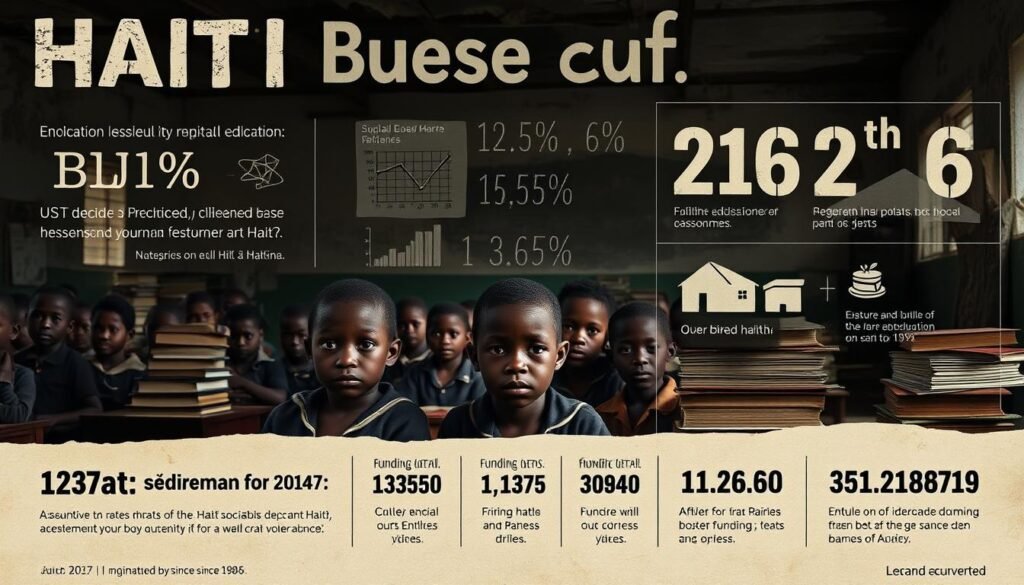
Youth unemployment is a critical issue in Haiti, with a significant percentage of young people unable to find formal employment. This has led to a burgeoning informal economy, where many youth engage in unregulated activities to make ends meet. The lack of job opportunities not only affects the economy but also has social implications, including increased poverty and inequality.
In the absence of viable economic opportunities, corruption, and no institutional structures like FADH, service intelligence, some young Haitians have turned to gang culture as an alternative means of survival and, in some cases, social status. This phenomenon is particularly prevalent in urban areas, where gangs often fill the power vacuum left by ineffective governance.
The rise of the gang phenomenon is a symptom of deeper political-societal issues, including a lack of education, corruption, unemployment, and social exclusion. Addressing these underlying problems is crucial to mitigating the influence of gangs on Haitian youth.
Despite decades of political instability, Haitian youth have shown remarkable resilience in the face of adversity. This resilience is evident in various aspects of their lives, from grassroots movements to cultural expressions.
Haitian youth have been instrumental in driving change through grassroots movements and civil society organizations. These initiatives focus on addressing social issues, promoting education, and advocating for human rights. For instance, organizations led by young people have been crucial in providing support to marginalized communities.
Many young Haitians have achieved success against all odds, becoming entrepreneurs and activists who are making a difference. Their stories serve as inspiration to others, demonstrating that with determination and hard work, it’s possible to overcome the challenges posed by Haiti’s political and economic environment.
Cultural resistance is another significant aspect of Haitian youth resilience. Through art, music, and literature, young people express their experiences, hopes, and frustrations. This creative output not only reflects the Haitian reality but also contributes to the country’s rich cultural heritage, offering a powerful means of resistance and expression.
The resilience of Haitian youth is a testament to their strength and determination. By supporting and amplifying their efforts, we can help create a brighter future for Haiti.
As Haiti navigates its current crisis, the vulnerability of its youth to gang violence has become a pressing concern. The political vacuum and rising gang violence have created an environment where young Haitians are increasingly disenfranchised.
The absence of effective governance has led to a surge in gang violence, leaving youth without access to education, employment, or safe living conditions. This situation is exacerbated by the lack of opportunities for young people to engage in meaningful economic activities.
Gang violence has become a significant threat, with many young Haitians being forced to join gangs due to economic necessity or coercion. This not only perpetuates the cycle of violence but also diverts young talent away from contributing positively to society.
The Haitian diaspora represents a significant resource for the country’s development. Engaging the diaspora in knowledge transfer and investment could provide crucial support for Haiti’s economic recovery.
Young Haitians are increasingly taking the lead in proposing solutions to the country’s governance issues. Their involvement in politics and civil society is crucial for bringing about meaningful change.
Digital innovation and remote work offer new opportunities for Haitian youth to participate in the global economy. By leveraging technology, young Haitians can access job opportunities, entrepreneurship training, and global markets.
| Opportunity | Description | Potential Impact |
|---|---|---|
| Digital Innovation | Access to global tech trends and innovation hubs | Creation of new industries and job opportunities |
| Remote Work | Participation in global employment markets | Economic empowerment for individuals and families |
| Entrepreneurship | Development of local businesses with global reach | Stimulating local economies and creating employment |

In conclusion, addressing Haiti’s current crisis requires a multi-faceted approach that includes diaspora engagement, youth-led solutions, and leveraging digital innovation. By empowering young Haitians and providing them with growth opportunities, Haiti can begin to rebuild and move towards a more stable future.
Haiti’s youth have been let down by false leaders and broken promises since 1986. The country’s potential remains untapped, with young Haitians facing significant barriers to education, employment, and social mobility.
Rebuilding Haiti requires a focus on reclaiming the future of its youth. This involves addressing the failures of the past, including the brain drain, lack of educational reform, and mismanaged international aid. By prioritizing youth-centred policies and programs, Haiti can unlock the potential of its young people.
The path forward involves diaspora engagement, knowledge transfer, and youth-led solutions to governance problems. By working together, Haitians can create a brighter future, one that leverages the energy and creativity of its youth to drive economic growth, social justice, and democratic stability.
Reclaiming Haiti’s future is a collective responsibility. It demands a commitment to transparency, accountability, and the empowerment of young Haitians. By doing so, Haiti can finally realize the promise of its youth potential and build a more equitable society.
The initial expectations were for a democratic Haiti, security, prosperity, with hopes for reform and a brighter future for the younger generation.
The instructive military coups led to political instability, deterioration of the education system, security and vanishing economic opportunities for the first post-Duvalier generation.
The brain drain phenomenon refers to the emigration of highly skilled and educated individuals, resulting in a significant loss of human capital and innovation in Haiti.
Initially, there was significant youth mobilization and support for Aristide, but subsequent policy failures, particularly in educational reform, led to disillusionment among young Haitians.
International intervention, including UN missions, has had a mixed impact, with some programs being effective, while others have been hindered by mismanagement of foreign aid and a lack of youth-centred policies.
Statistics show a decline in education and literacy rates, high youth unemployment, insecurity and a rise in gang phenomenon as an alternative path for disenfranchised youth.
Yes, there are numerous success stories of entrepreneurs, activists, and artists who have made a positive impact, demonstrating the resilience and potential of Haitian youth.
Potential paths forward include diaspora engagement, youth-led solutions, and the role of digital innovation and remote work in addressing governance issues and promoting economic development.
The diaspora community can contribute through knowledge transfer, investment, and engagement in initiatives that promote youth development and good governance.
Digital innovation and remote work can provide new opportunities for economic development, improve governance, and increase access to information and services, potentially serving as game-changers for Haiti.