Physical Address
304 North Cardinal St.
Dorchester Center, MA 02124
Physical Address
304 North Cardinal St.
Dorchester Center, MA 02124

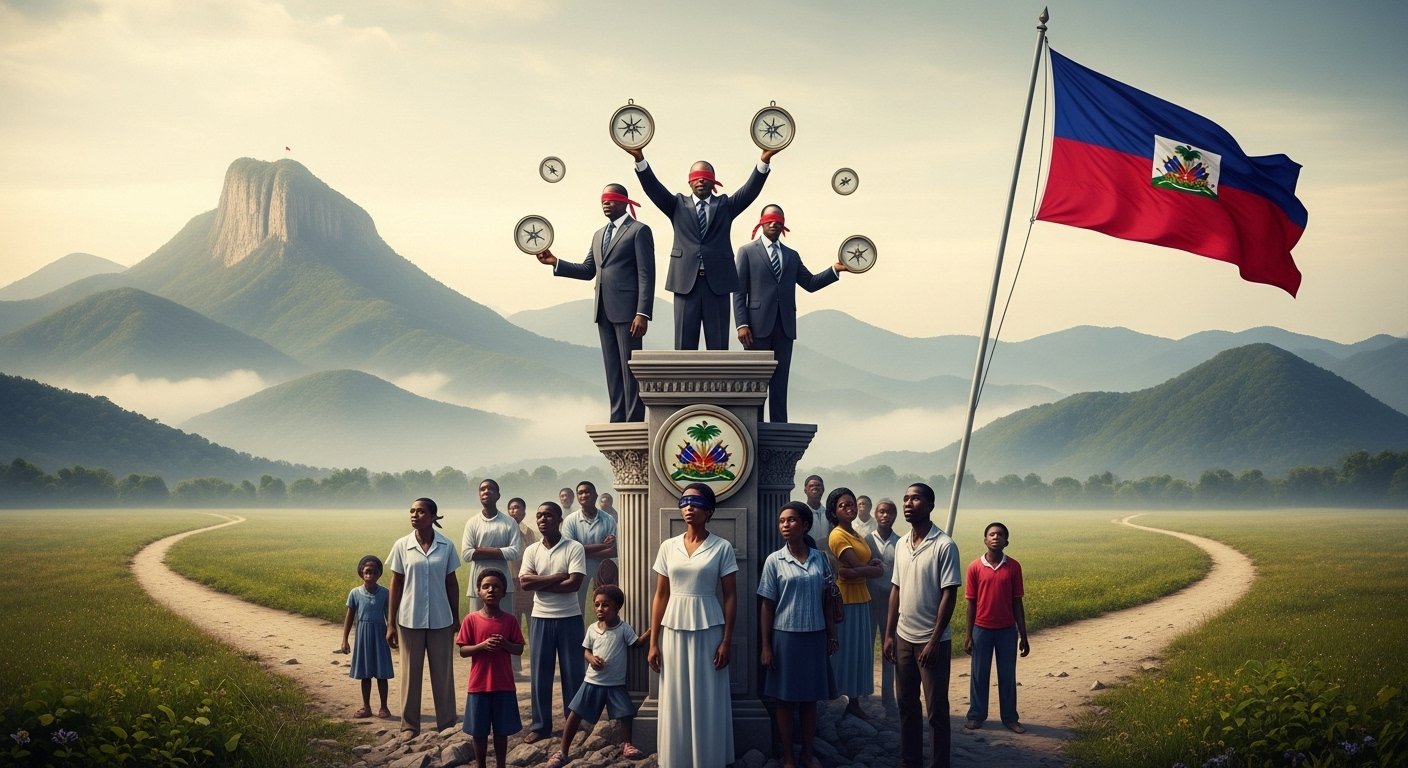
Gain insight into the governance crisis in Haiti as the transitional government struggles to lead the Haitian people.
Haiti is facing a severe governance crisis, with its transitional government struggling to provide direction for the Haitian people. The lack of a clear vision for the future has led to widespread uncertainty and instability.
The current situation in Haiti is characterized by a lack of vision and ineffective leadership, affecting the daily lives of its citizens. The need for a stable and forward-thinking government is more pressing than ever.
A profound crisis is unfolding in Haiti, characterized by political instability and a void in leadership. The situation has been escalating since the assassination of President Moïse, which has had far-reaching consequences.
The assassination of President Moïse has created a significant power vacuum, exacerbating the existing political instability in Haiti. This event has triggered a chain reaction, further destabilizing the country’s governance.
The aftermath of President Moïse’s assassination has been marked by heightened tensions and a struggle for control. The table below summarizes the key events and their impacts on Haiti’s governance.
| Event | Impact on Governance |
|---|---|
| Assassination of President Moïse | Created a power vacuum, leading to political instability |
| Power struggle among political factions | Further destabilized governance, hindering effective decision-making |
| Increased tensions and violence | Worsened the humanitarian crisis, affecting civilians and infrastructure |
The current crisis in Haiti is a complex issue, deeply rooted in political instability and exacerbated by the assassination of President Moïse. Understanding these dynamics is crucial for addressing the challenges faced by the Haitian people.
Understanding Haiti’s current governance issues requires a look into its past. The country’s history is marked by significant events that have shaped its political landscape.
Haiti has experienced a long history of political instability, with frequent regime changes and coups. This legacy has contributed to the country’s ongoing governance challenges. The impact of such instability is multifaceted, affecting not only the political sphere but also the social and economic development of the nation.
Haiti has undergone several transitional periods in the past, each with its outcomes. These transitions have often been marked by uncertainty, corruption and power struggles. Analyzing the successes and failures of these periods can provide valuable insights into the current governance challenges faced by Haiti.
The historical context of Haiti’s governance is complex, with various factors contributing to its current state. By examining the legacy of political instability and the outcomes of previous transitional periods, we can better understand the challenges that Haiti faces today.
In the face of political upheaval, transitional governance emerges as a vital mechanism for steering a nation towards stability. It is designed to fill the power vacuum created by political instability, conflict, or regime change, providing a temporary framework for governance until a more permanent structure can be established.
Transitional governments are interim administrations that take charge during periods of political transition. Their primary purpose is to stabilize the country, facilitate democratic processes, and lay the groundwork for a sustainable political order. These governments are tasked with addressing immediate crises, rebuilding institutions, and preparing the ground for elections or other democratic processes.
Successful transitional governance is benchmarked against several key performance indicators. These include the ability to establish security and the rule of law, promote economic recovery, and ensure the protection of human rights. Additionally, effective transitional governments are judged on their capacity to foster inclusive political dialogue and facilitate a smooth transition to democratic governance.
| Benchmarks | Description | Indicators of Success |
|---|---|---|
| Security and Rule of Law | Establishing a stable security environment and ensuring the rule of law | Reduction in violence, functioning judicial system |
| Economic Recovery | Promoting economic stability and growth | Improved economic indicators, job creation |
| Human Rights Protection | Ensuring the protection of human rights and promoting accountability | Respect for human rights, accountability mechanisms in place |
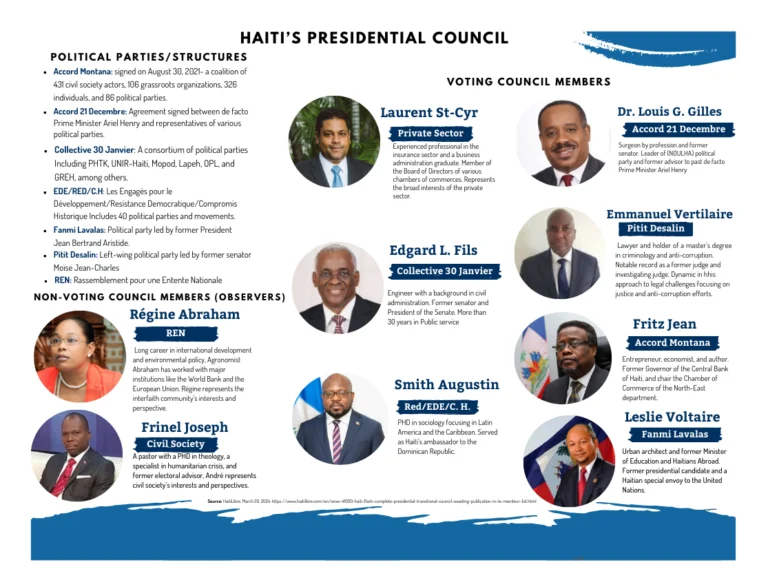
The formation of Haiti’s transitional council is a critical development in the country’s quest for stability and effective governance. This council has been established amidst growing concerns over the country’s governance and political stability.
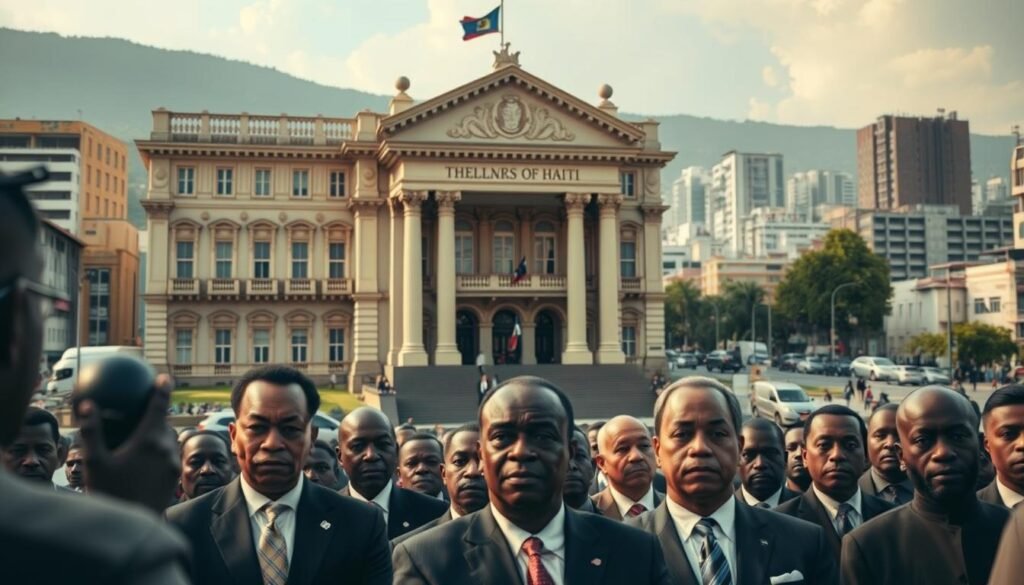
The transitional council comprises various stakeholders, including political leaders, civil society, economic representatives, and members of the international community. Key players in this council are expected to drive the country’s transition towards a more stable and democratic governance structure.
The selection process for the transitional council has been marred by controversies, with critics questioning the legitimacy of the selection process. Concerns have been raised about the representation of various stakeholder groups within the council.
The legitimacy of the transitional council is a pressing concern, with many questioning whether it truly represents the interests of the Haitian people. Representation is crucial for the council’s effectiveness, and any perceived shortcomings in this area could undermine its ability to govern effectively.
The council’s formation and its ongoing operations will be closely watched by both the Haitian people and the international community, as they hold significant implications for Haiti’s future stability and governance. But let’s be serious, a poor country with a nine-presidency system.
A lack of vision and direction characterizes the governance approach of Haiti’s transitional government. This absence of a clear roadmap for the future has significant implications for the Haitian people, affecting various aspects of their lives.
The transitional government’s inability to establish clear policy objectives has led to confusion and a lack of trust among the populace. Without defined goals, the government’s efforts seem disjointed and ineffective.
The government faces challenges in balancing short-term needs with long-term development goals. This has resulted in ad hoc decision-making rather than strategic planning.
There is a pronounced disconnect between the leadership of the transitional government and the needs of the citizens. This disconnect is evident in the government’s failure to address pressing issues such as security, economic stability, and public health.
The following table highlights some of the key challenges faced by the transitional government and the Haitian people:
| Challenge | Description | Impact |
|---|---|---|
| Lack of Clear Policy Objectives | Unclear goals and priorities | Confusion and mistrust among the populace |
| Short-term Planning Failures | Inability to address immediate needs effectively | Increased suffering among the population |
| Disconnect Between Leadership and Citizens | Leadership is not responsive to citizens’ needs | Decreased trust and increased dissatisfaction |
In conclusion, the transitional government’s lack of vision and direction has severe consequences for Haiti. Addressing these challenges is crucial for the well-being of the Haitian people and the country’s future stability.
Despite its formation with high hopes, Haiti’s transitional government has been characterized by a series of failed promises and missed opportunities. The government’s inability to deliver on its commitments has led to a deterioration in security and economic conditions, leaving the Haitian people disillusioned.
The transitional government has struggled to implement effective security reforms, a critical component of stabilizing the country. Inadequate policing and insufficient training have hindered efforts to restore order, allowing gang violence to persist.

Economic recovery efforts have also faltered, with the government failing to address pressing issues such as unemployment and infrastructure development. The lack of investment in critical sectors has stifled economic growth, exacerbating poverty.
The failures in economic recovery have had a direct impact on employment and basic services. Many Haitians struggle to access necessities like healthcare and education, further entrenching poverty and inequality.
| Indicator | Pre-Transition | Post-Transition |
|---|---|---|
| Unemployment Rate | 15% | 60% |
| Access to Healthcare | 60% | 30% |
| Education Enrollment | 80% | 40% |
The table highlights the decline in key indicators since the transition, underscoring the need for effective governance to address these pressing issues.
The governance failure in Haiti has led to a significant humanitarian crisis, affecting the lives of millions. The absence of effective governance has resulted in widespread suffering, from food insecurity to public health issues, corruption, insecurity and displacement.
Haiti faces a severe food insecurity crisis, exacerbated by governance failures. The lack of effective agricultural policies and infrastructure has led to food shortages. Malnutrition rates are alarmingly high, particularly among children and the elderly. Furthermore, the public health system is on the brink of collapse, with inadequate healthcare facilities and a shortage of medical supplies.
The situation is further complicated by the prevalence of diseases such as cholera, which has seen resurgences due to poor sanitation and water treatment. The governance failure has directly impacted the ability to respond to these health crises effectively.
The humanitarian crisis has also led to significant displacement and migration. Many Haitians are forced to flee their homes due to violence, insecurity, and lack of access to necessities.
Internally, displacement is a major issue, with many people moving to urban areas in search of safety and resources. Regionally, Haitians are migrating to neighbouring countries in search of better opportunities and safety.
| Category | Internal Displacement | Regional Migration |
|---|---|---|
| Causes | Violence, insecurity, and lack of resources | Search for better opportunities, safety |
| Consequences | Urban overcrowding, strain on resources | Cultural integration challenges, economic impact |
The humanitarian impact of governance failure in Haiti is multifaceted, requiring a comprehensive response that addresses the root causes of these issues.
Haiti’s ongoing crisis has prompted a significant response from the international community, raising questions about its role and responsibility. The international community’s efforts in Haiti have been multifaceted, involving both humanitarian aid and security assistance.
Foreign aid has been a crucial component of the international community’s response to Haiti’s crisis. However, its effectiveness has been a subject of debate. While some argue that aid has helped alleviate immediate suffering, others contend that it has created dependency, constant interference and failed to address underlying structural issues.
A review of foreign aid effectiveness in Haiti reveals mixed results. For instance, some portion of aid has been directed towards humanitarian assistance, which, while necessary, does not address long-term development needs.
| Aid Category | Amount | Impact |
|---|---|---|
| Humanitarian Aid | $X million | Alleviated immediate suffering |
| Development Aid | $Y million | Mixed results on long-term development |
The multinational security mission in Haiti has faced significant challenges, including logistical hurdles and resistance from local communities. Despite these challenges, the mission has been crucial in maintaining order and facilitating humanitarian aid delivery.
The facade deployment of Kenyan police as part of the multinational security mission has been a notable aspect of the international community’s efforts. While the deployment has faced challenges, it has also contributed to enhancing security in key areas.
The international community’s role in Haiti is complex and multifaceted. While there have been challenges, there are also opportunities for meaningful engagement that can support Haiti’s path towards stability and development.
Multiple factors, including political, economic, and humanitarian considerations, have shaped the U.S. approach to Haiti’s crisis. Over the years, the U.S. has played a significant role in Haiti’s challenges and troubles, with its strategies evolving in response to changing circumstances in US interest only.
The evolution of U.S. policy towards Haiti reflects broader shifts in American foreign policy and humanitarian engagement. Different administrations have brought varying priorities and approaches to U.S.-Haiti relations. For instance, some administrations have focused on so-called security and stability, while others have emphasized economic development and humanitarian aid.
| Administration | Key Policies | Focus Areas |
|---|---|---|
| Clinton Administration | Humanitarian aid, economic support | Democracy building, economic reform |
| Bush Administration | Security reform, counter-narcotics | Stability, security cooperation |
| Obama Administration | Economic development, humanitarian aid | Reconstruction, health initiatives |
Currently, the U.S. engagement in Haiti encompasses a range of strategies aimed at addressing the country’s multifaceted challenges.
The U.S. provides diplomatic support through active participation in international forums focused on Haiti, such as the Core Group. Economic support is delivered via USAID programs aimed at promoting economic growth and reducing poverty. Additionally, the U.S. offers security support through training and capacity-building initiatives for Haitian security forces.
By adopting a comprehensive approach that includes diplomatic, economic, and security dimensions, the U.S. aims to contribute to Haiti’s stability and development, but has seen no results.
Effective governance pathways in Haiti hinge on the successful implementation of constitutional reforms, capacity building, and active civil society participation. For Haiti to achieve stability, it must address its governance challenges through a multi-faceted approach.
Constitutional reform is crucial for establishing a legitimate and representative government in Haiti. Reforming the constitution can help in clarifying the roles of different branches of government and ensuring that power is distributed evenly. This can lead to more democratic processes and reduce political instability. Remember, we’ve been down this road before; the only solution is the 1805 constitution amended.
Building institutional capacity is vital for effective governance. This involves strengthening the public administration, improving the judiciary, and enhancing the capacity of law enforcement agencies. By doing so, Haiti can ensure that its institutions are robust and capable of delivering essential services to its citizens.
Engaging civil society is a critical component of effective governance. Civil society organizations can play a significant role in holding the government accountable, promoting transparency, and advocating for the rights of citizens. By involving civil society in governance, Haiti can foster a more inclusive and participatory political process.
By focusing on these areas, Haiti can make significant strides towards achieving effective governance and stability, ultimately improving the lives of its citizens.
Haiti stands at a critical juncture, with its future hanging in the balance. The current transitional government has been marred by controversy and inefficiency, leaving the Haitian people disillusioned and desperate for change.
To move beyond this transition, Haiti needs a governance structure that truly represents and serves its citizens. This involves not only addressing the immediate security and humanitarian crises but also laying the groundwork for long-term stability and prosperity.
By focusing on constitutional reform, democratic processes, and institutional capacity building, Haiti can begin to build a more equitable and just society. The international community, including the United States, has a crucial role to play in supporting this process through effective foreign aid and diplomatic engagement.
Ultimately, Haiti’s future beyond the transition depends on the collective efforts of its leaders, citizens, and international partners to create a governance framework that prioritizes the needs and aspirations of the Haitian people, paving the way for a brighter future.
The current governance in Haiti is characterized by a transitional government (CPT) that is facing significant challenges because it’s not a legitimate government, including a lack of clear policy objectives, a disconnect between leadership and citizens’ needs, and a failure to address security and economic issues.
The current crisis in Haiti was triggered by the assassination of President Moïse, which created a power vacuum and led to political instability. The country’s governance challenges are also rooted in its history of political instability and previous transitional periods.
A transitional government is a temporary governing structure established to manage a country’s affairs during a short period of crisis or transition. Its purpose is to provide stability and facilitate a return to democratic governance by organizing fair elections only, and it can not sell or sign any contracts.
The international community is involved in addressing Haiti’s crisis through foreign aid, interference, multinational security missions, and diplomatic efforts. The effectiveness of these efforts is crucial in supporting Haiti’s path towards stability and effective governance.
The key challenges facing Haiti’s transitional government include security reform shortcomings, economic recovery failures, and a disconnect between leadership and citizens’ needs. Addressing these challenges is essential for the government’s success.
The humanitarian impact of governance failure in Haiti includes food insecurity, public health crises, displacement, and migration. These issues have significant consequences for the well-being of the Haitian people.
Haiti can achieve effective governance and stability through constitutional reform (1805 Constitution), building institutional capacity, and engaging civil society in governance. These pathways offer potential solutions to the country’s ongoing governance challenges.
The United States plays a significant role in so-called addressing Haiti’s crisis through diplomatic, economic, and security support. The U.S. approach to Haiti’s crisis has evolved under different administrations, and current engagement strategies are crucial in supporting the country’s stability, but only in US interest, not Haiti’s.
The benchmarks for successful transitions globally include the establishment of democratic processes, building institutional capacity, and ensuring the engagement of civil society in governance. These benchmarks can serve as a framework for evaluating Haiti’s transitional government.